My pet theory is that every software product has a "peak version". Before that peak version, the product is not yet in a complete state, and it is fairly obvious, both for the developer and user, what features are missing. Once the peak version is reached, new features are not added because they improve the product, but to justify selling the product again to existing customers, and to 'keep the team busy'.
Instead of really improving the product, features become checkboxes on the roadmap. Which eventually results in degrading the quality of the product, it becomes bloated, the UX becomes confusing (especially to new users), and existing features start to suffer because the "maintenance surface" becomes bigger and bigger.
What should happen of course is that the product's feature set is frozen at the "peak version", and only bug fixes and optimizations are happening, that's a hard sell to the bean counters of course, especially with subscription models and "software as a service" which they like so much. From the customer's point of view, bug fixes and optimizations are expected to come for free, because they are fixing defects in the original product and don't add any value, right?
Eventually progress and success is measured in features added, not in satisfaction of individual customers. And as long as KPIs are looking alright - meaning the 'average customer' (which doesn't exist btw) isn't pissed off enough to look elsewhere, all is good, even though everything is terrible.
Subscription model is actually way better if you don't want to end up with feature bloat. Because you actually get money from users even if you only ever fix bugs and improve performance.
If you freeze your features you will soon arrive at a point where everybody who wanted your software bought it and then the revenue stops.
Except that revenue stream ends before the "fix bugs and improve performance" step. People buy based on screenshots/demos/trials/reviews, and those don't expose the deep bugs you run into 3 months later when doing real work.
Shovels break, light bulbs burn out. Then you go buy another one, and there's a good chance it's better than the earlier one. The manufacturer keeps working to improve the quality, and people keep paying them for this. "Buy a software license once for all time" is not analogous to this.
> Shovels break, light bulbs burn out. Then you go buy another one, and there's a good chance it's better than the earlier one.
Not in my experience. Almost always the new ones are improved only in one respect: profitability. Generally this means they have used cheaper components, lowered the cost a bit, and made an inferior product. Ok. End of tangent.
> The manufacturer keeps working to improve the quality
Call me cynical, but I think it's naive to make this claim.
Manufacturers don't optimize quality, they optimize profits. Even if there's sufficient competition, manufacturers don't race upwards to improve quality, they race downwards to reduce the cost and undercut the competition.
You can see this in kitchen appliances. People complain about how they don't last as long as they used to and are harder to repair. That's because when a customer sees a $30 blender and a $50 blender on the shelf, they will nearly always pick the $30 blender, even if the $50 blender is a higher quality. There was a race to the bottom on pricing, and corners had to be cut.
Information asymmetry is also a problem. The $50 blender might be trading on a beloved brand name... but with the metal gears replaced by plastic and glue in place of the fasteners. How can the average person tell?
What you really want to read is reviews from 3 years in the future but you can’t. So you buy the $30 blender because it’s too hard to assess whether the $50 one is worth it.
I really liked the hn article the other day on assessing garment quality. The first step in stemming the tide of garbage is being informed.
In the software world SaaS tends to optimise for growth and customer retention, which is probably better aligned to meet people’s needs than optimising for first sale.
At the start of our living together, me and my wife bought cheap kitchen appliances. Two years later, straight after the warranty expired, most of them died. One of them actually gave a very close call to a nasty accident. So now we learned. We buy the good stuff, based on brand experience and word of mouth from friends. If we havent the money, a second hand good one is in general both cheaper and better than the bad ones. It takes some time to find them sometimes. I know lots of people doing the same.
So you are right in the short term, but consumers learn. This will bite cheaper brands in the long term.
"Buy a software" is vastly different from "Buy a software license"
Problem being, <shovel> makers are now prohibiting you from owning your <shovel>. From fixing your <shovel>. From changing your <shovel> so you don't need to buy <super shovel>. Now with forced updates, you're now literally prohibited from keeping the shovel you have and like!
You are using <brackets> as though you haven't noticed the physical product companies are all racing to lock up their products in rent-seeking license agreements.
> The manufacturer keeps working to improve the quality, and people keep paying them for this. "Buy a software license once for all time" is not analogous to this.
I agree, why I feel ye olde numbered software releases worked fine. I even think subscription based software is fine if the yearly subscription price is at or below what the old numbered version costs.
What happens these days is software converts to a subscription model and the developer decides to jack up the yearly subscription price to 2-3x the old yearly price.
I agree with your examples but I think a piece of software is different because users expect it to change over time.
New Mac OS version? Users want <software> to support it.
Found a bug in a library <software> uses? Users expect to get a fixed version
etc.
And while as a software user/buyer myself I like the idea of paying once and be done with it I kinda understand why people need recurring income if they keep on working on a piece of software even if it's just "minor" things.
No, they expect to have the opportunity to upgrade to newer versions which may be different if they want those differences. They don't expect the one they bought, learned to use, and have grown proficient with to suddenly be completely different one day for no good reason.
Consider buying a truck because you haul stuff around a lot. You don't expect to just come out to your driveway one morning and find a fuel-efficient minicar there instead because someone at the car company decided that people like fuel-efficient vehicles, so they would steal back all the trucks they made and replace them. However, maybe you used to haul a lot of cargo but you don't anymore so you've been thinking of replacing the truck and a fuel-efficient car would interest you, but you want that to be your choice.
Your example is not addressing the point the parent made. Users definitely expect free updates to new OS versions with all the bells and whistles this version supports. They also definitely expect bugfixes. Nobody mentioned changing design here.
I can guarantee you that inboxes of all iOS developers who have not implemented dark mode will fill up the first day iOS 13 is released to public.
Heck, people expect your app to work on the first beta and will complain if it does not.
I think both of you guys are right. I am continually surprised though to see some outright anger though. A good example is Microsoft Office. People who were used to pre ribbon get downright angry when talking about the ribbon.
Its this weird delicate balance of improving the UI but not changing it too much. I tell people all the time UI is the hardest job in the world, an entire team of PhD's cannot get it right most of the time. Its simple an impossible task to consider the 'work flow' of every user- it is just beyond the scope of human intelligence I think.
All you can do is create a good UI that works for a majority of people, and try to manage it from there.
I have been avoiding the available OS update for my Macbook Air because I've heard it kills performance, reduces battery life, may not run one of my favorite applications, and AFAIK brings nothing that I actually want.
This is a bit naive. Software and especially apps these days are more a stream of updates (like Netflix) than a v1.0 you buy once. Updates are expected from users (and app stores).
Example: A customer bought your app on iOS 9. It worked perfectly fine. You wrote it once, because you couldn’t expect more revenue from existing customers. It stopped working on iOS 11, because 32-bit support was ended on Apple’s side.
Of course, it’s not Apple who gets the blame, it’s you, because your app doesn’t work anymore. But it is supposed to work, because your customer paid good money for it ($4.99).
Back in the day, sure, if you bought a software that worked on MS-DOS only, it’s your fault when you got Windows and it didn’t run your software. No expectations, no hard feelings. But iOS is iOS. It’s the thing running average Joe’s smartphones. Software bought for iOS should work on iOS. Forever.
Your examples all describe products with an expected expiration date. Software used to have expiration dates. But not anymore. The expectation changed.
Software bought for iOS should work on iOS. Forever.
What you're glossing over here is that for literally decades, that was a pretty good baseline assumption, because we actually valued backward compatibility. The lengths that Microsoft went to in order to maintain that compatibility in the first several major releases of Windows are legendary. The lengths that Linux developers still go to are also remarkable.
It's only in the crazy new world of X-as-a-service and not even controlling the OS on your own devices that anyone thinks deliberately breaking stuff every few years to force the upgrade treadmill is a good thing. And the people who think that are largely the ones who also see you as nothing but a data point in a revenue maximisation model, not the actual users.
Ask yourself this: Have you ever met anyone who isn't a software developer who told you joyously about how much they appreciate the endless stream of updates that everything they buy now gets? I haven't. But I have lost track of how many friends and family have bemoaned things being changed that they didn't want, older devices that seemed to be working perfectly well but then got broken by some software update, some service they depend on being broken or switched off, some content on a service they pay for being removed or blocked unless they pay more, etc.
This is not progress. This is a failure of regulation, the triumph of capitalist free markets in consolidating so much power in so few places that competition is no longer an effective protector of the customer's best interests.
Fair enough. There’s obviously software that goes back decades and we all benefit from the great backwards compatibility of MS or Linux.
But: How useful is your copy of Windows 98 these days? Can you collaborate with others with your copy of Photoshop 5.0 or Office 2003? Can you easily install Quake I on a modern machine without hassle?
> Ask yourself this...
It depends. I see your point and you are right to a certain extend. But then I see lots of people asking for new features or are glad about new capabilities the app now offers. I’d say it depends a lot on the type of software.
> competition is no longer an effective protector of the customer's best interests.
Why? You still get to buy some software or use your iPhone 3GS. It’s just a security thing. Or did you expect free updates to your OS?
The buy-once-use-forever software doesn’t really work, because software is rarely isolated like some Linux CLI tools from the 80s. You need to have security updates or collaborate with people by sharing files. Someone wantsnew features and change, others don’t. At least under the new model, you get to use software for a low price if you don’t use it that much (Adobe cloud is what, 10 bucks a month compares to 600 upfront?).
Can you collaborate with others with your copy of Photoshop 5.0 or Office 2003?
I suppose that depends on what you're trying to do. I can still run those programs, and I can still access my data created in those programs. Obviously they don't support some features and formats that were added in later versions, but forward compatibility is a different issue. My point here isn't about new things being given to you free by magic, it's just about not losing things you already had.
But then I see lots of people asking for new features or are glad about new capabilities the app now offers. I’d say it depends a lot on the type of software.
Again, just to be clear, I'm not objecting to change in general. Of course in some cases we hope that our software will add useful new features or fix bugs or improve an interface.
What I'm objecting to is software that forces updates on users whether they want them or not, which Apple for example has a history of doing with iOS devices through a variety of mechanisms.
It has total control of the only major source of software on its platform, and it seems to have no problem with mandating that any software supplied through that store complies with its latest guidelines. As a developer, that might mean issuing a new version of an otherwise working app for essentially cosmetic reasons. Don't comply, lose your whole market.
Crucially, Apple also pushes new versions of its OS that bundle essential security updates with functional and cosmetic changes. You can't keep an Apple device secure without accepting everything else as well, even if the everything else makes your experience worse than when you chose to buy the device. This, to me, is the really nasty shift in recent times, and it's one that Microsoft is guilty of as well now.
You still get to buy some software or use your iPhone 3GS. It’s just a security thing. Or did you expect free updates to your OS?
Yes, if my product does not work as it should because of a defect, it is reasonable to expect that the supplier of that product should remedy the defect, or otherwise compensate me in some reasonable way for the loss caused by its failure. This is how consumer sales normally work, and indeed the principles are enshrined in law in many countries.
Software companies have had a very easy time on this score, despite the large number of bugs in what they ship, and I think that is in large part because of the informal arrangement that essential bug fixes and security updates would be issued free of charge for a reasonable period after someone made a purchase.
If software companies no longer want to uphold their side of that unspoken bargain, then I don't see why we shouldn't get stricter with them about consumer protection and their liability for failures. Obviously we don't know how to write perfect software and it's unrealistic to expect a developer to ship a flawless product, but let's not kid ourselves that huge numbers of corners aren't being cut in order to push things out the door more quickly, nor that those compromises don't sometimes have damaging results that were entirely avoidable.
Windows has great backwards compatibility but at the cost of acxumulating legendary amount of cruft. It also means that if you develop new entreprise software you have to use ancient frameworks.
On Linux retrocompatibility is handled at the source code level. So stuff will work as long as you are ready to compile your own old versions of all libs in a chroot somewhere. Trying to run even a few months old binary will often fail.
Mac is similar to Linux but the burden of recompiling is on the developers. Many applications ship an old version that you can run on some Eldritch version of macos.
If you introduce a cloud component everything breaks unless you are ready to support multiple versions of your DB.
No wonder so many entreprise devs fled to evergreen web apps.
Retrocompatibility was a given because it was relatively easy.
I hear the big downside is that you have to offer enough improvement over the previous version for your customer to be willing to pay for them. That's just crazy talk!
Is that true? I bet you wouldn’t – or most people wouldn’t. The OS for them is an intangible thing. Your app/software is what gets the blame if it doesn’t work in a new environment. No way average Joe pays again for the same product he bought before, just because he now as Mac 10 now instead of 9.
Or more charitably, the life of light bulbs was artificially shortened to avoid a race to the bottom with long-lasting but inefficient bulbs. Hot-running incandescent bulbs emit more of their radiation in the visible spectrum instead of infrared, but they burn out quicker. Colder-running light bulbs last longer, and that's obvious to consumers, but power bills aren't itemized so they're less likely to notice the wasted energy. The actions of the Phoebus cartel were arguable in the interests of consumers.
the difference being that if your shovel breaks or is redesigned, you have to buy a new one. with software, updates and new features are expected to be free to a certain extent, so other means of monetization are necessary.
I think the absence of this theory in reality is proof that it is not a successful business practice for software development.
If you believe that this model accurately translates to software then I challenge you to start your own software shop.
Sure but then the well dries up for software maintenance and you end up with a slowly degrading product as the environment in which it runs slowly shifts around it.
Then you have to secure a new vendor when it eventually breaks completely which is basically the same as buying yearly versions. Or you pay a subscription/maintenance contract so that the software keeps being maintained.
The problem with software maintenance is that it isn't a 'full company' job so you have devs sitting around who might as well add features for large clients since it makes them happy and you keep getting that sweet ARR.
That's a good point. I'm overall positive about subscription software, but I don't like the fact that it always seems to go hand in hand with DRM and other nonsense. I'd rather they take some modest amount per year and let me do whatever I want with the software. Its a headache to make the software work when the computer is on an isolated network and will never be connected to the internet. Office 365 I'm looking at you.. :P
On the other hand, I’m totally against subscription software because I resent having to pay again and again for the same product just to be able to use it a month later. What ever happened to making a product, selling it once to the customer, who then gets to use it as they wish for as long as it works? Why does everything have to be a recurring revenue stream? Because you have software engineers who need something to do? I don’t want to pay your software team over and over so they can keep changing it on me over and over. Just make it once, sell it, then go make something else!
That's not exactly how the JetBrains perpetual fallback license works. You don't get a license for the last version you used under your subscription. You get a license for the version you had 12 months before you ended your subscription.
If you buy an annual subscription, you are paying for 12 months up front, so you immediately get a fallback license for the version that is available at the time you start or renew the subscription.
If you buy a monthly subscription, then after you've paid for 12 months you get a fallback license for the version that was available at the beginning of your subscription. If you then keep your subscription active and later cancel, you get a fallback license for the version that was available 12 months before you canceled.
That looks like snatching defeat from the jaws of victory -- a model that could have been a beneficial arrangement for everyone, turned into something overtly customer-hostile with a rip-off feel to it.
Doesn't seem that off to me. Perhaps you're just thinking about it from the wrong perspective.
Jetbrains has a price in mind for what they want to sell their software for, $X. You can buy it whenever you want for $X. To demonstrate that you may want to buy the next version of their software, they'll let you use the most recent version of their software for 12 months after your purchase, at which point they will stop and you will have to use the version you purchased.
Alternatively, as a different service, you can subscribe to the most up-to-date version of their software for a monthly fee. In an example of great customer service, Jetbrains will treat you at the end of each rolling 12 month period of subscription as though you had bought their product 12 months ago, and they will give you a free copy of that product!
If you're bothered that you can't subscribe to their latest-version service and then end your subscription and keep using the product, that's just silly. The price of the product is not $X/12, it's $X, and if you want it you can freely pay $X for it.
Honestly? Because no software is free from bugs and there will always be a need for support. The difference between single sale and subscription can be life or death for a company, its products, and its support.
But if you don't feel that a subscription to a service adds value, please don't buy it and voice your concern to the developers. Especially if they're a small shop.
That said, subscriptions can be canceled. For example I needed Adobe Photoshop and Illustrator this month. Got to use those for a fraction of the cost I would have paid five years ago for each program and been stuck with a license. It's more flexible that way. But I understand it doesn't reflect every use case.
Then charge for bug fixes. Charge for updates that make the application run on a new version of the OS. If those things provide sufficient value, users will pay for them. I've been paying for that for decades for my commercial text editor.
And can subscriptions be canceled in practice? If you cancel your Photoshop subscription, your documents suddenly become unopenable. In this way, software subscriptions—at least for software you create with—are like protection money: "Nice documents there. It'd be a shame it anything were to happen to them."
> ...we don't do a new version to fix bugs. We don't. Not enough people would buy it. You can take a hundred people using Microsoft Word. Call them up and say "Would you buy a new version because of bugs?" You won't get a single person to say they'd buy a new version because of bugs. We'd never be able to sell a release on that basis.
-- Bill Gates (1995)
How would you sell bug fixes? "Hi grincho, how would you like an update for X feature where we fix Y bugs for Z dollars?" Most people would respond by asking why they have to pay more money for things that should be working in the first place. It'll become hard to know whether a developer is fixing new bugs or whether they just wrote some buggy software knowing they'll get more money by selling bug fixes separately rather than writing it correctly in the first place.
Right. I should not have to pay again, or subscribe to some “service” to have the company fix their product’s defects. If I buy a vacuum cleaner that randomly rips up my carpet once every 100 sessions, or a garage door that opens by itself in the middle of the night, I should not have to pay the companies to fix them. This is why we have warranties and product recalls, which are conspicuously absent in the software business.
Charging for bug fixes can also be seen as protection money: "Nice security holes you've got there, it'd would be a shame if anyone were to abuse them."
And no software vendor would like to categorize bugs as security related or not, or maintain and test all combinations of old releases plus security patches applied. The easiest is if all customers stay on top of tree.
I bought Office 2007 around the time of its release because a client didn't like whatever word processor I was using. I've used Office 2007 ever since and absolutely have no need for any feature additions. And there were no bugs that affected my use. Why would I subscribe to the current overly bloated Office? Why should I?
Ideally. Assuming you haven't bought into a contract, and assuming the company... you know... stops charging you once you stop using their product and "cancel" using the mechanism they provide. That second problem can be mitigated with single-use credit cards, like what privacy.com offers, but if that gets to be too common, I can imagine companies requiring you not use those as a condition of service.
This is what disputing charges is for. Once you have told them, even once, that you are canceling your subscription, any further charges are fraud and you should respond accordingly.
I agree with this, provided that you did notify them in a reasonable way.
A random email from an unverified address to the first point of contact you can find with Google is not a reasonable way, for the purposes of this discussion. Nor is a casual ambiguous statement during a long phone call whose meaning clearly wasn't understood, if you don't clarify it at the time but then quote it out of context later.
Personally, I like the rule of thumb that it should be no harder to cancel a subscription than to take one out and you should be able to give that notice via the same channel(s) you could use to sign up in the first place, but no-one on either side is required to go any further than that. It keeps everyone honest, but it's also obviously reasonable and proportionate.
I wouldn't consider the second example telling them, and I wouldn't consider the first you, but I can see how it might be interpreted that way, so fair point.
Ultimately, though, they're periodically asking you for money; if you decide to stop giving them money, then things need to work out such they don't get any more of your money.
Ultimately, though, they're periodically asking you for money; if you decide to stop giving them money, then things need to work out such they don't get any more of your money.
Agreed, that is the important thing (though it implicitly assumes that you don't have some contractual obligation to continue making payments for whatever reason).
I'm not in any way advocating making legitimate cancellation artificially difficult here. I dislike shady businesses that do that as much as anyone else. I'm just also seeing it from the other side, as someone who has run subscription-based services, because sometimes customers will give ambiguous or conflicting signals and then assume you magically know how to interpret them correctly.
A particularly common one in my experience is a subscriber sending an email to ask how to cancel, receiving a prompt reply from you answering their question, but then not actually doing it. Contractually speaking, there seems to be no doubt at that point that their subscription continues and further charges are legitimate. However, if they just forgot to act on the response, and then they come back six months later claiming that they're still being charged after "they asked to cancel", that's always an awkward situation. It gets more awkward if they really haven't been using your product/service since that time, or if they haven't actively been using it but they do have some sort of data stored in it that would be deleted if their subscription ended. It can get much more awkward if they really did literally ask to cancel, but in an insecure/unverifiable way such as an ad-hoc email, and if you did reply advising them of that and explaining the correct procedure, which they didn't then follow.
Within reason, we tend to refund as a good will gesture in this sort of situation as long as we believe it was an honest mistake by a customer, but I don't think either the law or whatever payment service was used should be imposing any sort of obligation in that case. Insisting on a clearly defined cancellation process does have the advantage of being unambiguous and therefore reducing the risk of that sort of confusion.
Indeed. And software developers have largely enjoyed a free ride where they haven't been pursued under consumer protection laws for providing defective products because of the good will built by providing updates to fix defects for a reasonably long time after purchase. If the latter stops, why shouldn't the former?
I think it is also one of the rare industries where the price of the good is so vastly under-priced (often zero!) for the value it provides -- especially if you use the "sell once, update forever" model people claim to desire. Few people would want to pay for it that way though, I would assume.
Especially considering that so many people get extremely high quality software for free (open source, free software, apple style "comes with hardware purchase", etc) these days.
> The difference between single sale and subscription can be life or death for a company, its products, and its support.
Oh come on. Companies have been in business selling stuff for the longest time. It wasn't exactly wrecking capitalism before subscriptions became the normality in the last decade.
Expectations have increased in multiple dimensions.
1 - Users have been trained by Apple and Google to expect endless upgrades for $2. When I grew up, Eudora, an email client, retailed for $100-ish, with an incremental $50 for ugprades every couple years. You can make a living on the latter pricing, but require hugely popular software for the former.
1a - as software has moved to mobile devices and web, the OS updates more often. ios does annual releases, android does the same, and chrome has a 6-week-ish update cycle. There's simply more thrashing, and it's no longer good enough to ship to a copy of Windows that updates every 4 years.
2 - There is a lot less end-user only software that just runs on a users device. It's far more common for software to require running servers to provide part of the service, and/or to code against apis that regularly change and require ongoing updates.
I'm aware no eng is owed a living, but if they can't make a living, the software becomes unavailable: either not written or not maintained.
> We don't have plans for an iPad pro version at the moment. Yes, it has a beautiful screen, but there's more to consider, such as how to adapt the UI for touch without compromising the experience.
>But the biggest problem is the platform. Apps on iOS sell for unsustainably low prices due to the lack of trials. We cannot port Sketch to the iPad if we have no reasonable expectation of earning back on our investment. Maintaining an application on two different platforms and provide one of them for a 10th of it's value won't work, and iPad volumes are low enough to disqualify the "make it up in volume" argument.
A lot of small companies that were selling shrink-wrapped software have shuttered down - for various reasons no doubt, but the effect of a steady revenue stream on any business cannot be dismissed. Most of the software I use is either free, under some kind of subscription, or has a large corporate brand/vendor behind it. What about you?
> the effect of a steady revenue stream on any business cannot be dismissed
Really? The effect of a steady revenue stream on any consumers can't be dismissed either, so how about we have those businesses pay us first? Then we can pay them back for their software. Is this how logic works? An effect can't be dismissed, therefore everyone else must dance to produce that effect?
As a consumer, you are free to engage with a business of your choice. Likewise, a business is free to adopt a business model of their choice. That is the only "logic" at play here.
> As a consumer, you are free to engage with a business of your choice. Likewise, a business is free to adopt a business model of their choice. That is the only "logic" at play here.
So the logic behind "this model is objectively bad and means life or death for a company" was "well, it's a free country, so if you don't like it, go somewhere else"?
What I said was much milder - "A lot of small companies that were selling shrink-wrapped software have shuttered down - for various reasons no doubt, but the effect of a steady revenue stream on any business cannot be dismissed"
Specifically, I did not say that the subscription model is the only way to make money or stay in business. You're needlessly polarizing the issue and at this point, I'm gonna have to set the troll flag on you, and this conversation has stopped being productive. Bye.
It's been wrecking software companies for decades. Name one consumer software company from the 1980's that still exists, besides Microsoft. In software, monopolies, consolidation, and integration are the name of the game.
In contrast, I can easily name dozens of companies in other fields that have been around for 50 years or more, including some small ones that have stayed small yet successful.
Nintendo should probably be on that list with EA & Activision as well. The only reason they still exist is due to their consumer software business. They've shipped an enormous amount of consumer software.
Microsoft hasn't been a pure-play software company in a very long time. So I would also include Apple and IBM on that list, as both have shipped huge volumes of consumer software at various points (Apple is both still alive and still ships consumer software; IBM still exists, but no longer ships consumer software).
Name one consumer software company from the 1980's that still exists, besides Microsoft.
Just down the road from me is Frontier, which was founded by David Braben. He was working on the original Elite back in the early 80s, and although Frontier didn't come along until a decade or so later and doesn't strictly meet your condition, I'd argue that it's a good example of a successful consumer software business and has got there by producing a sustained track record of successful products. A few years ago it was listed on the stock market, but by then it had already managed almost two decades as an independent and grown to hundreds of people.
>What ever happened to making a product, selling it once to the customer, who then gets to use it as they wish for as long as it works?
That was the old business model. It worked well for a while. Then most small software companies that sold general purpose software went out of business doing just that. And with App Stores basically stealing 30% of all your sales, its become even more harder to do that. A lot of major software companies have since moved to the subscription model and have seen a bump in revenue and profit. For me, its not a bad value proposition for things like Office or Photoshop where I appreciate the updates.
>I don’t want to pay your software team over and over so they can keep changing it on me over and over. Just make it once, sell it, then go make something else!
Interestingly, after Photoshop moved to the subscription model, Serif released their Affinity Photo software that was a one-time-payment-no-subscription software to compete with Photoshop and to cash in on the discontent. I bought it to support their efforts, but I kept using Photoshop because its just a better software and I'm more familiar with it. It will be interesting to see if Serif is still around in 5-10 years..
> It worked well for a while. […] And with App Stores basically stealing 30% of all your sales …
I’ve never understood that argument. Physical media production, packaging and shelf space was way more expensive than 30%. Not trying to justify the Apple’s Premium here, just pointing out that it’s a lot cheaper than physical retail used to be.
> I kept using Photoshop because its just a better software...
Well, I could sell it on my website and keep 100% of the sales? Modern operating systems seem to think any binary is malware these days. Windows ads a NTFS metadata tag to any file thats downloaded online and will throw up scary looking warnings when you try to run it. And the security folks spent years writing columns telling people not to download "random" binaries from the internet. So now we download "random" binaries from the App Store. Ofcource the app store has very little interest (beyond bad PR) in actually testing or ensuring that the application is not malicious, because who wants to hire tens of thousands of people for that when you can just use an "intelligent" algorithm to figure it out. They will pass the buck back to the vendor in a nanosecond when they discover malware in the app store. They're still going to keep the 30% of sales though. I'm not bitter, I promise! :)
Maybe I the buyer am willing to pay 150% in the store compared to on your website. I need to find my credit card, to trust one more random website with it... I have certainly decided not to buy things for this reason. And if I don't know too much about you, then I'll take all the sandboxing I can get, and happily pay a premium for that too.
And of course you only get 100% if you have zero fraud, zero hassles, no fees, no awkward cases.
Fair enough, yes the convenience factor can drive more sales which is mutually beneficial, I'll give you that. But the OS can still put you in control and let you run things inside a sandbox. Its the 30% money grab that I was complaining about because the app store provides no assurances on anything, and so we are pretty much back to square one. Its still a "random" binary off the internet. And for a basic sanity check, you can scan the hash to determine if its a known malware.
I think its just the same bullshit as Walmart and Target selling toxic toys and then shifting blame onto the original supplier. Not sure what happened to the lawsuit though..
Agree to your second point on fraud/hassles,etc...
I think you are forgetting tech support. Depending on the product and the types of users you have, it can be time-consuming and quite expensive for the company.
The primary reason subscription model makes sense, and why many software shops are switching to it, is because you never want to find yourself in a situation where you have to generate new sales to afford supporting the existing customer-base.
This was never an issue because in the old model you only provide support for one year, and sell an annual maintenance plan at 20% of original price to continue it.
Consumers complained, sure but most businesses understand that it costs money to provide services. If a software vendor had no plan for funding maintenance that would be perceived as a supplier risk because it’s unsustainable.
I wholeheartedly agree, but it's still not perfect. Introducing new revenue models into old industries where people are used to "owning" their software can be dicey.
A decent middle ground is permanent fallback versions. But then you still have the issues with feature creep.
Once you get to the point where pretty much every new feature serves just a niche, plugins are the solution.
If need one of a hundred niche features, it's great to have software that has it, and it's also really great to have softare that doesn't have the other 99 features; it's better from usability perspective if they don't get automatically added for me.
Just like Microsoft Excel. Unfortunately, Microsoft backpedalled between 2011 and 2016 versions (those are for Mac) and removed a significant amount of functionality.
Files closed with the application no longer reopen, UI elements are gone, and, worse yet, you can't completely customize all of the possible keyboard shortcuts any more, you can't even find access to them.
To my understanding, this was for 2 reasons (excuses):
1. Some OS changes Apple made*
2. To push people to subscribe to office 365 and "gain" that functionality
* I paid full price for both 2011 and 2016 (and the corresponding windows office copies). 2011 still works on the most recent macOS with all of the functionality. So, claiming that Apple did something to make the feature of automatically reopening the documents you had open when you quit broken is bull. Their old version still does that on the new OS just fine (despite that little pop up claiming the software is incompatible...it still works, why not use it?)
After buying MS Office with removed functionality, I will sadly not be buying office again. Nor will I be subscribing to office 365, nor will I be supporting it in any corporate ecosystem. The files from the old versions are perfectly fine and when they no longer are, Libre office and (almost embarrassingly) Google docs will have to do.
I'm definitely not the only one bailing. My father has been off for many years and, as a principal engineer at a Silicon Valley medical device company he helps others see that we don't need to let Microsoft maintain a stranglehold on us.
But, I was happy buying the new versions of office year after year until these most recent changes. Excel 2005 was one of their best versions. That was my subscription model: I pay full price every couple years you put out a new version and, in return, you give me a good, solid product that built off the prior one (or at least stayed damn near as useful) while providing support to that product through updates and bug fixes.
Subscription services are already gaining groans from people and we don't need another subscription in our lives.
But, to wrap up, back to the point: even though excel (and the other MS Office software) were incredibly versatile already, you still had the option to install the Analysis ToolPak if you needed to work with complex statistics or engineering analysis or even write your own plugins or macros for it, instead of those features overburdening the software and overwhelming the users by "covering all the use cases".
Lost functionality in Office 2016 has been driving me crazy, too. It seems that most of the problems are derived from the 2016 apps implementing app sandboxing (which Apple requires for distribution through the Mac App Store). The 2011 apps are unsandboxed, but I'm not sure how much longer it will be before Apple turns off the compatibility mode for legacy apps.
Depending on how small the niche is you can sacrifice a small amount of users if they switch to keep the code simpler. Also it's not like the model prevents you from adding features. But it gives you more freedom to pick the ones that make the most sense to implement because you do not need to constantly chase new users.
SaaS means all customers get our new features and on our schedule, not theirs (note: we sell a SaaS). We would never freeze an old "version" because that would cost us too much to maintain (edit: we do freeze in short term, we don't in long term).
We still add "bloat" features because we are trying to sell to new customers. On the flip side, customers do get new features that are useful to them without the price of their subscription changing.
If we froze features, and only fixed bugs (and browser compatibility), customers would eventually drift away over the long term because they do need some new features.
>If we froze features, and only fixed bugs (and browser compatibility), customers would eventually drift away over the long term because they do need some new features.
Why not sell it as an upgrade/add-on/DLC then? More money for you and less hassle and bugs for the customer to deal with.
Might be financially a good idea - perhaps we are just lazy and leaving money on table? Hard to say.
But it is such a pain keeping track of who's got what features enabled, what the pricing structure is, more complex invoicing, customers are paying already etc.
We would for a new major "product" but we do not for smaller features.
I'd argue that it diverges not only across different users, but is also variable over time - as other tools, customer expectations, user expectations, paradigms of interfaces and human-computer interactions change, there is some amount of new features and changes which needs to be done not to lose touch.
Of course if we could isolate the whole domain the application fits in from external influence there might be a stable optimum feature set, but I don't think that's how it works in practice.
The solution is that every deployable version of the service should be usable on it's own and users should be able to chose exactly what version they are locked on to. Or they can choose to live on bleeding-edge and always get the latest updates.
I think some people around here, most especially the package-manager-uber-alles crowd and the security-for-the-security-god types [0], will be very upset you said this, but I agree.
Why shouldn't I use software that works best for me, even if it isn't the latest and greatest version? Why shouldn't I be able to use multiple versions of the same software as though they were different products because they do different things well? As I recall this was expected behavior in the before times, in the long long ago, when internet wasn't yet a thing.
One of my pet peeves is that software always makes you take the good with the bad. You want the latest bug fixes and security updates, but you don’t want the added chat feature and UI redesign #12. But in order to get the former you also have to accept the latter. Companies should do a better job of maintaining old versions so you don’t have to take disruptive changes and feature cram just to patch a security hole.
That was feasible in a world where every computer was air-gapped because there was no such thing as the Internet. Now every app needs to stay up to date for security reasons, even if it doesn't directly use the internet itself.
Do they really? If you do a cost benefit analysis on using older versions of software that work better for you, including the probability of exploitation of both the new[0] and old versions, you'll find that it very often doesn't work out. Besides which, if you're really concerned about it there are plenty of better ways to mitigate those threats like sandboxing.
[0] updates have been known to make software more vulnerable too you know.
This constant stay on latest and cross your fingers mentality has to go if we ever are to have more stable releases and interfaces (both UI and APIs) again.
Average app developer is clearly not trustable for keepimg a whole system secure (Zoom for a recent example). We have to go back to air gapping but do it on app and even internal component level instead of whole machine. Sandboxing and containers is the only way forward.
Programs that manipulate binary files are common vectors for attacks. A malformed file can trick even well-written and well-tested parsers into executing code that they shouldn't, or corrupting aspects of the user's environment.
For example, cvedetails.com, some random website I found from Googling, lists 13 vulnerabilities for Photoshop and 31 for Libreoffice in the last few years.
There have been plenty of attacks targeting image and document viewers/editors over the years. It's a great vector, because recipients are more likely to open a document than run an executable.
Some of the very "best" vulnerabilities of all time have been attacks taking advantage of scripting features in Office.
I agree with you and wish this was far more common. JetBrains is one company that does it well. They let you download previous versions or upgrade to the latest version if you have an active subscription. If your subscription lapses you can still download older versions of the software from the time you had an active subscription.
I've done both, kept the latest version or rolled back to previous versions when I didn't like the latest changes. So, it's certainly doable, and I wish more companies offered this.
There's a big difference between offering "end-of-life" versions for download, even if they are no longer supported, and forcing users on new versions even if they don't want to (which is fairly common for mobile/web apps and generally subscription-models like Adobe and Autodesk switched to).
That's because the world decided to adopt software as a service model, where your device is just a thin client and real work is happening on a server. And that model is incompatible with letting customers to run old versions.
I.e. exploitation pure and simple - delivering value to customers is incompatible with company exploiting those customers. This deserves as much pushback as possible, even though it seems like a quixotic effort.
But it is only a matter of time. Once webassembly achieves near feature parity with the native versions, you bet Adobe will switch users to the webassembly version.
From Adobe's perspective, it offers a lot of benefits:
- they don't have maintain build farms or pay a CDN to host GBs of binaries of native installers (for different OSes);
- users will always be on the latest (read: most secure) version since there is nothing to install or nag the user to check for updates/apply security patches;
- browser-dependence implies near-persistent Internet access, making license management/enforcement a whole lot easier;
- they can upsell you on cloud storage so that all your assets are available from any web browser.
Yes, it's really a problem. An average fails to be the peak version for anyone, missing some features wanted by some users, and having too many features for other users.
That's not necessarily true. An average could also be the peak version for many users. And if it is true, I still don't see why it's a problem, the average would still measure the peak state across all users?
Microsoft Word 5.1 on the Macintosh was published in 1992 and was generally seen as the best word processor ever invented. It's UI was perfect. It won a lot of praise in the press, all of it deserved. Sadly, after version 5.1, Microsoft began to focus on the integration of the Office Suite, which meant re-doing all the apps so that they'd be open to programming. And more features got added, and the UI became cluttered. For those of us who sometimes use Word, but don't need the rest of Office, Word 5.1 remains the high point.
Also, as others often said, 5.0 seemed like a broken release, and the ".1" was a much bigger upgrade than is normally implied by a non-major-version number. So it is version 5.1, and not version 5.0, that is remembered fondly.
Office has gotten worse for me since 97, they added more and more crap that I didn't need and then put it front and center with a "look at the crap we added you don't need" design.
These days I write in markdown and it it has to be pretty format it in libre office (mdpdf works fine for 99% of my uses though).
MacWrite Pro was also released in 1992 and its UI was streets ahead of Word 5.1’s. Unfortunately its performance was laggy and, even by then, Word was so much the incumbent that it was hard to compete. But I loved MWP.
Not only Linux. Many people praise Apple for its radical "game changers", but I mostly use macOS because they haven't broken my workflows or muscle memory in the last thirteen years. It's a miracle in the world of commercial software, and it probably won't last as long as XFCE.
Cinnamon feels like XFCE's conceptual descendant, it doesnt break the desktop metaphor at all from win98/XFCE while having enough of the newer stuff if you want it.
It was what I used until recently and would go back to in a heartbeat.
I completely agree and to me this is the "Flash Bones" problem.
Despite one's opinion of Flash as a web alternative or its license, it was a great way to run interactive content on a browser, and they kept adding features to their native IDE ("Flash" itself) and capabilities to the player (including the SWF spec).
It eventually reached a point where there was not much more to add to it: it could play video (novel at the time) and audio (including live synthesis), use sockets, etc etc, and do some pretty advanced stuff supported by the player/spec. But none of that sold Flash IDE licenses, so they _had_ to add more features to the IDE. One of these features was the ability to do Bones, a pretty common animation feature.
To me that's what marked the IDE decline. I used to create a lot of Flash content, but stopped using it at that point too. Not because of bones, but it was symbolic of the moment. I still created Flash apps for years, but it was always by creating fresh, "stage-less" projects, compiled from source code (the right way to go anyway).
Bones itself is a great feature, but at the time Flash the IDE was already way behind other animation tools that exported to Flash like ToonBoom. Adding that feature just made it clear that they didn't know what direction to go with the IDE: it wasn't the best animation tool (despite having kickstarted a market!), it wasn't the best dev tool, just a bit of both with very few people who needed both. No surprise it stopped selling even while the platform was thriving online, circa 2010.
This commment and the OP seem to suggest that if users were in control, they would not change things. They would not add features. They would subscribe to the idea that software is "finished" (save for bug fixes).
Can we agree that, realistically, generally users are not in control of the software development process, despite any organisational structures that appear to let users drive it.
FL Studio is a long-standing, and much loved software package for audio production.
Since its beginning FL Studio has had the following policy: Once you buy the software, all updates are free for life.
The counterpoint is that each new version of the software has gotten better and better. Therefore, the purchase of FL Studio license both has fantastic current and future value, and has earned intense customer loyalty and online reputation, generating substantial word-of-mouth sales---like what I am doing right here, right now.
Since we're playing that game, i nominate Paint Shop Pro 7 :-)
There are very few (and minor) things i'd change about that software and apparently its developers thought the same because the biggest change they did after that was to change the program's theme (in general i think when a commercial program has ran out of important stuff to add the next thing they do is to change the program's theme :-P).
Also Delphi 2 and C++ Builder 1. I refer to the IDE there (they're essentially the same IDE except one uses Object Pascal and the other uses C++), not the language (as a language the ideal would be Delphi 7 with some functionality from Free Pascal like dynamic arrays and generics). The only thing i like from later versions is the inclusion of auto-completion, but beyond that (and especially after Delphi 7) there is way more bloat than good.
And MS Paint up until the Vista version. The only thing it needed was a tool to draw arrows. I curse the Win7+ MS Paint every time i want to draw overlapping rectangles or a rectangle and then something else.
Also WinHelp, whatever was the last version was fine. This didn't "fall from grace" as much as it was outright killed. CHM/HtmlHelp is nice (everything else that Microsoft has produced on the help front sucks) but the ability to add CSS and JavaScript on it means that many programs do add CSS and JavaScript (though TBF authoring WinHelp shows that it is a hacky hack of great hackiness, but i'm referring to the overall UX as a user, not author).
And of course WinAmp 2.95, i do not think this needs explanation :-P
Finally i think Visual C++ 6 (with the addon to add tabs) is the best VC++ version - again about the IDE, not the language. Though overall i prefer Borland's C++ (C++ Builder, Borland C++) mainly because the compilers are much faster (and i do not use C++ much to care about any missing features).
On the Linux side the last version of Xpdf to use Motif was the best Xpdf, GNOME2 is the best GNOME and Gtk2 is the best Gtk. Though Gtk itself is lousy, the only reason to use it is for GNOME.
Word for Dos 5.0. If you are old like me, you may remember thinking this was a pretty good word processor, and when Word 6.0 came out, it seemed a bloated mess in comparison. It's been downhill ever since.
Mac OS X 10.6.8. It was good, and stable, and nothing that has come after has really added value to the product.
> and nothing that has come after has really added value to the product
For you. Personally to me things like cross device copy-paste, airdrop, notes and reminders integrations are indispensable now. Metal has brought a huge improvement to rendering speed and of course security between now and then is incomparable.
Agree on Snow Leopard. I don't even mind later versions not adding value. What's sad is, they added negative value. It got slower, buggier, and uglier with every update.
iOS 6. I'm using latest iOS and the only useful feature for me is fingerprint recognition and that is more about hardware. They added tons of new features but I wouldn't miss any of those features.
They've also added a whole load of negative features, or needless complexity, and taken away the helpful in the name of fashion. Maybe I liked coverflow. Or an analogue clock on the lock screen. Maybe I liked big album art on the lockscreen when playing music instead of the absurdly tiny thumbnail of now.
Snow Leopard, iOS 6, Word 6 (or 2003 if we have to take the modern era), all seem easy choices, yet the companies doing it never seem to notice they jumped the shark. Dropbox 10x the size with built in messaging anyone? Thought not. :)
Agree on iOS 6. For me it's not that the later versions don't offer good and useful features. It's just that I'm disgusted everytime I have to look at that god aweful UI. Jonny Ive truly has no taste.
They've added new features I like, but that was the sweet spot of discoverability and aesthetic. It's been downhill since. I'm also not loving making it a more general-purpose OS—the iPad/iPhone as a slab of metal & glass that could become any of several tools, with a no-BS operating system keeping it all coordinated, was what really made it special.
That definitely happens, but I think a lot of the blunders are due to good intentions with poor execution or not enough thought into the need and demand.
Things like adding features to solve a problem, when those problems only affect a small percentage of users, is something I see a lot. Especially in the beginning of a product when you’re not 100% sure what you’re making or who you’re making it for and you want to appease all of your customers so you don’t lose them.
Or the feature added is too complex to be useful for a user without training / tutorials, of which few users will undertake that time investment.
I have yet to be on a team where features were not trying to directly address a customer issue / complaint, but maybe I’ve been lucky.
Keeping bean counters shouldn’t be the goal, but everyone does like to keep eating. What do you suggest for keeping the business healthy while not making things terrible?
To start branching out into additional software. Rather than shoehorning a feature into a product that doesn't need it, make that feature be a standalone product.
This was the premise behind various component platforms, e.g. OLE, CORBA, OpenDoc which were, in many ways, the GUI equivalent of command line shells.
We could see a renaissance in that area if technologies similar to Electron and ubiquitous app stores make these more feasible.
(To toot my own horn, I think https://tenet-lang.org/ would be helpful in building well versioned APIs to allow intercommunication with shared semantics.)
It's a bit late for this thread, but Android Intents and the related WebIntents were kind of similar to OLE, but it seems neither captured the attention of the market.
I don't have a solution of course. We need a revolutionary idea like the "subscription model for software", but for user happiness, maybe there's a middle way which doesn't end in poverty for the software developer ;) UX designers leaving their ivory towers to get an idea how the real world works would be a good start. Somehow we managed to turn the positive idea of an "update" into something most users are hating.
I assure you that UX designers (the real ones, at least) would love to get out of their ivory towers.
In every job I have had, I have begged to get out and talk to users before doing anything else. However, that idea makes folks in charge nervous. It's expensive. It might reveal secrets(?). The users might get annoyed.
One of the biggest issues is that time spent on research is time when the developers can't be developing. That seems to trump everything.
Good point. In that particular case (first version of ribbon) the file open and save ux was (IMO, IIRC) so awfully bad that I'll be able to give even a modern UX designer the benefit of doubt ;-)
One might argue that the current system is making things much more terrible than any alternative. Software as a service makes sense for some things. But for the majority of things its now being used for, its only purpose is rent seeking. Cryptocurrencies offer an interesting balance between rent seeking and consumer friendliness. You use a piece of software, it mines for coins which are transferred to the company. The more you use their product, the more money they get yet from the user perspective it's all free (beyond some initial purchase) and doesn't even get into the nastiness of the ad world.
Only problem there is that as ASICs are developed, general purpose CPU mining rapidly becomes grossly inefficient, so you'd somehow need a decentralized coin optimized for extremely high usage scenarios that was also resistant to ASICs. Not really sure how you'd achieve that latter part without simply constantly changing the algorithm, but it poses a complex challenge of changing the algorithm in a purely decentralized fashion in a way that one can not build adaptive ASICs for. Though I would imagine this is a solvable problem.
> Not really sure how you'd achieve that latter part without simply constantly changing the algorithm
For many crypto currencies being resistant to ASIC and even GPU miners is an explicit goal since it promotes decentralisation (everyone has a CPU, few have Asics). The usual way to achieve this is to make memory the bottleneck. ASICs are great for speeding up computation and massively parallelising it, but if the bottleneck is not compute but memory or even better memory bandwidth then an ASIC can't have a big advantage.
> Cryptocurrencies offer an interesting balance between rent seeking and consumer friendliness.
Not when you include performance in the "consumer friendliness" side. Existing software is already way too bloated and keeps assuming it's the only thing users run; cryptomining would only exacerbate that effect. Especially that to earn a measurable amount of money over the lifetime of the product, your typical chat app using this model would have to run CPU and GPU at 100% load.
Everything you're stating is driven by wild assumptions that seem to be based on nothing except for trying to paint a pessimistic picture as possible. Everything would be contingent on a huge variety of variables - the algorithm, the usage, whether we think of a unified crypto or software specific coins, and much more. The idea is not to go for another VC hype bubble aiming for 80 billion percent growth or bust, but simply to create a stable source of revenue that companies can use to sustain themselves without resorting to the increasingly broken 'ecosystem' we have in digital rent seeking/advertising today.
This is really quite a perfect application for cryptoes where everybody could win, but there are a number of not yet solved problems that need to be overcome. One issue with this idea, and as with all good decentralized ideas, is that the person who does ultimately create it would likely receive little reward for it. It's not about making money, but about improving the state of software as a whole. There are only so many Tim Berners-Lees.
Beginning: Slow and almost no return. Slow being a lot of intellectual effort to lay the foundation. No return being the foundation does not do anything useful, yet.
Middle: Fast and linear return. Building on a sound foundation allow adding feature that is simple and with high quality; and the return is linear to the effort.
End-of-life: Slow and almost no return. Bloated software eventually is dragged down by historical burden (tech debt, legacy features, etc.). Massive effort is needed to add feature, and the return is almost painful to stand.
A lot of recent software took the approach of forced update to extend the middle life. Like the chrome today is considerably different thing than its beginning. Py3 tries to demolish its historical legacy, and embrace new foundations.
I was thinking something like that when changing some settings in Visual Studio Code this week-end. Before version x it was just a json file, now there's a GUI that wraps up that json file in a bunch of drop-down menus. I have like 5 settings in the file but the menus make it look like I am playing flight simulator or something. Thankfully I saw the curly brackets button and I can still edit the file manually :).
> Instead of really improving the product, features become checkboxes on the roadmap. Which eventually results in degrading the quality of the product, it becomes bloated, the UX becomes confusing (especially to new users), and existing features start to suffer because the "maintenance surface" becomes bigger and bigger
I side with you 100% on that
The meme about software being an act of non-stop bicycle reinvention has never been more true to life than it is now
One might argue that some SaaS product teams hold back adding new features almost to a fault. Basecamp and Sifter come to mind.
Edit: I know more about Sifter than Basecamp. I login to Basecamp every few years and it seems like not too much has changed to my untrained eye, but maybe they did stuff under the hood. For sure I know that Sifter got to what they considered peak features and stopped.
It's interesting to compare the user responses to updates by Facebook and Twitter respectively.
Facebook's UI has changed significantly over the last 15 or so years. Features have appeared and disappeared, boxes have been arranged and rearranged. But there's rarely a big fuss beyond it getting a little slower each time (roughly commensurate with consumer hardware speedup, in fact). People don't really notice and they don't really care. People originally balked at the reactions feature, calling it gauche and unnecessary - but now people use it as part of the language of the platform without a second thought.
Compare with Twitter. Every UI "overhaul" they've ever done has been received in a hugely negative way. The only change which has been remotely successful was the 140/280 switch.
The difference is threefold:
First, Twitter's UI changes have been big. They skip over incremental changes and go straight for gigantic overhauls. This requires people re-learn the language of the site completely every couple of years.
Second, these changes have invariably been coupled with user-hostile design decisions. The obvious one this time round is the automatic switching to "AI sorted timeline" on every visit. No wonder people have an almost pavlovian response to the design changes.
And thirdly, while Facebook's changes are usually to accommodate changing usage patterns, new features, or new hardware, Twitter's updates are very transparently pointless. They offer zero improvement to the user experience for any sector of the market. Every change causes people to question why they use the site in the first place.
Gosh I didn't expect this to be such a long rant. Turns out I have a lot to say about the terrible design decisions made over in Twitter land. The conclusion is this: people don't hate change. They hate change which makes their lives worse than the status quo would have done. It's not complicated.
> Facebook's UI has changed significantly over the last 15 or so years. Features have appeared and disappeared, boxes have been arranged and rearranged. But there's rarely a big fuss beyond it getting a little slower each time (roughly commensurate with consumer hardware speedup, in fact). People don't really notice and they don't really care.
Are you using the same Facebook as I do? Every time they rearranged more than a single button there was an uproar. People do care, but there's exactly nothing they can do except whining. Facebook doesn't care, and people won't leave because their friends are there.
I guess that's a side effect of the siloing that goes on on Facebook. I certainly heard nothing major about it, and orders of magnitude less than the same/similar people about the Twitter redesigns.
In the earlier days of Facebook, say until 2012 or so, there were definitely huge uproars when there were major changes. I think that after a while people just had basic "learned helplessness" symptoms - there weren't really any possible alternatives to FB due to network effects, so they just got used to it.
People do hate change, regardless of how much better that change is. I don't think I've ever seen a UI redesign over which users didn't get into a massive uproar. I certainly saw the massive uproar any time FB introduced a UI change.
Sure, some UI redesigns are just plain bad and users are justified in hating them. The twitter redesign does appear to be clunky/bad as you noted. The new Reddit seems to be another case of the redesign being pretty bad.
But users will unfailingly hate every major redesign without fail regardless of how much better it is. If users had their way, Windows 10 would still look like Windows 98. Facebook would still look like this [0].
I liked Windows 7 so much more than Windows Vista I probably can't express it. Same when Firefox moved to a slimmer UI. Anecdata, of course, but "users will unfailingly hate ever major redesign without fail regardless of how much better it is" seems impossible to substantiate.
> I liked the iOS redesign immediately. Now we're all so used to it, and now looking back iOS 6 looks like a janky toy, but most people hated iOS 7+.
These two sentiments are not necessarily incompatible. iOS 7 absolutely made iOS 6 look old and clunky, and I could never go back. But I also still actively hate the pure-white world of iOS 7 seven years later, and don't get me started on the Safari icon. It'll be curious to see how things evolve in the post-Ive world.
I wonder if the opposite effect also exists: a solid redesign that also lifts up the previous version in hindsight.
I think there's a difference (moreover, a percievable difference) between a UI redesign which users hate and a UI redesign which users merely complain about. People love complaining and will happily point out the rough edges of anything put in their eyeline, but that's not the same thing as disliking it in a vacuum.
No, this is not true at all. In fact, the very first software project I was paid for was a perfect example: I had to replace an ancient DOS based database app with something more modern. The end result had a GUI that was completely different, barely retained the same workflow, had tons of new input validation that users had to cope with all of a sudden. End result? They had a knee jerk hate for it when they saw it. They would have to re-learn routines they had settled into for about 10 years. So there was push-back.
And it didn't last: a few weeks after the transition everybody told me that they liked the new app so much more. Why? Because they couldn't make that many dumb mistakes anymore that were tedius to correct. The app kept track of more information behind the scenes that helped then woth processing the data and - that was the main reason IMO - I had carefully designed a ton of tiny nearly invisible helpers into the UI that helped a lot with data entry. There was stuff like autocompletion that had context sensitive suggestions, form fields would pre-fill with the most likely values where appropriate etc. It was fairly subtle. It took a while for the users to learn all that. But once they understood the new way of doing things, noone wanted to go back anymore.
I did show and explain repeatedly and patiently. It was just so different and bewildering on the surface that users were instinctively hostile to it at first.
With that rationale you literally can't change anything ever. Version 1.0 ever after.
It is better if it ultimately just takes time for them to like it. The same people who initially hated it will most likely grow to like it. When we migrated from Windows 7 to Windows 10 last year, my boss was extremely upset--but he was just as upset a decade ago having to upgrade to Windows 7 in the first place.
God I hate this kind of paternalistic reasoning from developers. Nobody is saying that you can never update software ever, just that those updates should be driven by a clear functional reason. Implementing a change that you know your users will hate just to switch to a "modern" UI does not serve users.
> Users come around eventually.
How do you know? A number of apps I use have overhauled their UI in a way that made it look shinier at a glance, but categorically worse for actually using. I either stopped using them if the change was too awful, or eventually just stopped leaving negative feedback once it was clear the devs didn't care. Never once have I hated an update at first and later thought to myself, "Wow I was so wrong, this update is actually amazing, I'm glad the dev team ignored all of that negative feedback and forced it on their existing users".
> With that rationale you literally can't change anything ever. Version 1.0 ever after.
The point was IF users hate it, you probably did something wrong in the redesign. That doesn't exclude the possibility of doing a redesign that users are excited about.
Plenty of IM clients I use update semi-regularly with new features, and I'm either neutral or excited based on whether I plan to use that feature, but I'm never upset because they're not breaking my existing workflow.
And, yes, sometimes a redesign just takes time to come around to, but there's also lots of redesigns that genuinely reduce functionality. I've lost track of how many times an update has outright removed a favorite feature of mine, reduced configuration options, and so on. This might be a sensible business decision, but it's not to my benefit.
> Every change causes people to question why they use the site in the first place.
I was using twitter to follow very few, high quality feeds, and with this new update it was made clear that the intended usage is the opposite. No more twitter for me, I'm back to good old RSS feeds.
Beside that, I can't believe anyone would find the new design better than the old one on a monitor, the menu has more presence than the actual tweets.
The Twitter redesign (last week or so?) has been wonderful for me: it keeps your place in navigation, allowing you to look at a tweet thread and go back to the place you were before.
Previously on Twitter, after any navigation you'd lose your place, having to scroll (and reload all the previously-seen content) very far if you were down far.
On the other hand, every time I have been back since the changeover, they reset my feed to 'algorithmically chosen tweets' (or whatever they call it) instead of the "by time posted" option I invariably want and choose. It's gotten so I'm pretty unlikely to go back to Twitter now, since along with this major annoyance, it's ugly, cluttered to the point of near unusable, and all-round annoying to me. So long and thanks for all the tweety birds, I guess.
Because they want to control what people see in their feeds to prolong eyeball seconds, which you get by hiding what you find interesting in piles of poo.
That's a great observation. I've had similar thoughts about Windows 8/10 changes and the reaction of their long term users. Incremental does seem to be the best way. People also tolerate dramatic changes well if there's an option to revert to the old ways.
Which is something Microsoft used to do well. Almost every big user-facing change, like the Aero desktop, could be reverted back to "Classic" if the user wanted. Or a feature considered obnoxious could be disabled. Either via the Control Panel, or via a group policy. It's difficult to hate a new feature or UI change if you can simply turn it off. But, with 8 and 10, they switched to a much more restrictive attitude and their reputation took a considerable hit.
This is something Apple is doing well with iOS. Obviously, 6->7 was a disruptive (and controversial) transition. But since then, their incremental approach seems to have worked very well.
"First, Twitter's UI changes have been big. They skip over incremental changes and go straight for gigantic overhauls. This requires people re-learn the language of the site completely every couple of years."
Honestly, I think that this is part of the point, at least with social media applications. When people get used to an application, and it works predictably, they have control over their use of it, and can fit it into their lives how they see fit.
This isn't what social media companies want. Social media companies want users to spend as much time using their applications as possible which means setting up skinnerbox-esque mechanisms as much as possible which requires the application to at least be a little bit unpredictable. Replacing time based news feeds with unpredictable algorithmic ones is one way to do this, but any kind of change throws the user's sense of balance off. If the user doesn't quit right away (and most don't) they have the potential to become more dependent going forward.
> Features have appeared and disappeared, boxes have been arranged and rearranged. But there's rarely a big fuss
I mean, I pretty much hated everything Facebook did since I used to have an actual news feed of things my friends did/said. Peoples profiles stopped being a place to go and put things. Conversations moved from wall to wall, to comments with the stupidest fucking nesting and ui I've ever seen.
I never really used twitter - so can't comment - but facebook drove me off their platform as much as I outgrew it.
As for noise/fuss - Twitter is a shouting platform where things snowball in a different way.
Wow, that Twitter thread was horrible. Users: “this UI change is terrible, please provide a way to opt out!” Designer: “You’re all wrong. I’m an artist and I say it’s better. Get over it!”
Literally the trashiest response a developer can have to honest end user feedback. All ego. May I never have to work with this guy.
My wife has handicaps (deaf and cerebral palsy). She gets nervous and mistrustful if something has changed. She hates updates and asked me why the companies can't let the software alone.
She has a point. Updates and nagging dialogs have a cost which is higher for non-IT people. Imagine your old neighbor being confused if he should allow that update or not and being stressed about because these update requests don't stop coming in.
The best analogy of finished software I have heard is this:
> Software is done, like mowing the lawn is done.
We live in an imperfect world, if we want to keep ourselves safe and prevent bad actors out of our data/technology. Updates are a part of the process. You don't mow your lawn once, it has to be maintained. Which is the same as software.
This is something that we would be all better for if we could teach this concept to everybody so that updates are just a normal part of life.
I do not buy this. You're equating security updates with UI changes. Pointless UI changes get a lot more frustrating as you get older. What we really need is software with really long support versions that minimize bullshit churn in UI and usability.
Old version support has a cost for the company supporting it. I guess it shows to the maturity of the company when they do. It's not easy to pull off.
As a dev on a mid-size project, I'd say that those UI changes often have two sides, with people who will also complain "why can't you just fix/change X, it's such a small change, but so annoying". Everyone wants their issue fixed, but not the issues of others.
Our project went from having two versions (stable and old-version), to just one, because the community of users had split into two, with much fewer developers working on fixing the latest version (because their company mostly supported users on the old version, not deploying new projects on the latest version, very understandably risk-averse people).
Removing the old-version made a few developers angry, but 80% of them rallied and now the project is much more sustainable (i.e. we're not big enough to afford the split). Eventually we introduced a paid version of the old-version supported for 6 months, with a stretch goal to extend to 12 months if people supported it. Only a handful are paying for it. Others are now happy on the latest, which became more robust as more people are using it.
UI is surface area. Having 2 UIs vastly increases the surface area of the application, which means tons of testing. It also means all of your developers have to dedicate resources to remembering 2 or 3 versions of the UI, and to an extent the history of those changes.
There are also degrees to which it's more difficult to memorize two loosely related things than it is to memorize two completely separate ones, because your brain keeps trying to treat them as similar even when they are not.
There are really two distinct types of updates - one that's patching up security holes and ensures the software keeps running on modern systems; the other adds and removes features. They ought to be distinct.
The lawn analogy is not apt, because software left alone does not change at all. It's one of the most stable things in the universe. The environment changes, slowly, and at some point adaptations are needed.
The trouble is that software is rarely maintained in the same state. A landscaper will now your lawn. A programmer will replace the grass with rocks and snakes, tell you how much better it is this way, and get confused when you’re not happy.
Why couldn’t it be more like hardware, if it’s well built I won’t need an electrician to come every week or two to update the hardware. I think that can be true for software too, at least updates shouldn’t be intrusive (chrome and HN come to mind)
Let me give you an example, I’m a casual gamer, I don’t play every day, sometimes a week or two could pass without me playing with my console, but almost every single time I turn it on it will get at least one update, for the console itself, my controller, the game I wanted to play, I guess that’s one of the reasons I don’t turn my console that often. I miss the old days when my NES would wait for me, he was always ready!
Updates aren't a normal part of life though, they sometimes happen to break your system because they introduce bugs. There's a calculation of perceived probability of trouble because of updating vs expected gain from the update.
However I think it's not about teaching people. What about children and the elderly? You can't teach them.
After all, are computers and software specialized tools for professionals? This has not been true for the majority since the millennium the least.
I have to admit that I don't have an easy answer. I just see that the relentless changes and updates are not well received by many people and I am afraid they aren't completely off in this case.
Two related stories. At one point way back in the day, eBay wanted to change the background color of the main page from yellow to white. They didn't just make the change one day, instead they slowly changed the hex code every couple of days so the change was gradual. When it was complete, some people would say stuff like, "Hey, didn't the background used to be yellow, when did that change?".
When I worked at reddit I told this story, and we ended up using the same technique to move from a two line display to a three line display. Each day we slight changed the spacing to make it larger, until we had enough room for the three lines, and then we switched to three lines. Some people even responded to people's complaints by saying, "but it doesn't take up any more space than the old two line display!". Of course this was reddit, and at the time the code was totally open source, so someone found the daily checkins to change the spacing and outed us, forcing us to put the "compress the link display" checkbox into the preferences, which is still there to this day.
If you go to old.reddit.com, each link takes three lines (the title, the metadata, and the buttons). If you check that box, it goes back to the old two line display (the title, and then metadata and buttons on one line).
Wow. From where I'm sitting it seems like Reddit went to the ends of the earth to make users happy during periods of change, and wound up with a prevailingly negative reputation (in its own community) for its efforts. Was that the impression internally as well?
Reddit's UX was perfect from a (my) user point of view in like 2011. Everything added or changed since then has been either unnecessary stuff that nobody asked for, adding social network features that aren't what reddit was originally meant for, or a way to better serve ads.
The only thing reddit needed was to improve the mobile experience, which they kinda did, except they have tons of annoying dark patterns in it to push you towards the app.
Hah. Yes, we felt the same. We would make every effort to make change painless, and people would complain violently. It didn't help that our website was the perfect platform for complaining about change to your favorite website.
But at the end of the day we knew it was usually just a vocal minority, and when that wasn't the case, we would roll the changes back or make further changes to address feedback.
Over time we learned it was better to release new stuff as beta and let people self select if they want to use it (hence the continued existence of old.reddit.com).
You know, a lot of users would be more ok with change if it was demoed to them first, or given a heads-up, or they were given an opportunity to give feedback that co's actually use, and improve the product. A lot of people I know would say something to the effect of, "[Google/Microsoft/Apple/other co] can fly me out and have me test every product. I'll do it for free." Just because the practice of forced system updates and breaking changes is so god damn frustrating and it happens so often.
Back when I worked in medical software, it fucked up doctors' and nurses' workflow very, very badly for a whole workday (could be anywhere from 8-24+ hours), and it might stay the same way for years. Because even if they tell us to revert it, it's so low on our priority list that it just stays there forever. Users can complain forever and nothing will change because we refuse to prioritize the very thing they're asking for.
Tech co's don't really have a satisfying answer to this issue IMO. The most we do is bring in a few people off the street every few months to test the whole system, but usually we seem to just say "LG2M" when another engineer on the team says it should be fine. That's an engineer, not a user. You won't get quality feedback.
I guess when you keep telling new engineers some dark shit like, "Users don't know what they want", your industry will get pretty callous to its customer base.
Every time they change something in Windows, they never take the old thing away but instead keep both. Which means there's a myriad of ways to get to the control panel. And there's multiple variants of the control panel UI...
Outlook is another good example, there's 3 different UI's where we can add/remove accounts.
Result: New users use the new (default) UI, old users use the old UI, admins use what's quickest.
The real kick in the beans from MS is the new UI lacks anything beyond basic functionality in the new UI.
For example, Win10 (1803) Mouse settings you can modify:
Left/Right handed,
Scroll Wheel lines,
Scroll inactive windows when you hover.
For every other change you have to click "Additional mouse options" and are taken to the old UI.
MS Win10, and to a lesser extent Server 2016-19 has increased the number of clicks it takes me to get to the thing dramatically.
In 7 I relied heavily on the search feature - it was wonderful to type "Programs and" hit enter and get to the page I want. Today they have hidden (in win10) those old UI screens.
It is frustrating.
I would accept the new UI if it had feature parity, but it can't even perform the most basic tasks (mouse pointer speed for example).
The old mouse UI is due to third party software that adds their own interface on top of it. Microsoft do want to move away from it but they don't want to break backwards compatibility.
Totally agree. Their UI seems to be made only with ease of use of the most common case in mind, not spearing a single thought for power users. My preferred example is getting WLAN details before connecting. No way to do this with Win10s UI.
I totally understand mobile phones having having barely any space available. Even desktop optimizing for common use cases. But there got to be a limit on how much you dumb down your software.
Use the cortana bar to search for control panel settings in Windows 10.
The UX for system settings is still like barf, arbitrarily choosing between two UIs depending on the setting is some shit that wouldn't even fly in desktop Linux in 2019, and was an artifact of the Win8pocalypse which Microsoft later walked back. But searching for settings is still possible.
I think that the settings search has gotten worse in 10. "Disk management" no longer returns the relevant MMC, for example, I have to search "disk partitions". Last night, "add or remove" defaulted to a web search, so I searched "programs" and "Add or Remove Programs" was the first result...I still can't figure out that one.
I can search for control panel options just fine in Windows 10. Not on my machine right now, but searching for "mouse" brings up both the new settings page and the control panel one just below.
It already has feature parody. Like how the UWP version of the remote desktop client doesn't allow you to paste files from your PC to the remote host, while the old version does. Hilarious.
Agreed. The end result may be that Windows 8 and 10 are inconsistent UI-wise, but it's also the only reason I'm not really angry at them - because I know that if I can't do something in the new, dumb, infantilized UI, I can always do it in the traditional, pre-Windows 8 UI.
I've seen many UI rollouts that carefully track user happiness metrics. All UI changes have in common that user happiness goes down for a short time after the change -- but for good changes, it goes back up and to an even higher level than before. So it's expected that right after a change people are unhappy, which is where Nielsen's (sensible) suggestion comes from.
The problem is of course that UX designers get so used to dismissing that initial criticism that they sometimes dismiss valid criticism that leads to long-term user unhappiness as well.
This is just curmudgeonliness backed by nothing at all.
You probably shouldn't do major redesigns with no real benefit to the user (I'm looking at you, reddit), but if you're adding or improving functionality, then feel free to incrementally improve your site constantly. People will get used to constant small improvements and will miss them if they stop.
Users don't hate change, they hate arbitrary change that forces them to learn how to use your site again, or that removes features they enjoy.
It's not "curmudgeonliness", it's the real deal. And the article makes your point, but in different words.
Adding stuff itself doesn't disturb anything. But if the added stuff interferes with existing features in any way - including UI friction and performance degradation - people are gonna get angry ("badwill" will be created). Doubly so if you start removing features.
It's important point to keep repeating, because accumulation of badwill doesn't show in the telemetry, so data-obsessed companies don't get it.
I agree with you in general, but I think you're missing a subset of users who can keep up with smaller incremental changes but specifically don't, which over time can eventually make them feel lost.
This describes my relationship with Facebook. I've always generally understood how Facebook works and used to be a power-user. Over time as the new little features didn't apply to me, I found that my own interest had been crowded out and the environment felt entirely different, which further pushed me away. At this point I have very little confidence in my ability and understanding of Facebook.
"Users don't hate change, they hate arbitrary change that forces them to learn how to use your site again, or that removes features they enjoy."
How does this square with the overwhelmingly negative early responses to facebook's news feed, or reactions? Would you characterize them as "arbitrary"? I use those as examples because they now seem widely loved, so they seem like good (non-arbitrary) design to me, but they were poorly received.
Firstly: humans don't resist change when it's something that they asked for, they resist things being imposed upon them against their will. There is an incredibly persistent cultural movement in product design that "we know best", this is a very parent-child style relationship: "Mother knows best", that both disempowers and disengages customers.
Yes, yes, yes! A thousand times Yes!
Here's the right way to do a UI revamp: Introduce your powerful, better, shiny new UI as a clone of the old UI. Once the clone is of high fidelity, then introduce the ability to switch to new "skins" or new "modes" which have the new powerful features, or the better UX. Perhaps even set up a scenario with 2 or more competing to win new users.
The proper way is to let users discover and move to the new thing. Imposing new UI/UX on users just degrades goodwill, and it also hides data about where the new version has flaws or needs improvement. Adopting change needs to be a "pull" and not a "push."
At Google years ago, the UX designers coined the term "change aversion" and used it in exactly this arrogant way that this article is talking about. They even used this concept to dismiss the empirical results of UX experiments that they themselves conducted with regular users, that indicated this effect. Lol how do I science?
This resulted in lots of internal memes mocking these UX designers.
Totally agree with everything this article says, fuck arrogant UX designers coming into my office and rearranging my workspace, fuck you coming into my house and rearranging my furniture.
(If you attempt to justify this by "it's not your product it's the company's", you are really missing the point, and you shouldn't be a UX designer. Human emotions don't care about legal structures.)
Does anyone know if this organizational dissonance still exists at Google? I'd really like to think that there are Googlers on the inside who appropriately appalled by GMail. With the latest redesign I literally decided that it was worth $5/mo of my money to pay Fastmail so that I wouldn't have to endure GMail anymore.
I agree 100%. In my view every change you make to your software (that is not a bug fix) is just as likley to reduce the perceived value for your current customers as to increase it. Spread these changes over time and you segment the customer base across different states of pleased and unhappy. Naturally as the customer base denormalizes against any given state affinity you reduce the overall population's feelings about your app.
IMHO this is one of the hardest problems to solve with long lived applications. What changes can be made, what features can be added or changed and what "look and feel" changes can be made without tilting the affinity of the current users vs expanding the value proposition for new ones.
> The more times you force me to change my behaviour, the more badwill (being the opposite of goodwill) builds up. Eventually I'll become so pissed off that I'll move, no matter what the cost.
This is why I gave up my iPhone X. I just hated constantly re-learning Apple's new paradigm du-jour, and I absolutely loathed FaceID and the notch.
Now I have a OnePlus 7 Pro, with "Touch ID" and no notch, and except for some friends occasionally saying "why are you not blue" I am happy as a clam. I never want a "Face ID" and I never want a "notch." (I don't care about bezels, etc.)
Now, I'm considering dropping the rest of Apple from my life, after a 15 year Apple-only lifestyle. It's really the "touch bar," when all I really want is an ESC key and real F keys, and the fact that I have to repair my laptop every six months because some key or other is broken again. And, it's not even a "wait 20 minutes while we replace the keyboard" but more of a "wait a few days to a week" and god hope they don't charge you $700. Ridiculous.
Getting rid of F keyboard is a major fuckup from Apple. I am very far of suggesting that they don't know what they do, but I am yet to see a software developer happy with the Touch Bar - after all these years.
People don't hate changes, they hate learning new things. Most of them are lazy, and don't want to change their habits, no matter how bad they are.
I know from my experience, that most valuable users will contact you directly (e-mail, support, twitter, other way) to describe their experiences before and after the change, telling you what exactly hurts them.
Rest of them are pointless trolls with "First Comment Rule". What is that? First negative comment will spark negative discussion, so trolls spark them to pressure on company/product. There is a lot of companies that will write, "I am sorry", and will start to move backwards because of that.
How to live with that? Listen, adapt, yet don't care about everything or everyone. :)
Re: People don't hate changes, they hate learning new things. Most of them are lazy
Changes often don't solve anything of significance, just reshuffle stuff to be different or to be "cool". When you deal with dozens of apps and applications a day, having to relearn a UI is an annoyance.
Take the MS-Office "ribbon" change. Perhaps it may improve newbie learning a rough guess of 15%, but those of us who got used to the existing tool-bar by rote memorization were slowed for a few months. The ribbon changed one arbitrariness for another arbitrariness from our perspective. I can point out several irrationalities in the ribbon.
Adobe should read this and understand it. Veteran users of Photoshop, Illustrator and InDesign get updates that change the default way of doing something and they don’t even provide a UI to change back. Don’t fix long-standing bugs, just change something that didn’t need changing.
That and the major performance downgrades to support unwanted features.
I love how the author shouts from the rooftops the following
>This argument is both incredibly entitled and terribly egocentric (...)
While this whole post reeks with entitlement and egocentrism - but from his perspective, so that is OK!
To me, it feels like the author is incapable of empathising with a larger user base than himself and only thinks about his benefit and how the changes affect him and how he uses the product.
>Let me be clear: when I buy a product I am paying for what the product can do for me now. It fulfils a need that I currently have. I am not paying money out of my own pocket for a faint hope that the product may do something in the vague and nebulous future.
This is simply not true. Depending on what you buy (a physical product like a bike) or a software subscription (like photoshop), you get those upgrades whether you want it or not. You don't want it? Then DONT BUY THE PRODUCT. Customers have the ultimate power: voting with their wallet. You don't like it? You go to the freaking competitor!
I understand the authors frustrations but customers have the ultimate final say in anything by voting with their wallet.
> To me, it feels like the author is incapable of empathising with a larger user base than himself and only thinks about his benefit and how the changes affect him and how he uses the product.
I disagree. "Users hate change" is a meme that's generally accepted in the industry; the post applies empathy to dig into the reasons why it seems that "users hate change".
> Customers have the ultimate power: voting with their wallet. You don't like it? You go to the freaking competitor!
"Voting with your wallet" in a non-commodity market doesn't work. Doubly so if we're talking about complex products with complex feature sets, making each essentially an unique animal. Triply so if the "feature" of "not mindlessly messing with the UI/featureset" is impossible to predict ahead of time.
If your favorite what ever changed, do you like it? Or do you immediately go what is this? Regardless if it was good/needed.
There is obvious parts where a change may be good or needed, and those are easier to accept. But if you deem X to be good enough does a change that increases the ability to do Y speed by like 5% really matter if it changes everything. No.
"Voting with your wallet" always matters. Doesn't matter if it's free or not. It always matters. If half of anyones customers stopped using the product because of a redesign, they would consider alternatives. The problem is people complain and stay, and 5 weeks later they are used to it and don't care anymore until the next change.
"Voting with your wallet" always matters. Doesn't matter if it's free or not. It always matters.
Do you understand how discouraging the network effect is on free products? Any social media app that breaks out is quickly bought by the big players and they reset the score again.
...with most big software products, you can't really "vote with your wallet", because they have a monopoly. They may even have "earned" that monopoly status because once a long time ago they were really good, and this was the reason they became successful.
But there's a certain type of mediocre-yet-charismatic people (call them bullshitters), which attach to such successful products like leeches, and the downward spiral begins.
Yes, and customers do very much vote with their wallets, even when the costs of switching exceed the benefits of switching!
What kind of bike, or most other physical products, get updates or upgrades for free whether one wants them or not? Certainly physical products with software and networking can, but people are often upset when that happens anyways. I'm pretty sure almost all bikes are not in fact automatically updated or upgraded after they're purchased. And that's essentially a 'feature' now in comparison to a lot of software purchases.
Upgrading from v1 to v2 of your product is no different than migrating from your product to your competitor's product, except you probably have better compatibility. If your competitors offer good-enough compatibility, or you break backwards compatibility, even this advantage is lost.
Just as with data structures, we should build software itself as generally immutable. The successor to version X, in most cases, is version Y of something else. The exception seems to be filling out features. If your v1 is good but sparse, then adding missing features is an obvious win for users, too. That means, though, that you need to publish your roadmap. Customers can't plan around arbitrary releases and mystery features.
This article is correct, but you can take it to a higher level of abstraction.
All change is interpreted by how it impacts the individual. The article laid out one possible scenario where this results in bad will. But it is broader than that. It is broader than product design. If you look at the people in your world, and think about how they will react to a change, you'll get a picture of how a change will come across, whether that is a product change, a process change, an organizational change, etc.
At the end of it all, it boils down to empathy - the more you can think about change in the context of how it impacts specific people, the better you'll be able to manage it.
I really, really, really like Snow Leopard[1], but there are a some features they’ve added that I really like, such as autosaving, fullscreen, and word lookup.
I’d still go back to Snow Leopard if I could, I don’t quite agree Apple has added nothing of value. There are things I would miss.
I'll add to the OP that implementing new features isn't the only reason change happens. Many developers and marketers have a fetish for change for the sake of change. There have been many times when a product I use has undergone a redesign, except along with a visual redesign most of its features took twice as long to access. Information that was available with one click now required two or three.
There are several XDDs that drive this; fad, resume, and other driven-development methodologies.
"Implemented site in X" may not help either users or operators, but may advance the developer's career. Or evenmerely provide the developer the impression it might.
The most important downside for me of website/software UI redesign is that I already know where to look for what I am looking for. For example, reddit, I am comfortable with old design and do not want to spend my time on exploring new design, I do not want to spend time on it because I have lot of other things to spend my time on.
I take a view in between of the quoted article and the video it criticizes. There are costs to changes. The key, to me, whether those changes are outweighed by functionality improvement, as on average perceived by users. There will always be folks who do not like the change, but if the majority of the users like new functionality (maybe after a bit of griping), or most strong advocates among users love it, this is probably a change for the better.
Unfortunately, many software changes are done without bringing the benefit for the users (e.g., "we are switching to framework/model X, so UX is now different; deal with it"). Those changes are pretty hard to justify. Not always impossible (e.g., you may have reached the limits of older design and have to spend a lot on devops, etc.), but hard and for those cases the company should bend over backwards to minimize pain for users. My 2c.
Guess this is related to the abomination called "new Twitter UI". While the redesign is an abomination, with Twitter especially there is another thing in play: they do not listen to or consult their users in any way, no matter if ordinary users or third party app developers.
Third party developers want to be able to use all the features available on the platform - especially when it comes to DMs, polls and media. But Twitter has locked down all that stuff and introduced ridiculous rate limits on that what remains open - to the point that writing a full featured client is not worth the time any more.
Users want to get rid of harrassment - the calls of "Twitter, ban the f...ing Nazis" are years old. Instead, Twitter still doesn't even allow banning quote-tweeting - meaning, a large account quote-tweets a small-ish account and the followers of the large account then dog-pile on the quoted tweet. Mass flagging exploits automated AI filters leading to (especially) sex workers being automatically banned, with next to zero accountability for Twitter and sometimes requiring court orders. But instead of working on real pain points like the ones I just described, Twitter rather works away silently on a crap design, forces it onto their users overnight and doesn't even give an option to opt out or to submit feedback.
Of course users feel like they're being treated like shit.
I know I hate change, though some changes that I loath initially, can and do grow on me. Though there are always some that do not. But as a whole, most change is good. Just that initial impact and we go from an autonomous interaction from various queues to having a new layout, sequence, feature or even font. Those put us off out pace and for want of another way of putting it - mess with your mojo. Over time, we adjust, some changes quicker than others, other changes take longer. Few never at all take. But then we all have those, and if enough users still dislike those changes, they tend to get rolled-back, but not all.
I will also add another tangent to this:
We tend to overlike change we create or instigate.
>when you have a product that works, and an existing customer base - freeze it. ... simply leave the product the way it is, bar minor BAU and bug-fix work. Instead devote effort into building a new, next-generation product ...
As a counterexample, Apple did this with Final Cut Pro and suffered years of criticism from customers for “abandoning” their installed base. Of course, being Apple, they didn’t seem to care. :) The new version eventually got to parity and beyond, but in the meantime people were seriously unhappy (and I’m sure many still are).
People don’t like change, and people also don’t like being abandoned.
Yes, but users will accept it and be satisfied if the change is good. How manu of us have tools we continue to use (or long for when using alternatives) because they worked so well.
"We know what's best for the user" is assuming you are even designing for the user in the first place.
The user is often not the customer, and design changes are ultimately here to serve the company, not the user:
- How can we increase number of ads users will tolerate?
- How do we increase the amount of content users share?
- How do we increase the number of likes/hearts they send?
I wouldn't be surprised if the lionshare of user backlash comes from decisions that weren't meant to serve the user in the first place.
Of course it depends on the nature of the specific change. I'm sure lots of developers really appreciate bug fixes, especially for bugs they've encountered, let alone developed workarounds or patches.
But there's a reason (really, lots of reasons) why it's a great idea to pin one's third-party dependencies. Change is, at least, costly; at beast trivially so (but never literally nothing).
Guess what. Programmeurs hate change directer by others too. Otherwise we’d all be working in the “perfect” language, and all this legacy wouldnt be be here. It’s simply an egoistic/arrogant point of view of “the designer”, which can be a programmer, pm, visual designer, ceo, anyone really, who thinks he’s better and smarter than the rest, and thinks he holds the perfect solution.
Sometimes this turns out right. Often it doesnt
MS Excel when they switched to the ribbon UI was a huge problem for existing users.
I have had certain software running with antiquated UIs, but I keep them in place as users know how to use them. They have enough on their plates that they do not want to have to learn something new and deal with the cognitive overload.
If the old way works, they will stick with it, as long as it gets the job done.
I think there shouldn't be change in a software project just for the sake of change. It should be okay to just maintain a project without changing major parts of it. Unfortunately there are some projects that just go the opposite way. Major UI changes every few months just for the sake of it. As for myself I am not opposed to changes, but only when it's meaningful.
that's an incredibly expensive and complex way to avoid some friction for some users. What about breaking changes to APIs? Do you end up with two completely separate backends and DBs to maintain as well? Do you just completely clone your entire product every time a big change happens -- and do you hire enough new people to handle that work?
Probably not, you probably just stretch existing engineers too far to maintain old stuff.
Seems better to only introduce breaking behavior changes when they're really necessary, and move the entire product to the new design. And if a new feature or a change in nav is enough to lose you customers, then your product might not be that compelling in the first place.
Because in many cases this is not possible. For example when Twitter added polls no other client than the default one was able to display them. If they kept some older version around they would not have feature parity. Then they introduced threads, these would look weird. Now imagine if they introduced nesting, the database model could change in a way that all older versions would require a substantial update. Maintaining an older version may very well mean maintaining two products and two synced versions of the database. Now you have doubled your engineering cost.
It would probably be only marginally more expensive (for Twitter specifically) for them to add changes in a way that's backwards compatible with older clients, so I don't think this argument is particularly convincing. I think, because it's somewhat plausible, they pushed it, but because they really wanted to control all of the clients, to increase their advertising revenue.
The hardest part in software development is probably to not add new features. Learned the hard way. (The things users tell you they want, is rarely what they actually want.)
This is wildly dependent on your original design actually being good.
Many products are NOT good at first and constantly redesign until they get something good. It's silly to give blanket advice "never redesign your product."
The author completely ignores the part where the customers want the changes. This entire post is incredibly entitled and terribly egocentric, as well as being wrong-headed on several counts.
New Reddit remains slow, which engendered badwill.
New Twitter, on the other hand, messes up its primary product - the users' feed - to give unfollowed content. It breaks the idea that the user is curating their personal feed, and that is problematic.
You can still run old Reddit! It works the same as always. Props to them for acknowledging the cantankerousness of their older users and continuing to support the classic design. I think Reddit would implode with nerd rage if they just dropped it given the state of the new design a couple of years ago.
> Secondly: Your change probably isn't for the better. Not for me, not for the majority of existing customers.
Things could be much worse. When the change suddenly prevents users from doing X, something they invested all that time, attention and effort to be able to do all without an option to change back. All software where updates are controlled by a party that develops it is at constant risk of becoming a piece of junk for and frustrating at least some of its users or most or all of them. In comparison it's not that big of a deal if software is a new competing alternative, like Wayland for example. If it breaks lots of use cases for existing users it will simply not get anywhere, only fragment ecosystem a bit with new niches.
> "This argument is both incredibly entitled and terribly egocentric, as well as being wrong-headed on several counts."
From a user's perspective, perhaps. That doesn't make it incorrect, however.
> "Firstly: humans don't resist change when it's something that they asked for, they resist things being imposed upon them against their will."
“If I had asked people what they wanted, they would have said faster horses.”
~ not actually Henry Ford
> "There is an incredibly persistent cultural movement in product design that "we know best", this is a very parent-child style relationship: "Mother knows best", that both disempowers and disengages customers."
It's not that we know best, it's that we know better than to just listen to users. We have all the data and research. You have an opinion because you're upset.
> "Let me be clear: when I buy a product I am paying for what the product can do for me now. It fulfils a need that I currently have. I am not paying money out of my own pocket for a faint hope that the product may do something in the vague and nebulous future."
We are generally aware of this. However, when we develop a product, we have a process that, for various reasons, goes beyond your particular narrow view of our product.
> "When you as a product manager or designer or PO or whatever decide that your product should do A, B and C too, I don't care. I don't want those features, I didn't pay for them."
Indeed, not all user share the same requirements and therefore we don't develop the product for any one user in particular.
> "When you as a product person change the way that I have to use the product in order to do X, you are asking me to spend time, effort and attention to change my habits around X in order to do something differently, which may (or may not) benefit me in the future."
We apologize for the inconvenience.
> "In all likelyhood you made it easier for new users to learn X. I don't care about new users."
This is where your and our interests clearly diverge.
> "Every change that you make to the product after I have bought it makes it more likely that I will leave your product and find something else that does X instead, because the cost to me to learn how to something different in your product is now not much different than the cost to learn how to do something in a different product."
In all likelyhood, you won't. The cost of learning an entirely different product will likely still be greater than learning the changes we made. Furthermore, there is the cost of another purchase, as well as the sunk cost on your previous purchase.
> "The more times you force me to change my behaviour, the more badwill (being the opposite of goodwill) builds up. Eventually I'll become so pissed off that I'll move, no matter what the cost."
Really, no matter the cost? Who are you going to move to? The hypothetical competitor that never changes their product?
> "The vast majority of the effort that designers spend on look and feel, typeography, colour palettes, image choice and placement, tone of voice, button placement, size and style and a host of other things are of marginal value at best."
Design tends to either go over people's heads entirely, or it's highly important. I suppose you're in group A. Still, a product that hasn't had a facelift in a decade will have an appearance of being outdated, even if the underlying technology is modern.
> "Thirdly: the idea that you can just tell your customers to suck it up is a relic of last-century marketing that relied on captive customer bases and lack of customer knowledge, awareness and community. Modern customers are, in the majority, well informed and highly vocal with other customers in their community."
Vocal they are, indeed. A select few of them at least. Despite this, we will not have our product be held captive by these users.
> "The idea of EPP is thus: when you have a product that works, and an existing customer base - freeze it. Instead of a major redisgn because 'Material Design is so 2014' simply leave the product the way it is, bar minor BAU and bug-fix work. Instead devote effort into building a new, next-generation product that addresses (hopefully) a new customer segment, and allow existing customers to add this new product to their portfolio for a incremental fee. This allows existing customers to self-select into a new product, protects revenue and reduces the risk of existing product customers leaving due to badwill."
Unfortunately, there is no data to show that this is a terrible idea. Perhaps that's because not many would risk real money on implementing such a presumably terrible idea.
There are some known cases of drastic redesigns presumably killing a product. On the other hand, gradual redesigns as well as adding features incrementally are industry-wide standard practice. That process clearly works. Yes, users complain about changes. No, they generally won't switch because of them. They may delay upgrades, but that generally happens with or without changes.
Why do people hate change? Because of BLOAT. No one gives a shit about your fucking react or electron or node bloat bullshit, give me a fucking simple site like lazyfoo.net this whole Web 2.0 is so fucked up and inaccessible to people in 3rd world countries or even just pla es where connectivity is bad. People care about looks, aesthetic, style. It's all form over function nowadays. nearly 2 decades ago, Windows XP used less than a 100MB RAM and was initially buggy shit. Back then, the SP updates FIXED issues; they didn't CREATE them. I want to go back
Wow this person is projecting their ignorance of the decades of academic HCI studies and industry best practices, including UX design and research methodologies for bringing the user into the design process (to understand their needs) and uncovering user insights from testing designs early on in the design process. Would love to see some concrete examples of redesigns that support the author's argument because I can provide plenty that prove the opposite which simplified user flows and introduced better conceptual models/interaction design patterns that were vetted through user testing.
Maybe they've only worked with smaller teams or visual/graphic designers. Any large organization with a competent UX team can easily dismiss a majority of their claims by exposing them to the UX design process.
"Every change that you make to the product after I have bought it makes it more likely that I will leave your product and find something else that does X instead, because the cost to me to learn how to something different in your product is now not much different than the cost to learn how to do something in a different product."
Product redesigns should optimize and make product features more efficient/simple to use for the core audience (user personas [1]) and support their experience in achieving their end goals (journey mapping [2]).
I imagine you’re being downvoted because your post comes across as another smug designer/product person saying “I know better than you, you uneducated philistine”, with a side of “you just haven’t seen it done right and your personal experience is wrong.”
I’m sure Reddit’s abortion of a redesign has went through hundreds of rounds of UX testing and has been signed off on by the masters of the field, but it’s still slow, unnecessary, and buggy. It does everything worse than the existing design, except perhaps for increasing some sort of pointless dashboard metric users don’t care about.
The author's post came off the same way you've described (to my ears), while targeting design without any concrete examples so it's all conjecture as far as I'm concerned. Designers and developers should work closely together, I depend on them for their technical feasibility/performance subject matter expertise.
"Reddit redesign [...] it’s still slow, unnecessary, and buggy."
I agree Reddit's redesign is a mess and it's largely the implementation and development by the hands of developers whose job it is to code and otherwise discuss performance tradeoffs with product team/design stakeholders for exactly all the items you describe.
How are designers to blame for how it was coded? Devs should have voiced concern if they knew the proposed designs would be a performance disaster on the publicly facing front-end.


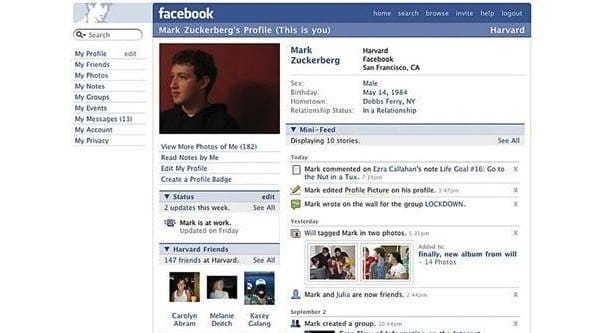
Instead of really improving the product, features become checkboxes on the roadmap. Which eventually results in degrading the quality of the product, it becomes bloated, the UX becomes confusing (especially to new users), and existing features start to suffer because the "maintenance surface" becomes bigger and bigger.
What should happen of course is that the product's feature set is frozen at the "peak version", and only bug fixes and optimizations are happening, that's a hard sell to the bean counters of course, especially with subscription models and "software as a service" which they like so much. From the customer's point of view, bug fixes and optimizations are expected to come for free, because they are fixing defects in the original product and don't add any value, right?
Eventually progress and success is measured in features added, not in satisfaction of individual customers. And as long as KPIs are looking alright - meaning the 'average customer' (which doesn't exist btw) isn't pissed off enough to look elsewhere, all is good, even though everything is terrible.