'Global sales' I hope everyone understands in China it is very hard to get a licence plate, the government allows you to get a licence plate if you buy a heavily subsidised electric car. The aim is to stimulate demand to develop an industry. Large cities also banned motorbikes and scooters, with the same aim.
This is no way market driven demand, BYD is a very interesting company to look into. It is my understanding that Warren buffet has a large share in this company.
My believe is China sees oil dependence as a long term strategic weakness. In the event of a navel blockade it will be much harder for them to get the oil they need to run the economy. If a large part of the consumer sector is driven by electric powered by local sources (coal, hydro, nuclear) they can keep the logistic channels open. As a side benefit they get to fund a sector hoping to have the same success as they did with solar panels.
The article might have pointed this out but it was paid past a certain point on my device.
China is a country lead by engineers with unlimited power to do whatever they want. If they want all cars to be electric, that will happen. If they want a 5 million person city just there because it's logistically advantageous, then that will happen.
The good thing is that they can make decisions like this.
The bad thing is that they can make decisions like this.
Autocracies seem to be the most efficient form of governance. It's a shame that this also means that they can do evil things very efficiently, given no one can stop them.
Autocracies are only short-term efficient. Once their initial aims are met, they become terribly inefficient, then corruption sets in, and then they must be forcibly removed.
It's good for other nations who can benefit from their trailblazing, but bad for the nation itself because they're basically fucked in the future when the bill comes due.
Centralization is long-term the worst kind of governance, inevitably becoming as self-serving as kingdoms and monopolies. The bigger it is, the worse it gets and the sooner it gets there.
Even in the ideal case, where your central planners are competent and moral indefinitely, centralization is a swingy strategy, for countries or companies. Every investment is ultimately a bet, that you have correctly predicted the future needs of your citizens or customers. Centralized control, of states through an autocrat or central committee, or of markets by monopolies or megacorps, ultimately amounts to placing fewer, larger bets. When the bets are good, it is very very good; when the bets are bad, it is ruinous.
Decentralized decision making is ultimately conservative, risk adverse: it is never great -- a lot of people will be wrong, so things will never go as good as they might. But it is seldom terrible: even when context shifts and the underlying conditions everyone was betting on change, the wide diversity of bets means that at least some people won't have been completely wrong, maybe for stupid reasons, but it can prevent a complete catastrophe.
(The difficulty, of course, lies in socializing the losses and gains, so that you can benefit from decentralized decision making without it ultimately reverting to a de facto central committee through successive rounds of winnowing those who guess wrong, until the small number of people who had so far guessed right can begin guessing wrong at scale.)
> Autocracies are only short-term efficient. Once their initial aims are met, they become terribly inefficient, then corruption sets in, and then they must be forcibly removed.
From the point of view of Western individualism, yes. However, a strong autocracy relies on building a strong collective identity through education and the cultural institutions. That identity isolates the individual from his personal beliefs and justifies his suffering, for the purpose of collectively achieving "macro" goals.
A major mistake is to judge non-Western socio-economic systems through the lens of the Western intellectual tradition.
This makes a society weaker - it's effectively a monoculture that restricts the data available to the decision makers.
It also reduces a societies ability to innovate in art, culture and eventually technology and science - innovation requires the ability to take an outside view, to be self-critical, and a society that is too busy forging a 'strong collective identity' will make it harder for individuals to do that.
It even poisons a societies own understanding of itself and its history, since we have so far failed to come up with good ways of building a 'strong collective identity' without accepting and promoting lies about history.
As with most things, you need to find a balance between the two. All-or-nothing is rarely a good approach, no matter what you're talking about. Everything taken to extremes turns bad.
> We can be diverse, yet share overarching ideals - such as living together peacefully and in solidarity.
We can, but increasingly I see people arguing that we should forgoe those and determine our actions in society based on our own individual interest and market mechanisms.
I feel like capitalism vs. socialism is a false dichotomy. We could and should have a society with somewhat equitable outcomes that nevertheless uses market mechanisms to achieve that. It's this cold war attitude of us vs. them which is the problem.
I probably agree with this, at least to some extent, but if the question is what is the better form of society, I'm not sure how relevant it is.
You can have societies that are very community minded and govern them in a free way and with a democracy. You can try to govern very individualistic societies with an autocracy.
There's probably an optimum level of accepted dissent in a society, depending on what it wants to achieve, and I tend to think that social democracies come the closest to achieving it, and certainly much closer than most autocracies.
The Western urge for constantly rethinking and reevaluating history and traditions, for innovations in art and science, does not lead to an inherently stable society in the long run that spans across centuries. The changes themselves introduce new kinds of problems requiring new solutions, and that affects the societal structure in unpredictable ways.
Japan and South Korea are western only in a superficial sense, in that they have copied the basic institutional structure of the industrialised West. However, the main forces acting on that structure are rather different, and the main actor is certainly not the "egoistic, cold, self-interested, autonomous individual".
> The Western urge for constantly rethinking and reevaluating history and traditions, for innovations in art and science, does not lead to an inherently stable society in the long run that spans across centuries
I'm not clear what you're saying here. Are you saying that it would be a good thing if society in western countries were more like what it was 400 years ago? Enormous improvements in science, technology, culture and civil society grew out of that 400 year history, and regressing or remaining static over that 400 years would be a disaster.
The only way to have a stable society that spans across centuries is to have a society that can change and incorporate new ideas, technology, people and ways of doing things. It's societies that aren't flexible and strong enough to cope with change that are unable to remain stable over long periods of time.
China was at the same level, or higher, in development as Europe in 1600.
By 1700, and certainly by 1800, Europe's interest in science, which then led to developments in advances in technology. This technology is what allowed the "white men on awesome ships with awesome guns" to have their way.
Perhaps if China was so top-down they could have also developed themselves more.
Toby Huff examines this disparity in his books Intellectual Curiosity and the Scientific Revolution. A Global Perspective and The Rise of Early Modern Science: Islam, China and the West. The telescope was embraced in the West, but hardly used (except with a few isolate individuals) in the other major cultures in the 1600s.
The time period you describe includes multiple massive european wars between nation states who were incentivized to improve industrialization, logistics and yes technology.
China's periodic bloody uprisings don't create the same incentive, they basically didn't have foreign policy until it came knocking.
If anything, China is an example of a society NOT stable over long term. Here in the West, we basically had two large disturbances in 2000 years: collapse of Western Roman empire (which wasn't even as bad it they made it look because most economy was in the Eastern part of it, that fared reasonably well through that crisis), and Black Death. As a big big stretch, one can also point at Napoleonic Wars and WWII but neither was nearly as bad, not even comparable to the disturbances Chinese society was going through almost every century in the same period.
And their collective identity (or huge population) didn't help them fighting wars either, they miserably lost almost every conflict they got in, even ones with themselves.
Your definition of "large disturbance" is pretty narrow. You missed things like the renaissance, the reformation (and subsequent proliferation of non-catholic faiths), the hundred year war, the thirty year war, two world wars, ...
> The Western urge for constantly rethinking and reevaluating history and traditions, for innovations in art and science, does not lead to an inherently stable society in the long run that spans across centuries.
A stable society that spans centuries can stagnate. See Imperial China and Japan before Admiral Perry showed up.
In 1600, the Chinese (and Moghul India) were probably more advanced than Europe in many respects, but there seemed to be little to no desire for further development. The telescope, which kicked off a revolution in the West, was basically ignored. When the Jesuits showed up in 1595, the China still thought that the Earth was flat:
(which is a part of an atlas, picturing many areas of the world with literally amazing detail and precision)
Granted, Piri Reis did an amazing job, even raising a few conspiracy theories on how he did it, but here is the fairly average European map of the world from 1609:
Singapore is the best example of a monoculture in a diverse environment. Systematic rejection of one community and elevation of the other in government, education, military, etc. Not to mention how difficult it is to get citizenship if you're not Chinese in some form.
Also where are Singapore's innovations? Apart from building a fancy city, they have done nothing. Many Singaporeans comfortable enough and well off that I know often rush to settle down in Australia or USA or the UK, especially in tech. Why is that?
Singapore is a really good magnet for entrepreneurs from other places, but nothing much otherwise. A very artificial place with zero arts and culture - heck, they destroyed their primary language (Cantonese) in schools so as to be cozy with China for business.
In a person, inability to critically self-examine or tolerate criticism from others is a sign of a weak person not a strong person. It's the same in countries.
I'm not sure I agree that the GPs description is a good description of Singapore, but to the extent that it is, I believe Singaporean society is weaker for it.
> This makes a society weaker - it's effectively a monoculture that restricts the data available to the decision makers.
Bingo ! A monoculture is really weak because people that act the same and think the same. It's the reason even though Asia has over 2/3s of world population they are not responsible for 2/3s of all innovation in the world.
So, it never crossed your mind that racist write people enslaved Asia for hundreds of years?
They destroyed the Asian government, drugged the Asian population, and forced financial restitutions on the Asians to pay for their their own enslavement.
But yet, here we are. Hundreds of years later, and the Asian countries are finally shaking off their colonial enslavement from the white man. And here you are, claiming that they add nothing to the world’s innovations.
It’s just a thought. And maybe something you should consider first before judging others.
China hasn’t been a colony since when? 100 years ago? Then it was Japanese colonialism. So Asian colonialization of other Asians. Then China decided on a political system that stunted their growth for 40 years. Vietnam stunted their growth for 25 years. Yet we blame the white man?
Some parts do turn on a dime. Recovery tends to take longer in many cases because people are slow to assume that the cause of bad times won't come back. This can be good or bad depending on what the correct reaction to bad times is. If the correct action is saving that is very different from the correct action to be not doing anything.
You're conflating autocracy with collectivism. Collectivism exists in a very healthy fashion in democracies / free markets (for example Japan, Korea, Taiwan, and even Hong Kong before the clampdown).
Eastern collectivism doesn't need a rod of iron to enforce it.
The notion of a "strong collective identity through education and the cultural institutions" that "isolates the individual from his personal beliefs and justifies his suffering" is not uniquely Eastern. It has a long history in Europe, with mixed results.
Call me cynical but climate change, the biggest threat to mankind right is right in front of us. We will also face the biggest threat to what made our civilization and our democracy possible, which is cheap quasi-unlimited access to energy (petrol in our case). Combine both and I don't see democracies as being able to efficiently navigate us out of this combined nightmare to come.
As you said, autocracies are efficient for hard problems, and we're going to face the hardest very soon
Not necessarily. Autocracies don’t self-correct when it’s needed: dissent is not tolerated and dissenters are automatically out-group and dealt with accordingly.
I can see a very bad version of the trolley problem in our future. Do we let go of capitalism and democracy for a while in order to save the species or do we hang on to them and possibly lose it all? Autocracy can always be gotten rid of at some point, at least, you'd hope. With present day tech it might be a ratchet that once it clicks will not get reversed.
Unmitigated, the forecasts are around 5°C in this century.
Unimitigated, the forecasts are around 3-7 feet sea level rise this century.
Both of these massively increase the probability of non linear disasters including the release of methane from permafrost and ocean floors, or the disruption of the Gulf stream which would disrupt global agriculture even worse than a 5 degree temperature rise.
There is no indication that problems are going to be linear related to temperature increase. Maybe it will be twice worse, maybe 20 times worse, who knows.
Among the many problems, you can expect heat to be so hot that 1 billion people will be living in a place where it's not physically possible to live (humidity doesn't allow the body to cool down): https://eu.usatoday.com/story/news/world/2020/05/04/world-he.... It won't exactly be all roses to the other billions too
Could be a meter this century. And if temperature keeps rising, glaciers will only melt faster. But that's just the sea level; there's also changing weather patterns, disrupted ecological systems, more powerful hurricanes.
It's absolutely a bigger threat than the terrorism that everybody was so eager to throw away their freedom for 19 years ago.
Everything's freezing again all the glaciers are growing again, climate change models predict next 50 years are going to be some of the coldest in a very long time..... threat?
I absolutely agree!
I am just really struggling to put a time estimate on when the bill will come due for china. I think they can be in an upward trend for some more years as a technological follower. What I mean by that is that they use simple metrics of current technology (Ghz, GB, battery life, screen colors, electric car range and so in) and just “mandate” to get better in them. But all these things will eventually commoditise and if china wants to grow beyond that they have to come up with qualitative innovation. At least in my (very narrow) experience I have not seen much evidence for qualitative innovation in china. I think that is the point where their system (of this extreme obedient school system etc.) might start to struggle. I think the upper bound for that point would be a per capita gdp like south korea has (but probably much lower).
After that point (which might be in lets say 10-20 years) there can still be a veeery long downward slope (the soviet union lasted for 69 years).
I would be very interested in what other people think about this (and these timelines)
> At least in my (very narrow) experience I have not seen much evidence for qualitative innovation in china
This argument never sounded very true and intellectually honest to me. I mean, I want to believe in it, but when I scrutinize it precisely, I wonder - how can you measure the ability to innovate of someone who doesn't want (or need) to innovate?
At present time, China's competitive advantage is cheap specialized labour, and they're taking full advantage of that - as they should. That's the whole point of being behind in technology and racing to catc up! It might very well be that when they switch their focus, from copying to innovating, they'd be very good at that as well (or very bad! we literally have very little data to tell)
If you look at Japan and Korea who took the same approach of "cheap specialized labour", they both pivoted to high quality, and more innovative once they caught up. I have no doubt China will do the same, but at much larger scale. There's already a lot of innovative consumer products coming online, which I'd attribute to the vibe of rapid and efficient hardware products iteration in Shenzen.
Japan and Korea are collective societies, not autocratic ones.
China's goal under Xi is a return to the golden age of the Kingdom of Heaven, where all Chinese people exemplify the ideals and morals of the most civilized society on Earth. That goal is only tangentially related to the technical innovations they're making, and will eventually stifle them as the definition of "good citizen" and "proper pursuits" becomes more hardened and inward-looking (much like it did during the Middle Kingdom).
Maybe or maybe not. Given that they're basically picking a very similar recipe from the economical development playbook, I wouldn't be surprised if they arrive at a similar outcome. And South Korea was ran by violent dictarors until its recent democratic history. I don't think the same will happen to China, but I wouldn't dismiss the ability of its citizens to innovate based only on the autocratic nature of their government. It's not like if the Chinese people are deprived of imagination. They have it, and they have the ability to act on it, and they do.
The autocratic environment might not be most amenable to free thinking and innovation, but then I'm not convinced that being free from autocracy is truly necessary for innovation to occur. Plenty of innovation occurred when Europe was ruled by Kings, or in 1900 Russia. Even within autocratic corporations, plenty of innovation occur.
Anyways, I don't wish for autocratic governments, but I'm not willing to dismiss China's ability to be innovative based on that.
Many of the innovators in medieval Europe and Soviet Russia were seen with suspicion, when not outright persecuted. Innovation, beyond safe incremental productivity improvements, requires nonconformism and unconventional thinking. After all, why would you create something new if you are content with what you have?
How do innovative transportation technologies(SpaceX, Hyperloop), food choice(plant, lab based meat), robots and AI, green tech, etc not "proper pursuits"?
They're good business, they offer more power to China, why would they change that?
And considering they're history, they've probably learned the lesson about the weakness of ignoring global technology.
And sure, they do have the "great firewall", but it's smart enough to let the science\technology in while filtering the politics out.
> And sure, they do have the "great firewall", but it's smart enough to let the science\technology in while filtering the politics out.
That's not true, and given the current trend (everyone gonna use TLS) it is impossible for the "great firewall" to be smarter. For example, HN is blocked in China.
They're very good at it. We have plenty of data to tell.
In the industrial sectors that I watch (test equipment, industrial machinery), China has been climbing the ladder at a startling rate, from "outsourced labor" to "copycat" to "bottom tier" to "mid tier" in the last decade. They're now gunning for high tier equipment, and they show every indication of getting there in the next few years.
How do you measure qualitative innovation? If research is a good measure of innovation, China is only second to the US in AI research, for example.
If innovation is measured by consumer adoption of new technology, TikTok is the first major AI-first consumer application. In other markets too, China has made major innovations in the consumer space that have not caught up in the West yet - ecommerce, fintech, consumer goods and more. None of these are top-down CCP mandated innovations.
If China is smart, and they are, they will simply outsource the innovation. If you have enough money you just poach innovators out of US/Europe; have them work remote if they don't want to come to China.
They sure do, but the distributed leadership means there's hopefully someone pushing against corruption, even if it's inconvenient for other goals of the government. Even if they don't succeed, at least they keep shining some light on it. (I'm looking at your Aussie government blocking the anti-corruption group)
> Democracies don’t become self-serving?
Same. There's always going to be some inefficiency, but the closer we are to actual democracy and the less biased it is, the better it seems at ejecting the self-serving members of the government.
Only short term efficient so far. All systems eventually suffer from rot, but efficient authoritarianism lasting more than one lifetime isn't impossible. Perhaps their political system there's more power in skimming growth than extracting rents. The history of democracy as we know it is very very short. Don't believe the cold war propaganda.
What system has lifted the most people out of poverty? It ain't American.
I think they're only as good as their autocrats, and not just in terms of good intentions. Singapore fared better than others, but it wasn't entirely centralized either.
The cogs in our governance (everyone else) are pretty rusty, though.
Indeed. Autocracies work great when they make the right decisions, but work horribly when they make the wrong decisions. It’s basically the govt picking winners and losers rather than letting the market select for them.
> Autocracies seem to be the most efficient form of governance
Efficient in achieving a particular goal, sure, but the wisdom of crowds (and the market) is a thing, too. When the autocracy decides X will be the next big thing, and it isn't, all that efficiency from the previous correct bets gets wiped away by the inefficiency of one wrong dictate from the top.
Efficiency is the opposite of robustness. Autocracies always appear stable until suddenly they don't anymore and break apart or fail in some other way. While democracies seem inefficient and at times quite volatile, they are significantly more robust and can adapt better to changes down the road.
Modern China, so far, has only really experienced a fairly homogeneous historical phase, which is one primarily driven by economic growth. They haven't been forced to deal with major societal issues, in my opinion it's simply too early to judge just how robust that government and state is going to be in the long-run.
I'm not sure that modern democracies exist for sufficiently long to make strong claims about their stability, and premodern democracies weren't particularly stable (as far as I know, I'm not too good at history).
That's a fair criticism, on geological timescales everything we have done that moved us ahead is on the order of an eyeblink and all of the past is the very long and extremely dark time before it. Democracy may not be a strong enough thing to be able to resist our technological progress, which then can result in falling back to a previous stage or some kind of lock-in effect for an undesirable future. It would be naive to expect things to continue as they are indefinitely.
I'm not convinced that this is borne out by history at all.
Anyway, the argument against the effectiveness of autocracy is essentially the same as the argument of planned production vs markets for price discovery.
The more you concentrate decision making on complex topics, the less the body making the decision has access to all the nuance and detail that are needed to make the correct decision. This usually gets even worse when the people bringing the (potentially upsetting) detail and nuance need also to maintain good relationships with the autocrat or face serious consequences.
You saw this relationship between Trump and Fauci recently - if you're trying to say something that the person in charge doesn't like, then you are sidelined to the detriment of society. That's classic autocratic behaviour. But in this case the consequences for Fauci were constrained by the fact that it was happening in a mainly free society, and the society was able to correct itself after 4 years without having to murder a huge proportion of its population. The ability to do that is a massive benefit for a free society.
There have been horrible famines killing many millions of people because the (smart, well-educated) person in charge thought they knew what was best. That is not efficient.
Needing to build consensus is something that generally has to happen in a free society can slow you down, but it also exposes you to other views, and allows your mistakes and prejudices to be challenged. This allows you to make better, more effective decisions.
I can recommend "Seeing like a State" for more information about this. I don't think they are.
But I also don't think you can make sweeping generalizations about these things - they are statistical phenomenons, governed by a myriad of interactions. You'll find some things work better in a system that statistically would predict a worse outcome.
Unless you close your eyes for ideological reasons and pretend they don't exist. :)
To go right back to the beginning, this was Plato’s argument in the Republic (benevolent philosopher king better than mob rule). He argued that democracy would tend to mob rule (some good examples of that recently...) but history has also shown that there are very few philosopher kings/very hard to maintain that for more than a generation
> Or will democracy require something akin to "martial law" to quickly decide and act on urgent matters?
After the pandemic hit the West - Europe started locking down mid-March, Trump banned EU flights on 12th - Germany (a democracy of 80 million people) passed a financial aid package on 23rd of March; US (a democracy of 300 million people) followed on the 25th.
So it's quite clear that democracies can react quickly, provided there's broad consensus of what the problem is and how to solve it; of course, things slow down when there's no consensus and conflicting views, but arguably that's a feature, not a bug.
If anything I think the pandemic shows that the 'free West' sucks at responding to such threats. We've done miserably compared to Singapore, China and Vietnam.
It's mixed. There are a (admittedly small) number of countries in the 'free West' that have had 0 or even negative excess mortality so far.
It's also difficult to compare because autocracies are less likely to release data that makes them look bad (they're too busy building a 'strong collective identity').
Personally I'm incredibly happy to have spent the pandemic in Europe rather than totalitarian regimes. And even though I spent my time between Italy, UK and Slovenia, three of the worst-hit countries.
But obviously different people have different preferences. I'm also young, fit, healthy programmer, so all-in-all very lucky.
Efficient to what end? The whole purpose of representative democracy is that we disagree on what we are trying to achieve, but still need to have a somewhat coherent plan. Autocracies are "efficient" only in the sense that they skip a bulk of the work.
to restrain capitalism in favour of what/whom? if you leave out democracy, the government no longer works for you, it becomes a power acting in its own interest just like the capitalists.
Autocracies are efficient only as long as they are correct. It certainly helps if they're lead by scientists and engineers, at least for some issues. But when an autocratic government is wrong, it's nearly impossible to correct it. And every government is wrong sometimes.
As much as I like China stimulating electric cars, there are a lot of issues they're handling poorly or are being downright evil about (Uyghurs, for example).
Huge buried assumption in this comment that democracy in general or America's system in particular is more likely to produce 'correct' decisions than China's 100 million party members and their hierarchical politics.
It's interesting to compare/contrast the incentives created in each system but in light of the last 20 years of decision making, it's hard to claim America aced it.
I think a well-functioning democracy with an educated electorate will do better than China, but I wouldn't argue that the US meets those criteria. A better comparison might be the Nordic countries. If that's too much cherry-picking for you, consider that China is probably also the best-functioning autocracy in the world; plenty of autocracies are terrible.
Well no, because an autocracy can just decide to go full in with the most outrageously stupid ideas and no one can stop it from happening. Just look at the great famines in USSR, China and North Korea. Or the fuckups with nuclear reactor designs and operations in the USSR.
Now mind you, autocracy doesn’t necessarily mean despotic dictatorship. Self serving unbounded capitalism can be one as well.
Only in short term. A single autocrat can be efficient and purpose-driven and can move mountains, but the next one has decent chances to be just a useless bloke, and the system doesn't have a feedback loop from citizens to correct the course via elections. So eventually all autocracies deteriorate.
Putin's autocracy deterioration has happened even during his lifetime.
Concentration of political power eventually leads to concentration of economic power ... this ultimately leads to monopolies in the commanding heights of the economy ... efficiency and innovation decreases with lack of competition in the market.
This is why centralized socialist states and autocracies don't produce world champion companies in the long run.
You have incentives to want people to be personally weak and historically ignorant, but still able to shuffle papers and make new widgets to make gdp line go up.
It's in your best interests for the country to despise you, and the other half to despise your counterpart- so that both halves despise each other and can't coordinate toward their common interests.
You want the subgroups motivated to vote for your side by problems they face to keep voting for your side next time around, so you're incentivized to make a big show of trying to fix their problems, but not actually fix them and blame the failure on the other side.
And when the day is done, you and the opposition leader can have a drink in your mansion.
This is all evil in a molochian sense, and it all makes sense.
China is the biggest market indeed. As a counter point though
> Sales of BEVs almost tripled in the UK, while those of PHEVs almost doubled, giving the vehicles a combined market share of 10.7%. Other non-plug-in hybrids took 18% of the market, but overall car sales were down 29%.
Tesla’s sales in Germany are up ~20%, but on a very low level. Their total market share is now 0.5 percent. It’a definitely encouraging to see growth here, but there’s still a long way to go.
It’s also important to keep in mind that the numbers for electric vehicles often include plug-in hybrids. They’re a neat idea in theory, but in practice, they often serve as a hybrid car and never get plugged in. The gains from those vehicles are somewhat limited, except that they are included in the subsidies for electric cars in Germany.
Is like to have a source for the statement that plug in hybrid never gets plugged in. Everyone I know who has one charges it over night and only runs it on petroleum occasionally.
43% of the private owners use the charging option, 18% of the company owned cars. However, due to tax incentives, 63% of all cars registered per year are company owned cars.
The incentives are that you get a substantial tax break if you register a plug-in (or electric) car - leading to the odd result that 40% of all Porsche Panameras registered are plug-in hybrid cars.
This is why I think more of the tax should be moved from buying to using. C02 tax for cars should be mostly at the pump when filling the tank, not when buying. A plug-in driven 10 000 km a year pollute more than any car driven 100 km a year.
So it should be taxed same as hybrid car if owner doesn't have charging station at home.
Some environment group argue that lower range PHEV is evil because it's just for cheat but I against. PHEV should cover daily use range (YMMV 30-60km?) but shouldn't need much because they have engine for fallback. Equipping mostly unneeded batteries is definitely bad for environment.
All demand is driven by the fiscal and regulatory framework, that's part of what defines the market
That's like saying that petrol cars aren't "market driven demand" because there is a regulatory framework in place that lets you spew out CO2 and particles without paying fines
This is no longer really the case. Last year many of the subsidies have been removed.
If anything growth in China has slowed down because of that.
Europe is actually the place that has put the most pressure on companies, because their new regulation required a fleet efficiency that.
China does legitimately want to not have cities be a hellhole to live in and supporting EV made sense. Also because China hopes to be able to export EV, getting into the ICE car game would have been harder.
it's also a plain environmental issue given how populated Chinese cities are. For the air quality alone electric transport is worth it, the damage done by bad air is immeasurable already.
Oil dependence is only one factor of it, another factor is EV itself obviously has a bright future market, and it's a very good opportunity to take the advantage now.
It's very hard to compete with traditional car industry - the brands are very well established. However traditional brands moves rather slow on EV because all kinds of their own issues. EV is the perfect opportunity for Chinese to jump in the market and take the first mover advantage.
When there's any big change in any industry, the market would be shuffled, and there's always opportunity for China to take. It's as simple as that for the current world.
I believe the same thing could also be said on semi-conductors industry soon. There were very few attempts earlier and ended up pretty ugly, because it was just not economic feasible to compete with Intel or Qualcomm a decade ago - if it's only 60% effective with the higher cost and same price nobody would buy it. But recently Apple released M1 and make everyone in industry start to reconsider alternative architectures - which may eventually led China to be an important player in the next decade.
Car companies must meet the EU fleet emissions standards and the only way most car companies will achieve that is by selling BEVs. Volkswagen and Renault are the top two BEV makers in Europe.
Toyota is in a good position with their fleet emissions because they've been selling hybrids for so long. They're not under as much pressure to start selling BEVs in high volumes.
Yes, the emission standards have forced the car manufacturers to offer electric cars. But how does it explain that customers are buying them? Even so much that there are long waiting times when you order an electric car.
The answer is: there are enough customers interested in buying an electric cars but both the available product range and production count limited their ability to do so. With the offerings of electric cars improving, the consumers are happily buying into them.
The car makers are taking a loss/low margin on BEVs sales . Pricing is tuned such that they can sell enough BEVs to meet the regulated fleet efficiency, but no more than that.
Which only means that the customer is of course taking the price into account when buying new cars. As the production costs of electric cars are coming down considerably (manufacturing scaling, battery costs), the prices are coming down and very soon there will be the same margin as with petrol cars. Never mention Tesla, who don't have the problem of compensating their ICE car emissions.
Your first and second paragraph contradict each other. Even though Toyota doesn't offer a single BEV in their lineup, they are completely fine with the stricter emission standards.
Nobody is forcing anyone to sell BEVs, what is forced is efficiency. Full BEV is only one way to achieve that goal. Look at Hyundai Ioniq hybrid - a perfectly capable midsize family car, affordable, introduced to the market in 2017. It will meet emission standards all the way until 2029.
Volkswagen doesn't want to waste money on fines so they've made a big commitment to EVs. They've become the biggest BEV maker in Europe and in time they'll be the biggest BEV maker world wide, which isn't that surprising. Volkswagen owns 12 automotive brands and they're the world's biggest car company.
They existed years ago and I am skeptical that they are significant enough to make the average person even consider a new electric car. They are still too expensive for what they offer, even with heavy subsidies.
However, what I do see in Germany, are more and more electric cars in car sharing, rentals and company fleets. Upper middle class is going pretty electric as well to appear cool/caring about climate. Several Teslas in front of my building now since the new upper middle class apartments went up across the street. Several Audi e-Trons in the area as well. What's curiously missing is the ID.3 somehow - I expected to see many more at this point.
Volkswagen and many other well-known manufacturers are pushing out really decent electric models. I see a ton of Renault Zoes cruising around, electric Smarts as well. They simply fit well into the European market which is dominated by dense cities and short commutes (<100km).
Yes, right now electric vehicles are certainly an "upper middle class" thing. But that's largely because EVs are still new and the "average" person just can't afford to buy a brand new car every few years.
However, in 5-10 years we should start to see a mature market for good quality used EVs, making them much more accessible. At that point, better reliability, better driving experience, much lower operating costs, etc will make EVs the obvious choice for many, if not most, buyers.
> They are still too expensive for what they offer, even with heavy subsidies.
The average price paid for new US cars was $40K [0]. There are now plenty of models below that without subsidy, including Chevy Bolt, Nissan Leaf, VW ID4, Kia Niro, Hyundai Kona and even the low end of the Tesla 3. That's just the upfront price, of course TCO is lower than a same price ICE car because fuel and maintenance are lower.
> They are still too expensive for what they offer, even with heavy subsidies.
> Renault Zoes
In Berlin, Renault Zoes were (maybe still are?) _free_[0] to get for small businesses. I know multiple freelancers who took advantage of that deal. Yes, that might not be the "average person", but it's probably not insignificant either.
Yes, there are. About 6k per car. But this just preempts the price development in a growing market. And it helps the market to grow to a point where the cars do get cheaper because of scaling.
On the other side: fossil fuels and especially car combustion engines are not taxed along the negative impact they have by toxic and carbon emissions.
The air quality in the west is better than it is in much less developed areas of the world. People live longer because of the use of fossil fuel and can live better lives spending less time on basic things like creating food and managing shelter to stay alive and they have more time doing meaningful things.
Fossil fuel industry is the industry that have made it possible for us to live longer, and feed as many people as we want while at the same time making the environments much cleaner over time.
> Fossil fuel industry is the industry that have made it possible for us to live longer
I'm not at war with fossil fuel industry, I was simply answering to this question
> what deductions are we giving for the positive externalities?
My dad worked in pulmonary oncology for 35 years, I think that better air quality, less lung disease and better overall environment is a reward itself, that's the prize we get for positive externalities (and in case of EVs the State incentives, in Italy they are up to 10k euros if you buy a new EV car and get rid of an old ICE one).
[1] even when they paid a just fine (like the 60 billion BP paid for the spill in the Gulf of Mexico) it's peanuts compared to the environmental damages that the future generations will inherit (the mangroves still carry the damages from the Ixtoc spill of 1979, 40 years later)
Ixtoc soiled hundreds of miles of beaches, all the way to Texas. The fishermen also said that oysters that used to be found clinging to the mangrove roots seemed to have vanished after the spill and never returned.
There is “force being applied” in the form of EU fleet-wide emissions requirements.
Automakers must sell increasing numbers of full electric and/or hybrid vehicles in order to meet their emissions targets, otherwise they face potentially huge fines.
This claim is completely false. As others pointed out the EU applies stricter and stricter emission regulations each year forcing all manufacturers to comply.
There is a five year plan in China to basically take over the entire global automotive sector by making electric cars. They are not interested in completing with ICE cars by selling cheap ICE cars, it is all about upping the game to a better product that is BEV.
Europe had better watch out.
The US can defend their market with tariffs so everyone there drives a truck. But the longer they do that then the more out of touch they will become. It is going to be fun to see how this works out.
Tesla make great products but they are not a great market fit for Europe. There's so much scope for innovation but even now the Europe BEV efforts are ICE cars with the engine swapped out, therefore not cool.
> even now the Europe BEV efforts are ICE cars with the engine swapped out
You should check out what VW has been doing lately - the ID.3 is an EV-only platform and is selling quite well in Europe - much more impressive than their past efforts.
I also believe that a country like China take a lot of different considerations in to this equation such as people health. Not because of empathic care, but rather workforce and long term cost management.
If they have a goal or idea they can paint with a really large brush and hit a few birds with a really big stone. It's both a strength and ofc a weakness.
Over here where actual market matters more we will often act much slower, which is a strength and a weakness. =)
Well yeah, electric vehicles are costlier than ICEs, of course the shift isn't going to be market driven. It should be a given that all the changes needed to fight climate change will only happen with thumbs on scales.
why would they ban bikes!? especially in big cities they should learn from the US's horrible choice here. And China seems to have built some great public infrastructure too.
Calm down. If anything the post speaks to how forward looking China is with electric incentives. If anything it’s anti-electric (implying subsidies are driving most demand), not anti-China.
I’ll be interested to see the lifespan of EVs for “normal” people. I’ve got a 2012 Nissan LEAF we bought post-lease in 2015. I love it still, and don’t have any plans to replace it. The battery is not in great shape, but it gets me where I need to go. I am genuinely considering replacing the battery rather than buying another EV when the battery finally fails.
The only cars having actual battery issues so far are older Leafs (shit thermal management for the battery) and Priuses (they're just old).
No other EV has had major battery issues yet, so there really hasn't been time to develop a viable 3rd party battery replacement industry.
Even the actual car manufacturers tend to quote insane prices for full battery replacements because they really don't have a process in place on how to handle it yet.
"just old" applies to the battery technology used when they were built. Not to "a car" in general. It is totally uneconomic to scrap a car only because one part broke. I own a car from 1978 that is in very good shape (for some minimal maintenance cost, you should not just let it rot).
Everyone is always so hung up on the value of the car when it comes to repairs.
The value of the car is only what someone would pay for it. If you're planning to keep it, then that value is only an insurance number.
A car is potentially worth a lot more if you keep it, especially if the car is low maintenance. With electric cars you trade some value up front (they are typically more expensive) to reduce the maintenance over the long term. But you will still have maintenance like replacing batteries when they go. You saved the cost of filling it up with gas and changing oil for going electric. So the smart move would be to treat your car like you're still sort of filling it with gas and changing oil and put that money towards the cost of new batteries when the time comes.
Every car has maintenance costs. With electric you just sort of push it down the road a ways when it comes to the battery.
You could get a new car... sure.. but now you have a car payment, or you may have thrown a bunch of cash at the problem. But if there's nothing wrong with your car except maintenance then put that money into the maintenance. Otherwise you're just pretending to care about the environment with your electric car that you probably tell yourself is cheaper (due to gas and oil changes) and better for the environment.
This is quite different from maintenance. You already pay upfront to have lower maintenance costs, so the gas/oil/maintenance savings argument do not apply here, I think.
You usually do not throw the car when it requires a major repair, but when the car is worth 2k with dead batteries to scrap and the replacement of the batteries costs 10k, while you can find a car that is OK to drive for 9k, it is considered uneconomical to repair. Because if you can just sell the car for 2k, pay 9k for another car, you are only losing 7k in the process. Replacing the battery costs 10k - the opportunity cost of replacing the battery is 3k.
This is why a car that requires an engine replacement (for an ICE car) is simply scrapped for parts instead of putting a new engine.
Now, this probably isn't for the average person, an independent dealer or a resourceful (and careful) car owner could easily replace batteries much much cheaper.
you're right, the value of the broken car itself is irrelevant to whether it is economic to repair. what is relevant is the cost of a reasonable replacement. if it costs $2000 to to fix the car, you might be better off scrapping it and buying a different used car with that $2000 that actually runs.
If the repair costs $2000 to fix the car, and it's otherwise fine, then it's worth it over another car so long as it is still getting the job done.
Where I would agree with you is when the car is no longer safe, either from a structural standpoint, or due to safety standards improving drastically. In those types of scenarios it is worth buying a new car simply for those reasons.
Maintenance has to be done regardless of what kind of car you have. If you're skipping those steps then it'll come back to bite you. I think people just don't like maintenance because they think it should be less than the value of the car. Which is simply not the case. Cars aren't investments (typically) in the sense that their value rarely goes up. It goes down, almost always.
Maintenance is done to keep the vehicle operating properly, reliable, safe, and in good condition. Sometimes those maintenance steps may increase it's value slightly
But here's an example. Say you have a car. It's worth $1000 but is otherwise in fine condition. It runs great, it's safe, it is rust free and structurally sound. Except it needs to tires. Lets say those tires cost $750 because you also have to buy a new wheel and maybe the tires are harder to find. Do you go "well... that's too much... I'm just going to throw the car out and get a new one"
If you do, you're doing it wrong. The same is true for battery maintenance. If the car is otherwise fine, it's like buying any other maintenance. You may not LIKE that you have to pay for maintenance, but it's part of vehicle ownership.
> But here's an example. Say you have a car. It's worth $1000 but is otherwise in fine condition. It runs great, it's safe, it is rust free and structurally sound. Except it needs to tires. Lets say those tires cost $750 because you also have to buy a new wheel and maybe the tires are harder to find. Do you go "well... that's too much... I'm just going to throw the car out and get a new one
I think the same logic applies? $750 is way too low to have a good chance at finding a replacement that is relatively safe, structurally sound, etc. $2000 on the other hand is pretty close to buying a mid-2000s civic with no accidents on record. there's no clear cut answer here; either repair or replace could be the optimal choice depending on projected maintenance costs and your local used car market.
of course, this is all based on the assumption that your current car is already a beater. I probably wouldn't scrap/sell my 2017 vw if it needed a $2000 repair.
> It's worth $1000 but is otherwise in fine condition.
You need to calculate if the cost of 4 tyres plus any future maintenance costs (and the time that is going to be lost in the future for maintenance) exceeds the cost of a new car minus the cars current value.
Opportunity costs and value brought by a new car is hard to calculate, yes, but the motto is: if you like the car to spend 1000 on it, just do it. E.g. My car is 15 years old, while I can afford a brand new one, I don't, because I love it :)
Some older Model S with 60kWh batteries also experience problems (slow acceleration, limited fast charging). The degradation is nowhere near as bad as the old Leafs, though.
There are hundreds of millions of people in the world who would happily accept that car instead of what they are using. An old Model S still looks great.
I suspect the bottom end of the market is going to disappear.
Right now I could buy a car for £1000. It won't be great but it would be good enough to get somebody too and from work and the shops. That won't be feasible when a new battery costs £5000 or more.
It’s worth pointing out that the cost of a battery is effectively pre-paying for ~5 years of gas (how much you drive dependent). If you finance your used car (as many do when they buy used from a dealer) the lifetime costs and payment schedule would probably be about equivalent.
“Pre-paying” isn’t in the vocabulary for many though. You seem financially savvy, if you were to randomly sample the market how car buyers do you think have the level of resources and discipline to actually follow through with this?
You picked a brand that is a hallmark of upper middle class conspicuous consumption and a brand that doesn't make economy cars (for the North American market) anymore.
The Mitsubishi Mirage, Nissan Versa and Chevy Spark (hatchbacks comparable to the small European cars the GP mentioned) MSRP at under 15k.
>Is this real? In Europe you can get a Fiat Panda, brand new, for 9k€. Smallish engine, barebones interior, but overall a pretty decent car.
Mitsubishi Mirage and other ~15k hatches fly off the (metaphorical) shelves.
Just not in the kinds of neighborhoods HN tends to live in.
Also HN's househeeper tends to buy a used Corrolla (or some other hallmark of upper middle class conspicuous consumption) from one of their clients so HN doesn't have that sort of exposure vector either.
nissan versa starts at $15k. it's a subcompact sedan that I would never want to own, but it has four doors and can fit two child seats in the back row.
With how much the prices of batteries have come down in the last decade and the battery improvements. Nissan should give a cheap battery replacement to people that want it. This guy upgraded his himself
https://thedriven.io/2020/11/04/nissan-leaf-owner-upgrades-e...
A powerwall has what, 12ish KW usable (less in reality) which a single one can power a house for for up to a day if you're careful about what you're using. If you scale that up to the 75KW+ batteries being put into EVs today buying an inverter could be a good investment if you live in an area with frequent power outages (or a cabin or whatnot).
There was also some talk about Teslas being able to send power back to the house with the new HPWC - not sure if that ever happened.
Nissan LEAFs (since the first generation I think) have had the tech built into the car to support this, but so far the corresponding hardware to connect it to the grid hasn't been available outside Japan. In the UK trials are starting for it now:
AFAIK there are other makers that are also ready for this. I seem to remember that the Leaf is.
What I think will be the hard part of including cars into the grid is the warranty issues. I.e. if a battery gets so much usage from the grid that it somehow gets broken or worn out, who should take that cost/ risk?
IIRC, it was added in one of the charging standards, I want to say it was CCS. In theory every car that supports that charging standard should be capable of it, but in practice that will likely be a different matter. As few people need it, few people are likely testing that it works.
I've heard the hard part right now is more regulatory in nature. Especially in the US where energy regulations vary not just from state to state, but also sometimes regionally within states based on power utility provider for a region.
I find that very unlikely if you have any appliances at all. Multiple it by ten and I might start to believe you. For reference, right now we, granted in a four person household and electric heating in the coldest winter month, are using around 100 kWh per day. Even when the house is unoccupied in the summer the consumption is around 3.5 kWh per day. That is probably mostly just a fridge and two freezers.
From May 2019 to January 2020 we used 706kWh. I have a fridge but no other appliances that constantly draw power. I don't heat electrically, but I cook using electricity. I run the washing machine about once a week or so and hang-dry the clothes.
I guess I've used a bit more electricity during the last year because I worked from home more, but I doubt it's a factor 10. 100kWh per day would cost more than I pay for rent...
Do you heat water with electricity? That’s a big part of our consumption. Just by looking at what hour we use electricity I realise that just the kids bath every evening is around 2kWh.
And with two small kids the laundry machine runs at least once per day and the dishwasher at least twice when we both grownups work from home.
100 kWh per day??? You're burning it like there's no tomorrow. Or somebody is stealing your electricity. My experience from 2-5 person households is that 20 kWh per day is a _very heavy_ consumption. I couldn't even imagine for what is 100 kWh per day needed.
Hot water yes, heating no. Luckily both countries in which I lived have central heating.
I agree that a lot of kWh are needed for heating. But I hope it's, in your case, for less than 6 months a year? Did you notice a difference in consumption in summer and winter months?
Oh yes, in the summer we use something like 20-25 kWh per day, and it is clear that the bulk of those are used either when we cook or when someone is using hot water.
With a household of 4 and doing everything electrical (cooking, heating, hot water but no electric car) we use on average about 9-10 kWh per day. A bit more in the winter, a bit less in summer.
This is a well-insulated, relatively recent house in western Europe. 100kWh seems excessive to me.
A good generator cost 5k or more. I have a 75 kWh battery sitting in my garage. Bummer the tech isn’t right to reverse the flow. My understanding is Tesla don’t have the right part to reverse the AC flow.
I've got a 13 year old Prius and its battery is still working! I did have to replace its coolant pump a few years back, but it's still working after 174k, and it's a 2008 battery.
I also drive a 2008 Prius with the original battery. Only things I've had to replace after 180k miles is 12v battery, oil, oil filter, air filter, tyres, wiper blades, lights, brake pads and hand brake cable.
Basically things that regularly need changing, although the hand brake cable is probably the exception to that.
On the radio the other day there was a car show and they were talking about costs for battery replacements (and then it was advised to replace board computer, managing the batteries too) for a Tesla, I was shocked by the costs. I don't recall the exact but he was 30k+ euro lighter. I was interested in a electric car, but interest dropped significantly after hearing that. Maybe I don't know enough about cars to compare to regular gas cars maintenance costs.
Maybe back in 2011 when that was posted, if the swap was for a second hand engine out of a crashed donor car that happened to be on-hand at the independent workshop where the job was carried out.
I'd wager a guess that you'd be looking at well north of $30k for putting in a brand new engine in a Tesla-bracket BMW of semi-recent vintage.
Anecdote but even back 4 or so years ago I got a similar quote (10k) to replace a BMW engine with a new crate motor at the dealership. Let’s not make assumptions.
The point is you'll never need to replace the engine in a BMW unless you got into an accident or something like that. EV batteries will just degrade with normal usage.
That's simply not true - of many makes of car, but BMW in particular. There are lots of issues with combustion engines which can be fatal - look at the issues with vanos bits dropping into them, camchain failures, etc.
I buy and sell cars as a side gig, and there are plenty of models which people like me would not touch with a barge pole because of issues like this - many of them German - and you'll find many for sale as spares or repairs, and find that secondhand engine supply is low (as many have blown up), and therefore expensive. Look at a diesel vauxhall insignia, for instance. Hand grenade engine, no chance of getting one secondhand (and even if it did, its got the pin pulled).
I'm sure there are exceptions, but engine problems are way, way less common than the accepted degradation of batteries over their lifetime. Most car engines keep working well even after running 100-200k kms. There is no "accepted" degradation into uselessness as we have for lithium batteries.
The same degradation happens with ICE engines - they lose power and become less efficient.
And batteries which are thermally managed (ie anything but an old leaf) will have a better lifetime than a typical ICE engine -tesla easily achieve 300k miles with less than 10% range loss.
I'm interested in this as well. The overall median and mean ages of an EV with their first owner is still way above the decades lasting 3 year ICE mean.
This doesn't seem to be just an "early adopter effect" as the "neophilia" of "early adopters" you would think would trend the other way to a shorter first owner life.
If the increased first owner life of EVs remains as more "normal" people buy in, that implies there may be a major shift in the secondary/used markets and that may be fascinating to watch. It might possibly be a hugely surprising (to some) secondary effect of an EV transition. There's a lot of jobs in the used market, and such a big shift could disrupt those jobs quite a bit.
(I've got a 2012 Chevy Volt myself and don't feel a lot of pressure to replace it any time before the 15-year warranty on the drive chain/battery. I probably wouldn't replace the battery, as the small bit of pressure I do feel is that it is about time to get rid of the compromise of having an ICE generator backup I hardly/never use and move to a full proper EV.)
My issue is I always like the next best thing. What that takes the form of isn't always obvious even to those who know me. Some are making mock fun with me over the fact my Tesla is nearing three years as I do tend so swap nearly every other year if not earlier.
However from my 17 Volt to my 18 Tesla 3 I am now only considering BEVs, I really cannot reason myself back into a petrol powered car. With motorcycles there is no real alternative if you want to travel. For the most part they are still in "Leaf" tech with only dipping their toes into liquid cooling the pack and or motor. Worse is that most are useless for commuting as they don't have storage space or wind protection; protection which would improve their aerodynamics.
Late 2021 promises to have a much wider selection and 2022 should be a watershed year for EVs. Car wise I would love a good four seat convertible option. To me the EV power and open air travel were just meant to go together, too bad VW doesn't see fit to bring back the Beetle in that form as both previous incarnations were ideal for EV
I think it will be really interesting to see what the residual value of the old battery will be. Could be really high- 50% original capacity is a problem for cars but not for grid storage (if the price reflects remaining capacity)
50% capacity for energy storage might be ok for
Home gamers but no utility scale project is going to spend all the money on permitting, construction and the rest of the power infrastructure and then get batteries that are beat up.
I fail to see how permitting, etc. has anything to do with battery capacity. The only thing that will matter is price per kWh of storage and if used batteries can be sourced, binned and serviced reliably.
The cost of the batteries is probably not a large component of the overall project cost which includes permitting, insurance, substation, inverters, labour, transportation of all of the above equipment. So to then cheap out and buy batteries that have half the life or half the density and probably greater risk of failure, Fire, higher insurance costs is not something I see people managing 50-150 million dollar projects sticking their neck
Out to do to maybe save 10%? But then have lower reliability, more maintenance, and a complete replacement
Of all the batteries coming in half the time as it would be with new ones.
This is a good point, but I’m thinking a higher return will be earned with new batteries than used ones. I guess we’ll see in 10 years If there are utility scale grid storage with used batteries!
If everybody wrote off the used batteries, then the price of used batteries would be practically nothing. And then somebody would say, Gee, you mean I can buy 1MWh of old Nissan Leaf batteries for $1,000...?
An application will be found, or they will be recycled, whichever has better economics.
80% capacity is EOL for pretty much all batteries. Below that, you start to see issues with output. Its not like a tank of gas where 80% full still means you have 4/5ths of the power of a full tank available to you.
Could you expand on what you mean by that? I have a laptop battery thats at 60% and it still allows the machine to run full-tilt of battery. I also had drones and other equipment with degraded batteries.
My parents ran their 2004 Prius until last year and it had zero mechanical problems— it was just old, and the parts that were failing and uneconomical to fix were related to interior trim degradation.
AFAIK the main problem with the Leaf battery is that it doesn't have active thermal management[1].
I guess it's possible one could make a replacement battery pack which has an internal cooling loop, but it would be quite limited in how much heat it could get rid of through the battery case body without external radiators.
Of course better batteries might heat up less when used or charged, due to lower internal resistance, but that still leaves really hot or freezing days.
- it charges to 100% every time (unless you dig into a menu, turn on analytics and switch to 80%) I never knew a leaf driver that figured this out.
- the battery size is very small, so you need a full charge to get anywhere reliably and/or drain it very low.
- to put any kind of mileage on the car, you need to cycle the battery MANY times. (one cycle might be a day's driving on the leaf, but one cycle on a tesla is a week's driving or more)
I think the leaf would be a perfect car with up to 20 miles of daily driving.
Ah, I hadn't picked up on this. My BMW i3 has a built-in buffer so what shows as 100% on the dash is actually about 80%, and similarly for 0% (I verified through the raw data).
Doing true "0-100" definitely does not do the battery any favors.
Recent Leafs have added it since, around the same time Teslas added it (but well after GM did, as GM will point to its Michigan Proving Grounds as a bitterly cold battery workout and saw active thermal management as an early requirement).
Battery chemistry has improved so while it will never be a Tesla (lack of coolant loop, etc), I have heard some folks have gotten a significantly better Leaf after replacement.
A heater for freezing days would be pretty simple.
It's sad that Leaf's failure makes "air cooling is bad" opinion. Leaf's approach is body contact cooling rather than air cooling. I expect properly done air cooling isn't so bad.
That would be great but high % growth from a small base doesn't imply the same growth rate will continue once it reaches higher levels (see for example how undeveloped economies grow faster until they become developed, at which point growth slows down: https://en.wikipedia.org/wiki/Convergence_(economics))
In general, what you’re saying about growth rates is true. However, there’s reason to believe that electric cars could grow at that pace
1. Regulation by governments. A few states and countries are mandating zero emissions (ie electric) vehicles by 2035.
2. Car manufacturer strategy. Since they know they can’t sell ICE vehicles past 2035 in some jurisdictions, it’s better to make the transition to electric quicker. Audi, for example, doesn’t plan to refresh its ICE vehicles past 2023. Even if you wanted to buy a new ICE Audi in 2025, you couldn’t.
3. Prices for consumers. The increase in manufacturing volumes of batteries will make them cheaper. They’ve dropped 20% per year over the last decade thanks to increased volumes. In a few years, the sticker price on electric vehicles will become lower without any subsidies. Their total cost of ownership is already lower. This will further increase growth.
4. Charging infrastructure. Currently the second biggest stumbling block (after sticker price). It’s not economically feasible to build charging networks or infra in apartment complexes when electric vehicles are niche. But as they grow in popularity, it becomes more viable, further increasing their popularity.
So yes, normally you can’t expect growth like this to last. But it possibly will because the attractiveness of electric cars increases in proportion to their popularity.
Per point 2, all of the German manufacturers now seem to have similar strategy dates. Many other European manufacturers are presumably paying attention as well. Even in the US, GM has signaled they've got their own relatively close date in mind where they expect it to happen, but for many reasons (including hostile US shareholders) have been keeping the specific date close to the chest. They are probably a bit more pessimistic in that date than the German automakers, but they've made it clear the horizon is coming (whether hostile US shareholders like it or not).
Interesting flipside corollaries to points 3 and 4: my opinion is I expect we may see something of a "singularity" slope in the transition sooner than I think a lot of people expect as ICE supply chains (which are quite complex webs) get disrupted and gas infrastructure goes away. Disruptions to the first may cause quick spikes in ICE vehicle costs and maintenance costs from increasing prices for consumers and decreasing supply of ICE-specific auto parts. As for the second issue, gas pumps are already seen as a high maintenance cost rarely profitable loss leader for grocery stores and convenience stores. How long do you think the pumps will be serviced/maintained/made available as demand drops? I certainly expect it might snowball surprisingly quickly whether or not overall oil costs remain at historic lows.
The worst time to own an electric car was when almost none were sold, with zero infrastructure.
Yeah, but we knew that when we bought a 2011 Leaf. But no one was going to build the infrastructure if no one bought electric cars, so... (And, fact is, we rarely charge it away from home, so charging infrastructure has been a thing a half dozen times in ten years.)
Ten years later, we look forward to the vast improvements in EVs when we eventually replace it.
gold trading volumes have doubled between 2018 and 2019.
It haven' t made it a replacement for fiat currencies in the following 2 years.
EVs are still too expensive for the majority of people that _need_ to buy a car and their growth will put pressure on the charging infrastructure, which is insufficient right now or inexistent in large areas all over the World, for example here in Italy outside of the 2-3 larger cities, owning a 100% EV is a luxury.
I'm also not sure production capacity can sustain that kind of growth in the near future.
In Europe regulations about emissions are driving up the EV sales for company fleets, but the overall car sales are going down. There are 40 million registered cars in Italy and in Q4 2020 only 8.5 thousands were new electric cars.
Being a homeowner does not mean you live in single family house. Yes, I own my home in Oslo but I live in an apartment. We have shared garage areas which is indeed common in Norway even for people with single family homes. Garages are often clustered in Norway to keep neighborhoods car free.
We also have problems all across Norway with electrical capacity not being enough to install chargers in these garages. So upgrades to the grid has been necessary lots of places.
We only recently got a grid upgrade in my apartment complex to allow installation of chargers.
You really want to charge where you park. Day to day you want to l2 charge your EV. Which is like a 4-12 hour process. Most people without at home charging that relay on 100% supercharging a) aren’t happy about their car and b) are toasting the battery.
Simple charging plugs at work though are a solid solution. Can get your charge in while you work.
In my street it's the other way around. If you buy an electric car, the city will guarantee a charging spot in your street, which is basically a private parking spot if you're the only one in the street with an electric car.
We have a shared garage with other people in our building. One family bought an electric car and wanted a charger in the garage, but despite the whole HOA agreeing, it's apparently too hard to get metered electricity down there.
And you always have to emphasize that buying a regular, combustion engine car is exceptionally expensive in Norway, even for used cars the taxes are high.
Electric vehicles are exempt from all this plus you don’t pay road fees and electricity is cheap.
Also, Norway has just about 5 million inhabitants.
I live in a comfortable upper-middle class suburb in Canada and the number of electric cars now is impressive. Obviously when both federal and provincial governments give a tax credit it can only help.
If you're the kind of person whose phone frequently runs out of battery or someone who moves around in harsh climates, I'd skip the EV for now.
It's great that cleaner cars are getting adopted faster. The absolute number gap is still very big, the infrastructure challenges are also very big (remember BetterPlace?) and current optimism is very irrational.
Arguably that's more like a four-wheel scooter. I generally draw the line at Smarts (although I think the new Twingo uses the same platform as Forfour).
You can buy a Kandi in the US today, often for under $10,000 after subsidies.
https://www.kandiamerica.com/
It does have a backup camera, as basic camera modules and screens are essentially free now.
If you're in an urban area, consider an ebike for a light electric vehicle without unnecessary frills that you can store in your home.
Uhh, the Kandi is an NEV. Not allowed on highways, speed limited to 25-35MPH by law, and has nowhere near the safety and crash test requirements of a 'real' car. For comparison, NEVs are normally literal golf carts with bigger motors.
I'm not convinced Tesla's passive safety features are better than those of other companies.
Given the track record of Teslas crashing into stationary obstacles, I'm not sure if they even use cameras for emergency breaking, or if it's just the radar based stuff every other car maker uses as well.
My Grand Cherokee has a radar unit that states the same warning about stationary objects. It appears the part is from Bosch and fit for Grand Cherokees and Durangos.
The next step is to work on cleaner electricity. While most EU got the message long time ago, eastern bloc countries are much behind. Currently in Poland it is better for the environment to drive a diesel VW Golf than Tesla, as the electricity is produced from brown coal.
That's not true. Even with coal, the end-to-end emissions are better with electric cars.
Proof: Poland is 800gCO₂/kWh [1]. With an average electric car (i.e. my hyundai ioniq), you average 11kWh/100km, or .11kWh/km. Taking emissions into account, that gives us 88gCO₂/km.
Also, that 120gCO₂/km doesn't take into account the CO₂ emissions for the electricity for the refinery to make the diesel. Or the transportation of the diesel.
11kWh is kind of generous - I mean I believe you, because I've been following a Facebook fanpage of an Ioniq owner in Poland and his numbers are very similar, but I think it's due to the car's amazing efficiency comparing to the competition.
If car A produces 1 tons of emissions to build, and 100 tons over its life, and car B produces 2 tons of emissions to build, and 50 tons over its life, car B is the better one for the environment. (52 < 101)
Looking at emissions to build as a metric by itself is disingenuous, you should look at lifetime emissions instead.
If you consider that the new car in Poland will be on the road for 10-15 years, it's still better to buy an electric car instead. They will exit coal soon, and in a few years the EV will be greener to operate.
I thought cars these days last 200k miles easy, probably 300k+ with minor repairs. At 15k miles per year, that should give at least 15 years of use, but I would hope the average was more 20+.
I agree, in some cases 15-20 years, or more, might be possible. Depends on how easy/cheap to replace all the parts are - seats will wear out, the headliner will have accumulated all kinds of stains and grease, random electronics (a modern car has ~100 microcontrollers) might fail and be hard to access, AC might be expensive to fix, maybe the battery dies and (even if the batteries are cheap by then) the mechanic charges 1k for the replacement...
At some point it's probably cheaper to buy another used 8yo EV than continuing to maintain an 18yo EV.
You're not considering the local nature of the emissions and diesel's dirtier effect on organisms. How much closer are the cars to the populace, relative to the power plant?
And you are ignoring that electric cars produce fine dust particles from their brakes and tyres as well.
The fine dust is actually a much more serious problem in the city than combustion engine emissions as the latter are passed through particle filters and the catalyst.
Sadly you're asking the poorest countries in the EU to completely overhaul their energy production. While that will happen, it'll take a longer time on average.
Germany is one of the dirtiest producers of electricity in the European Union with 400 grams of CO2 per kWh on average while France emits 50 grams of CO2 per kWh on average.
Poland is actually planning to build nuclear power plants while Germany is permitting the shutdown of coal-powered plants plus building 17 new gas plants.
Thus, Poland’s electricity will eventually be cheaper than Germany’s.
The EV market in Poland is extremely small for a 38mln country, so I believe that by the time it reaches appropriate size the scale will tip in favour of EVs - after all we're bound by EU emissions targets and the associated CO2 market.
Brown coal has been declining in Poland faster than anticipated:
It is being replaced by imported hard coal, but that's still some improvement.
There are also plans for offshore wind, because I believe they finally found a crony that would like to pick this up and make money on government projects.
There are plans for nuclear, but let's just say that there have been for years now and they didn't even manage to pick a site, even though there's a half-finished concrete reactor hull(block?) from the communist era available.
Why does coal have such staying power in Poland? I've heard all about their coal reliance, is it political powers and mining powers who keep it that way? How is air quality and asthma in the country?
In the past it was because we had 400k+ coal miners who were very well organised, so any attempt to touch the coal industry resulted in protests and literal tire fires in Warsaw.
That number went down to 80k by 2020, but they still vote in concert, so any governing party has to tread lightly.
Nowadays it's just that there's a lot of old infrastructure - both power plants and residential heating and noone wants to step up and replace it, because that would mean additional costs - we're a stingy folk.
As a result the coal industry is currently being subsidised to the tune of 9bln PLN (€2bln) annually.
As for air quality: during the winter it's just awful - mostly because of homeowners who burn coal dust and garbage for heating.
I live in Wrocław and bought an air purifier in September, but already had to replace the HEPA filter that was supposed to last a year, because a week of PM2.5 over 200ug/m3 was enough to clog it entirely.
Poland is planning to build six nuclear reactors in the near future.
One of the biggest consumers of coal within the EU is actually Germany which have a rising reliance on fossil fuels due to them shutting down nuclear power plants.
One thing I keep getting tripped up on with EV cars is the usability during an emergency. I grew up in SoCal when there were rolling black-outs. Just this week, a windstorm took out my parent’s power for 3 days. I don’t view electricity to be as reliable as gas. What fact am I missing that can change my view on this?
In the Miami area after Hurricane Irma in 2017, we couldn’t find gas for our cars for about a week. I think the pumps for gas stations require electricity (which was also out) plus deliveries were disrupted by downed trees, traffic signal outages, etc.
Just an anecdote that gasoline is not always available during crises. We did have electricity at home but neighboring buildings and neighborhoods had outages for a week or more.
I have also been through many hurricanes. A point you're missing is that places like a gas stations are prioritized to getting power back on over a place like your house. In one large hurricane as a kid, my house didn't get power back for almost a month.
With that said, many places on the coast have improved a lot by building power lines underground. We never even lost power in the last storm I went through a few years ago.
Probably not, but seems like they would as more people begin to own electric cars. Charging stations also tend to be on main thoroughfares, which tend to get power back before neighborhoods.
But it's not uncommon for people to have at least a gallon of gas stored in a typical suburban home. That's 20-30 miles of emergency travel if needed. I don't think most people can easily store enough electricity to give them 20-30 miles of EV range. Maybe that's possible with a powerwall type setup?
I'd be happy to pick up a cheap(<$15k) EV for work commutes(range of 30 miles is fine), but it would be supplementing my gas vehicle(hybrid or conventional).
The math may change as gas prices spike over the next year. I think that will really drive EV adoption. Time will tell though. So far, I see EVs appealing to a certain type of consumer(pro-technology and/or affluent).
Just use it to run a generator, they're generally more efficient than the average gas engine anyway. You can use the electricity generated to power your house and charge your car in an emergency.
And with a tri-fuel kit, you can run that generator on gasoline, propane, or natural gas depending on what's readily available. Even if the gas pumps are offline due to a power outage, you could hook up one of those prefilled propane cylinders that near every gas station seems to sell these days.
Modern EVs can have bidirectional charging so they can charge each other. Hence if you run out and the grid is down you may be able to buy electricity off somebody else’s car. Don’t see this flexibility with gasoline.
Well, you can put gas into a canister and manually refill it. That’s not possible with electric cars unless you want to use a hometrainer with a generator to charge your car.
Living in NYC after Hurricane Sandy, I spent a lot of time biking past mile+ gas lines. Gas stations ran out for a significant period of time and National Guard fuel trucks were eventually deployed, but didn't have enough for all comers.
This is such a good point - in every disaster / zombie movie they somehow have gasoline to run cars but no electricity, when in reality it would be the other way round - any existing gasoline would go off after 6 months.
It's an interesting topic, many view gas station and the oil supply as more reliable.. probably a too-big-to-fail aspect of it. But 'if' it crashes, it's indeed a lot harder to compensate for than electricity.
> It's easier to set up back yard solar panels than a back yard fuel refinery.
If you have lot of open space with sun exposure, true.
For the average small yard, it's easier to buy a 55gal drum of gasoline and a manual pump if you can anticipate the need.
Growing up in hurricane country, it's something some people did. Buy a drum in the summer and store it. If it wasn't needed, just use it up after November (end of hurricane season).
> For the average small yard, it's easier to buy a 55gal drum of gasoline and a manual pump if you can anticipate the need.
If someone on planning on doing this, make sure to get 'boat' gas or ethanol free gas. Gas containing ethanol is not made to be stored and separates/attracts water.
> CPSC also warns consumers that private storage of more than a limited amount of gasoline (usually five gallons or less) is illegal in many areas, and subsequent fire damage may not be covered by insurance policies.
That article (from 1979) indicates that the only legal restriction is that it must be dispensed into an approved container.
More recent advice from the API indicates that fire codes usually restrict the storage of more than 25 gallons (~95 L) at home. Many people in rural areas would have orders of magnitude more than that.
So it seems that, in the US at least, it's not illegal all over.
Your first link says the exact opposite of your claim. It says it's legal to store above 30L and below 275L of petrol if you inform the local Petroleum Enforcement Authority.
Even above 275L, it says you need a license - it doesn't say it's illegal.
Fuel does go off, but if you have reason to store it, you probably have a use for it, so as long as you cycle the fuel, you can store an emergency supply indefinitely.
'Even above 275L, it says you need a license - it doesn't say it's illegal.'
Its commonly said 'it illegal to possess plutonium', but obviously someone does operate nuclear powerplants, and thise are people with the right licence. Same applies to drugs, explosices, etc.
The question is - are requirements of the lisence realistic for you to meet as an average homeowner?
You can still store up to 275L without a license, which is surely enough for the use case we're discussing. I can't help but think you're nitpicking.
However, I picked a random Council to see, and it looks extremely doable for a homeowner with the space to do so to get a license to store up to 2,500L. It's not even particularly expensive (£44 pa)
We have a solar array on the roof. It’s great. But the dc->ac converter needs the grid to be active to do its conversion, so when the power goes out no solar. (I suspect it syncs with the grids 60hz...)
If you include a battery backup in your system, you can run without grid power.
When I worked at a power monitoring start up we had a demo house that was charging an electric rav4, so it’s possible.
Yeah, that's the actual reason. I've seen someone use a small Honda generator to generate the frequency required to trick the solar generator into going... it's a weird setup because you basically tie in your generator using a breaker, so both generator and solar can be enabled at the same time.
Most home solar installs are grid-tied. No utility power, no solar power.
It simplifies the system a lot, because the grid provides "instantaneous" load matching for your house. If the inverter is sourcing more current than your house is sinking, the grid will sink it. If the house is sinking more current than your inverter is sourcing, the grid will source it.
When there's a utility outage, you need something else to provide the load matching. Either a local generator, or a battery is common; but either way, it's a lot more expensive.
It is a more complex and expensive inverter that can operate both isolated from the grid and in sync with it I think because it has to know when to do which and if it is outputting power how can it tell if the system is live because it is grid tied or because it is keeping the system energized itself.
I think they need external signals to tell them which mode to operate in.
Maybe the external system sees the frequency and voltage dropping or lower than normal range and decides to disconnect the load from the grid and opens a breaker and tells the inverter to operate in isolated mode.
When the external system sees the utility power is good again it could tell the inverter to shut off, close the breaker to connect the load to the utility, and then the inverter can go back to grid tie. The outage can be very short unless the load is large motors they don’t like the instantaneous change in phase when switching between different sources that are out of sync.
It's a safety reason. If the company disconnect the grid upstream to work on it, and your house is still powering it, they have a problem. You need extra equipment to automatically disconnect the house from the grid too.
I understand why grid-tied systems are built this way, but from an engineering standpoint this is really inefficient. Converting from DC to AC and back to DC, for no reason. In fact, most solar controllers are already designed to use and charge batteries.
It doesn't help that most car manufacturers use locked battery charging protocols that don't allow you to easily change this process.
AFAIK other car makers in the US use either CCS or ChaDeMo.
In Europe, all car makers (including Tesla) support CCS.
CCS allows DC charging and has support for load balancing, so I assume it could be feasible to create a home CCS charger that directly charges an EV with DC from solar panels.
However, considering how expensive power electronics are, and how difficult it would be to integrate such a charger into an existing solar installation, I have doubts that many people would buy such a charger. Also, I don't really know how CCS works in detail, so I may be totally wrong about this.
solar panels are the wrong dc voltage, so some sort of conversion is needed. I'm no EE, but my understanding is you go through AC and a transformer anyway in most cases.
Virtually all off-grid solar installations use some kind of an MPPT controller with a battery setup. The controller is always charging the battery (when there is power output from the panels), and the consumer power output is supplied by the batteries. This way you get much higher peak current output than the panels could provide, you also ensure stability.
In fact, many cabin installations don't even use inverters to convert into AC. They instead use DC appliances. So no, going through AC makes no sense in this scenario.
As for DC voltage levels, that of course is dependent on solar panel configuration and battery cells configurations/packing. Virtually all electric cars have a built in charger with a switching power supply that's already doing the DC voltage conversion. What I was remarking was that there is a lot of duplicate electronics that perform the same function and that a lot of intermediary steps can be eliminated.
Off grid is going to be designed to fit and probably cheap. Not always best. If you panels are near the batteries and near the load what you say can make sense (though I wouldn't be surprised if the charger had a AC step internally, that is clearly optional)
That isn't what you would do for anything tied to the grid. This is far more common (economies of scale mean the parts are cheaper). There you would take advantage of AC's ability to change voltage easily to allow the panels to be farther from the rest of the system. You would also want to use the grid as a backup for any system failures in the solar setup.
With a charger that goes down to 750w you can charge your ev off grid with an inverter.
I currently do it with 12 100w panels. I run ac/dc converters to supplement additional dc from the grid to charge at 1500w, but have a 750w charger for emergencies that will charge directly from the sun with no grid. It does require a small buffer battery to work reliably.
at 750W, even with perfectly efficient energy transfer, you're looking at adding ~2.75 miles of range to your car every hour it's charging. That means during winter, if it's sunny, you might be able to charge your car all day and get 25 miles from it.
You'd be a lot better off with a jerry can and a $500 gasoline generator....
The article is citing needing 6-8 panels between 320-330 watts to charge a Tesla Model S; 8 if you live in the northeast United States (it's not backyard orientation, it's about where you live geographically), 6 if you live in the southwest United States. The "small" Tesla panel arrays that I mentioned are 4.08 kilowatts [1], which is more than enough even in the northeast to charge a Model S, or any EV. They take up 240sqft, which would fit in most backyards, although a roof mount would of course be preferable both because it'll get less shade and because it won't take up backyard space, unless you have a lot of open backyard space away from any existing structures.
Really. There's a reason Tesla sells solar panels, and it's because they can charge the cars Tesla makes. They can also lower your electric bills (or drop them to zero, or make you money depending on the region you live in), since even the smallest panel array they sell produces more electricity than an average American driver needs per year for an EV.
Do you own Tesla solar panels? I've heard mixed reports about them. I live in Northern California where there is a big solar presence but most of the solar people I've spoken to (installers and owners) say Tesla is too expensive and not particularly great.
I'll be doing solar panels on our roof when the battery storage tech becomes viable and PG&E start being sensible about individual electricity production.
I don't own Tesla solar panels! I'm just going off publicly available info. I'm willing to believe that Tesla is not competitive on price, although I would be surprised if their wattage numbers were fake.
Besides, if the power outage brings society into such a disarray that you can't just call an ambulance if something happened, then there is a high likeliood that having a petrol-powered car wouldn't be much better than an electric one anyway.
Europe is a big place, though. There's a lot of people living in the countryside and with much less reliable utilities compared to urban areas. Power outages do occur here too and they're even frequent in some areas. :)
Can confirm this is true for Australia. We frequently have outages and the network is in shambles.
Just to make sure, rather than provide any incentives (there are NONE) we're going to introduce extra taxes for EVs to make up for lost fuel excise taxes, which contrary to popular belief doesn't pay for our roads.
I guess the minimalist (by Norwegian standards) yet growing sales numbers in spite of our soaring electricity costs and Zero CO² taxes on ICEs (they're eg 40% in Norway) must be scaring the fossil fuel sponsored politicians (both Libs and Labor alike).
Here in Japan, blackout is very rare event but Leaf and Outlander PHEV supports V2H from first release. Normally it's not needed but it's helpful when disaster happened.
I only charge my car once a week, as it has almost exactly the same range as my old gasoline car (~300 miles). So if there is going to be a bad storm in the forecast, I will top it up, just like a gasoline car.
If the outage is extended, there are plenty of DC fast chargers near enough to me that its unlikely that both me and them would face an extended outage, just like how in a gas car you might have to drive a few gas stations over to find one with power. If I had solar installed, I would be able to recharge during the day if I am somewhat careful in driving as the estimated surplus power for area I have for solar is ~7-20 miles a day.
I have lived in SoCal for 22 adult years. I’ve lost power maybe 3 times, and for at most 6 hours. A Tesla should have enough range for a few days commute w/out recharge.
I don’t think power reliability should be a concern... except for when the big one strikes. But in that case all the freeway overpasses will collapse, so an ICE car won’t help you anyway.
Sure but PG&E wasn't doing these outages 10 years ago as much as it is now.
In the Bay Area, it's regularly an occurrence where people in the Santa Cruz Mountains will not have power for 2 days to a week. With little to no notice too.
You come home with a low battery to refill it at home, you might not be able to get very far. Hopefully you just drive with 50+ miles ready all the time.
Later this week I'd expect multiple areas in the Santa Cruz Mountains to lose power (from the coming storm). It's very common, happens multiple times per year (fires, winds, rains can all cause it). Sometimes it's just a day, sometimes many more.
Unless I someday get to live somewhere with a very substantial solar system, I won't ever be with only an electric car. Grid-delivered electricity isn't reliable enough to bet on.
And consider storms like hurricanes Irma and Maria which left many areas of the Caribbean without power for multiple months.
I don't agree with OP in that I think power reliability is a concern with EVs. However PGE does not handle power for SoCal. In SoCal you have San Diego Gas and Electric(SDGE), LA Dept. of Water and Power, Southern California Edison, and maybe others. PG&E, along with its numerous problems, is NorCal.
I lived in SoCal for 24 years and the only major(>3 hours) power outage I remember was https://en.wikipedia.org/wiki/2011_Southwest_blackout and IIRC it lasted less than a day. That said, a major seismic event could occur anywhere in CA and cause outages for much longer than that.
PG&E's safety outages are a fact of life of living in California
Is this due to natural disaster risk or lack of maintenance for infrastructure? I've lived in Austria & Germany for 15 years now and only once experienced a power outage (I think it lasted about 15 minutes).
It’s because their electric grid equipment has been the source of ignition for wild fires in the past and the state fined them for causing fires which in part drove them into bankruptcy last year. So to avoid fines they cut off power whenever conditions make fires likely. Their poor financial management over decades is also likely responsible for poor equipment maintenance which increases likelihood of equipment causing fires.
A fact of life in the past couple of years only. It's a(n over)reaction to their legal woes, and I suspect it will snap back as regulators crack down on these actions.
I have a similar sensibility when it comes to generators. I grew up in the northeast and there were two ice storms I remember where we lost power for over a week. After the second, my parents got a gas generator that could be refueled when it ran out - even while the power was still out.
If they were buying today I'm sure many would recommend some type of electric powerwall to store energy but I'm doubtful in the situations you need it the most it would be there. And the whole point of getting a generator is not to provide you with electricity for the time you lost it for three hours - but for the one in ten year storm that leaves you without power for a week.
I have an EV. After I drive it home, I plug it in. Except when I'm lazy, it's basically never below a couple hundred miles of range remaining.
Rolling blackouts wouldn't really cause an issue, and when I've experienced blackouts, it's never been a problem. When the power is on, the car would charge back to the limit I set (I usually keep it at 80% charged to preserve the battery, which is still nearly 250 miles of range). When the power is out, it's anyway very rare that I drive hundreds of miles in a day and actually need to charge — and as other posters have mentioned, you could hit up a charging station that isn't in a blackout at that point.
When I owned a gas car, getting below 50%, or even below 25%, was completely normal. So I can see how if you're used to gas cars, it would seem worrying that there might be a blackout: how do you "refill" if you're low? But the truth of electric car ownership, at least in my experience, is you basically never go below 50% charge in daily use. So the idea that you'd likely get stuck at some point because the power went out just isn't really a concern.
IMO assuming you have home charging (either a garage in a house, or if your apartment building offers chargers) — which to be fair is a reasonably big if — electric is much, much more convenient than gas. You never have to stop at a gas station equivalent in your day-to-day life, since you just plug the car in when you get home, like you'd charge a phone overnight. You barely need to do any maintenance, because the moving parts are so simple. And electricity is much cheaper than gas.
For people without access to home charging, I think EVs are currently more annoying than gas cars. But not because of blackouts: it's just because charging to full is considerably slower than filling a tank of gas. If you're not able to have it charge at home while you're asleep, regularly hitting up charging stations and waiting is annoying.
When I was commuting, my daily driver gas car got 36 MPG. My commute used 0.72 gallons. At $3.55/gallon, the trip cost $2.56 or about 9.9 cents/mile.
At the same time I had a Fiat 500e. The same commute consumed 11kWh.
So the breakeven point (between my two cars) is $0.24/kWh in electric cost.
Looking at my PG&E bill, peak time (4pm-9pm) cost is $0.35/kWh and part-peak (9pm-midnight) is $0.34/kWh. These are winter time prices, they are much higher in the summer (but I only have my current bill handy).
So if I had to ever charge the electric car during peak or part-peak times, it is quite a bit more expensive than gas.
Now, of course, I only charge it at night (PG&E price $0.17/kWh) so it is a bit cheaper. Just need to be careful to set the timer so charging never starts before midnight.
Oh wow, 11kWh to go 26 miles... I guess it depends heavily on the car, then. The Tesla Model 3 (the car I own) gets a little better than 4 miles per kWh, which would mean the trip would take around 6kWh — so about half the cost, making it cheaper than gas even at California electricity prices.
Going uphill would also burn more gas though, so I'm surprised a pure gas car was getting 36 mpg under that scenario. And at least the electric car would regenerate a portion of the electricity on the way back down; it's not like brakes can produce gasoline, after all.
Generally people don’t have their cars sitting around at close to zero miles of charge left. So you can drive to a charger that does have power, if your house doesn’t. You can always come up with fearful scenarios though. What about pumping gas during a power outage? I guess they have battery backups for the pumps? Many Superchargers have battery backups as well, built in. And some are powered by on-site solar with battery storage. But again you can always come up with a worst case scenario.
During COVID lockdowns I was wondering if the national guard would be deployed to gas stations to enforce limits on driving by limiting gas purchases. If we want to just make up scenarios, this is the kind of scenario you could avoid by having an EV with your own solar and backup batteries.
Can't you just... drive to a charging station? I mean, it's not like the whole continent lost power for three days. Just go fill up and come back and park it at home.
Note that with a gas car, you can't fill it up at home ever, for any reason (unless you have a well and refinery I guess).
> Note that with a gas car, you can't fill it up at home ever, for any reason (unless you have a well and refinery I guess).
Or a drum of gasoline and a hand pump which is very practical. If you live anywhere where outages and natural disaster are a thing, it's good to plan ahead.
Wikipedia says the 2000-01 California energy crisis was caused by Enron. I believe it will take years of engineering-driven investment (upgrade lines; trim trees; clear flammables from the transmission corridors) to make power reliable in California again, but the California energy companies are bankrupt (again?) after judgments in recent years' wildfires.
I believe the reliability problem is worst in California and is less of a problem in other states and countries. (But offset in part by the large number of charging stations in metro areas, at least in SFBA.)
That said, a replacement doesn't need to be as reliable as its predecessor, it only needs to be reliable enough. Cell phones, for example, will go down a few hours after a power outage, whereas POTS phones were engineered to stay up (and provide power to corded phones) during power outages and weather events. Cell phones are more convenient.
EVs have two nice properties: faster acceleration than gas cars (which some view as a safety feature), and they're cheaper to fuel than gas cars. This can tip the balance in favor of an EV for day-to-day use.
If you are prepping, I think it still makes sense to have at least one conventional gas-powered car. Just make sure to keep the tank at least 3/4s full; gas pumps tend to go down during blackouts.
> If you are prepping, I think it still makes sense to have at least one conventional gas-powered car. Just make sure to keep the tank at least 3/4s full; gas pumps tend to go down during blackouts.
If you're really prepping, also have a fucking bicycle. You provide the fuel and they're cheap to maintain.
The irony is that the only time it's actually safe to ride a bicycle in an average American city is during a post-apocalyptic event when there are no cars on the road =)
Nothing inherent to cell phone networks causes them to go down during power outages. Just like POTS they need a backup power supply for their infrastructure to remain functional when the power grid is down. Usually this takes the form of diesel generators.
The main difference is that the cell network doesn't power the handset but modern cell phones use so little power than a $50 consumer UPS would recharge a cell phone many times over.
Keeping phone networks up during power outages is very important for public safety.
I've got a PHEV; when I need to exercise my portable generator (it's supposed to run for at least 30 minutes once a month), I plug in my car to at least have some load, rather than letting it just idle.
Personally, PHEV makes a lot more sense to me than full EV. My particular model (Ford C-Max Energi) has pretty low EV only capacity (20ish miles, if you stay under 60 mph and relatively flat), and the battery interferes with cargo space, but if you got the capacity up to about 50 miles, that would do a lot of people's (non-covid) daily commute with a single charge (either overnight at home, or during the day at work; but you wouldn't need both). And when you need to go farther, 500+ miles per tank, 5 minute fillup.
Look at how many chargers are nearby and how far you'd have to drive in a typical rolling black-out to charge. I bet it isn't that much worse than how far you'd have to drive a gas car to refuel, as those stations tend not to have reliable backup power either.
On the US southeastern coast, the big concern is hurricanes. Gas stations are far from 100% dependable in regional emergencies both before and immediately after the event. Electricity tends to only be a problem afterward.
How much is that irrational fear worth to you? In the end that's the question that needs answering. Very soon, you'll be paying extra to buy a petrol vehicle. And that's before you drive it anywhere and get to deal with taxes, fuel cost, and maintenance cost as well.
In any case, a typical EV would have about 50KWH of battery; more than enough to power a house for a while. The more EVs there are, the more stored KWH of energy will be around in any area if a blackout happens. Much more useful than oversized SUVs burning up all the remaining fuel in your area while fuel logistics are being disrupted.
For your parents, an EV and vehicle to grid technology could have seen them through those 3 days. More, if you drive it to some fast charging access point in between to top it up for 10$. It's perfect especially for remote setups. Add some solar panels to the mix and you are basically not dependent on the grid.
I have SCE, but I just keep my Model 3 plugged in when I’m not driving, and it’s always at 90% when I need it: it’s better than gas, because home charging means I don’t have to remember to keep my tank full for emergencies.
Tesla put a bunch of their charging stations onto solar panels with battery backup and they have large batteries on trailers with chargers they deploy to meet demand during peak travel periods. In a world where everyone or a lot people have a home battery system with solar neither gas stations nor the electric grid will matter as much possibly not at all. Think about it this way. Is there a way for you to buy equipment to make your own gas from resources on your property? Is there equipment you can buy to generate your own electricity?
We have thought about this as well. If there is an emergency that affects a metro area, you need to be able to get out of the area and then refill. In an ICE, it's easy to drive 200 miles and then tank up in 5 mins. In an EV, you might be able to get 200 miles, but it's much less likely that you'll be able to refill in under an hour. If many people are evacuating, charging stations will be overloaded. Trickle charging can be done almost anywhere, but that can take a really long time.
You can't pump gas if there's no power to the pump. Electric is also nice because you don't have to queue up at a fueling station, this is especially convenient in situations where an outage is anticipated like in advance of inclement weather. Also, in a typical emergency situation if you're using your vehicle, it'll be taking you out of the disaster area into a place where electricity (and gas) will be available.
Just wait a few more years, gas stations will start being phased out, rooftop solar will be even cheaper, and the economical side of your worry will be eviscerated. The learning curve solar and batteries are on means their relentless March of improvement will render gas scarce and expensive by comparison. Gas will still play a role for older cars and antiques, but it'll be harder and harder to find over time.
I'm more worried about range of EVs and charging stations being absolutely swamped in times of crisis. Gas stations lines were bad enough during hurricane evacuations, imagine roadside charging stations.
I think I will always hold onto a reliable ICE car for the rest of my days.
Buy rooftop solar. You'll be vulnerable to standard California chaos, but if the world truly collapses, you can disconnect from grid power and cruise around the post-apocalyptic gas-free wasteland as a zero-carbon road warrior.
I felt the same way. My wife and I bought a model y in November and we love it. If I could get an electric Tacoma I would, but I think I’m going to have to get into the cyber truck if I want an electric truck.
Are you claiming that EVs don’t have AWD? My car begs to differ. Or...? Sorry I’m not versed on the finer points of 4x4 versus 4WD versus AWD terminology so maybe it’s me that’s confused, feel free to fill me in.
4x4 mechanically locks the front and rear axles together. Valuable vs AWD for driving in very low traction conditions like sand, mud, deep snow. Should not be engaged on dry pavement. AWD dynamically routes power and is always on.
EVs typically have a different motor for the front and back wheels, so they would have most of the same traction benefit of a 4x4 system. In the case of companies like Tesla, I think they market as AWD because that implies a system designed for slippery roads, and not off road trails. 4x4 or 4WD can differ a lot but all typically include a locking center differential so that even if both front (or rear) wheels have no traction, the vehicle can move.
For me it was a matter of cost, there were lots of inexpensive used ICE cars with AWD but no electric ones. The cheapest AWD Tesla seems to be $47k new which is vastly more than most people spend on a car.
If you do an analysis of all factors the Tesla is not so bad on cost. Sure you can get way cheaper cars in terms of up front price. But the price comparison is more fair if you factor in the safety and the savings on gas and maintenance. Not to mention resale value and helping do a small part for the future.
Are any of those actually options "at the moment"? If I put a deposit on a Rivian or Cybertruck I have no idea when I would actually get to drive it, depends how many people are in line and whether their production lines ramp up on schedule. I can drive a Subaru off the lot today if I want.
All three are either prototypes or in pre-production, you can't really buy any of them right now. They did have prototype Rivians for Long Way Up[1] as support vehicles.
Keep the old Land Rover or Subaru and check again in a year or two for an actual EV 4x4.
i bought an electric two wheeler, a "low power" one for a grant total of USD 835 in indian rupees last year.
since then the petrol prices have gone up by 15-20%. my previous vehicle was bought in 2016 for same price. i sold it and got half my money. had to pay 400 in cash.
since then minor maintenance which is basically free so for the last year i have saved almost $250-290. in 1 year.
in this year i will get my 400 back in savings and after that for the next 3 years i will "earn" out of driving.
note: i have grid tied 5KWH solar system at home so electricity costs are zero
I need a new car but I am put off by the range and charging infrastructure of EV. I haven’t looked into it properly yet but I’m surprised there’s not much more good hybrid cars on the market, sounds like a great compromise on the paper. What’s the catch?
The upside and downside of hybrid cars boils down to the same thing: Having two energy systems on-board. While often great, it also makes the whole system quite a bit more complex.
You need a gas tank and a battery, electric motors and internal combustion engines, and so on. I don't know how hybrid cars compare in terms of purchase price and maintenance costs, but on paper they are a much more complicated system.
We have a Kia Niro HEV (hybrid with a tiny battery for regenerative breaking) and it's great, 4.5l/100km. We also considered the PHEV (plugin hybrid with battery for up to 60km) but it has a bit less storage space (because of the battery), we don't have anywhere to charge it and it's quite a bit more expensive. It can work very well for people who can charge at home with 30km commute (or charging also at work and 60km commute) though and it's still cheaper than pure electric.
Mainly more points of failure, and additional weight to my knowledge.
The electric motor allows superior city driving due to the nice fact that you have regenerative breaking and much more efficient low speed operation where an ICE would not be able to run at its most efficient RPMs. While the gas engine gives a lot of convivence that you might otherwise lose.
The downside is now you have two drivetrains that need to integrate into a very limited space, with limited weight as the whole goal was to make an more efficient car. Its also non-trivial to make a good transmission let alone one that has two inputs, or even an integrated electric motor.
Batteries in a hybrid are also pushed much harder in a way. Batteries are often rated over 20hr discharge cycles as you can generally get more power out of a battery by discharging it slowly. Asking 1A from a 100Ahr battery vs 1A from a 1A battery is very different in terms of effective capacity as well as the longevity of the cell. Given that batteries are so heavy and you need two drivetrains you can only add so much battery capacity. The end result is that its easy for the batteries to age faster in a hybrid.
A surmountable issue is heat, batteries don't play well outside a range of limited range of temperatures. Too cold and they will have less effective capacity, too hot and they can be damaged or degrade faster. This issue can be overcome, but is just another way there is more complexity than Tesla's 'the floor is a battery approach'.
Hybrids are cool, but they are hard to make right is the tldr.
hybrids don't really offer much more efficiency over ICE, but they do add cost and complexity (more things to break). The good compromise is PHEV (plug in hybrid) since you get the efficiency of grid energy for short trips but retain the reliability and versatility of ICE.
I read the following article today and was quite impressed. It's the worlds 2nd largest auto market and Tesla is doing very well there. The factory is not at full production and still they managed to be the best selling EV.
Tesla Model 3 Is 2020's Best-Selling EV in China, Company Achieves 11% Market Share
11% of the EV market share, not the total market. Still impressive enough given that the Chinese EV market is extremely competitive and fragmented, but a long way from mass adoption.
This 11% number really hides the reality. You are comparing what amounts to a luxury car to basically tiny city car that cost like 10% of the Tesla.
If you look at revenue in that market it is a far larger number.
Tesla in general in terms of BEV is about 28% of the global market and more if you consider revenue. In Europe the largest competitor to the Model 3 is also a cheaper city car.
Tesla is doing very well and has been growing market share globally every year.
People are driving far less in general, and I suspect fewer people are road tripping, so range anxiety, and rechargeability becomes less of a problem for those who need to buy a new car.
But there are also more people replacing plane with car travel, which increases the numbers of people driving, but I presume that's much lower than the number of people no longer road tripping. And some of those people might decide it's worth it just to rent a car if they need to do that.
I switched to an EV mid-pandemic, my reasoning was:
  - Close to zero maintenance
  - Cheaper to run
  - Less taxes (our cars get taxed by the amount of emissions)
  - Keeps its value better (less parts that wear or break)
Basically the amount of driving I did went down by a good 50%, it's cheaper to have an EV.
There were some compelling new EVs and price drops around the pandemic time frame. For example we bought a Model Y.
A pandemic is also a great time to get a car, because prices had dropped with many incentives, but also driving to go on socially distant hikes is a great way to stay healthy and break things up.
County or city building departments is probably a good place to start. If you want a few chargers it's probably find an electrician and get a permit. If you want 200 chargers, you will be talking to the power company and governments, you probably want a lawyer.
The "iphone" of the electric car still isn't here.
I've been saying it's coming soon for a while, cars that are so vastly superior to gas cars that it re-frames the gas car as being legacy technology just as the smartphone from apple finally got the consumer interested in smartphones and view flip-phones as inferior.
I think however, it's going to come from left-field (not from Tesla) and for the first time I'm tossing a date on it, 24-36 months:
The key is the bizarre three-wheeled electric cars from micro-manufacturers like aptera, ampere, nobe, elio, arcimoto, electra meccanica, malcolm bricklin, sondors, and vanderhall.
They are offering low priced commuter vehicles with really low drag coefficients, easy parking, and when combined with solar panels embedded in the body (which I know of 3 manufacturers that are releasing cars this year that will do this) you'll get effectively a "worry free" vehicle; it charges more than you usually drive it, needs very little maintenance and repair, and is easy to maneuver.
I think Geoffrey Moore's diagram on this one is starting this year and if the next gen of these funky cars are as "practical" as I think them to be, I think the chasm will be jumped around 2023/2024.
But this is like if we were in 2003, and I used the bulky, nerdy clunky HP iPAQ 4150 (https://images-na.ssl-images-amazon.com/images/I/51BH3PKCZ7L...) and argued that these computer-phones would eventually be a mainstream device and be a complete replacement of desktops and laptops for many people. Obviously unrealistic then. You have to iterate in your head.
For instance, take the solar e-trike, make a modular design like how ebussy has (http://ebussy.de/), inductive charging like what bmw and witricity are working on or what's been deployed in sweden (https://www.smartroadgotland.com/) you know, the next steps that everything gets crossing the chasm, you have to do the act of mentally imagining putting these things together, I can see this future coming together.
Also you add the cost trajectories of batteries and solar on to it, and you'll realize this is like anything else in the innovators dilemma: the capacity is moving up, the price is moving down, steadily, year on year and you're maybe looking at say, a honda-civic level rated e-trike car at say $4,000 in 2030 that can get modular addons and be inductively recharged while driving.
I know this sounds as wacky as bill gates home of the future from the 1990s where he talked to a special "assistant computer" in his living room to do things like order a cab or the carputer project MS ran to have an in-dash navigation system with location and map info in the early 90s ... it all looks crazy until it happens.
For whatever it’s worth, everyone who has driven my model 3 immediately wants one and it has inspired 4 purchases so far. Even the most EV hating Porsche fan was converted. It has been described to me by those friends and family and by myself exactly as “an iPhone moment”. I know HN is usually quite hard on Tesla, but I do disagree - and it has nothing to do with autopilot. I feel like the sales numbers also make the case that the iPhone of electric cars absolutely is here: it’s the 3 and the Y.
I'm a big fan of Tesla, bought their stock in 2010, drove or ridden in almost every model, I still don't think it makes the cut.
It's a bridge tech like the CFL lightbulb or the blackberry. Not that musk can't push it forward, just not with the current lineup
I've worked in tech focussed on alternative vehicle adoption for 5 years now.
This weird left-field long shot thing I'm talking about is the first time I can see it actually happening.
I know it's hair brained and wacky sounding, but I think it's also correct. Taiwan and India have a huge scooter culture for commuters on the same logic I'm banking on here. Conventional 4 doors aren't going away, but there's a large downstream opportunity following all the traditional dynamics - it's pretty by the book, even down to the dismissive attitude, especially by me.
I'm about to get 100 or so on the road in car-sharing by years end so I'll know a lot more by then. I don't know if it will work without the other pieces. Still trying to pull the inductive charging together and once aptera is actually ready to ship, I'll be getting solar ones out too. Odds are murky, but eh, let's do it anyway.
> got the consumer interested in smartphones and view flip-phones as inferior
except cellular phones were vastly better devices for their purpose.
smartphones are better only for content networks (FB and similar) and App stores
Meanwhile my Nokia 7650 in 2002 was already doing everything I need today, but it also worked when it rains (most smartphones touch screens get confused by water) and battery lasted days, not hours. It also survived an infinite number of falls.
We see them as "old" only because mobile connectivity was in its infancy and HW has become much more powerful in a small time frame.
But I would trade my actual smartphone for a phone of that era with 4g connection, a physical keyboard and a modern screen immediately.
The economics have already turned, EV are invitable. The difference is that EV require completely new supply chain.
Demand for Lithium, Cobalt, Nickel is growing like crazy and that takes time. Battery factories are very hard to build, supply of chemical engineers are very hard to find. More time then what was required for the IPhone.
While I am a believer in 3-wheelers, that is not the IPhone moment. The simply fact is, the lifetime cost is better then a gas car. With gas cars being a legacy technology your resale value will be destroyed.
In a few years buying gas cars will seem silly.
I think you let what you like to see influence your view on this. The killer app is simply cars that are like cars we have but better because they are EV.
I think anything smaller than a four-door sedan will be pretty much dead on arrival in the U.S. for most people. I don't see any reason that Americans would start preferring small cars because they're electric.
Currently, right now, yes, more infrastructure and ancillary or innovation need to exist to support such adoption.
The big leap here is I see those parts also coming together. Some things in China, others in Germany or Poughkeepsie (http://compositesmanufacturingmagazine.com/2021/01/high-tech...) ...the constituent pieces are coming together just like they are with the e-ink smartphone... There's a few of them (hisense a7, facenote f1, kingrow, ky-01l, light phone), they kinda suck, but it's clearly the future - there just needs to be another year or two of development
Does The Guardian have a paywall in some countries? All I ever see is a pop-up and some banners asking to donate. Sometimes those banners and pop-ups explain why they don't have a paywall.
1. True, EVs are more expensive and do need government subsidies to make up the difference
2. If you're measuring range as "don't stop at all, I'll pee in a bottle" range, then yes.
A better measurement would be "is the range enough for my normal daily use", then the answer is yes for a large number of people. Not everyone of course, some people actually _need_ to drive long distances daily without the ability to recharge. For those people an ICE car is the only valid option for at least a good 5 years.
3. The first thing you should forget is the "gas station" mentality, there shouldn't be any need to drive to a specific "charging station" and wait for 45 minutes doing nothing for the car to charge.
Recharging should always be done at home overnight (10+ hours of charge time, low power requirement), or during normal daily activities (work, shopping).
Quick recharges should only be needed if you're driving more in a day than the car's maximum range is. Road trips and traveling long distances mostly.
4. True, electric cars are sold as fast as they can be churned off the production line. The most popular ones have long queues.
> Recharging should always be done at home overnight (10+ hours of charge time, low power requirement), or during normal daily activities (work, shopping).
A big chunk of the world's population lives in dense cities without access to private parking.
A big chunk of that big chunk lives in developing countries where new infrastructure roll out is very slow, so readily available street charging is probably more than 5 years into the future.
My prediction: for the next 5 years EVs will be the domain of upper middle classes and for the next 10 years EVs will be the domain of middle classes. Poor people will keep using ICE cars until at least 2035, maybe more. And they will still account for probably half the cars on the road.
Private parking won't be an issue if you can charge the car during grocery runs, but yes, it's an issue.
Rolling out charging isn't much more complicated than rolling out streetlights. But it depends on what kind of "developing countries" we are talking about.
I agree with your prediction wholeheartedly, new car sales will slowly move to EV or PHEV during the next 10 years. After that they'll start to trickle down to the used car market with more affordable prices.
It will be a while before you can grab a $1k beater EV though.
True, but timing is everything. 2021 still seems to early for mass EV adoption, 2022 might see a proper ramp up and we will have to wait until 2025 or so, for better battery tech and cheaper batteries, to have EVs truly on an equal footing to internal combustion engine cars.
After that things will probably pick up and we'll get the hockey stick that leads to what you're saying.
> Does the EV cost as much as a regular car? Most of them are very expensive, comparatively, especially for cheap family cars.
The average price paid for new US cars was $40K [0]. There are now plenty of models below that without subsidy, including Chevy Bolt, Nissan Leaf, VW ID4, Kia Niro, Hyundai Kona and even the low end of the Tesla 3. That's just the upfront price, of course TCO is lower than a same price ICE car because fuel and maintenance are lower.
That $40k price is just for the US. For the rest of the world prices are much lower, even in developed countries (the average EU car price is about $35k: https://www.statista.com/statistics/425095/eu-car-sales-aver...). And let's not get started with developing countries, where it's a lot more likely that the price is around $15k.
This is what EVs are fighting against. Not just against other new cars, but against used cars too.
Plus personally I've rarely convinced anyone to buy anything with TCO calculations. Maybe you've had more luck :-)
I think EVs are still a few years ago from real mass adoption. 2025 sounds a bit more realistic. I'd say that the second gen ones are the ones that will make it through (Tesla Model 3 2027 facelift, or whatever they'll call it, ID3/ID4 2028 facelift, etc.). Those will probably have access to well developed super charging networks and to 90-100k MWh batteries at a 25% lower price.
You've moved the goalposts from where you originally said EV's are "very expensive". "Very expensive" cannot mean less than the average price for a new car. You can argue more expensive than comparable quality or something but "very expensive" is wrong. As for used cars, I don't think there's enough data yet but I recall seeing an article where Teslas depreciated less than comparable ICE vehicles.
On the developing world front, in the last few months of the year the best selling EV in China cost $4,200.
> Plus personally I've rarely convinced anyone to buy anything with TCO calculations. Maybe you've had more luck :-)
The fuel costs ways less per mile, what don't you believe about that?
> I think EVs are still a few years ago from real mass adoption. 2025 sounds a bit more realistic.
This is what the projections I've read say as well, and battery prices will continue to decline, though not as steeply. That will be when the steepening of the adoption S curve happens.
> You've moved the goalposts from where you originally said EV's are "very expensive".
Very expensive for me, personally. I wouldn't pay the average US price of a car :-) Most of the world, including most Americans, seems to agree with me.
> As for used cars, I don't think there's enough data yet but I recall seeing an article where Teslas depreciated less than comparable ICE vehicles.
This is both good and bad. It's good, rationally, for TCO (but see my comment about TCO below), but it's bad because the second hand market price is higher, see my comment above :-)
> The fuel costs ways less per mile, what don't you believe about that?
I'm not saying I don't believe you, I'm saying that a big initial price is a much higher hurdle than you'd expect. People are not fully rational (otherwise the $9,99 psychological prices wouldn't work everywhere across the world) plus they don't fully/correctly factor in savings later. As they say: a bird in the hand is worth two in the bush.
This is unnecessary though. You just plug your car in every night like a cell phone and you have full charge every day. Tesla's supercharger network is plenty fast for long trips and adds a nominal amount of extra time.
This is presuming you can charge at home. Many of us cannot. Many of us cannot charge at work. Many of us have to rely on gas station like infrastructure for getting any kind of range. (2-3 minute pit-stops to get full range back)
I suspect charging will be more prevalent in time. Charging in apartment buildings, on the street, etc.
Even now you can make trips to the super charger on occasion and just pick one where you can get dinner, though this is obviously not as convenient as gas.
You can also move to an apartment with an EV charger (I did) or have one installed. They’re becoming more common.
Free chargers are scattered around in a lot of places.
We have three Teslas out of six parking spots in our apartment building with no charging on site and we do fine.
I rarely use superchargers because the free options are so good, and free. And most of my supercharger visits are around 5-10 minutes which is not bad.
To be fair this is in a big city with a lot of resources.
I’d be the first to agree that not every place is like this, but it’s worth doing a careful check of your area because there are sometimes better options than you think.
Do you not travel and or enjoy road trips fairly frequently where you must re-fuel? I personally do(southern PA to central/Northern New York)!
Also, can I charge a Nissan Leaf and or Chevy Volt using all the Telsa charging stations? IF I can great if not still these cars aren't for me or people who enjoy frequent road trips. Especially those who expect the same UX as a gas car. In time sure, but not there yet!
One thing people don’t understand very well is that charging time is not linear - it takes a LOT longer to charge the last 1% than the first 1%. This is important during road trips.
On a typical trip from SF to LA in our Model 3 with 300 miles range, you would think you would stop once “for gas” and charge to 100% as that is the mental model coming from a gas car. However, it takes ~45-60 mins to charge to 100% and only ~10-12 mins to charge to 50%, so the much better option is to make 2 stops along the way and only charge to 50% each time.
When you look at it from that perspective, you need to take 10 mins to stretch your legs every 2-2.5 hours of driving or so, which really isn’t a big deal at all and probably good for you. Using that strategy an indefinitely long road trip in an EV really isn’t a burden at all.
> Tesla has offered access to their superchargers, but legacy car companies haven’t taken them up on the offer
Probably because Tesla demanded something that they knew other manufacturers won't give them.
They pulled the same PR stunt when they offered their pretty limited patent pool in exchange for all patents of the partaking manufacturers. Nobody wanted to take part because as a result Tesla would have had access to all patents while the others would only have had access to Tesla's patents. A pretty bad deal for everybody except Tesla.
I’m not sure how bad a deal that would have been for the legacy companies - I’d guess most of their patents are worthless (maybe good for defense).
The legacy car companies are held back by the dealer model and failing to execute for ten years giving tesla a massive head start.
I’m not sure they’ll be able to survive the transition. Refusing to support superchargers just makes whatever EVs they do come up with a non-starter. The Electrify America network sucks.
Those "legacy" companies are already selling more EV than Tesla in Norway. Norway taxes ICE to an extreme and was Tesla's PR example where they claimed to be the front-runner.
In 2020 from January to October the Model 3 was behind the Audi e-Tron, VW's aging e-Golf, the VW ID.3, the Hyundai Kona, and the Nissan Leaf.
Not at this time. Charging in 2-5 minutes for 300 miles of range is still 5-10 years away, and is likely to cause accelerated wear on the battery pack. Also charging locations will be more difficult as you now need to supply 1 megawatt per station rather than the 120-250kW you need now. The charging station will likely need to charge your car from a bigger battery at the station as power companies are not fans of people suddenly[0] connecting and disconnecting several 1MW loads.
Day to day charging of batteries is likely to remain around 6-8hrs just to reduce wear on the battery pack.
[0]: Sudden for most power companies is anything measured in minutes. Also, they will likely flat out prohibit you from turning on your load when the grid is near capacity, unless you want to pay ruinous rates, like $10+/kW/hr.
The Semi charger will probably be in the megawatt range on account of the larger battery. What will it take to power a truck stop with 100 chargers? Nuclear reactor maybe?
Yeah it's great our local coal powered plant started charging more per kilowatt because of electric cars draining the grid. They've also been adding surcharges on anything they can for electric vehicles like big taxes on tires just so they can get that tax that they're missing from the gas pump.
Pretty much the entire world is trying to get rid of Coal on their grid. It's expensive and has (rightfully) a bad image.
So let's assume a brand new car lasts 10 years, by the time that car is ready to be changed, the grid has evolved to the point coal is irrelevant. The whole operation is still better than a buying a new petrol car.
I mean, shouldn't they be trying to find a way to replace revenue loss from dropping gas usage? Presumably a good portion of that gas tax is going towards maintaining automobile-oriented infrastructure (roads bridges etc) which EVs also need.
Is that sarcastic about the coal plant? Depending on the plant, it's most likely better for the environment to forego ICE emissions and replace with BEV via coal. But even so, once you remove that coal, you have the BEV in place!
I acknowledge that electric cars are objectively superior. But subjectively I can’t get excited about one. I want a great sounding exhaust. I want a great feeling manual transmission. Cars for me are more about feeling, heritage, and excitement than about raw performance and efficiency. For that reason I think I’ll try to hold on to gas cars as long as I can.




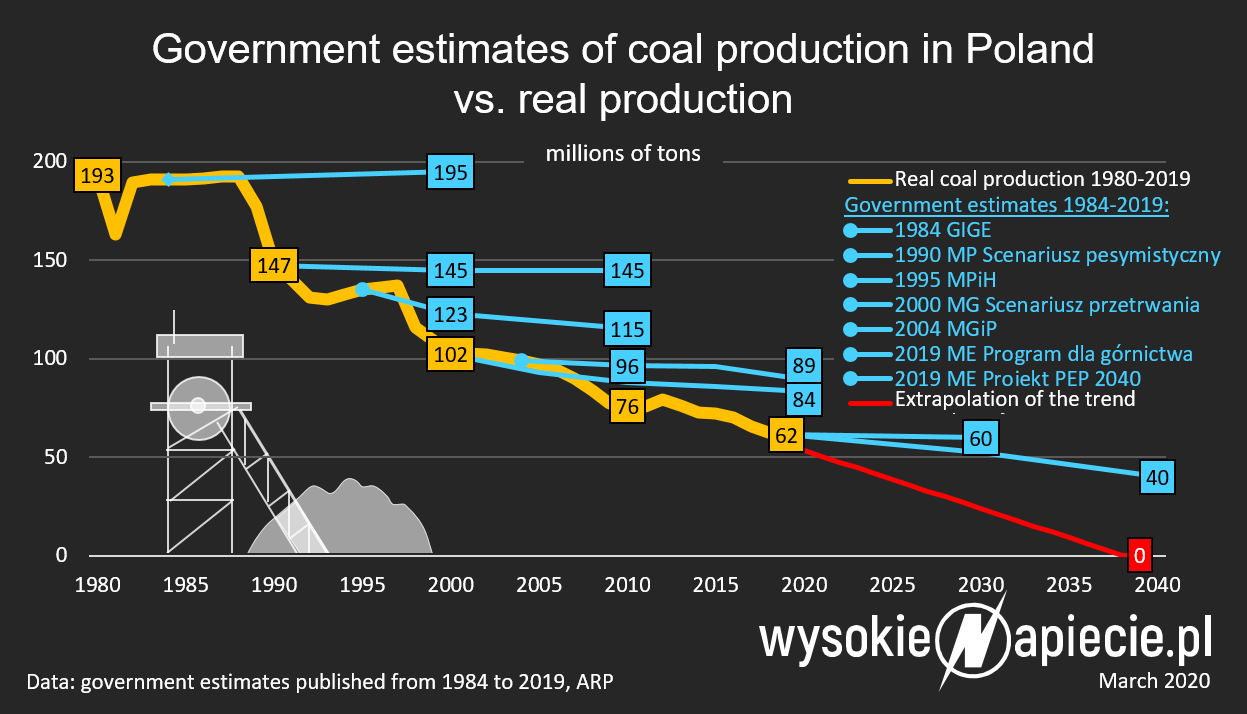

This is no way market driven demand, BYD is a very interesting company to look into. It is my understanding that Warren buffet has a large share in this company.
My believe is China sees oil dependence as a long term strategic weakness. In the event of a navel blockade it will be much harder for them to get the oil they need to run the economy. If a large part of the consumer sector is driven by electric powered by local sources (coal, hydro, nuclear) they can keep the logistic channels open. As a side benefit they get to fund a sector hoping to have the same success as they did with solar panels.
The article might have pointed this out but it was paid past a certain point on my device.