> I got absurdly lucky when I found my wife, but I spent every day without her more or less miserable. It’s arguable she’s the only reason I’m able to be happy. I imagine some of these men are similar to me in the loneliness and not as lucky in finding someone, and it’s impossible for me to not feel something.
This is basically a red flag for any relationship. If the only thing making or allowing a person to be happy in life is their partner then something is wrong. Mental health is no joke and not being able to enjoy life is usually a symptom of an underlying cause. Depression is probably the most common but anxiety disorders can be similarly hard.
I think that's the strongest criticism of incels as well; having a romantic and sexual relationship is not a requirement for a happy life. No one wants to be the partner that gives meaning to another person's life, unless they're also codependent in some way. It's emotionally draining to take on that kind of responsibility.
EDIT to add: the best explanation that I've heard for the feeling men have of basic unhappiness without romance and sex is toxic masculinity; the general societal rejection of deep emotional relationships between straight men. Lonely? Make strong friendships! Spend your time with other men who like you and enjoy your company and validate you. A partner is not a replacement for the natural circle of close friends humans are supposed to have. I'll be honest that I'm not the best at doing this, to my own detriment, but I think it's basically the solution.
>This is basically a red flag for any relationship.
No it isn't.
My grandparents, who were married for 60 years had this mentality. My wife's grandparents, who were married for a similar amount of time, also shared this mentality. My wife's parents still share this mentality (and are obviously completely devoted to one another, which you will notice if you spend about 5 seconds with them). My parents divorced, which has had an incredibly destructive effect on my family, almost certainly as a result of my father's belief that he needed a life that was independent of our family, and that he could somehow live "independently" and still fulfill his role with my mother as the leaders of our family unit.
Go talk to some elderly people: the ones who have been in marriages that have lasted the entire lives are generally completely devoted to one another, and as an extension their families. Unsurprisingly, those families seem to be generally full of happy, healthy people in their own happy, stable relationships.
There is a bizarre (and imo destructive, and toxic) idea that seems to be running through tech especially that devotion to your partner is rooted in "jealousy". It usually leads to "maybe you guys should become polyamorous. What are you jealous?"
And then, predictably, that leads to relationship collapse, heartbreak, and bitterness about 100% of the time. Shocking.
> There is a bizarre (and imo destructive, and toxic) idea that seems to be running through tech especially that devotion to your partner is rooted in "jealousy"
I feel like you're responding to a different argument than the one that was posed above. They weren't saying that a deep devotion to your partner is bad at all. They were saying that if you're miserable every moment you're not with your partner, there is likely something wrong that needs to be addressed.
Being able to be comfortable and happy even when your partner isn't around doesn't preclude you from having a devoted long term relationship. In fact, that feels like a recipe for a healthier long term relationship. Otherwise you can end up with codependency or separation anxiety.
But you are moving the goalposts, the statement in discussion is this:
> I got absurdly lucky when I found my wife, but I spent every day without her more or less miserable.
This is not healthy, doesn't matter how much you care about your partner and relationship. Feeling miserable every day without someone is not a good sign.
You can be much happier when you are with your partner, you can enjoy to spend most days with your partner, that's natural. Not enjoying a single day without them is pretty alarming.
I feel like you're reading that text differently. I don't think they're saying "if my wife or I are apart for a few days [business trip or something], then I'm miserable", but rather "I was miserable before I found the relationship with my wife, but we can perfectly well be apart for normal business trips without issue."
>Feeling miserable every day without someone is not a good sign.
I would guess that the main issue here becomes the tendency for folks to become housebound. Retirement is no joke in terms of becoming inwardly focused.
> I was a bit of an oddity in that I was anticipating marriage since early adolescence; that outsized-value for relationships came with what I feel were comparably overgrown feelings of loneliness. I got absurdly lucky when I found my wife, but I spent every day without her more or less miserable. It’s arguable she’s the only reason I’m able to be happy. I imagine some of these men are similar to me in the loneliness and not as lucky in finding someone, and it’s impossible for me to not feel something.
Being miserable whenever you aren't around your partner does rise to the level of a mental health issue, I feel. You aren't going to be around your partner 24/7/365, and it's not healthy or reasonable to spend that away time in misery.
But what I'm responding to is the idea that if you're only ever happy when your partner is there, there's likely something wrong. I didn't even really bring up single life.
> indeed is one we should all strive for (or why bother)
What do you mean by this? Why bother with what?
(As an aside, I actually don't think that being in a relationship is something that all people need to strive for.)
I would argue that a high level of devotion is not the same thing as codependency. I'm not sure you and OP are actually disagreeing with each other here.
It's entirely possible to have an enduring, meaningful, devoted, monogamous relationship that brings a great deal of happiness to both partners without that relationship being a requirement for the people involved to experience any amount of happiness or fulfillment in their lives.
Yeah man I don't think I would classify a committed relationship where partners end up missing their partner when they're gone as "codependent". And honestly this whole trend of laymen trying to psychoanalyze people with whatever toxic psychobabble their read on twitter is getting out of hand.
Codependence is when two people have some unhealthy trait that is reinforced by the other person's unhealthy trait. From wikipedia:
>Codependency is a concept that attempts to characterize imbalanced relationships where one person enables another person's addiction, poor mental health, immaturity, irresponsibility, or under-achievement.
That is not the same as "I get sad when my wife is gone because she is my life partner".
> Go talk to some elderly people: the ones who have been in marriages that have lasted the entire lives are generally completely devoted to one another, and as an extension their families. Unsurprisingly, those families seem to be generally full of happy, healthy people in their own happy, stable relationships.
> And honestly this whole trend of laymen trying to psychoanalyze people with whatever toxic psychobabble their read on twitter is getting out of hand.
No offense, but that's exactly what you just did. I personally know of families with 30+ years of marriage who appear "full of happy health people" on the outside but independently disclose their lifelong frustration.
You're interpreting this very different to how I read it. Missing someone is very different from being miserable when apart because you don't have anything else to give your life meaning.
I'm not miserable when I miss someone. I'd never describe it as that way, because if I'm apart from someone, while that sucks, at the same time it means I have someone. Longing is not misery to me at least.
I still don't understand if by that sentence the article author means he was miserable before, or if this means he misses her after just one day of her being away. "Spent" is in the past, so I assumed it's the former.
I have the impression that people are talking about different things in some replies.
> I still don't understand if by that sentence the article author means he was miserable before, or if this means he misses her after just one day of her being away.
Honestly to me it's not important, if it's either of those things, if it's misery every day without someone that's pretty extreme. IMHO, YMMV etc. Glad he's happy, but that's a lot to put on a partner.
Right, but this is the statement that someone pointed out as a red flag, that you disagreed with
> I got absurdly lucky when I found my wife, but I spent every day without her more or less miserable. It’s arguable she’s the only reason I’m able to be happy.
Which is basically the exact definition of codependence.
Look-- my life would be crap without my wife. She's awesome and I am much happier in partnered life. I'd survive and have some enjoyment alone, but most of us end up partnered up because it's a serious buff to life fulfillment.
That doesn't make us codependent, to know that I'd spend lots of time miserable if unpartnered and without my wife in particular.
I don't think it's generally worthwhile to argue with people whose arguments center around "I love my wife and you cannot tell me that's not okay." Lots of these responses read as though people are feeling attacked, which isn't a great baseline to start any reasonable conversation.
In fairness, the tone of the earlier comments has been edited-- the original tone of "you're all codependent" and the statement that we're all just jealous that we can't play video games whenever we want maybe reasonably made people feel attacked.
I'm not suggesting that the person feeling attacked isn't right to feel that way (I didn't see the comment you're referring to, but this topic seems to be kind of heated in nature regardless).
Mostly just, attempting to reason with someone that's feeling attacked (much less, someone that's feeling attacked about something as emotional as loving their wife) is an unwinnable task. I wish this conversation started better, because I actually think it's very important (and I generally think/agree that lots of relationships are unhealthy and it contributes to a lot of more negative societal issues), but I think discussing those topics with those that think you're trying to invalidate their relationship serves no one.
See, I disagree, because I believe that we've evolved to prefer stable, partnered life, and that a large portion of the population is still substantially affected by those drives. Not all of us can just say goodbye to biological imperative.
I agree that people should be "okay" without a partner and freestanding as their own person. But, this doesn't mean that it's unhealthy for partnership to be a major portion of life's happiness and fulfillment.
I don't know what the version of me without a stable, long-term relationship would be like. But-- I do know that my life became much better around the time that I met her; that the improvement appears to have lasted and cumulated, and also that it seems to me that a large part of my fulfillment and happiness comes from interaction with my wife. If this is unhealthy, I haven't seen the negative impact from it yet.
Apologies, I didn't realize you were the commenter I've been referencing as feeling attacked.
> See, I disagree, because I believe that we've evolved to prefer stable, partnered life, and that a large portion of the population is still substantially affected by those drives. Not all of us can just say goodbye to biological imperative.
Can you reference any legitimate science to back this up? I believe the push towards partnered life is a byproduct of capitalism, and has nothing to do with evolution or biology.
> But, this doesn't mean that it's unhealthy for partnership to be a major portion of life's happiness and fulfillment.
This is the strawman that keeps getting thrown around in this comment section. Nobody is suggesting that finding happiness and fulfillment in a partner is unhealthy.
> I don't know what the version of me without a stable, long-term relationship would be like. But-- I do know that my life became much better around the time that I met her; that the improvement appears to have lasted and cumulated, and also that it seems to me that a large part of my fulfillment and happiness comes from interaction with my wife. If this is unhealthy, I haven't seen the negative impact from it yet.
This is again a strawman. "Incapable of being alone" is different than "enjoying being together". The former is what is unhealthy, as has been referenced over and over again in these comments.
> I believe the push towards partnered life is a byproduct of capitalism, and has nothing to do with evolution or biology.
?? This is something that is observed across many cultures. Yes, attitudes of permanence are different, and the strength of prohibition against adultery is different, and you can find an outlier. But e.g. we have pre-capitalist Native Americans practicing marriage and stable coupling, and thousands of years of documented traditions within China, ancient Egypt, etc.
> This is the strawman that keeps getting thrown around in this comment section. Nobody is suggesting that finding happiness and fulfillment in a partner is unhealthy.
It's hardly a strawman when it occurred earlier in this thread (and still is there weakly even after edits).
Yah. I think for me, in the long term, I'd be miserable without a partner. The continuity and shared journey is a key part of what makes life tolerable. Yes, friendships are great, but they're not the same. Not to mention: I like getting laid.
I also think my wife is a uniquely good partner for me. If I lost her, for some reason, it would be difficult to find a situation nearly as good for me.
That's hardly the same as codependence, though.
I also gotta say: When my wife leaves to travel on her own or with the kids for a few days... it's bliss, both during and after. A few days without her is great, and reunion and the chance to share stories of our independent adventures is great, too.
I've known people who are happy and fulfilled living alone, but it's hard for me to picture myself in their shoes.
My wife and I have an awesome relationship. I would be okay-ish, but it couldn't hold a candle to what I have now.
The big bright spots in my life are my work, my relationship with my wife, and my kids. I would have more time to play video games and consume media, and I'm sure I'd have some more friends and hobbies... But it's hard for me to picture papering over her absence with friendships and hobbies.
>Which is basically the exact definition of codependence.
Well okay I suppose that the people I'm talking about, in their 50+ year relationships would describe their love for their partner as a type of addiction, but what you might be missing there is: that is a joke, and they are being cute.
If we're redefining romantic devotion as an "addiction" then I think we have officially lost the plot.
You're kind of just arguing past the people in this thread ("these relationships in my life are healthy and not codependent, so codependence is not a problem in relationships"). I would also argue that your takes offer the same "armchair psychoanalysis" you're arguing against, fwiw.
> If we're redefining romantic devotion as an "addiction" then I think we have officially lost the plot.
No one is redefining anything. This term is poorly defined. Codependence is not "romantic devotion". "Romantic devotion" should not be codependence.
> A codependent is someone who cannot function on their own and whose thinking and behavior is instead organized around another person, process, or substance.
Both this post and the OP strike me as "if it works, it's great, but if it doesn't, it's bad". Different things work for different people, and generalizing too much leads to suggestions that aren't useful for any particular individual situation.
> the ones who have been in marriages that have lasted the entire lives are generally completely devoted to one another,
I've been happily married for 17 years and have been with my wife for over 20.
Trust me: there is a big BIG difference between being deeply devoted to your spouse and being co-dependent on them such that you cannot be happy during their absence.
To add to the other replies, my own grandparents sound similar to yours in that they were happily married for 52 years. But my grandfather passed away 5 years ago, and while I know she still misses him deeply, I don't think my grandmother is in a constant state of misery. She is still able to find happiness in life despite now being alone.
I think that's what the parent was getting at. Being devoted to your partner doesn't mean you need them to enjoy life.
I don't think you're arguing against what the parent actually said. If you need your partner in order to be happy, and when they are not around you're unhappy, that is not healthy. Not healthy for you personally, and not healthy for your relationship. That's dependence (or codependence if it goes both ways), and that's not the same as simply missing someone when they're not around.
You can be 100% devoted to your partner and relationship but still be happy when the two of you are apart. A polyamorous relationship, or a person who has a whole other life completely separate from their partner, is not the only other option. You seem to be creating a false dichotomy here.
Pinning your happiness to the presence of another individual is not healthy. You cannot be with that person 100% of the time. And what if they die, or their feelings change and they don't want to be with you anymore? (Certainly either event would be devastating, but it should not destroy your only source of happiness.) How is it healthy for you to put all your emotional eggs in their basket? And even worse, how is it fair to the other person, to make that person an essential part of your constant happiness?
> Go talk to some elderly people: the ones who have been in marriages that have lasted the entire lives are generally completely devoted to one another, and as an extension their families. Unsurprisingly, those families seem to be generally full of happy, healthy people in their own happy, stable relationships.
Have you actually talked to or people long enough for them to trust you with their past or current martial issues? Because in my experience, after knowing then for long enough, they start talking for real and completely different pictures emerge.
And really really, you don't know whether people are happy nor what that happiness actualy practically means, until they know for really well. Because most people don't talk about how their relationships looks like from inside.
I agree that OP should not have used such absolutist terms, but you are guilty of the same thing. There are couples which are *devoted* to each other. And there are couples that simply have a deep friendship and know that in 30 years they will probably drift apart but continue having respect for each other. Self-awareness and honesty are obviously necessary, but you describing "life-long devotion and complete dependence on one-other" as the only way to build lasting meaningful relationships is simply harmful. Just as harmful as saying that such type of devotion should not exist.
I suppose the best reply to this is that for a healthy romantic/sexual relationship to exist the partners in it must already be basically emotionally healthy, including having the coping skills and support to deal with their own emotional disregulation if it exists.
It's wonderful to see happy partners in lifelong relationships. That is almost certainly a sign of individual emotional maturity and self-regulation. Those people would be happy in or out of that particular relationship (absolutely not discounting the intense grief of losing a lifelong partner, but the emotional resilience to start enjoying life again), and the ones you mention clearly have strong and healthy relationships with other people as well.
Unhappiness with life before finding a partner demonstrates that there is something fundamentally wrong. People feel too lonely, or too insignificant, or too unloved, or too undervalued, or some other excess of negative emotion that at its root is unhealthy self image or mental health issue and needs to be dealt with independently of whether or not that person is in a partnership. Validation from a relationship can certainly mask the underlying negative emotion, but there's a big risk that at some point a partner's validation will stop working and the person will become unhappy again but put the blame on the partner or the details of the relationship without realizing that it's the same internal emotional problem that was always there. Almost certainly if the relationship ends the person will think the partner left because of the incorrect belief they have about themselves due to negative emotions, e.g. "I was unlovable" or "I wasn't attractive enough".
> There is a bizarre (and imo destructive, and toxic) idea that seems to be running through tech especially that devotion to your partner is rooted in "jealousy". It usually leads to "maybe you guys should become polyamorous. What are you jealous?"
That is indeed toxic. Jealousy is a natural feeling; it can be rooted in some negative beliefs but not always. To me it feels like a fair mix of instinctual response from relationship preference and underlying fears. Unfortunately for the folks you mention instinctual jealousy is a pretty strong indication of a preference for monogamy and not for polyamory. In contrast what I've heard called "compersion" is a feeling of shared joy and happiness about a polyamorous partner's experiences with other partners, distinct from any sort of fetishization of another relationship (which while not necessarily unhealthy is distinct from simple happiness at a partner's happiness). Jealousy for me has usually been rooted in fear of loss; loss of a relationship or fear of missing out. For monogamous people jealousy is also rooted in, for lack of a better word... Monogamy. It's probably the majority relationship preference.
> having a romantic and sexual relationship is not a requirement for a happy life.
This is a bit silly: either it's trivially true but irrelevant, if the claim is that there exist people who can live happy lives without (sexual) relationships; or it's flatly false, if the claim is that everyone can be equally happy without relationships as they would be with them.
Relationships bring significant happiness. People who are in relationships self-report more happiness. They're richer. They live longer lives. You might say that I'm mistaking cause and effect: maybe happier/richer/healthier people are more likely to enter into relationships? This is probably part of the effect, but not the majority of it. If someone randomly ends up a widower from their partner experiencing a sudden, tragic accident, their happiness doesn't remain level. In fact, it substantially decreases: widowers have some of the highest suicide rates of any demographic group.
Relationships aren't some crazy random idea that just happened to develop in 2020 USA. They exist universally, across all cultures and times. All of them consider a relationship as a good, important goal (even as the typical attributes of relationships do vary). It's hard to name any facet of culture as universal as that.
Man this thread sure must be depressing if you're single.
Single? That's your problem, that your single. Go get a relationship and be happy!
Way to dogpile on people when they're down.
I say enjoy being single. If a relationship happens, good for you, but don't listen to people that say you're damaged / worse off / going down the drain because you're single. They're just jealous you can travel and play video games whenever you want. =)
I see far more people saying the opposite, that if you're single and unhappy, it's your fault for not trying hard enough to be happy.
Some people need relationships to be happy. Some don't. It's silly to deny the existence of either group, but most discourse seems to deny that it's valid for someone to see a relationship as an important component of their path to happiness.
> They're just jealous you can travel and play video games whenever you want. =)
This comment comes off defensive and hypocritical to me, rather than contributing to the conversation. You're basically saying we shouldn't talk about good things if some people don't have those good things; and also screw people with good things because they're actually jealous of the have-nots
I think life is incomparably better with a partner. It's not a question and it's not even close: there's nothing I miss about being single and almost every single thing about my life today is better because I'm in a relationship than if I weren't. It's cheaper, I have someone to share the good times with, I have someone to support me in my bad times, I have a teammate for life's plans and adventures, and I never feel lonely. I can also travel and play video games whenever I want; in fact my partner often buys me videogames and I often buy her things for her to enjoy on her own.
That's not dogpiling on anyone. It's not my fault if someone's single, and it may or may not be true that being in a (good) relationship would make them happier. It definitely makes me happier, and statistically it's a massive boost to quality of life for the vast majority of people. It's not fun to think that someone's worse off, but changing what you say doesn't change reality. This is meant to be a place where people can discuss ideas and concepts, and not talking about the benefits of relationships doesn't make them any less real.
To be frank, you response sounds a bit more defensive than mine.
Are you arguing that if someone claims that it's possible to be perfectly content and happy while single, that that somehow undermines the happiness you've found with your partner, as if the mere claim that contentment can be found without a partner invalidates the fact that you're happy with your partner?
I can easily read your response as saying something akin to:
"You're single and happy? Nah. You only think you're happy because you haven't experienced true happiness. Only partnered people can truly experience the incomparable joy that I have found, unlike those benighted singles."
You're happy with your partner. Good for you! That's awesome and amazing. But there's no reason to use that happiness as a reason to look down on other people.
Your reading would be an unreasonable stretch, as I explicitly acknowledge in my comment that for a random person,
> it may or may not be true that being in a (good) relationship would make them happier.
I don't know if person XYZ would be happier single in a relationship, and I don't have an opinion on it. Everyone should be free to do what they want, whether or not it makes them happy, and I don't care either way. What I was disagreeing with were your implications that (1) just because some people are single and unhappy, nobody can talk about how good and happy relationships can be, and (2) talking about being in a happy relationship is "dogpiling" on unhappy, single people. To take your wording, there's no reason to use unhappiness as a reason to shut down conversation
Nowhere in the parent post does he seem looking down on anybody. Stating that life can be a whole lot better with the right partner is a morally neutral statement
I have been single, then married, then single again. I can tell that for me single is better. So for each one its own. It irks me when someone tells other people what is good for them.
I don't think anyone is doing that. It's just the case that many (most?) people are happier and more fulfilled in a committed, long term relationship. It doesn't mean that there aren't people for whom that's not the case, and it doesn't mean that those people are somehow defective.
But this entire post is about how some people get sad, angry, and/or hateful when they want to be in a relationship but continually fail at it. It seems off-topic and missing the point to bring up a "well, actually" about how some people don't want or need that.
Do you think it's sad if a couple has shared values and enjoys living those values together?. My partner and I are both very frugal, hoping to be able to retire early. We constantly celebrate how frugally we're able to live because we're together. Everything is half-off: housing, cars, groceries, travel, electronics. We each research different ways to save on bills, support each other to cut down on costs, research different aspects of saving and investing. You may not value frugality, but the cost savings of being in a relationship is undeniable and great for people who do value it.
> They're just jealous you can travel and play video games whenever you want. =)
To infantilize people like this is more hurtful really. We both know your allotted time with a Nintendo isn't a source of envy. It's a problem, it needs addressing. If you've successfully overridden one of your most primal biological instincts then good for you, you don't need to read all this. However, I suspect most people who say they are just as happy single are not entirely truthful (to themselves).
I'm honestly very surprised at this entire thread.
Clearly the smiley face at the end didn't convey that I was half speaking in jest. But people seemed to have taken my position as an assault on their entire world view.
Let me ask you this though:
> overridden one of your most primal biological instincts
Have you considered the existence of individuals that are gay, lesbian, or asexual? How do these individuals fit into your apparently biological-reproductive-imperative based view of happiness?
Or would you go further to say that those individuals also cannot be happy, since they can't be truly fulfilling their biological instincts either?
Another way to phrase the original top comment (which, btw, is very deservedly the top comment): "If you can't be happy on your own, there's no way you'll be happy with a partner."
Happiness comes from within. Pegging your happiness on something external to yourself - material wealth, social standing, another human being - is giving away all agency you have over your own happiness.
> Another way to phrase the original top comment (which, btw, is very deservedly the top comment): "If you can't be happy on your own, there's no way you'll be happy with a partner."
Why does everyone in this thread like posting definitive statements like this? As if it's universally true?
Life isn't as black and white as people like to think.
I was not much of a happy person before I found my (now) wife many years ago. She helps me deal with life in a way no therapist could ever do (and vise versa, me to her). We're in it together and help each other.
I could not figure out how to be happy on my own. Once I found my partner, I was able to be happy.
This isn't universal, of course. Many people are able to be happy on their own, but it's so strange reading definitive stuff like "there's no way!" when it's just not black and white.
People say it as a sugar-coated way to express "if you're unhappy, it's because of a character flaw, so you should internalize your frustration, not express it to other people, deal with it privately, and definitely don't politicize it."
A death of a parent is identified as one of the most significant causes of unhappiness. If your happiness is negatively impacted by the death of your parents, is the issue that your parents died, or that you've given away your agency to choose your own happiness?
>pegging your happiness on something external to yourself - material wealth, social standing, another human being
You have incomplete and varying, but nonzero levels of control over all these things.
I agree with the whole "if you're not happy alone" rule of thumb but happiness isn't a binary. It's a scale. And amassing a little more wealth, becoming a little more respected, having a partner, all those things can add amounts of happiness that push someone from "unhappy" to "good enough". Look at the reverse case when people lose all that stuff if you really want to see how evident it is.
> I say enjoy being single. If a relationship happens, good for you, but don't listen to people that say you're damaged / worse off / going down the drain because you're single. They're just jealous you can travel and play video games whenever you want. =)
This is infantilizing people's desires. Enjoying being single is something that many people just cannot do. To me, it's like telling someone who is paralyzed from the waist down to just walk it off - you can still enjoy all that life has to offer... Assuming those things don't involve the use of your legs!
For many people - this is debilitating. A lot of people are just wired up this way.
How many people are truly incapable of happiness while single and how many need a romantic relationship because they see it as the only reliable way to have a friendship that outlasts eight apartment moves and five job changes? When people no longer have reasonable access to social lives outside work and marriage, it’s no wonder so many are unhappily single.
Not disagreeing with your main point, but twin studies show that marriage status account for only 1% of variance in happiness. So maybe the idea that most people need a romantic relationship to be happy is a little overblown?
which addresses a variation of the question. The unpaired half of twins with discordant marital status show significantly (in the case of men) higher rates of depression; women also seem to too, but because there were so few twins of discordant marital status in general, the test is pretty underpowered and so the confidence intervals are huge. Given that, it's actually pretty impressive that it was able to find any significant differences at all.
Thanks for sharing the findings of your quick research. Depression score is indeed not exactly the same as happiness, or life satisfaction, but for the purpose of our conversation I would say they are all close enough to what matter to us, so they are all sufficiently meaningful (and probably very correlated to each other).
Eyeballing the paper you cited, there appears to be evidence that widowed and divorced people are more depressed, but not single people (compared to the baseline, married people). At least when running the regression with all the other important variables controlled. Am I reading it wrong?
For the paper I found, I was looking at Table 4, which is of single never-married people comparing to the baseline of married people. Table 3 seems to correspond to what you're seeing. Skimming the discussion, they guess that the difference in depression and BMI scores between never married/married is due to health selection effects, although AFAICT there's not really a way to differentiate between health selection effects and marriage playing a causal role.
> having a romantic and sexual relationship is not a requirement for a happy life.
I don't have the all data off hand (see some citations below) but I believe they say married men live longer, commit less crimes and are happier. So yes in some sense, can you be happy if you are not married however, is it almost certainly harder. I assume you would find similar data for not having a romantic parter. You, a human, are not an island and almost certainly would benefit from close personal and romantic connections.
I would say that there is a way of expressing this towards your partner -- especially too early in a relationship -- that can be very draining.
The correlations are clear but causality less so. What if it’s not marriage that makes men happier, less prone to crime, and longer-lived - rather it is that women select for partners who are happier, less prone to crime, and healthier?
It's weird to try and explain this from a sterile alien-studying-humans perspective, but since that's the HN theme I'll do my best. Marriage and having dependents carries with it a lot of economic cost. By revealed choice theory, that implies it has significant benefits, or else nobody would ever do it.
I would be interested in a citation that those entering into marriages and child rearing are aware of the economic costs and are able to enumerate the benefits prior to the events, or if its look back justification after the fact. If you dig, I think you'll find most folks were not aware of the economic and opportunity costs of children, as well as the work involved in maintaining a healthy relationship with a party for an extended period of time.
(removed a bunch of pew research citations that made the comment unwieldy; happy to cite for those interested)
> It's weird to try and explain this from a sterile alien-studying-humans perspective, but since that's the HN theme I'll do my best.
This made me laugh, in a good way :) I'll approach it from that angle:
Monogamous child-rearing looks to me a successful evolutionary strategy for the human race (and keep in mind the "monogamous" part might be relatively recent). It implies less about the happiness of the parental units, though.
The Terran octopus dies off soon after giving birth to its progeny, and this is successful for octopus-kind, but results in no long-lasting happiness for the octopus mother. Likewise with many species of insects, arguably very successful lifeforms on Earth. Many of them die or are cannibalized after mating or giving birth.
Successful species propagation strategies do not necessarily make the parents live happier lives. There is an evolved reason for said strategies, but is happiness the maximized factor?
Well if we want to be all logical and science-y about this, we can't assume humans are rational beings. People obviously make bad decisions all the time.
Just because lots of people have kids, for example, doesn't mean that having kids makes people happier, and in fact studies seem to show the opposite to be true on average. That said, I'm not trying to say that having kids is always an irrational choice, and certainly it makes some people happier (or it might make people "unhappier" but lend them a greater sense of meaning and purpose that balances things out). But clearly you can't just say "well, correlation must imply causation because otherwise why would people do X if it makes them less happy?"
Revealed preference doesn't always work well as an explanation for why people do what they do though. E.g. if someone falls for an investment scam a-la Madoff, the person obviously didn't want to end up destitute because of that.
A closer example here might be a salesperson performing a "hard sell" on an automobile that is just at the edge of affordability for the buyer. The buyer really wants to be able to drive around in this cool looking automobile, but they end up with a lemon that they can't afford to keep drivable and sucks up all their resources. It's not so hard to draw a parallel from that to someone who has a family on accident.
This is counterintuitive. The obvious benefit of marriage is producing children.
Producing children is extremely costly for both parents. This is true both in animals and humans - you would generally not say that rearing children is good for the health of the parents. It probably brings emotional benefits to the parents (which it would have to, otherwise they wouldn't do it), but there's no reason to assume that couples are automatically better off in terms of their finances or physical health than singles.
Edit: Since people correctly pointed out that you can have children without marriage, please replace marriage with "romantic relationships that produce children".
> The obvious benefit of marriage is producing children.
No. Marriage doesn’t produce children.
Marriage can provide social obligations relating to the support of children, though. (It also provides social obligations of mutual support between spouses.)
I think it would be more accurate to say it had significant benefits, but they decreased. And there is a lot of inertia keeping it popular. This results in a lot of "failed" marriages.
To figure out the causality, you'd need an experiment where people are randomly removed from relationships though random external events.
We do have an imperfect example of this, in the case of widowers. When someone is widowed, does their happiness tend to increase, remain level, or decrease?
That's not enough. One of the often espoused counterarguments is "do happy people marry more, or does marriage make people happier?". You'd have to continuously check happy people and keep a control group from marrying. Checking just the widowers doesn't account for the severity of the loss.
I think it goes both ways. Women obviously do prefer partners who are successful, higher in socioeconomic hierarchy. Yet not being able to find a partner may lower one's self-esteem, which in turn may reduce the likelihood of doing things that increase chances of socioeconomic success.
I mean, advancing in life generally requires leaving your comfort-zone, but that may be hard if you lack confidence.
In fact, AFAIK, one issue with incarceration is that you are not seen as suitable partner anymore. Turns out that both men and women tend to avoid partners with criminal record.
I think there is a really good point here. However, it should be recognized that some of those studies do not control for divorced vs never married very well and the magnitude of the benefit of marriage is over-stated. Not to say marriage does not have health/happiness/other benefits, but the effect is smaller (although the Harvard study seems to control for it certain cases, in strange ways).
The question of what would most benefit a person's path toward happiness isn't the question of what do people need to be happy, though.
Sloppy analog: If I won the lottery tomorrow, it would allow me to buy a guitar I want sooner than another method; but not winning the lottery doesn't preclude any possibility of my acquiring that guitar.
I'm not sure that not winning the lottery means the path without winning the lottery is harder.
Winning the lottery may even prevent other conditions from developing in the course that would otherwise sustain the goal.
Humans and Islands analogies have been waged in many philosophical battles, but I never gathered that one was settled. Personally, I've subscribed to every man being and island and no man being an island all at once, and think both are fundamentally true in constant contradiction of one another and the contradiction is all you can really point to being true. (the original line "No man is an island" was Donne remarking of man's nature with regard to the Christian god, at least as far as I understood it)
I think if you [general you, not personally] hang your happiness on any one thing you're going to struggle or cause undue burden on someone or something else. And that's what the incel crowd gets so wrong; and I must say the proof kind of seems in the pudding there...
The GP pointed out that the relationship described in this has red flags because the relationship alone is the source of happiness. It would lead to a happier, possibly longer lived, less criminal person.
You seem to be implying (and I don't think this is intentional) that close personal and romantic relationships [for straight men] == a wife. But that doesn't necessarily need to be true. Maybe for romance, but certainly not for close personal friendships.
You're correct that a person isn't an island, but the focus on single romantic partner may be to the detriment of other forms of relationship which are still hugely valuable health wise.
> This is basically a red flag for any relationship. If the only thing making or allowing a person to be happy in life is their partner then something is wrong
When you get older, a partner (or children) are important to keep you going. Your body will fail you. Your mind will fail you. Your life will end and (statistically) it will be a long downward slope. Binding yourself to the right person keeps that slope more even, for longer.
People who think being alone is great are right, until some point after the slide begins that has slowly eaten away at your own ability.
You have a point, but in this case the author of the article says:
> I was a bit of an oddity in that I was anticipating marriage since early adolescence; that outsized-value for relationships came with what I feel were comparably overgrown feelings of loneliness. I got absurdly lucky when I found my wife, but I spent every day without her more or less miserable. It’s arguable she’s the only reason I’m able to be happy.
So it's not old age, but youth in his case that was unhappy until he met his wife. That does look like a red flag to me. Suppose his marriage goes south, will his (ex) wife now be responsible of not only ending the marriage, but also of ending all possible happiness in his life? That's an unreasonable burden to place on her.
> So it's not old age, but youth in his case that was unhappy until he met his wife.
Some people feel the existential dread before it is realized. This is shared by both sexes and sometimes expressed at absurdly young ages without prompting.
Yes, that's absolutely correct. In my case at least I remember occasionally waking up when I was very young in hysterics because of general existential dread related to death.
I remember becoming interested in finding a life partner from as young as 7 or 8. I spent my teens and early 20s turning off girls with my seriousness and didn't manage to get laid until my late 20s. I was sore about it at the time, but in retrospect I'm glad I didn't meet with more success because I likely would have ended up marrying someone who would not have been a suitable lifelong match.
Would finding a romantic partner help with existential dread related to death? You will not only worry about your own death, but that of your partner's as well. Some degree of this is normal and expected, as it's part of being human, but if it reaches the pathological levels described by the author of TFA...
I agree with this. Maybe it doesn't apply to everyone, but I feel it can apply to most people.
For a while, I could have been described as "incel" (as in the literal description of the term, not the negative connotations it has picked up). I was not exactly popular with the ladies, and my dating history was close to nonexistent. My now wife was my first girlfriend and we met when I had pretty much thrown in the towel and given up on romantic relationships.
In an alternate version of my life I could have lived the single life and filled it with other activities and material possessions. I could imagine myself being happy to some extent living like that into my 30s, my 40s, maybe even early 50s. But after that?
Now I can't imagine life without her at my side.
I think there is a lot to be said for having a life partner that is beyond just a good friend and always has your back (yes I'm aware not all relationships/marriages are functional). Especially as the two of you grow older.
I feel the same about kids. We don't have immediate plans for kids. Right now we can imagine living without kids forever, but at the same time we also feel this will change and we'll regret not having one when we are in our 50s 60s or 70s, etc.
> People who think being alone is great are right,
I think the critical part is the "only thing" in the quote.
The same thought expressed as "she makes me happy" and "she's the only thing that makes me happy" are different because of the implied loss of everything (that you will give up everything else that could make you happy to have this person stay).
> until some point after the slide begins that has slowly eaten away at your own ability.
I'd say that is pragmatic, but a very selfish thought.
My parents were taught that by their society ("successful kids" == "retirement plan"), but they didn't follow through with that thought during our upbringing - if anything, they thought they were paying it forward.
For an american comparison, the silent generation of America were a lot like my parents in their attitude towards the future (bright, but built for the kids).
> I think the critical part is the "only thing" in the quote
This is editorial added by the commenter, which is incidental to the point and does not purport to even hold the meaning of "she's the only thing that makes me happy". This is not literally meaning "the only happiness I feel". Ostensibly, the man still finds happiness in sleeping, eating, etc but a good partner fills a particular kind of happiness that is near impossible to replace.
Yes, but that's different. And certainly "empty nest syndrome" is a thing too, but I think there's a large difference between acclimating to a new normal and general mental/physical degradation vs starting out in this mental state in the beginning of your life.
I like doing everything with my wife. It would be hard imagining life without her! Or my kids. But I wasn't an unhappy mess before I met her.
So it seems like old age is the right time to start relationships, as almost everyone will be a lot more willing to start one, and exclusivity will be valued a lot more for practical reasons
While I love being in a relationship, you go too far to imply that all humans need a relationship. There are many people in history who have lived on their own, even as hermits, and been happy that way. Perhaps it's not the right lifestyle for you, but your lifestyle isn't the right fit for everyone else either.
> until some point after the slide begins that has slowly eaten away at your own ability.
Whats your commentary on people who marry and then divorce very late in life like Bill Gates? After all if the primary purpose was to protect against this aggressively lonely stage in life -- no fault divorce has thrown that guarantee out the window.
They seem to now be in the same position as long term single people -- except it's a massive uprooting stressor placed on you in your final years.
EDIT to add: the best explanation that I've heard for the feeling men have of basic unhappiness without romance and sex is toxic masculinity; the general societal rejection of deep emotional relationships between straight men. Lonely? Make strong friendships! Spend your time with other men who like you and enjoy your company and validate you. A partner is not a replacement for the natural circle of close friends humans are supposed to have. I'll be honest that I'm not the best at doing this, to my own detriment, but I think it's basically the solution.
I don't agree with this. The desire to bone isn't 'toxic masculinity' and isn't something easily substituted with more friends (unless they are of the "with benefits" variety). In me, at least, it is a distinct and real feeling of need without easy substitutes. More friends may lead to more romantic opportunities, sure, but that is indirect and subject to circumstance.
If it were only about the desire to bone, then “just visit your local prostitute” would be the accepted obvious solution. The need for stable companionship is not as easily solved. Luckily, it is not tied to sexual attraction, like the drive to bone.
Close platonic friendships that outlast romances are more healthy than requiring each new girlfriend to be your primary means of emotional support. The lack of social interactions outside of work and wife is also a cause of codependent burnout: it’s unreasonable to expect that the same person is good in bed, a loving mother to your children, primary full-time emotional support, and a chef.
what I recall from my time in my 20ies my desire to be sexually active was a lot more dominant and in charge of my higher faculties than what it is today nearing 50.
biology determines how strongly we feel we need to be with a partner I think. I accepted much more toxicity and negativity just to not be alone (allowing control by my partner over my emotions and was far more ready to compromise) than what I'm today.
Today any potential relationship needs to be solid on a mental level first before I'd even consider going further. That certainly wasn't the case in my early 20ies. Also I'm today able to spend time by myself (and not just get by but really enjoy my own company, thoughts etc ...)
I think that varies highly between individuals. I consider myself high libido and it's something I have to deal with fairly often, otherwise it starts screwing with my faculties. And the desire has not changed much since my 20s, even if I've learned to be more comfortable in the things that intersect with it
The concept of a dead bedroom absolutely terrifies me. Like, why bother with a relationship if the one person you can have sex with doesn't ever want to have sex?
If the primary thing you want is sex, does it makes sense to tie some relationship to it? Like, in place where prostitution is legal, all you would need is either that or partner that don't mind you having extra.
I wouldn't call it a primary thing, more like an essential component of a romantic relationship. Otherwise, a couple is what? Very committed best friends (I would hope)?
And on your other point, polyamory is increasingly common and a very valid way for people to approach such an inclination
>The desire to bone isn't 'toxic masculinity' and isn't something easily substituted with more friends (unless they are of the "with benefits" variety)
Wow, that's two turns of phrase that erode your point in one sentence.
> the best explanation that I've heard for the feeling men have of basic unhappiness without romance and sex is toxic masculinity; the general societal rejection of deep emotional relationships between straight men. Lonely? Make strong friendships! Spend your time with other men who like you and enjoy your company and validate you
I'm not sure I buy this. I'm a man who has lots of close friendships (many of which are with women, but some of which are with men), and I still feel like it's not enough and that I want a romantic/sexual partner. A partner is not a replacement for a close circle of friends, but neither is close circle of friends a replacement for a partner.
Not the parent, but I don't think friends are a substitute for a romantic relationship, but having friends is certainly better and more comforting when you're not in a relationship rather than being truly alone.
Regardless, men in romantic relationships should still be sure to cultivate strong friendships
> I'm not sure I buy this. I'm a man who has lots of close friendships (many of which are with women, but some of which are with men), and I still feel like it's not enough and that I want a romantic/sexual partner. A partner is not a replacement for a close circle of friends, but neither is close circle of friends a replacement for a partner.
I think the difference is between wants and needs. Aside from a very small number of people most of us need friends and family who care about us and meet our emotional needs. Children need this unconditionally but adults have to take responsibility of their emotional needs and fulfill them in a healthy way by making and keeping friends. I think sexual and romantic desires are not needs; they are very strong desires and their fulfillment is definitely wonderful but life can be happy and fulfilling without them.
I wouldn’t be so fast to dismiss it as a want for most people. I would wager most men feel like emasculated failures if they cannot attract a mate when surrounded by single women. It seems unlikely that a large portion of men only view romantic success as a mere cherry on top.
What a banal comment. You understand precisely nothing and you start proclaiming solutions that make no sense and then you even have the gal to psychoanalyze the health of the author's relationship.
A perfect example of the attitude of some that refuse to even try to empathize with others.
Your problem is that you just have no ability to comprehend a situation that is not very similar to your life. So for you, anyone who acts in a way that you do not understand is obviously acting up and doing it wrong, rather than acting in a way that makes sense given the person's circumstances.
Agreed- not only is it overly judgmental and presumptuous, it’s also a nitpick of a single passage from an entire article. It’s not off-topic, but it really swerves discussion into a tangent.
That's one bitter truth about life: (almost) everyone needs some amount of physical intimacy to be happy, but it's not something anyone is entitled to. Those of us who have access to that are privileged.
I agree with the author though. IMO the existence of so many "incels" is some expression of a real societal problem. Many young men are suffering, and we don't acknowledge their suffering as genuine. We just tell them that they suck, call them names and walk away. This can cause them to become more radicalized.
I was raised by a mentally ill single mom, on welfare. In many ways, my emotional maturity really lagged behind that of other guys. I didn't know how to make friends, let alone how to approach women or form a healthy relationship. I did eventually manage, but it took me years of learning during my 20s. When I was a young man, I struggled with some pretty bitter feelings myself, and I feel like society didn't make it easy to overcome them. Even today, the not so ambiguous message that society sends to young men is: if you can't get women, it's entirely your fault, because you are not enough. It just adds insult to injury, particularly when you're really missing closeness and understanding, when you feel alone and wounded.
IMO, the modern discourse around gender only really goes one way. We hear about women's issues everyday, but even in 2021, it's no more okay for men to talk about the challenges they face than it was in the 1950s. Men are told to just suck it up, and that's a huge part of the problem. If feminism is really about gender equality, then it needs to allow some room for men to talk about their issues and concerns as well, without fear of judgment. I would also like to see words other than "toxic" being used to describe masculinity.
> if you can't get women, it's entirely your fault
I'm curious, and this will probably be too curt but I am honestly trying to figure it out: Whose fault is it? Because incels believe it's the women's fault, and this message is the opposite.
It doesn't seem productive to tell them that it's society's fault or some other external thing. What are they supposed to do about that?
Most men that I know, including myself, function better when there's something tangible to work on. Lose weight, hit the gym, learn to lower my ego, listen better, practice small talk, learn about fashion, etc.
I think there's a healthy way to "blame" yourself. Or if you want a nicer way to put it: to be able to have honest criticism of yourself. After all, if you can't fix it, what's the point?
I think the answer would go along the same lines as answering the question "whose fault is it that you can't get a job?" when aimed at an identity category such as women or minorities. Basically: society has failed them in some form or other.
I think this is the right way to look at it. This is why I gave myself as an example. I was raised by a mentally ill single parent in poverty. I wasn't taught how to socialize with others in a healthy way. As a result, I wasn't equipped to form healthy relationships.
I think there are a lot of young men who are in a similar position and if they are given proper guidance and healthy role models when they are young, they can be in a better position to succeed in friendships, work and relationships.
I'm not convinced it's the same. When talking about dating, there are a bunch of stuff that you can do that boils down to "make yourself a better person." See: my list above. It's obviously not guaranteed, and many are more genetically gifted than others, but it seems way more manageable of a task than your example.
You can't expect women to work on having more of a penis.
> You can't expect women to work on having more of a penis.
That's a bit simplistic, isn't it? Not to mention, maybe it's not just the penis. Maybe you can teach women how to copy the kinds of attitudes (eg: assertiveness) that help men succeed. Maybe you can get more women in engineering by giving them positive role models from an early age.
We can help prevent there being so many incels by supporting young men emotionally from an early age. Right now we have a very punitive approach IMO. The education given to young men is a lot of "don't do this", "that's toxic", "women hate it when men do that", but there isn't enough positive messaging and encouragement.
Yeah, for the most part I agree, I just think that it's possible to frame the fact that a lot of guys simply being at a loss of how to go about this can be framed as a societal failure of some kind.
These kinds of skills are rarely talked about in any setting. Maybe that's how it's always been, but it seems to me that young men really aren't given much actionable advice when it comes to attracting a mate, and at one point the rules/expectations were a little more codified than they are today.
My own experience: I would be a millionaire if I had a nickel for every time I was told to "just be yourself". On the other hand, I was told a lot growing up what NOT to do when interacting with a woman. Don't try to kiss/etc her without asking permission. Norms around when it's ok to flirt (almost never appropriate). All of these kinds of negative rules made interactions with women feel like a minefield to me so I just stuck to online dating, but of course that has its own rules and expectations that take a lot of getting used to. Don't mention sex or anything remotely sexual. Don't mention how attractive she is. Don't use pick up lines. Don't just say hi. Don't expect a reply. And then of course, there's a whole new minefield to walk through when you start getting more serious -- a lot of which comes down to boundaries, another thing we don't do a very good job of talking about.
I made it through though, amazingly. I had a reasonably successful 8 year relationship, and even though it ended, I feel like we were right for each other in the sense that we had things to offer each other and I learned so many valuable life lessons from my partner during that time. Now I'm 4 years into my next relationship and it's going great as well, still learning so much!
I think a lot of this just comes down to things changing a lot re: gender roles, norms, etc. We're in this liminal space where things haven't quite shaken out yet into something more stable. My hope is once that happens (it feels inevitable -- things can't just keep on changing like this forever, right?) we will be able to talk about it more concretely.
It is worrisome though. My younger brothers (24) have not yet made any foray into the world of relationships. I try and fail to get them to open up about their feelings about this or anything else. They don't use the word incel but it could certainly apply.
Generally agree with you. I guess I was looking at it a little differently. If I'm talking to an individual, the only thing that matters is what they can do to better themselves now. It's not productive, on an individual level, to say stuff like "if only society was better!"
> I try and fail to get them to open up about their feelings about this or anything else.
To be fair, opening up about my feelings to my family sounds awful. I know I know, society did this to me yada yada.
I learned by watching and doing, not talking about my feelings to my family. College buddies being my wingman and showing me the ropes, etc. and failing until I stopped failing. Then again, last time I dated, "can I buy you a drink" still worked to get a few minutes of face time and I didn't need apps. Not sure what's out there now.
I think talking about my feelings to my family would have done absolutely nothing.
> Don't try to kiss/etc her without asking permission. Norms around when it's ok to flirt (almost never appropriate). All of these kinds of negative rules made interactions with women feel like a minefield to me
Is the "don't kiss her without permission" really they difficult? And frankly the same with flirting.
If these make women minefield, I don't see how to make it better without sacrificing women who fly want to be kissed or flirted with while they have presentation at work.
> Lose weight, hit the gym, learn to lower my ego, listen better, practice small talk, learn about fashion, etc.
This is a bit of a fresh thought to me, but it seems that the standard male self-improvement advice ends up in one of three buckets:
1. The activity is its own reward (lose weight, hit the gym). Even if it’s not immediately successful at helping one find a partner, their benefits are almost immediately self-evident.
2. Advice that is vital for sustaining a relationship but usually not the missing piece when it’s time to find a new one (listen better, lower the ego). They’re needed to get the second date but can’t help get the first date.
3. Advice for the sake of having given advice (read books by female authors).
“Learn fashion” is hard to place on here. On the one hand, ensuring that you comb the crumbs out of your beard daily and wear clothes that fit better than a garbage bag is essential. On the other, becoming “into fashion” when it’s not a natural interest is often more of advice for advice’s sake unless you’re targeting a very fashion-conscious woman (or the fashion-forward portion of the gay dating pool).
> “Learn fashion” is hard to place on here. On the one hand, ensuring that you comb the crumbs out of your beard daily and wear clothes that fit better than a garbage bag is essential. On the other, becoming “into fashion” when it’s not a natural interest is often more of advice for advice’s sake unless you’re targeting a very fashion-conscious woman (or the fashion-forward portion of the gay dating pool).
Yeah I mean, I think most of the things on the list have a "basic" and "advanced" tier.
Lose weight/hit the gym: Basic is to not be obese. Advanced is to be fit.
Small talk: Basic is to be able to start and hold a conversation. Advanced is to be smooth and captivating.
Learn fashion: Basic is learning how clothes are supposed to fit. Advanced is... something like what you said. (I'm not advanced here! haha).
It's often fault of a psychological trauma suffered in childhood. Sexual abuse, for example. So counseling is one thing that society could provide to such men. Sexual therapy treatments have been used successfully in some countries.
This is much more convincing than dnissley's response to me. I wonder how many "incels" have suffered trauma in their childhood.
I certainly don't expect people to just work through childhood trauma without societal help. ex. Make it cheap, easy, and acceptable to get therapy. Much different than my list above IMO where most people can work on it themselves without many excuses.
Hadn't considered that -- but has there been a rise in childhood psychological trauma? There's definitely been a shift in the way we talk about trauma, just in the sense that we open up about it more, so that could be part of it.
The example I'm coming back to though are people like my younger brothers, who had relatively happy childhoods (afaik), but still have failed to launch for some reason or another. To be fair my father has anger problems to some degree, but nothing too crazy, just a proclivity to yelling more than was really necessary.
At least in the bay area there are plenty of cuddle parties for platonic physical touch.
Feminism has a pretty convincing answer to the problem like I edited my original comment to include. Toxic masculinity is the social exclusion of deep emotional relationships between men, including the "suck it up" culture. The key is that only men can really participate in that healing because it's entirely a problem between men. Women, as I've observed, seek out deep emotional friendships with other women and have most of their emotional needs met that way. Men, for the most part, do not do that with other men.
"Cuddle parties" are not a substitute for sex, for men or women. Nor are "strong friendships", as you insinuate above.
Emotional intimacy, physical closeness, and sex are distinct and separable. Though they are linked for most people, for many no one of those is a substitute for any other.
"cuddle parties"... It's about as close to the real thing as jerking off to pornhub is to the happy marriage with a loving partner. It may take care of the immediate physiological urge, but that's it.
> At least in the bay area there are plenty of cuddle parties for platonic physical touch.
I never knew such a thing existed until you posted this, and perhaps I could have done with this at earlier points in my life. My receptivity would have varied greatly at different times though.
Fundamentally, I'm not sure it would have helped me as much as finding a therapist and talking about this stuff. Now that I'm out of the rut it would be much easier to approach a cuddle party.
Men struggle to see therapists as part of the "suck it up" culture so it's extremely difficult to get out of the existence once you are part of it. The system is self-protecting and does things to embed people deeper into the anti-feminist rut.
So feminism's answer to the the problem is "cuddle parties"? Are you serious?
I remember people used to argue that feminism was good because sexual liberation of women meant everyone was gonna get to have lots of sex. Obviously, these incels were not invited to the party. Women are having lots of sex, just not with them. And you actually believe "deep emotional relationships between men" are the cure for this unrest?
This is about deeper issues than friendship. It's about people's essential worth as human beings. People don't just have sex with anyone, they select partners and this implies selection criteria which implies value judgement. By seeking intimacy, we all risk judgement and rejection. Can you imagine what constant rejection by everyone must do to a person's self-worth?
"Cuddle parties" won't solve anything because they fail to understand the problem. Even proposing something like this compounds the issue because it's like saying "you are not good enough to have sex, enjoy this platonic activity instead". The root cause of this issue is society and women especially have decided these men are unattractive and therefore worthless. There is no fixing incels without fixing this inequality.
Jumping on somebody like that is seriously not ok on HN, and breaks the site guidelines badly ("Please respond to the strongest plausible interpretation of what someone says, not a weaker one that's easier to criticize. Assume good faith.").
Taking the thread noticeably further into ideological and gender flamewar, as you did here and elsewhere, is also not ok.
You posted tons of flamewar comments in this thread. We ban accounts that do that. Please stop and don't do it again.
Would you please stop posting ideological flamewar comments to HN? We ban accounts that do this. Actually I just banned your account, but decided to unban it after looking a little bit closer. If you keep posting like this, though, we're going to have to.
We want thoughtful, substantive, curious conversation here, not bomb-throwing, fights to the death, and whatnot. You've posted a lot of serious flamebait. Please review the site guidelines and stop doing that. Note this one: "Comments should get more thoughtful and substantive, not less, as a topic gets more divisive."
How do you reconcile that with the fact that one of the defining features of the last few decades of feminist writing has been intersectionality? And that some of the most prominent feminists are Black?
Kimberle Crenshaw's theory of intersectionality has been debunked using data from the Bureau of Labor Statistics that was released just before she released her work into the world back in 1989. If you want to see the debunking head here: https://www.youtube.com/watch?v=t6g6D3Cc-Wc (Antonio Moore)
Intersectionality, as described by its creator, is simplistic and misleading. It completely ignores black male incarceration because all of the labor statistics preclude them. Black men's suffering has been erased and its causing a generation (or more) of people to treat them like they are the white patriarchy and that they have privilege they really don't when you look at the data.
Intersectionality has taken demographic disparities in isolation, say white mens rights versus white womens rights, and applied them to black people without nuance to the difference between how white men and black men are treated by institutions in the US.
It's given cover for Feminists to look past racial inequity that is the basis for much of black women's suffering. Go watch the video and look at the data, tell me what you think they got wrong.
"I would also like to see words other than "toxic" being used to describe masculinity."
"The Fantastic Masculinity of Newt Scamander" https://www.youtube.com/watch?v=C4kuR1gyOeQ is a pop culture analysis of the mild-mannered leading man of the Happy Potter prequel movies.
Curious, are there are more of these now than in the past?
I suspect there were more decades ago because of more cultural taboos about premarital relationships. What's different now? That these folks are angry about it?
Masculinity isn't toxic. It becomes toxic when it blames women for its problems.
Feminism is all for men talking about their issues. It practically begs them to. It is absolutely, positively not feminist to tell men that you're not enough if you can't get a woman.
That doesn't, however, pose an obligation on any woman to listen to you. It doesn't matter whose fault it is that you can't get a woman; it does matter that it's no woman's job to make sure you get one. Exactly what that will require is up to a billion different factors -- but "blames women" is going to be an enormous red flag.
Your suffering is real. You absolutely don't have to just suck it up. Go talk about it. If you don't have a friend you trust, try a therapist -- they're paid to do that. But be prepared for the fact that if your plan is to blame feminism, a good therapist is going to ask you to reconsider your underlying assumptions. And if your friends are just there to affirm for you that the reason you don't have a woman is the fault of the women -- there's a reason the word "toxic" came to be applied.
The issue is when people conflate "there's no obligation on any woman to listen to you" with "expression of frustration in a public forum is a character flaw worthy of criticism," or when people conflate "blames women for its problems" with "criticizes toxic gender norms enforced on men."
Imagine a woman who is frustrated because her partner doesn't do any chores or give any indication he respects her. She complains about it online, attributing it to sexist gender norms. Someone says the same thing to her as you say here: men are not obligated to listen to you, your suffering may be real, but please keep it to close friends. If your friends affirm that the reason your relationship is the fault of patriarchy, it's an example of toxicity. It probably makes the most sense to talk to a therapist: they can help you figure out why your way of thinking is flawed and how you can convince your partner to treat you well or, barring that, find a new partner.
That'd be a pretty terrible comment, right?
Toxic gender norms hurt both men and women, but we're only willing to consider toxic gender norms that hurt women as a politicized issue.
Toxic gender norms hurt both men and women, but we're only willing to consider toxic gender norms that hurt women as a politicized issue.
"Patriarchy hurts men" is a feminist slogan. It gets hundreds of thousands of hits on Google. The front page is full of lefty think-pieces saying that we need to consider toxic gender norms hurt men.
The fact that it needs to be said means that not everybody knows it yet. But it means that the ones who are listening to it are the feminists. Feminism is an ally in trying to fix the problems of toxicity towards men, and these threads always bring out lots of men who blame feminism for their problems. If I've accidentally confused you for one of them, I apologize.
The issue is that the slogan "patriarchy hurts men" is nearly always used in a way that still puts the onus on men to stop policing gender norms on other men. The reality is that women have every bit as much agency and power in upholding patriarchy that men do, but few women (feminist or not) are willing to acknowledge the extent they enforce toxic gender norms, or even that women enforce toxic gender norms at all.
Women absolutely, positively enforce toxic gender norms. Women are part of the patriarchy. In fact, for many women, the best strategy for them is to embrace the patriarchy as hard as they can. That sets them up for rewards from the dominant paradigm.
Ending patriarchy requires both men and women to reject it. But the ones calling for for an end to patriarchy are the feminists -- which includes both women and men. Feminists absolutely, positively call out women who are guilty of entrenching the patriarchy.
That's not few women. It's lots and lots of women. And lots of men, too.
I agree with you that feminists don't enforce gender roles more than average, so attributing the shitty state of gender relations to feminism is silly.
I disagree that they are particularly willing to call out instances of women entrenching the patriarchy. I think this probably has to do with a root disagreement about the scope of what is considered policing gender roles.
It's true, for instance, that feminists are more likely to criticize a mother who tells her son not to play with dolls, which is good and something I agree with. It's just not the primary mechanism by which women enforce gender roles, which is partner choice. That's not to say that women shouldn't have the right to choose their partner--of course they should--but the patterns of how women choose partners enforce toxic gender norms, and many of the most toxic aspects of gendered male behavior arise from men navigating that landscape.
As a concrete example, consider bisexuality. The majority of women dislike the idea of choosing a bisexual guy as a partner: he's considered less masculine, or dirtied, or some kind of perversion of masculinity. This is their right, but it's also shitty. The problematic aspects I want to call out are that 1) the majority viewpoint among women about bisexual men is still very prevalent among feminist-identifying women, and 2) when someone expresses frustration at these collective choices, feminist-identifying women are far more likely to criticize the frustrated party instead of the toxic gender norms. The net result of this is men being terrified of homosocial affection and remaining closeted so as not to scare off potential partners, both behaviors most people would consider expressions of toxic masculinity.
This pattern repeats itself across a lot of different forms of gendered policing. But many feminists refuse to acknowledge it, because they don't acknowledge that partner choice can be a mechanism for gender role enforcement.
I have no idea what feminists you're dealing with, or under what circumstances, so I'm not going to apologize for them. But I can tell you that you've come across as hostile in this conversation, and it comes as no surprise to me that others have responded to you in a negative way.
The vast majority of "patriarchy hurts men" discussions I've seen, including the Buzzfeed and Washington Post articles I spot checked at the top of this search, have been about how the men reading the article need to fix their bad behavior. Buzzfeed calls for me to learn "specific strategies to end gender violence" so that I won't "engage in everyday sexist behaviours"; Wapo suggests "Giving up a small slice of privilege in exchange for a longer (and happier) life".
Modern feminism has actually been fairly two-faced on what it really wants. At this point, I can't tell whether feminism would prefer (given constraints only allow for one):
* Working on an issue which only helps women a bit, but doesn't help men at all
* Working on an issue which helps both women and men a lot
Considering media has a routine narrative of painting men as demons and women as angels, any claim that feminism is for anything in regards to men, might need to be backed up with some strong cases.
I don't think it's helpful to think of "feminism" as a singular movement, the way it's often portrayed in conservative editorial writing and cable news. We're talking about 50+ years of academic scholarship and grassroots activism here, and all the complications and inconsistencies that implies.
If you're looking for something in particular to make this case for you, I recommend reading the short book Feminism is for Everybody, by bell hooks, which does specifically talk about mens issues and how what she calls the patriarchal organization of society negatively affects men in different and unique ways (compared to women).
But again, editorials - especially on the right - typically pick out the most extreme or indefensible positions and try to make them appear to be normalized and widely accepted. You're doing yourself an intellectual diservice not to really deeply interrogate the motivations and biases of any piece of media that leaves you feeling like an enormous group of people (those who consider themselves feminists) is in fact wildly irrational and extreme. It should set off alarm bells when you draw such stark lines in the sand as "any claim that feminism is for anything in regards to men, might need to be backed up with some strong cases" that you're missing some nuance or complexity.
I know you don't intend to do so, but assuming that someone's conclusions about an issue must have come from talking points, and were not arrived at independently, dehumanizes them and makes it difficult to convince them of anything.
It discounts the lived experiences of people who have seen their friends and coworkers radicalized against them, of either gender. "This happened to me" cannot successfully be countered by "stop parroting X/Y/W-wing editorials." (general pattern I've seen even among family, not necessarily your phrasing)
The terminology used also doesn't help make the case for feminism among anyone not already convinced. Terms like "the patriarchy" can be seen as implying that it's okay to talk about men as a whole group who can be vilified, but it's not okay to talk about women in any negative way at all. Or "ally" could be seen as implying that the only identity someone not of group Z can have that matters is as an accessory to their cause.
The most disappointing and insulting thing a friend has ever said to me might be (paraphrasing) "I thought you wanted to be an ally." No, I wanted to be your friend, not a footsoldier who dutifully agrees with you 100% of the time no matter what my independent experiences have been.
I don't think it's helpful to think of "feminism" as a singular movement,
Sadly, even some of those who advocate for feminism (whichever branches might be considered "the good kind" for purposes of this discussion) seem to deliberately lump feminist movements together, so one can be forgiven for seeing terms like "the patriarchy" used by different groups and not knowing which group's beliefs to ascribe to the term. I don't think this can be blamed on a particular flavor of media, except maybe social media.
>It should set off alarm bells when you draw such stark lines in the sand as "any claim that feminism is for anything in regards to men, might need to be backed up with some strong cases" that you're missing some nuance or complexity.
What should set off alarm bells is this blind acceptance of written works and words, when the actions routinely do not reflect the words feminism espouses. There are entire subreddits and blogs online showing the many cases where feminism doesn't do anything, or worse, actively intervenes at the detriment of women. Your own example shows the same problem: "what she calls the patriarchal organization of society negatively affects men in different and unique ways". Cool, you talk about it, but what are you doing about it?
What is an intellectual disservice, is how quickly you circumvent my question only to berate my manner of writing. If people truly are such huge proponents of feminism, and feminism truly claims to "be good for men", surely they can answer a question this simple and provide clear examples. Do you not realize your own behavior is indication of the problem here? How can you not see that if you can't even answer "well duh, the second issue obviously" on an ideological basis, the claim that feminism is "for all" is complete bollocks?
If I really wanted to go full-on antifeminist, I could've mentioned the many issues that feminism causes for men and women that it seems to be utterly blind to. That's part of the question as well: a clear division between not only "we want the best for women", but "it doesn't need to be at the cost of men". If I really wanted to go and write on nuances, I could write a 12-page blog page and fight against the relentless nitpicking which will ensue. I'm not asking a simple, black-white question for the sake of trivializing a complex, multi-faceted subject. I'm asking it because ideologically, if we can't even answer this part first, there's no point going any further. It means the population of feminists is filled with people joining the movement, without knowing what it actually stands for. Including its most fierce proponents carrying the torches. Surely, I do not have to tell you about the many occurrences in human history where this didn't work out well.
Because the population of Hackernews has a great overlap with the population of Silicon Valley-type software developers and Redditors, who vehemently believe feminism is the same as egalitarianism and believe the few books written by a few big figures make up for the fact feminism contradicts those words at every corner in all of its actions. And when you point that out, the first thing you get is a No True Scotsman claiming "that's not real feminism / not all feminists", despite the argument being that feminism as a whole doesn't seem to care for men beyond empty platitudes and words.
It is literally in the name. FEMinism. If it was truly "for both sexes", we could argue the naming is sexist and supremacist. We already have a better word, egalitarianism, and people still aren't willing to adopt it.
Notice people talk past my example as well. I'm explicitly asking if feminism would prefer resolving an issue which prefers women over men, over an issue which benefits women more but benefits men equally. How this simple question cannot be answered by proponents of a movement this big, is possibly the biggest red flag. Yet we see it in the media every day: some minor issue with women needs major attention, despite there being an egalitarian issue which would help anyone outside the upper class way more. If lamenting about some "pink tax" is more important than resolving a mental health epidemic caused by making people increasingly more competitive with one another, where failure is met with lasting mental trauma, surely that should tell people what feminism really is about.
The very people claiming to be proponents for men in their words alone, are the ones partially responsible for the mess. And they are too blind to see it.
>That's one bitter truth about life: (almost) everyone needs some amount of physical intimacy to be happy, but it's not something anyone is entitled to.
it is, I notice that me or even people in my family who often times tend to show anticonformity behavior need some love.
Often times I wonder how would I feel if someone were to hold my hand, or give me a kiss but the feeling goes soon away perhaps dictated by the way I was raised or my own genes (something I'm can't determine since I'm not an expert neither in science or parenting)
Just to give you some context I grew up in a family with 6 uncles, 2 aunts and my mom, just one of them married, although all of them seem to fare well economically speaking.
To be clear, "(almost) everyone needs some amount of physical intimacy to be happy," is a falsifiable statement of fact. You can go out and measure something to find out whether it matches reality.
On the other hand, "but it's not something anyone is entitled to" is fundamentally a statement of opinion, unless it is limited to a specific context like within a specific social system.
Yeah people who say this are so wrong, companionship and a significant other is a required for a fulfilled life for a majority of people. We evolved to have this, and most people need it. You shouldn’t depend on one for happiness, but there is nothing wrong or weird about longing for one.
On the flip side, however, no one owes you companionship or a relationship (platonic or not). If you are struggling to fulfill that need, it's on you to improve yourself through building skills, seeking therapy, finding appropriate medications, or whatever else. Pushing the blame outwards to some other group for not bending to fulfill your needs is a real problematic stance.
On the flip flip side, no one owes anyone anything (except bodily integrity). You aren't entitled to a partner who does a certain number of hours of chores; you aren't entitled to a specific or any job title; you aren't entitled to a particular lifestyle; you aren't entitled to respect and admiration. That doesn't mean the only valid approach is to criticize people who systemically have a harder time reaching those things and feel frustrated by it.
We can simultaneously tell individuals to work on self-improvement to get themselves out of tough situations while also recognizing that society can do things to make life fairer and better for everybody.
Totally, but most people are not emotionally well adjusted or in a place where they an introspect and build themselves up to be the better version of themselves. A lot of folks would be helped by therapy and having someone to talk through to work through this (but that's a healthcare conversation, which we don't have to devolve into here).
I unequivocally do not condone folks who go off the rails in ways that cause harm to others (self destruction and harm is similar, but a different conversation), but I've seen enough mental health challenges and crises to understand why it happens. In general, life is hard, and no one is coming to save you except yourself.
Indeed, you shouldn’t based your identity around it or blame others (e.g. incels) but at the same time you shouldn’t be made to field there’s something wrong with you for wanting it. Like most things there is a balance to be found. I think the stars every day that I failed my way into relationships for most of my life and I can’t imagine the struggle of these individuals.
I don't think the identity of inceldom is necessarily blaming others for being lonely (though probably most incels do), but being angry at society for trying to sell an incorrect narrative of relationships.
Incels call this "maxxing". It doesn't seem to be particularly effective for them.
> Pushing the blame outwards to some other group for not bending to fulfill your needs is a real problematic stance.
Why? Reducing inequality in dating seems like a fair goal to me. People become incels because everyone else rejects them. If that doesn't change, the number of incels will keep growing.
It's not working because they believe the wrong things about why they are struggling to find companionship. It's not just find some stat to max and done, positioning the problem this way is itself part of the problem.
> Reducing inequality in dating
What does this mean, be specific. I cannot think of anything except absolutely ghoulish ideas that remove agency from women.
> It's not working because they believe the wrong things about why they are struggling to find companionship.
So they don't need to improve themselves, they just need to believe in the right things and suddenly women will value them.
Really?
> I cannot think of anything except absolutely ghoulish ideas that remove agency from women.
And yet it's this agency that created such a thing as incels. Look at data from online dating services, plenty of evidence showing over 80% of men are rejected outright. Do you think this is normal?
No, you misunderstand. They are optimizing for what they think will get them success, not what will actually get them success.
> And yet it's this agency that created such a thing as incels.
No, incels were not created created because women have agency in who they date. What toxic nonsense.
And also, you still haven't put forward any changes you'd like to see to remedy the situation as you see it. Bring solutions to the table if you think there is a problem.
> incels were not created created because women have agency in who they date
Did you not look at the evidence? Online dating is already the primary means of forming relationships. There's data showing women reject over 80% of men they see on dating apps. They actively choose to compete over the other 20%. They'd rather share a top 20% man than settle with a bottom 80% man.
How is this supposed to not create a class of universally rejected men?
> Bring solutions to the table if you think there is a problem.
Why bother? I doubt you'd consider any real solution since they would naturally result in disadvantages for women in favor of men and would therefore be "toxic nonsense".
Let me use an analogy. As a manager I help my folks get promoted all the time. The folks who struggle the most are the ones who think about promotion as a set of checkbox items they have to cross off. The ones who are easily promoted are the ones who are looking less at the criteria and more at how they can be introspective and develop themselves.
Framing finding a relationship in a "I'll just check these checkboxes and then I will immediately get a relationship" fundamentally misunderstands that we aren't generally selecting partners for one trait. No one is working from a checklist when they select their partners, so why set yourself up to fail by imagining they are.
Develop a growth mindset, focus on building your skills, build rich and fulfilling friendships. Ask for feedback and accept it. Build others up. People will want to be around you.
> Did you not look at the evidence?
I did a cursory Google search, which suggested online dating results in roughly the same outcomes as in person dating.
> How is this supposed to not create a class of universally rejected men?
If you are suggesting that 80% of men will face universal rejection, I find that extraordinarily hard to believe. It's quite frankly trivially falsifiable.
> Why bother?
Because you've made vague gestures that somehow society is to blame, but won't say how you'd fix it. Either that means you aren't sure, which undermines the idea that society is actually to blame, or your ideas are so repugnant that you are afraid to show them the light of day. You do not get to claim a moral victory by claiming to be a victim and then failing to engage with even the lightest questioning of your narrative.
It follows that if you fail to meet these criteria you are considered unattractive.
> Develop a growth mindset, focus on building your skills, build rich and fulfilling friendships. Ask for feedback and accept it. Build others up. People will want to be around you.
This assumes attractiveness is caused by factors that are within our control. This doesn't seem to be the case. Height is a very simple and uncontroversial example. How is a "growth mindset" supposed to help the incel who gets rejected by women on dating apps because he's shorter than them?
This isn't some insane idea either. Women I've dated have complained about short men on dating apps to my face. They want those men to reject themselves so as to spare them from even acknowledging their existence.
> If you are suggesting that 80% of men will face universal rejection, I find that extraordinarily hard to believe. It's quite frankly trivially falsifiable.
I said the data shows women reject about 80% of men they see on dating apps. The set of rejected men is different for every woman. Universally rejected men (incels) are the insersection of these sets, naturally it is a smaller set than 80% of men.
The fact is there's massive inequality in dating. Like all inequalities, it'll probably get worse over time.
> Because you've made vague gestures that somehow society is to blame, but won't say how you'd fix it.
Not providing a fix doesn't invalidate my point.
> Either that means you aren't sure, which undermines the idea that society is actually to blame, or your ideas are so repugnant that you are afraid to show them the light of day.
Yeah, I just encountered this subject. The most obvious solution is to go back to enforced monogamy. Nothing repugnant about that but obviously female agency will be impacted. You don't seem to be open to any ideas that don't maximize female agency.
> You do not get to claim a moral victory by claiming to be a victim and then failing to engage with even the lightest questioning of your narrative.
No, you don't get to dismiss people's arguments as "toxic" and then demand they "engage" with your questioning.
> most obvious solution is to go back to enforced monogamy. Nothing repugnant about that...
And there it is. Yes, that stance is awful. Going back implies removing the right of women to choose who they partner with. Enforced monogamy removes the ability of folks to choose how many partners they have. And who gets to define 'monogamy' and who does the enforcement?
It also completely ignores the poly folks out there, or the folks who are not interested in long term relationships.
It's at best, a narrow and puritanical view of human sexuality.
And having a dating scene with an 80/20 distribution isn't? Monogamy seems like the only way to give everyone chance.
So I guess this comes down to whether you think everyone should have a fair chance to find a partner. Do you? And if so how would you achieve that?
> Going back implies removing the right of women to choose who they partner with.
Nope, they can still choose whoever they want. The point is to get the top 20% of men committed and off the dating pool as quickly as possible.
> Enforced monogamy removes the ability of folks to choose how many partners they have.
Yes? That's the point.
> And who gets to define 'monogamy'
... The dictionary.
> who does the enforcement?
I don't know, society?
> It's at best, a narrow and puritanical view of human sexuality.
Probably. I did say it was the most obvious. Do you have a better idea? Because this "just be better" stuff doesn't seem to be working.
Assuming people even want to help these incels to begin with. Other posts I've seen just want to pacify them so they don't become violent or something.
How about actually having a likable personality, which easily tops all other qualities? Dating apps do prioritize looks, and especially during COVID I believe it makes finding a partner harder. But in-person the initial “not-as-good-looks” can very easily be overcome if one is kind, honest, funny, etc.
> How about actually having a likable personality, which easily tops all other qualities?
Does it really top all other qualities? Doesn't seem to be the case. There's evidence showing personality is only considered after a minimum threshold of physical attractiveness is met.
And a huge percent of attractivity is nurture rarher than nature.
You can work out and get into shape, you can have good hygiene, you can dress nicely, etc. Just because someone is luckier and doesn’t really have to pay attention to what he/she eats to get a good figure doesn’t mean that others can’t achieve that, although with more work.
Also, the face itself is much more important for men than women.
I don't buy that. If we use the example of height alone, the vast majority of women would not date a man shorter than them regardless of whether the man has a "likable personality". https://www.youtube.com/watch?v=ZbG05ePWRQE
Fortunately women’s height shows a normal distribution, as well as it’s not like many 150 cm women would date a guy well above 2m.
(Sorry, don’t know freedom units)
"How about actually having a likable personality, which easily tops all other qualities?"
So do you now agree this statement is obviously false?
Height is just one of the first filters women use, and often the requirement is more strict than just "taller than me". You also have to pass other commons filters. Another very important filter for most women is race, and we're just getting started.
It's a general well known trend. You can make a fake account and test it in a few minutes.
Just like in many other animals, female choosy selection is the limiting factor, and the males either prove themselves or might as well die. That's where all this lack of empathy is rooted.
> You clearly would not stick up for short or ethnic men the way you do for women
Based on what?
> who are already heavily privileged
Depends on country. I’m not supportive of some new-found feminist movements, but all for it in some Muslim secular countries where women are not allowed to drive and are all around thought of as the property of their husband.
> I've seen women with your left wing mentality talk about women's rights and BLM and then, in the next sentence, move on to making fun of Indian men and talking about how they would never date them
That’s called a hypocrite. And I don’t see how generalizing an entire gender based on n=1 is any different than your example where you rightfully was offended by the making fun of Indian men. You do the same shit for half of all people.
> Most of society does share this hateful mindset.
And a significant percentage of men also share the mindset that women are inferior/object, or other misogynistic shit. Neither should happen.
> You responded by saying "the sky is blue", do you believe some races are objectively less attractive than others?
Heh?
In another thread I did write that men usually don’t want to have relationship with women of another race (and vice versa). But it is all around true, most cultures look down on interracial relationships — which is said.
The fact that you blamed "personality" for all problems.
> Depends on country.
Well I'm talking about the West, the US in particular.
> generalizing an entire gender based on n=1
It's not n=1, the reason people do it is because it is generally considered socially acceptable.
> And a significant percentage of men also share the mindset that women are inferior/object, or other misogynistic shit. Neither should happen.
You really don't realize how many men are not misogynistic, and how much more acceptable it is to make fun of men for their insecurities (like height).
> Heh? In another thread I did write that men usually don’t want to have relationship with women of another race (and vice versa). But it is all around true, most cultures look down on interracial relationships — which is said.
This is not true, men are more open in general, and women, especially white women, have the strongest bias. Women will even refuse to date ethnic men they find attractive. There are lots of studies on this although I'd have to dig them up. Also why doesn't this affect white men as much if it's just about opposition to interracial relationships? They are preferred by many ethnic women.
> The fact that you blamed "personality" for all problems.
Which is all around the most important; the catch is that one can't really get to it over a picture. And unfortunately even in real life (especially now with COVID) it makes first moves harder. But there are many places where one can get to know others - work place, school/college. There people can show their true personality. And many part of one's appearance can be changed.
> It's not n=1, the reason people do it is because it is generally considered socially acceptable.
I'm fairly sure each culture have stereotypes of other cultures; but it is getting better. I'm sorry if you have been the target of such negative stereotypes, it's absolutely not okay, but one should not hold grudges against unknown individuals of that society, because it is the same shit.
> You really don't realize how many men are not misogynistic, and how much more acceptable it is to make fun of men for their insecurities (like height).
I said a significant percentage of men are misogynistic. And it is never acceptable to make fun of someone's insecurities - if it happens to you, quit those circles, they are toxic people. But I doubt non-popular high school girls have it better. My point is that the problem is bullies, not another group who is often hurt.
> This is not true, men are more open in general, and women, especially white women, have the strongest bias. Women will even refuse to date ethnic men they find attractive.
Well, how about blaming society instead of the individual? Behind every such woman there is a father and mother who repeatedly told her how bad these "other" people are and to never bring one home, etc. Or even just implicitly meaning that. It takes time to "heal" a society and interracial couples are much more acceptable than even just a decade age.
I agree with you wholeheartedly, but there's a small problem here (and it's not just in the West) -- people dismiss these people, call them names, and put a dark label on them.
And yet, quite often they need help. Changing one's personality, mastering new skills, etc etc. are not small nor easy steps. And some people may not even be capable of doing them by themselves. So what do they do? They seek out people and go public with their frustration... and they come across two groups: Group A, who call them names and shun them out, and Group B, who claim they understand them and talk with them.... all while telling them things like "Look, it's not your fault, man." "They're all whores", etc. What do you think happens next?
What I am trying to say is, some empathy and understanding would go a long way. I get that some people don't want to help themselves and are beyond saving, but there are many others who just need a small push to improve themselves.
>>no one owes you companionship or a relationship (platonic or not).
> That's your opinion
Yes, and it's shared by nearly everyone. The alternative is that you believe someone does owe you a relationship, which is anathema to anyone who values individual liberty and freedom at any level. Everyone who is advocating for making changes to society to improve their chances is really fucking cagey about the specifics.
So let me ask you, what changes do you propose, and who owes you a relationship?
Not really. If you're talking specifically about whether an unmarried man that fits some particular criteria is owed a wife, most people in the western world at this point in time would agree with you. But that's far from universal.
>The alternative is that you believe someone does owe you a relationship, which is anathema to anyone who values individual liberty and freedom at any level.
Not really. "Individual liberty and freedom" is not one concrete set of ideas that you have to either accept or reject wholesale.
>Everyone who is advocating for making changes to society to improve their chances is really fucking cagey about the specifics.
Some are, probably. I don't know which you've been talking to.
>what changes do you propose
Bring back severe social shaming for women that engage in sexual activity outside of a committed monogamous relationship (e.g. marriage or on the way to marriage). Bring back social pressure for a man to marry a woman that he has had sex with outside of marriage.
>and who owes you a relationship
I am married, so I think from society's perspective, my wife should owe me a relationship. If either of us denies the other a relationship without very good reason (meaning something more than just not being happy any more), the one abandoning the marriage should be looked down upon as having done something very wrong.
So... Oppress women is the solution you are proposing here? Why have you gendered it at all? Why do women have to face social stigma and not men? What about gay relationships, presumably you'd apply the same thinking (en route to a marriage or married)? What about poly relationships?
> I think from society's perspective, my wife should owe me a relationship.
I'm going to assume you mean owes you a supportive, caring, platonic relationship. Eg, two married people support one another to their mutual benefit. I'm going to assume you don't mean to imply your spouse owes you sex.
>So... Oppress women is the solution you are proposing here?
If that's what you want to call shaming them for certain behavior, yes.
>Why have you gendered it at all?
Because women are, on average, different from men, and, on average, exhibit different tendencies. Different measures are needed to push their behaviors to the same point.
>Why do women have to face social stigma and not men?
As I said, a man who has sex with a woman outside of marriage should be pressured to marry her, or in other words, if he doesn't marry her, he should be shamed for it.
Note that I don't think that should apply if he's not the only man that's had sex with her. In that case she is the one that should be the subject of social shaming to discourage other women from following in her path.
>What about gay relationships, presumably you'd apply the same thinking (en route to a marriage or married)?
I don't think homosexual behavior is very relevant to the discussion of men being unable to find suitable wives, but generally speaking, I don't think society should put any effort toward ensuring homosexuals end up in healthy marriages. And if there is any conflict between the interests of homosexuals and the goal of getting normal people in to healthy marriages, the conflict should be resolved in favor of normal people every time.
>What about poly relationships?
I think society should reject polygamous relationships.
>I'm going to assume you mean owes you a supportive, caring, platonic relationship. Eg, two married people support one another to their mutual benefit. I'm going to assume you don't mean to imply your spouse owes you sex.
I mean both. Both are important to the maintenance of most healthy relationships.
Honestly, you not being able to have partner night have to do with you being coercive and potentially abusive partner. It is the way you think about relationships - you want to create set up in which your potential partners are helpless and have no choice. You don't care about how vulnerable to rape or domestic violence it would make them. You don't care about consequences to children.
As in, potential partners are better off single and alone.
Sorry. But I do really find this persons plans highly coercive and abusive. I dont just disagree, I in fact find it abusive and threat.
And it is also true that such setup would make women super vulnerable for rape or sexual abuse and then forced them to marry their rapists. That is exactly how it worked in the past and how it still works in some radical Christian circles.
It would also create environment in which domestic violence would flourish as women were unable to leave as partner starts the abusing.
The whole plan, in multiple comments, is about creating coercive setup that don't care about violence it puts people at risk for.
I agree that the comments were egregious and banned the account. Nonetheless, it's against the site guidelines to feed such comments by replying to them—that just perpetuates flamewars.
"Don't feed egregious comments by replying; flag them instead."
(Or, if you prefer Old Internet, please don't feed the trolls.)
When they don't get replies and are properly flagged, egregious comments are deprived of oxygen and the fires quickly die out. When they are fed, we end up in various circles of flamewar hell. Such flamewars are a co-creation of the provoker and the provokees. We're trying to avoid that here.
The only egregious thing about my comments is your dislike of the opinions expressed within them. This was not an ideological flamewar. There were no insults being thrown around. Everyone was being respectful. And it was perfectly relevant to the topic of the submission.
You banned my account because you don't like my opinions. It's as simple as that.
I don't care about your opinions (or anyone else's, for that matter) but I do care about users dumping flamebait on HN, like how you want to shame women and whatnot. The issue is what sort of thread such comments will lead to (https://hn.algolia.com/?dateRange=all&page=0&prefix=true&sor...). In this case the answer is: extremely bad.
You've been creating accounts to break HN's rules with for a long time now. Would you please stop doing that?
Not that I expect you to care, but I'm not buying it. I was specifically asked what changes I proposed to alleviate the problem discussed in the submission. I gave an answer briefly detailing a system that has been and continues to be used around the world. You don't like that system, so you banned my account.
I never said I wanted to shame women. I said I thought society should do it to alleviate a problem I consider very serious, not because I'm personally enthusiastic about doing it. I think people around here are able to understand the nuance.
>You've been creating accounts to break HN's rules with for a long time now.
> You shouldn’t depend on one for happiness, but there is nothing wrong or weird about longing for one.
Precisely; too many men rely on partnership to meet most or all of their emotional needs and that is what drives intense loneliness when they don't have a partner.
I believe everyone is capable of being happy in their own company. It may take a lifetime of work for some people to achieve this. We are social creatures and human interaction is essential for our well-being, but that doesn't mean you can't have your own personal goals and interests or just simply enjoy time with yourself: you are a human being in your own company, too! Frankly without that ability you are not going to have healthy relationships with others no matter how good looking or successful you are. I know so many unhappy couples that put on a good front. I was part of one for years.
In the West in particular we are crippled with insecurity, anxiety and doubt. Are we masculine/feminine enough? Do we fit the image we have of other people's desires? We have incredible wealth and abundance and feel like shit. It's a societal ill as well as a personal one. It is possible to practice contentment, gratitude, and self-compassion and acceptance, these are just things that are not taught or idealized in our culture. I do think the mindfulness movement, commercialized though it may be, has something to offer to modern secular society.
I don't think that is true, but that's because I think there's a huge difference between what people think will make them happy and what actually will. The former tends to be an ever moving target, the latter requires a change in perspective that takes quite a bit of effort and doesn't make anyone any money.
Not sure why you're getting downvoted; others may not agree, but I think you have a very valid opinion. It is an incredibly common human experience to think "I would be happy if only I had X," only to find that achieving X does not actually make one happy.
> This is basically a red flag for any relationship.
This is a very odd western view of things. None of my Bangladeshi aunts would find it at all controversial if a young man said he was sad because he was chronically unable to find a relationship. Humans are supposed to be in intimate relationships of some sort, for the purposes of making children. Friends and hobbies aren’t a replacement.
I find the ease with which people throw around “codependency” similarly perplexing. I don’t doubt that this situation exists among some people. But normal healthy marriage involves a large degree of codependency. The idea you need to be a standalone individual who would be happy with or without their spouse is inconsistent with how people actually work.
Yup, I am from India and the experience of men from South Asian countries completely negates the argument in the original comment. Most men in these cultures have no problem finding strong friendships and family bonds, but can still struggle with loneliness and self-esteem when they fail to find intimate relationships.
I think the criticism was that the post's author expressed being deeply unhappy with himself to begin with, and the relationship was more like a bandaid that only covered up the underlying personal issues.
But it can equally well be the other way around: loneliness causes the unhappiness.
That's very unfortunate tendency how everyone here first assumes some clear-cut cause and effect, and then goes on from there to interpret someone's expressed feelings.
> having a romantic ... relationship is not a requirement for a happy life
Do you think having friends is a requirement for a happy life? It's not strictly necessary, but they are a positive factor, and most people will not be happy entirely devoid of friendship.
Having a partner is a friend you commit to and are closer with than other friends (generalization, sure). I have friends who I would not support through depression, but I would support my partner through depression. Needing someone like that is not unhealthy. It will be difficult to find someone willing to give the same commitment to your friendship as to their partner (generalization again).
> I have friends who I would not support through depression
they aren't your friends then. aquaintences perhaps but not real friends. I'd jump through fire for my friends and know they would do (and have done) for me. but then I also run a tight ship with what I consider a friend. if we haven't gone through some kind of shared struggle together we can never be friends. that's why most men will have trouble making real bonds once they leave their teenage years and early 20ies behind. not much new happens (such as puberty) that you struggle through as a group. try to make friends in your 40ies that are as strong as your oldest friendships and it'll be pretty much futile to get anywhere. it's even worse: trusting somebody at that age to become a close friend is a natural red flag for most men. the smell of danger is too high. you're meant to stand on your own feet with that age and better be used to (or even enjoy) being alone (if you don't have a partner)
Sure. At that point, this is just a semantic difference in acquaintance / friend / close friend / best friend. I would argue that there are many people who have zero friends by your definition.
I have friends (by my definition) who I'd, say, drive 30 min out of my way to pick them up if they got car trouble, but I wouldn't lend them $10,000. These are people I see regularly and actively make time to hang out with. I feel like most people would lean toward my definition over yours, but I could be wrong.
my old roomate wouldn't even lend me $200 one night, but he was more than willing to basically chauffer me around for a week when my car was in the shop. This included taking me to work 20 minutes north every day. Despite that, he wouldn't take the $50 I offered for gas. Definitely still consider him a friend.
This doesn't mean anything at all to this thread, but your comment reminded me of that. it still bugs me a tiny bit, even if I completely understand and don't blame him for it. I know some people are just extremely picky about money.
It is one thing to nominally 'support' friends through depression and another help them see it through to an under-defined end.
Supporting a depressed person will inevitably take a huge toll on your own mental health. That's aside from the time and physical effort it would take up. I am assuming that the friend has some understanding of depression to begin with, which from my personal experience is rarely the case.
I have supported a couple of friends through depression, and it is exhausting. In most cases I was only around them for weeks, and it drained happiness from my life. At time I felt like cutting contact, because depressed people are insufferable. The only reason I stayed to help was because I had personally gone through a similar situation recently, and didn't want to wish it on my worst enemy, let alone a friend.
It's like having a special needs child or being the carer for dependent parent. It is easy to say that you'd gladly do it, but the sad reality is you'll find yourself wishing for a better situation (with all the guilt in the world) once you are knee deep in it.
The medical term for what you are talking about is compassion fatigue. It's symptoms look a lot like depression: "People who experience compassion fatigue may exhibit a variety of symptoms including lowered concentration, numbness or feelings of helplessness, irritability, lack of self-satisfaction, withdrawal, aches and pains, or work absenteeism."
edit: I just found this meme: https://i.imgur.com/WCzNW77.png and I decided to link it here. People think friendship is something that is built over years because it takes years in order to have finally made it through enough hardship and shared struggle so calling each other friends is justified. This is the literal meaning of having a friend. You know they'll help you even you got nothing to give and without expecting anything in return from them.
> You know they'll help you even you got nothing to give and without expecting anything in return from them.
I cannot decide if that is more abusive or more romanticized.
If you expect your friends to be there for you without you returning anything, you are abusing them. That isn't friendship, that is exploitation.
And if your friend is there for you even though you are incapable of returning anything, it is incredibly romantic. But also usually very limited, because that drain on your friend has consequences and needs to either be equalized by something (not you) or suck your friend dry until he himself is incapable. Which is a very un-romantic ending, because it leaves the world with 2 emotional cripples.
For me, friendship is also very much about knowing the limits of what i should make my friends suffer through.
life is swings and roundabouts. having nothing to give in return isn't romantic - it's humbling. it's depressing and devastating the one who has no choice but to accept and I'd rather they get out of their dump than thinking about my expectations. it's more important that they're OK to me than if they give back (which I trust will anyway happen because "swings & roundabouts").
I understand most people are more calculating. My own family who would keep tabs of what they give and receive so to never feeling they're in somebody#s debt. I'm like that in business situations, and to those who I know would do it to me, but not to those who are close enough to consider friend.
> for me, friendship is also very much about knowing the limits of what i should make my friends suffer through.
No, I'm not. While I would appreciate help in such a situation, I can fully understand anyone walking away. Being a bother to people and needy is one of the worst parts of being ill.
If you have a treatable form of depression, go get treated. If you have a personality disorder, the person you're responding to is the lucky one, not you.
In a "comment a positive message on your facebook status" way? Sure, I'd do that. In a real, be-there-no-matter-what, show up consistently for them even when they're a drain and show no signs of improving for months on end? Some I would, some not.
Really, though, friendship isn't a commitment. I am friends with people I enjoy spending time with. I have plenty of people I am no longer friends with because we stopped having things in common or geography got in the way. That's not a failure on them or me as people. I've made new friends and so have they.
I don't feel bad about saying no to things I don't want to do. I don't want to spend time with someone who isn't fun to be around. With some close friends, I will, out of some sense of obligation or caring about that person. With most friends, I don't feel responsibility over their emotional state, and would rather support my own.
I would argue any "friends" you have that you wouldn't be there for when its not convenient or "fun" for you to be around are not real genuine friends. I cannot imagine a single one of the people I actually consider my friends being unwilling to be there for me if I was going through a depressive spiral and I can't imagine me not being there for them if they were. Friendships are a form of relationships and that means being together through thick and thin, when its easy and when its hard. If you are unwilling to be there for your "friends" when its hard only when it's "fun" then you are not friends as far as I am concerned, you are acquaintances.
It's important for you to understand the difference between actual clinical depression, which is fully treatable with medication, and depression as a symptom of personality disorders, which is not.
I don't know if you have ever dealt with the latter, or if perhaps you are part of that group, but encountering someone who is can be enough to turn you away from ever potentially being involved with anyone displaying depressive symptoms. There's just too much risk to one's personal life and well-being if they end up being the "bad" kind of depressed person, and not the "good" kind.
> I think that's the strongest criticism of incels as well; having a romantic and sexual relationship is not a requirement for a happy life.
Let me take this in another direction than most of the other comments:
Say you're talking to a homosexual person in a deeply homophobic society, one so bad that you risk becoming a pariah at the very notion that you might enjoy relations with someone of the same sex. Would you tell that person to basically get over it and figure out how to be happy anyways because it's "not a requirement for a happy life"? If that feels like it would be wrong to say, ask why it feels wrong to tell it to that person, but okay to say it to the subjects of the article.
I'm not really sure what should be done offhand. I know the situations aren't exactly analogous. But if you think it's bad to call homosexual people nasty things and they should be allowed to love, then how can it be okay to just casually dismiss straight people who have trouble finding love as being bad people and tell them to get over it?
I agree with a fair portion of the original article and my comment was almost off-topic because it relates more to the author than the article.
The common feeling the author identifies with incels is the intense loneliness and unhappiness. By no means am I criticizing anyone for their feelings. What I am saying is look for the primary underlying cause and dealing with those feelings which is to a) deal with mental health issues. b) focus on building a strong support system for healthy emotional regulation to alleviate loneliness especially. Life should be enjoyable with friends and hobbies, not miserable.
I also want to point out that what a lot of incels want is not a healthy relationship with a woman, but a glorified sex slave or sex worker in exchange for treating them with basic dignity. This is a far cry from gay people oppressed by homophobia. Nonetheless, for the sake of incels who understand what healthy relationships are like and want that:
I'm trying to be pragmatic. I'd advise a gay friend to escape their strictly homophobic society and help them leave. If there's no where to go then I can only offer emotional support and try to fix the society. Likewise, I think introspection about the true source of intense negative feelings is the best thing for anyone who feels intensely unhappy about life for any perceived reason. I have felt intensely unhappy in the past and I have a lot of evidence now that it was mental health and not circumstances like whether I had a partner or not, despite it feeling like the cause sometimes. Love and sex can mask a lot of negative mental health, too.
Pragmatically what else can we do for incels? They feel very bad, none of us (speaking for the men) can give them what they want, and the only way forward for them that I see is helping them find coping skills and support systems to become emotionally healthy. Most of them have unrealistic expectations and will be disappointed until they correct them. The others will have to wait to find the right partner while otherwise enjoying their lives.
> This is basically a red flag for any relationship. If the only thing making or allowing a person to be happy in life is their partner then something is wrong. Mental health is no joke and not being able to enjoy life is usually a symptom of an underlying cause. Depression is probably the most common but anxiety disorders can be similarly hard.
There is a great amount of neuro-diversity in the human species. Some people are wired to be rugged individualists who could enjoy living by themselves in a cabin in the woods. Other people are wired to need to be around their family.
For some people, its not a choice, its how their brain is wired.
I think the issue is how extreme the statement "It’s arguable she’s the only reason I’m able to be happy" is. I think there is nothing necessarily wrong with that if you find a partner who is comfortable with providing this author's needs. In my mind though that statement signals a codependent relationship which are generally not seen to be a great thing. I'm not saying they are in a codependent relationship as an FYI, but it sounds like something people in that type of relationship would say. Like can the person not be happy at all if they were not in a relationship? Can they not find satisfaction in their job, hobbies, volunteer work, etc? yes it might not be fulfilling as being in a relationship, but to have a binary happy / not happy state based only on being in a relationship seems extreme. This is just going based on how the author worded it. Maybe a better way to have written their statement would be "less happy".
I think that we are engineered to have sexual and romantic partners by default. And there are some, like me, that somehow we can live without one and not fall into addiction traps ( drugs, party, videogames... ).
But we all have friends ( most ) that are not like this, the difference for most of them between being single or not is big, and I don’t agree that they are depressed its just human nature.
Most people need comfort for the misery of their lives.
some choose food (obesity), some choose crazy partners (tend to be great in bed but bad in life), other choose video games (sense of accomplishment), and others try to help others as a way of hiding from themselves.
most people are running, some though are doing it in a socially acceptable way. but the root cause is the same.
Yeah, no, you are wrong. We are social animals. We haven't evolved to be happy alone. My wife is my best friend. I am absolutely the most happy when my best friend is around and the least happy when she is away. I love doing things with her, talking with her, etc. I have tons of hobbies and interests that don't involve her. I could easily fill my days with those things. But frankly they aren't on the same level as my wife in terms of generating happiness, not by a long shot. And I don't think it is co-dependence. It's just best friends enjoying being together.
> having a romantic and sexual relationship is not a requirement for a happy life
That's for each person to decide. For incels, it's clearly required. They want it.
It's a fact that interpersonal relationships and sex are part of being human. If you tell them to just give up on this and find other ways to be happy, you're telling them to accept a subhuman existence, that part of their humanity is worthless and should not be exercised.
> basic unhappiness without romance and sex is toxic masculinity
No. It is normal to want relationships and sex. It is normal to be unhappy if you are constantly rejected by everyone. You can have strong friendships and still want this. There is absolutely nothing "toxic" about this.
Hi. I'm a guy who has, for my entire life, had difficulty forming romantic relationships. For most of my life, I also had a lot of trouble forming close friendships. So this is a topic that is very personal for me, and please listen carefully to what I have to say.
First: close friendships are not a substitute for romantic relationships. Friendship and romance are two distinct needs. Not every human is wired to need romance, but _many_ people are. At this point in my life, I'm fortunate enough to have a circle of close platonic friends, but I'm still single, and I'm acutely feeling the lack of romance.
That being said, you have a valid point that romantic relationships are not a substitute for close friendships. Some incels want to get a girlfriend as a substitute for making friends, and I agree that's a bad idea. But telling them "make strong friendships" is not helpful! Most people in this situation will struggle to form to close friendships for the same reasons that they struggle to form romantic relationships.
So how _should_ the problem be fixed? There are no easy solutions. And there especially aren't easy solutions that the sufferers can implement on their own; if there was an easy way out, they would have done it already. I believe this problem will continue until _society_ changes how it treats socially awkward people. Society needs to be more sensitive towards people who lack social skills, and stop demonizing them. For example, there's a tendency to conflate "incels" in the sense of "misogynistic assholes who use terms like Chad/Stacy/femoid", with "incels" in the sense of "any man who's lonely and complains about it". The former group is a tiny fraction of the latter group, and conflating them is very unfair to the latter group. This needs to stop.
> This is basically a red flag for any relationship. If the only thing making or allowing a person to be happy in life is their partner then something is wrong.
Vast majority of people are only happy when they're in a relationship and have a circle of friends. We've evolved this way. If you have no friends, you focus on your partner to get this social interaction.
When you have no friends, no partner, then you turn to poor substitutes for social engagement, like online forums. If you ask me that's the red flag (using Internet a lot).
And what makes you think Maslow was right? Just because someone wrote something down or a belief is held as true in the Zeitgeist does not make it objectively true. There are many things that we hold as "true" which we really can't say are objective fact.
I'm not trying to be combative, I just believe that it's important to question things we believe to be true when we don't fully understand the reasoning.
Admittedly, though I know OF Maslow's Hierarchy of Needs, I have no idea HOW Maslow came to their conclusions. So, I just looked it up:
> The most significant limitation of Maslow's theory concerns his methodology. Maslow formulated the characteristics of self-actualized individuals from undertaking a qualitative method called biographical analysis.[1]
> He looked at the biographies and writings of 18 people he identified as being self-actualized. From these sources, he developed a list of qualities that seemed characteristic of this specific group of people, as opposed to humanity in general.[1]
> From a scientific perspective, there are numerous problems with this particular approach. First, it could be argued that biographical analysis as a method is extremely subjective as it is based entirely on the opinion of the researcher. Personal opinion is always prone to bias, which reduces the validity of any data obtained. Therefore Maslow's operational definition of self-actualization must not be blindly accepted as scientific fact.[1]
Doesn't seem like the experiment was very rigorous or even scientific.
The linked article goes on to explain more modern and scientific research on the subject that seems to disprove some of the original hierarchy's assumptions.
Try substituting 'crave' for 'need' there. You're assigning moral weight to something that acts more like hunger, or attempting to breathe whilst drowning.
People can adapt to this lack more gracefully than they can adapt to drowning, but it's not a thinking process being addressed here. This is an animal drive and you can't switch it off just because it's ungraceful.
Why don't you think people deserve housing and food, in the richest country in the history of the world? Our society could absolutely provide them, it just doesn't because they're "not worthy".
Sorry what? USA doesn't provide food to poor people? I find that a little hard to believe. Even India, with one tenth the resources per capita, manages to do that.
> having a romantic and sexual relationship is not a requirement for a happy life.
A romantic and sexual relationship is very much like having money. Money is not a requirement for a happy life. However, having enough money sure does make it much easier to have a happy life.
It is the same with romantic and sexual relationships. You can be happy without them, but having them is such a happiness multiplier that most people want them for very good reason.
Also it has important societal features. If people are poor and they see all the happy, rich people, and they don't think they have any way of getting money, all the psychology self-help telling them that they should be happy being poor, is not going to work. Eventually, a certain proportion will get resentful.
I think it is similar with singles, especially singles who want to be in a relationship but can't. Telling them that they don't need sexual relationships to be happy is not going to work, and will eventually lead to a lot of resentment.
>Lonely? Make strong friendships! Spend your time with other men who like you and enjoy your company and validate you.
Men can feel lonely and unhappy and unfulfilled when they are involuntarily celibate even after having strong relationships with other men and with their families.
This has been my experience talking to hundreds of men in India. India has a strong family culture and a strong culture of strong friendships between men (sometimes even involving completely platonic hand-holding which is perceived as weird by the West) but not much of a culture of dating before marriage. The dating pool has a huge under-supply of women, so most men that do want to date would never find a girlfriend. In my experience, many of these men really struggle with loneliness and self-esteem. Eventually, they give in to the family pressure and just agree to an arranged marriage.
This sounds pretty ignorant and insensitive. What someone wants or needs to live a happy life cannot be generalised. While I don’t think people owe you more than some empathy and politeness, they shouldn’t also be allowed to make sweeping judgments about your character on the basis of what you hold valuable or not.
It can be generalized. Sex drive is a biological imperative. To suppress it takes a lot of effort and adaptation. Workarounds take a lot of effort.
When you buy certain species of pets, you will only be able to buy them in pairs. Holding them solo is considered animal cruelty. I do consider holding humans solo cruelty, and people advocating things like "the world doesn't owe you a companion" cruel. Maybe the world isn't able to provide, but it should endavour to.
Sorry but I’ll have to downvote this, there’s something about humans that is either cultural or genetic, but we travel and live in groups and we settle with partner(s). Being alone might be OK in a tribe, but as we moved to more isolated and individualist ways of living being alone means something completely different. On top of that every song you hear is about love and every movie you watch has a love story. You go out and you see happy couples around you, conversations most often revolve around dating.
My theory is that behind every violent crime or act of terrorism there is a huge amount of frustration that built up from not having that someone.
Your choices are not limited to "being adhered to a codependent sexual partner" and "being totally disconnected from society trying to live as a Randean ubermench ascetic".
It is the belief that those are the only possibilities that makes people incels, not the lack of a chick.
Isn’t the point of incels that they want something that is majorly important in society, yet can’t get it. It’s a bit like telling poor people that they should not care about money.
They want something that they think is important in society, but isn't.
Nobody gives a damn if they have a sexual partner or not, and it is not anybody's obligation to be theirs so that they can achieve their misguided idea of personal fulfillment.
I think it's normal to be happier when you're in a relationship than when you're along, but you certainly shouldn't be completely miserable on your own.
There's a quote I read when I was younger that helped me realize this and come to find peace with my own loneliness at the time.
"Until you get comfortable being alone, you'll never know if you're choosing someone out of love or loneliness."
> romantic and sexual relationship is not a requirement for a happy life
We have proof of various intelligent animals, domesticated and wild, that display signs of depression, loneliness and self-harm when separated from their bonded partner. If anything, the need for intimacy and romance are central to life as we know it.
"Deep emotional relationships" are based on trust, of the sort that's only really possible with a handful of people at any given time. A relationship that boils down to "spend your time with others who like you and enjoy your company and validate you" is pretty far from "deep", by definition. At that point, you're probably better off just getting a dog.
I think in this context it's not about toxic masculinity, but simply biology. We're merely animals with big brains, and most individual animals have a deep desire to reproduce. So it's not exactly weird that historically everywhere in the world young men unable to find a partner have been frustrated and a source of social problems, especially as with men troubles finding a partner tend to correlate with lower socio-economic status in general.
>It’s arguable she’s the only reason I’m able to be happy. ...then something is wrong.
I don't think work life balance and societal expectations are given enough discussion in these matters. Having a toxic job or no balance is going to breed problems in even the most well adjusted people.
Likewise, men are taught by society at large to providers. Men are expected to get great jobs so the wife can stay at the mcmansion with the kids and that anything less than this is a failure of their person. I'm obviously exaggerating, but these messages still abound in pop culture.
I don't know what the solution is, but I think it starts with employees taking more control over the work they do, how they work, and what happens to the profits they create.
> Lonely? Make strong friendships! Spend your time with other men who like you and enjoy your company and validate you. A partner is not a replacement for the natural circle of close friends humans are supposed to have. I'll be honest that I'm not the best at doing this, to my own detriment, but I think it's basically the solution.
I agree with you in that this is the best solution, but modern employment is making that hard. When you have a 1h single-way commute, an 8 hour regular work day with an hour of lunch break, another hour of "expected" overtime and "expected" taking part in socializing events to "fit to corporate culture", you lose 11-13 hours each day to work and are probably exhausted. Add another one and half hours to make breakfast and dinner and 8 hours of sleep, that doesn't leave much space for any activities. And God may help you if you're one of the persons who has to take on a second or third job to make rent.
Boomers always complain my generation are "snowflakes" and depression ain't real... yeah no. Depression is real and these people had the luxury of being able to afford two kids, a house and a decent car on one person's salary without ridiculous overtime. Times have changed and not for the better.
I agree with most of this (though "Toxic Masculinity", like "Triggers," "Privilege," and so many others, is a phrase that used to be useful and has now been utterly destroyed by the socially fashionable).
The general "response" to the incel phenomenon seems to be to diagnose (and dismiss) them as the sexual version of anorexics: people who have an unrealistically negative view of their sexual appeal and potential and end up harming themselves as a result. If they could just stop being so hard on themselves and relax, they'd be fine!
This is a problem for two reasons. First, a lot of people genuinely are seriously, perhaps even hopelessly impaired in terms of finding a sexual partner. Appearance, money, and the ability to navigate a host of social and psychological interactions are vital to the process, and some people lack enough of these that their ability to find a partner is slim to none, and will not be improved by a few personal tweaks. The situation is similar to depression: everyone has felt down at some point and gotten over it with simple coping strategies, so they inevitably suggest these strategies to depressed people, not realizing they're dealing with a much deeper problem.
But second, the real issue, as demonstrated in the discussion here, is that a large portion of the population has an unhealthy obsession with having a sexual partner. They view it both as an unqualified good and as a necessity, and are thus terrified of going without it for any significant period of time. For these people, you are not complete as a person unless you're in a relationship. This is a profoundly unhealthy and destructive way to live life, even for ordinary people.
Relationships CAN be good. They can also be bad. On the whole, they generally end up creating almost as many problems as they solve (and sometimes more!). Having a partner is optional. It isn't like air or water or good nutrition. You have to find peace within yourself, with yourself, before anything else. Trying to fix that with any outside thing, including sexual or romantic partners, is a recipe for disaster.
This thread is full of people continuing this warped line of thinking. Relationships aren't evil, they can be good and they can have positive effects on people. But they aren't necessary, and they won't fix you. Only you can fix you.
In short, our culture very clearly has an addiction to sex and romance. Not in the dopamine sense, but because we believe the answer to our problems lies in someone else. In people with the ability to feed this addiction you get mild to moderate problems. In people without that ability, you get incels. Incels are just the most extreme symptom of a deeper disease.
This depends on the attachment style of the person. An avoidant would say 'I want to be independent and no one should take a dependence on me. I feel suffocated if someone does. Nobody likes it".
The other extreme is anxious attachment style. The extreme forms of both are considered personality disorders.
I have lived a significant part of my life being independent, without a partner. But now that I have, I enjoy the interdependence. It is very fulfilling.
>Lonely? Make strong friendships! Spend your time with other men who like you and enjoy your company and validate you.
The author has a great followup comment that should really be part of the original article that addresses this line of thinking exactly. Pasted below:
-----
I want to have a dialogue about this, because I think it's important in a couple ways. To start, I agree in sort of generic terms that a lot of the Incels must be whining without doing anything to fix it; that's just necessary.
But your scenario here for them, parsed, seems to be making a lot of assumptions I'm not sure are true. One thing I get told a lot when I talk about dieting/obesity is that everyone WANTS to be thin; if it were possible/doable/easy then we'd expect to see a bunch of obese people losing weight, and we don't, so it would be wrong to treat all obese people as lazy fat slobs. Basically that they deserve sympathy and the assumption should be that even if they aren't trying real hard at the moment, that what they would have to try is real hard, and it's more complex than just writing them off as voluntarily broken.
In this case I'm not sure what you are doing is the same, but it feels similar. It's something like "Yes, there's a problem - why don't they just change their personality, looks, and conversational abilities?". If that's easy, great; if that's even something someone can do, fine. But I'm not sure it's that simple; I don't know that many people who have drastically upgraded their personality successfully (read: I don't know any people who have done this) and I don't know many people who have ever made themselves more than marginally better looking (read: I've known some people who have done this, but not many). There's probably some dudes out there who are romance-marketable if they just start showering more, dress a little better and make some token effort at not being rancid assholes, but it's relevant that we think about whether those guys are the norm, or outliers.
I say this because, like, the solutions you propose besides that are A. Something that's expensive, stands a good chance of getting them sent to jail and only solves a small part of the problem most of them have B. Something that's expensive, slow and that we'd only expect to fix the underlying problem if the underlying problem is entirely them - i.e. if the stats I posted above are completely the un-loved faults, with no "market" problems they are getting screwed by.
If you are a guy who isn't a capital-I Incel seeing those suggestions, I'm suspicious that it's not that unlike seeing someone complain about their obesity and how society treats the obese and saying "Well, stop whining, bucko - it's hard to have any sympathy for you when "eat less, exercise more" is an option - do you even have a gym membership?".
If it's anything like that, it gets really easy to imagine this lower-case-i not-yet-toxic incel turning to some community somewhere that will give him some level of sympathy. What I'm saying is, we have an option to have sympathy for the generic condition without having sympathy for the bad behavior, something like "Hey, I get that it's hard out there and that this might not feel like or even be something that you can just 'fix' in that way. I feel for you, that's terrible" so they have some other option at all besides "listen, man, I'm going to explain 100 ways women are whores and this isn't your fault at all".
And the normal stuff with escalating problems applies - this is a problem that got almost twice as bad over the last couple decades. Right now, nobody is paying any real attention to it; some people acknowledge that those stats above exist, but nobody is seriously looking into why or what societal trends are pushing it. If we get down the road another 20 years and suddenly 50% of everybody in a certain high-energy-high-rage age range is relationship-less and the only people who have been sympathetic to them at all are terrible people, we can't act surprised when there's suddenly a much larger terrible-person cohort on the ground instead of the much larger sad-but-not-ruined group we might have had.
In the same way that it's not required to be rich to have a happy life. In theory, yes. In reality, many doors open or close (ESPECIALLY once you're 40+) based on your marital status. for a few of the many examples:
- Not having a spouse may be fine, but being excluded from social outings mostly from your friends who are married may start to affect your social circles.
- Not having a spouse may be fine, but paying higher taxes and more rent due to the rise of the housing market expecting two-incomes may in fact financially affect you.
- Not having a spouse may be fine, but receiving all your societal worldviews and mentalities from your same sex friends exclusively may lead you to have some problematic views in the long run.
It can affect a lot, and goes much deeper than sex. Even in some world where prostitution was not only legal but societally encouraged, these above issues from sexual intimacy wouldn't disappear overnight.
>I think that's the strongest criticism of incels as well; having a romantic and sexual relationship is not a requirement for a happy life.
Strongly disagree, unless you have low testosterone. Nowhere on Earth except in possibly some religious circles do people mentally push away and control to the point of elimination from awareness their sexual desires and not suffer for it in some form. You don't need to be a Freudian to know that the drive exists and gets out, somehow. If you have a low drive, then it makes sense that it would be viewed as optional.
I mean, if you apply this same reasoning, then "eating this big mac is extremely necessary unless you have one of these weird genes that makes you not crave these type of foods" becomes also a valid argument. It's not about what humans feel they need, it's about what they can live without without tearing their lives apart.
Not analogus at all, there's a wealth of consumable objects other than a Big Mac to sate your hunger. Setting aside fetishism, there's really just one object that sates sexual drive and that's a human being. Or do you think a sex doll is an adequate substitute with no second-order effects?
Me wanting to be famous can only be satiated by other people considering me an enjoyable person. But would you consider that I would be unhappy if I failed at being famous?
>This is basically a red flag for any relationship. If the only thing making or allowing a person to be happy in life is their partner then something is wrong. Mental health is no joke and not being able to enjoy life is usually a symptom of an underlying cause. Depression is probably the most common but anxiety disorders can be similarly hard.
This is nonsense. The instinct to reproduce is inescapable for the vast majority of people. Without it humans would not exist. There is only so much social conditioning that can be done to override the innate drive for partnership and sex. Ignoring this basic drive, which is implicit in Maslow's hierarchy of needs, disenfranchises young men who are disproportionately driven by evolutionarily derived instinct to seek romantic female companionship.
>A partner is not a replacement for the natural circle of close friends humans are supposed to have
No, more like friends are not a replacement for intimacy.


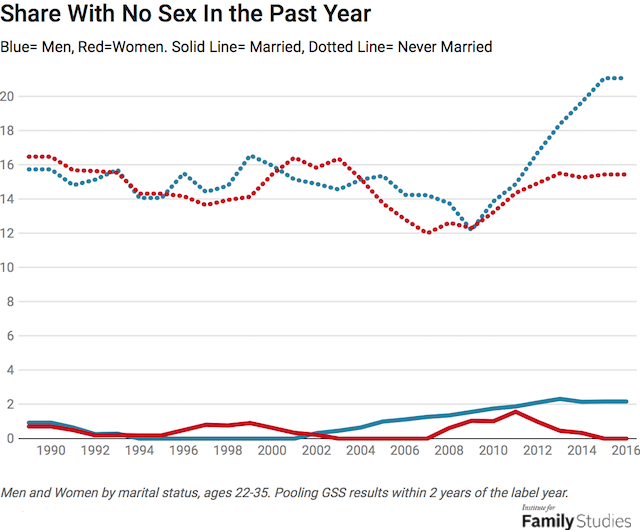

This is basically a red flag for any relationship. If the only thing making or allowing a person to be happy in life is their partner then something is wrong. Mental health is no joke and not being able to enjoy life is usually a symptom of an underlying cause. Depression is probably the most common but anxiety disorders can be similarly hard.
I think that's the strongest criticism of incels as well; having a romantic and sexual relationship is not a requirement for a happy life. No one wants to be the partner that gives meaning to another person's life, unless they're also codependent in some way. It's emotionally draining to take on that kind of responsibility.
EDIT to add: the best explanation that I've heard for the feeling men have of basic unhappiness without romance and sex is toxic masculinity; the general societal rejection of deep emotional relationships between straight men. Lonely? Make strong friendships! Spend your time with other men who like you and enjoy your company and validate you. A partner is not a replacement for the natural circle of close friends humans are supposed to have. I'll be honest that I'm not the best at doing this, to my own detriment, but I think it's basically the solution.