This is why the whole "real name" trend is insane to me. Who gets to decide what my "real name" even is except for me? I have this problem on a MUCH more limited scale in that I go by my middle name--a shortened version at that--and have for almost all of my decades on this planet. However, for many services, I'm not allowed to use anything except my "legal name." This is a name that, I hasten to add, ought to include my middle name since it's ON MY BIRTH CERTIFICATE, unlike the souls from the article who are using a different yet still identifiable name for a very important reason. For some reason, "legal" or "real" name only seems to mean "the first and last words from the 'name' line on your identity document."
Names are not intended to be unique or, frankly, immutable. A nickname, full name, shortened name, set of initials, or even a creative symbol can all stand for the same person and it's nobody's business, especially for a free "social" site, what relationship that string of letters has to that person.
(I would like to reiterate that I am not putting "oops, can't use my middle name" on the same level as "holy cowbells, an intimate detail of my life was just revealed to coworkers and potentially-hostile reporters without my knowledge or consent." It's just a small point of overlap that gives me a tiny bit of insight.)
This isn't even about your own perceived "real name". If I have a relationship with a company and they know my real name I expect them not to leak it to the world. Period. My business is with them and that's about it.
When you initially signed up with GMail you signed up for an e-mail address, not a public directory that links your e-mail address to your real name.
When you signed up to YouTube, you signed up providing a pseudonym. The implicit assumption is that your pseudonym is used to identify yourself to other users of the same service. You did not expect your comments, your videos and interactions to be linked to your real name.
The same principle applied to virtually every Google service.
Google broke that trust with a series of glaring mistakes.
I honestly lost any ounce of trust I ever had in Google.
I have no fucking idea what they have done with my real name.
Every day there is a possibility that Google has come up with yet another obscure shit service that decides to integrate itself with a user's main account and trumpet real life information to the world without the user's consent.
I've said it before and I'll say it again: Google's blown every shred of trust I have in it. I've used the company's services since 1998, for search, for mail, its OS, its corporate tools.
To the extent I can avoid using them now (and in the case of email where another party uses Google it's pretty much impossible), I do. And will continue to reduce my footprint.
And I can trace pretty much all of that to G+ and specific statements and actions of Eric "I'll sue you for publishing my home address" Schmidt, Sergey "Sleeping with my subordinate" Brin, and Larry "We'll fight the NSA while carrying their water" Brin. Honorable mentions to Vic "Not my real name" Gundotra and others.
Are there still good people at Google? Yes. Has the company lost its soul? Completely.
I'm sympathetic, but my view is that nothing I do online or electronically (text messages, email, etc.) is really private. The temptations for companies like Google, Facebook, etc. to abuse their trust are just too great to think it won't happen. If there's something I don't want anyone to know, I don't reveal it. I don't use G+, LinkedIn, or Facebook. I don't put deeply private things in email or text messages. Even here, I would not post anything private because if HN or any authority ever decided they wanted to find out who I am, it would almost certainly be possible.
There's a reason why I was using my G+ account pseudonymously.
However, when Google went out of its way to link up multiple accounts despite my telling them not to, the trust was broken. It's one thing to make an inadvertent disclosure yourself on some mailing list or another, it's quite another to have activities from multiple sources aggregated and de-anonymized for you.
I'm of an age which learned "you don't transact personal business online". I've found e-commerce, online banking, social networking, and the like to be highly curious in that regard, and the long tail of tears (yes, with many successes) to be rather predictable. Maintaining an offline separation for these activities isn't a perfect solution either, though it does generally provide me with plausible deniability and far fewer opportunities to worry about disclosure, though integrating surveillance into phones with integrated GPS tracking your location everywhere makes things a tad more difficult (read Stallman's many postings on this topic).
It's not that I'm planning on a life of crime or terror, but I've already seen my (largely professional / intellectual) online activities come back to me, and by disassociating myself from what I do in my online an offline life (much as you describe), I'm sparing myself that pain.
Facebook is arguably worse than Google in this regard, but both companies have a positively autistic lack of emotional comprehension over this issue.
Privacy is not all or nothing. It is about context. Information _x_ may be shareable with person _p_, but might be an invasion of privacy if it is shared with other people.
So "not putting deeply private stuff in an email" is not practical in general. Even shallowly private stuff would become deeply private in a different context.
Nothing you do online is really private. But maybe some of it should be. And if Google, Facebook, et al. hadn't been slowly lowering the bar of privacy protection, we might've had a more robust culture of privacy in Silicon Valley.
> When you signed up to YouTube, you signed up providing a pseudonym. The implicit assumption is that your pseudonym is used to identify yourself to other users of the same service. You did not expect your comments, your videos and interactions to be linked to your real name.
This point I particularly identify with and it's gotten to the point where I no longer comment on YouTube videos nor leave app reviews on Google Play because I don't want my real name published everywhere on the web.
I can't even begin to identify with the transgender community about the issues Google have willingly created.
I think it's about time the EU (or other governing body) stepped in an mandated that users are entitled to pseudonyms for internet services.
I doubt the EU (or other governing bodies) are very willing to help.
If they were to decide, everything you put on the 'net would be digitally signed with a key on your passport. (yeah, slight hyperbole - unfortunately not too much)
I'm in the same boat. I actually didn't find out what my first name was until I was in 2nd grade and I saw my birth certificate for the first time. My parents named me "Mohandas" after Gandhi, but were concerned about that being the name I went by, so not only did I always go by "Schuyler", my 2nd name, but my 2nd, 3rd & last names were on every legal document I ever filed.
About 3 years ago an agent at the RMV in MA, while looking at my birth certificate, which has all 4 names on it, decided that my license had to be issued to Mohandas. I showed her everything I had, passport, taxes, etc. yet she wouldn't relent and I couldn't figure out any way to protest it. At first it didn't really matter, until I got a letter from my bank that my car insurance was issued through, that I was Mohandas now, so far as they were concerned.
Then, when I went to get a license in my new state, they also insisted, though they were much more polite about it and raised the issue up to supervisors, etc. In the end they sent me to get a current copy of my social security card, which didn't have Mohandas written on it. When I arrived at the SSA...they balked at the difference and issued me a new card with Mohandas in first, and my 3rd name dropped completely. That sealed the deal at the DMV, so now my social security number, my license, my bank statements, utilities, etc. are all issued to "Mohandas" which isn't an identity I have any connection to.
Sorry for the rant, it's just been a frustrating, strange couple years as I've watched my lifelong identity transform out of my control.
EDIT: Would also like to add that in the scope of the article and the very real suffering this issue is causing an already embattled minority, my issue is absolutely not comparable.
You do not have to go through this. You may change your name legally for any reason as long as you are not trying to defraud anyone if you live in the US or a common law country. Your name is someone that you choose to be known by.
Generally you just need to go to a judge and get a court order of your new desired legal name, and prove that you aren't trying to evade taxes or defraud anyone. Then you can bring that paperwork to the proper people.
Look up the process in your new state and get your documents reissued.
EDIT: if you still want to keep Mohandas, maybe try keeping it as a second name, or part of your first name. Like you can be "Schuyler Mohandas" as your first name. Having two first names is common in some areas, such as the American South.
Sorry to hear about your trouble. All of these agencies have a process for changing your name. It can be frustrating, but changing a name is a routine procedure, so it shouldn't be too hard to undo the damage (though of course would have been easier if you did it as soon as MassDOT forced you).
So...I know that. And I shouldn't have said "have no connection to", that was absolutely false and just the frustration speaking. Mohandas was a name for my family and my dearest friends. As I got older, I got bolder about sharing it with many more people, but it remained something only the closest people in the world called me. My best man calls me "MoTowne" (first & last mashed up), my family at reunions occasionally say it. It makes me so happy when those people can identify me by what is an important part of my identity, but so separate from my daily life.
It is bitter to me that what my father once described as a name that was "Just for us" is now on "YOU'RE PRE-APPROVED" mailings from credit companies. It is bitter to me that I'm seriously considering changing my name as I do care. And it is bitter to me that it has changed my plans for my own children. I so loved having a private, meaningful identity to those closest to me that I wanted to pass the same thing on to my children. I've had the names selected for years, yet now I feel like I'd just be subjecting them to the same sort of trouble down the line.
I know it's a weirdly singular issue to have, and it's far from the end of the world, but, again quoting my father, "There's nothing wrong with having a little ambiguity about your identity." In fact...he may have even said "good to have." And I tend to agree with him.
All of that said, I very much appreciate your response.
This, pretty much. I have a friend who had to change her (legal) name due to a stalker, and consequently never uses it anywhere online (she uses an alias on facebook).
Given that's a lie about her identity, she could be quickly distrusted if she ever appears in a court. And that's a preety huge consequence of the Real Name Policy.
"Changing a legal name" is a legal process and the result, a new name for the same person, is no more a lie than choosing a nickname for oneself. From a legal standpoint, the changed name is now a legally permissible "lie."
This does not result in mistrust by a court because the legal system was involved in the change. Of course, all this assumes the "change in legal name" went through the legal process.
Actually changing your "legal name" in many places isn't a "legal process" at all. Not if you mean a state-managed, form-filling exercise.
In the UK for example the law only specifies you must make a public declaration of your intent to use a new name (a notice in a local newspaper will do), and then completely abandon any all use of the old name. Even the venerable old 'Deed Poll' service is just a mechanism to make that initial declaration, it's actually a private register.
In the U.S. anyway, you have the right to use any name by which you represent yourself consistently without intent to defraud, much akin to a common-law marriage.
The changed name is NOT a "lie". Changed name is her new name. As far as law is concerned, new name is the truth about her identity.
And I'm not sure that court would take it against person if that person uses alias online. After all, it is general advice for teenagers not to reveal their names online.
this isn't the problem. you can create a google account with whatever name you want, and as long as it looks like a regular name, they will never notice and not care.
the problem is they have different accounts with different names that are linked (android and g+) but the names are leaking through. it is hardly surprising that it is tricky to prevent that from a UX perspective.
this actually has nothing to do with "real names".
If you happen to provide similar identifiers or contacts on multiple services, they'll join them.
That's what happened with G+ and YouTube.
The mobile phone number Google kept requesting for two-factor identification -- oh, we'll use that to show your G+ profile to people who know your phone number. Fucking no fucking way you will. My G+ identity is pseudonymous, the phone number, unfortunately, isn't (and no, I didn't provide it). But sho' nuff, Google provided _that_ particular retroactive feature.
App Store ratings -- those are under your Real Name now.
Location / store reviews? Dittos.
I've asked 'em, they won't answer. But, Google, if you want us to not think you're working hand in hand with the NSA, stop carrying their water for them.
>Google, if you want us to not think you're working hand in gith the NSA, stop carrying their water for them.
I love this line and it sums up all my frustration about Google. They want me to think they're not in league with the spy agencies when they're the biggest spy agency there is.
> The mobile phone number Google kept requesting for two-factor identification -- oh, we'll use that to show your G+ profile to people who know your phone number.
Is this true? If so, holy shit. The sad point is that Google has broken so much trust that it would not surprise me at all. And it's actually prudent to assume as much.
Here's my earlier G+ post. The biggest problem: before submitting your phone number there's no way to tell what the company will do with the information
Google works for their customers: advertisers. Linking real names is central to identity management, which gives them a much better product for their advertisers.
This isn't about the NSA, and it certainly isn't about you. They're a company, they want money.
This is true to a point right? It's obvious that one you have users, you have value which you sell to the highest bidder whoever they are. They forgot who brought them value. It was the contract of a great product and the original user, us the people. If you want to remind them, leave en masse.
I guess I'll have to do my part and switch out as many of my services as possible.
It's actually trivial to prevent from a programming perspective: don't automatically link accounts, and even if they are "linked" (for login purposes), don't import/export personal information from them.
Now, a disclaimer -- I think how Google has approached this is dumb.
But, what if linking that info allows for better UX and features for your customers? At least for the majority. There will always be edge cases, in any feature we as developers ever build... Is it really as simple as "never do that, ever"?
In Google/YouTube/Google+ -- yeah, I think you can make an argument that people expected those accounts to be separate when they made them and G should not have forced them to link them. Bad form. But I honestly can see some cases where that sort of linking can be used positively.
In my humble opinion, the real issue is 1. How google forced the linkages, and before their latest "Pages" feature (which is hard to use even still) didn't allow for a workaround, 2. How long everyone's google and YouTube and android accounts have existed for. You made your YouTube account thinking it was separate. Now it's not, and that's an issue, due to a (correct at the time) assumption you made in the past, and that's not your fault.
It's a shame that this is such a mess. The only Google product I still use is Search these days. They lost my trust over a year ago now.
For me, as a developer and user, the main priority is only one:
Don't cause irreversible consequences.
That's the reason we have the "Are you sure you want to delete this?" dialogue boxes where it matters and "Undo" buttons where it doesn't.
Given the nature of the internet, the developers (especially Google) should know that once you link two accounts/names, you can't unlink them, so preventing accidental linking should be their priority.
This is the same reason I don't support automatic updates that introduce breaking changes, and I rarely even update my apps nowadays. This is also probably the reason I will buy an iPhone next time, even though I strongly oppose their closed-source/walled-garden philosophy - my my personal information and well-being are more important than open source, and at least I'm paying Apple with money, not information.
Fwiw, I made the same decision with my device choice, for the same reasons. I do run my own calendar and contacts server over SSL, to help safeguard things a bit more, as I don't trust Apple all that much either.
Far and away the biggest problem with all of this is that it's not opt-in. None of it. Not even the decision to have a G+ account at all, unless you posit that everyone who signed up an email account a decade ago before "social network" was even a thing.
To then turn around and call it "user error" when some forced integration has undesired consequences is just abominable.
In some countries like Spain, you don't have a right to decide what your (legal) name is. Your parents are required to register your father's first surname as your first surname, and your mother's first surname as your second surname. You may only change the order of your surnames, and there is a specific legal process to do this.
In Spain you can also change your given name without much problem (though it has all the inconveniences of bureaucratic processes, fees, etc)
It is not possible to change from a male to a female name or viceversa (unless you are legally changing your gender, which has its own, more complicated process). There are unisex names, but are pretty uncommon in Spanish, though I guess using a foreign name could be a trick in these cases.
(Note: People have two surnames in Spanish, the first one inherited normally from the father, and the second from the mother [1])
There are some cases where surnames can be changed, but they follow some rules and it's not very flexible. For example, is not uncommon to join surnames if they are "famous enough", so they will be inherited as one (keeping the reference to the famous ancestor).
In case someone is curious, here is a link (in Spanish) showing the process to change name ad surnames [2]
It is not a free service. You pay for it with your personal information. It is up to you whether you find the price too high. And with the Google+ integration, the price for using Google services is definitely on the rise.
I'd like to think that Google Plus/Hangouts/etc will go down as one of the biggest bungles social networking, but thankfully we have things like Digg and MySpace to point to for worse.
If any start-up or other smaller business had screwed up this badly, they would be bankrupt. Google survives this only because it's not their main revenue source.
I used to be a big Google fanboy, and I still buy Android stuff because it's the biggest OSS platform in its space.
But Google has fallen. Not because they're spying on us, not because they're "evil" or something, but because they suck at the big moves. They're scatterbrained and clumsy and they screw up incessantly. And then defend the obviously-bad decisions as "user error" when their platform is obviously inscrutable for users.
I just set up my wife with a fresh android phone and the process was miserable. There were days of it asking her to register for Plus ("I thought I already had a Plus account") or install some Maps support gadget ("I thought I already had Maps") and tedious errors. It all worked out in the end, but it was not a good user experience.
Google never planned to "out" this woman. That's the thing to remember. Google never sat down and said "we want to expose every transperson". They just screwed up. Because they suck. They ask repeatedly permission for dumb things that don't need permission, and then they wander over and make clumsy, grotesque changes without considering the consequences.
The whole "Social Layer" thing was a great idea, really. Google needed a Disqus-like platform to integrate across all their services.
But they completely dropped the ball on implementation. It's too opinionated about things it shouldn't be. If you're running a single site, you can be opinionated and say "Real Names Please". If you're running a framework you need to let the users and page-owners set the agenda.
The worst part for me is Bill Simmons apology in Grantland[*]. With phrases like "we definitely screwed up", "moving forward", "we appreciated the dialogue", it reads more like a server-outage postmortem, rather than a somber response to the death of a person.
Also, the article 2769 words too long, which is about 2700 too many.
  Uses of the Word “Mistake:” 15
  Uses of the Word “Mistake” in Reference to Actions on the Part of Grantland
   Writers & Editors: 14
  Uses of the Word “Mistake” in Reference to the Actions of the Outraged: 1

  Compliments Given to Grantland Writers & Editors: 12
  Manic Pixie Dreamgirl-Esque Words Used to Describe the Late Dr. V: 5

  Total Sentences: 214
  Sentences Mostly About Dr. V: 9

  Mentions of the Motivations and Feelings of Grantland Writers & Editors: 23
  Mentions of the Mean Things Others Have Done: 17
  Mentions of the Sad Feelings of Grantland Writers & Editors: 9
  Mentions of the Sad Feelings of Dr. V’s Family & Friends: 1
  Mentions of Dr. V’s Feelings, Any Kind: 0

  Instances of “Apolog[y/ize]:” 3
  Instances of “Sorry”: 1
  Instances of the Word “Sorry” Directed at Anyone But Caleb Hannan: 0
One important fact that this apology made clear for me was that they were never actually planning on outing her before her suicide:
"2. You need to make it more clear within the piece that Caleb never, at any point, threatened to out her as he was doing his reporting.
3. You need to make it more clear that, before her death, you never internally discussed the possibility of outing her (and we didn’t)."
If you read the original piece without this knowledge it sounds like they wrote an article outing her, told her they would publish it and she then killed herself. What actually seems to have happened is that they only wrote the version of the article outing her after her death.
Still, I don't get why this piece insists on their lack of intention to out her in the published article, while admitting they outed her to an investor.
Feels like 'we dont want to tell the world about it, we just told it to some public figure in your field'
I think this is unfair - the author isn't responsible for a suicidal (from past incidents before the journalist every was involved) and clearly mentally-ill person spinning a web of lies about their life (lies about where she worked, studied etc, that aren't related to her gender) and as a result provoking curiosity about their claims by a journalist who has got his teeth into a fascinating story.
That's all a separate issue from the person's decision to change gender (apologies if this is the wrong verb to describe what she did, I don't intend it to be).
People are vulnerable. And there is a lot of... cruft, attached to sex changes. And not only that, it appears that some family members essentially cut him/her off. So, that's basically a lot of pain all tied up in with the decision to sex-change.
I don't think any of us would have an easy time imagining ourselves in those shoes, but I'd bet that many of us would have an even harder time dealing with it, given how closely we cling to our specific gender trappings.
Some sensitivity to this may have helped.
It would be easier for a person to be honest with the world if the world (and her family, apparently) at least accepted, if not completely understood (because ultimately, it's so subjective that you barely can), gender-change decisions like that.
You clearly aren't familiar with Simmons' writing style. For instance, in my opinion the best thing he's even written was the Oscar Robertson section in The Book of Basketball. He manages, in the course of only a handful of pages, to just about perfectly capture the difficult balance of the O's legacy. His enormous talents, his extremely difficult personality, which got in the way of success, and of course the way that the ever-present racism of the era he played in deeply affected both those things. And I'm not the only one who feels that way. In the second edition, Simmons includes a footnote from Jason Whitlock, one of the most vocal (and, it must be said, controversial) media members about racial issues in sports, and he says essentially the same thing. My point? Simmons uses that language throughout the section. It's his style. He's informal, he's straightforward, he's self-deprecating, and he's funny, and it's why he's been so successful and will continue to be. His language in the letter would be troublesome if it was a departure from his usual writing, but it's not, and so as an avid reader I don't take it as flippant or dismissive.
As for your comment about it being 2700 words too long, the original post here is the only professionally published article I've read on the subject since Simmons' statement (which includes articles on Salon, Washington Post, Deadspin, etc.) which continues to phrase the events as though Hannan acted maliciously. The reason for the length of Simmons' apology was to make clear that Hannan and the editorial staff were extremely unfamiliar with trans* issues, and that it was that lack of education, and not personal hate or bigotry, that caused Hannan to make the mistakes (which Simmons, it should be noted, takes full responsibility for) he did. He didn't realize how grave it is to out someone in the trans* community in life or death, and to him it fit the narrative he found, of an inventor whose life was a complete lie. Again, he didn't understand that keeping a gender identity secret is done out of necessity in our culture, and is not in any way a statement of one's personal veracity. Grantland also published an op-ed by ESPN's Christina Kahrl, who is transgender, in which she eviscerates Hannan and the editorial staff's actions (http://grantland.com/features/what-grantland-got-wrong/). Note that at no point in her attack on Hannan's actions does she attribute it to maliciousness. To quote, "revealing her gender identity was ultimately as dangerous as it was thoughtless."
EDIT: I guess I should I add something, just so I don't get accused of anything. I attended one of the most progressive high schools in the country, and now attend one of the most progressive colleges, and know many LGBTQ and trans* individuals, with a few of the former counted among my closest friends. I believe that one's identity is theirs and theirs alone until they choose (if ever) to come out, and I also strongly believe that active sexual and gender discrimination is a hate-crime. My point is not that Grantland was not horribly horribly wrong. They were. My point is that it was a lack of education that caused their errors, and that the opportunity should be used to continue educating, which Simmons' piece, even if it seems at times to be attempting to shoehorn in an excuse, does. I know the errors they made, but I'm sure the vast majority of Grantland's readership does not.
Google have indexed the Internet. They have indexed public roads (Street View). Both things are pretty useful. Pretty cool.
The issue now is they want to index people.. pretty creepy. This can be seen with Google+ and the various inflexible policies it has towards Google accounts. Is Google "person search" really that far off? Already you can email anyone with a Google account right(?) How long before you put in a name and a town and you get Google+, Facebook, Twitter profiles along with posts related to that user from their public names and confirmed alias.
The only way to opt out is to destroy your Google account which is a shame as gmail + docs are pretty awesome. I don't know how that would affect Android for the day to day user.
Primarily only by not being able to use the play store, and having to disable the 'Google Contacts Sync' to store numbers locally without having google sniff them.
Make a gmail account, add no personal data, and use it only for the playstore, and problem solved.
It's really pissing me off that in CM11 (Android 4.4?), when I go to add a contact, the message is "your new contact will be synchronized with <google account>". As far as I can tell, the option to store numbers locally has been intentionally hidden (the only way I can think of to do it is create the information on a different phone, export it to a contacts file, and transfer the file...).
It is NOT true that I can avoid opening a Google Plus/Facebook account, and thus protect my privacy.
Google/Facebook has been striving to integrate the public account with many important services. Google/Facebook are a monopoly/very dominant in email, social networks, navigation, smartphones, etc. Some online services already require a Google/Facebook account. Your social media account determines your credit score[1], or can get/deny you a job position. This is going to get more widespread.
A social media account has become mandatory, and the law should step in to protect our privacy and safety.
Yeah just make a Google+ account for work. And when Google asks for your real name, and nobody at works knows you're transgender, what do you do? Put in your legal name that's still set to your old gender? Put in your new name that Google rejects because it doesn't match the name on your phone bill / credit card / whatever. Put in a fake name and wait until your account gets deleted?
> Put in your new name that Google rejects because it doesn't match the name on your phone bill / credit card / whatever.
This is the part that confuses me -- granted, my Google account for work has my legal name on it, and I don't have to deal with a mismatch between that and the name I go by. But I have several throwaway Google accounts, and have never had my real name turn up on any of them. Is this purely because I don't associate them with my phone number, and don't use them for e.g. purchases in the Play Store or whatever? Are you saying that, if I did that with a throwaway account, I'd suddenly find that it had ceased to be a throwaway, and had my legal name and suchlike associated with it? Pardon my confusion -- it's just that I'm astonished at the idea of Google, or indeed anyone, pulling a trick like that. Is that actually what goes on?
You're being hyperbolic. Neither is mandatory. Your linked article seems to be implying that the information one willingly makes public on social media is the problem for some credit decisions, and the latter part of that article seems to be concerned with businesses with specific online components. Interesting ideas, but a distraction from the topic at hand.
That article doesn't make any sense. I have to read each paragraphs two or three times and take mental notes to deduce who's who and who's doing what to who.
The author's name definitely rings a bell. I can't recall the details, but I am pretty sure she has been associated with quite a few articles like this on HN in the past, most of which were horribly written and turned out to be largely false or exaggerated. Does anybody still have a link for one of them?
I've read a few of her articles and they have all been lousy. Not spectacularly lousy, just as lousy as many mnay other articles.
But this article, although terribly written, does have so e really important information: Google has a bunch of products. I signup to them using different names. I have no idea how to control what name is used for what service. Ideally we'd have either a single control panel allowing is to set the name that is used for each service, or an easy to access control panel for each service.
In the UK I am legally allowed to use whatever name I like so long as I do not have the intention to defraud people. This makes Google's weird complicated system really annoying.
There was one posted in a comment a few days ago, where she blamed "fanboys" for something that was quoted literally her own screw up, to do with booth babes. It was pretty depressing reading. She's a shocking writer, who seems to relish controversy (something I've noticed wanna-be journalists mistake for actual respect for their writing). Which is a shame, as there seems to be an actual good point in this article, but you have to get through the emotional manipulation and twisted facts to find it.
Read it. John Gruber wrote inaccurately in a blog post that I labeled a female developer as a "booth babe" - she was not, and I had not. Unlike Gruber, I tracked down both women and asked how they felt about the whole thing, and published the results. Shawn King, who had originally told Gruber the lie, began a character attack campaign on me (calling me a whore in Twitter, etc), I believe to distract from their error. I got the usual death threats that women get, and I wrote about it (with the encouragement of my bosses at CBS) - perhaps this is the "pretty depressing reading" you indicate. Gruber never corrected his mistake. To this day, colleagues from other majors (NYT, etc.) ask me why Gruber did that. I don't know.
Now: you claim there are twisted facts in "Google outed me." What are they?
Your still posted article continues to include a passage where you call the PR person in question the "saddest booth babe in the world" So Gruber wasn't wrong, you did exactly what he claimed and you are now lying about your mistake.
It's so obvious that you were forced to add a ridiculous disclaimer where you continue to avoid any responsibility and instead assert that your original claim was "impressionistic". I posit that there's a different word for what you're doing: bullshit.
This is your modus operandi: You construct a compelling narrative first and then fits the facts to said narrative, truth be damned. Your original story is often based around very real problems in the tech community, so when you inevitably get called out for your falsities, you then attempt to shift all attention to the problem and blame those who have dared to point out your inaccuracies. Nowhere do you ever address your own terribly sad methods, instead, you continue to build a career based on being "controversial", never bothering to realize that your scorched earth approach harms the groups you write about and the tech community as a whole.
I wish we'd have a way to store such instances somewhere and connect it to a browser plugin or something, so that when one opens an article a message is shown: "The author of an article has a history of exaggerating, writing falsehood and outright lying. See [link] for details."
Hi there. Do you have a problem with OP's article itself, or just me? And is it just your personal distaste for my reputation or person, or do you have a legitimate critique about the article's citations, sources, or topic?
Some LGBT rights organisations rank companies by how LGB and/or T friendly the organisation is to companies. Large tech companies often come out quite good. These rankings should start including factors that affect the customers of the company, which means Google would start losing rankings due to actions like this.
The rights organizations should award negative prizes to the worst-behaving companies and organizations, bundled at a well-publicizable awards event. This generates bad press on those companies, which in turn might do some good.
I see some candidates for such awards right there in the article.
Please, get this guy fired. G+ is the biggest failure of Google. It has destroyed gmail chat with hangouts. Youtube with stupid G+ comment integration. It's slow, privacy unfriendly (to say the least, this present article is sadly crazy!), technically weak and socially awkward. They even fuck up the search, even the search!, with a strong bias on G+ "likes" and G+ authorship.
> It has destroyed gmail chat with hangouts. Youtube with stupid G+ comment integration.
These are pretty much huge improvements over the previous implementations though?
>They even fuck up the search, even the search!
I've personally found this useful on many occasions. True, I wish they could integrate with Twitter like they did before, but that's going to take coordination with Twitter. What would you improve regarding search/G+?
I'm starting to get seriously scared about Android 4.4 whenever it becomes more widespread.
I use CyanogenMod, who should strip out some of the worst intrusions, but I guess with 4.4, I'll need a replacement dialer and SMS as I don't let Hangouts get anywhere near my phone, and the dialer will be sending numbers I call / get called by to google. I've looked at Handcent for SMS, but are there any privacy-focused dialer replacements?
You defended Hangouts elsewhere. Again I followed your links and don't find things that match your explanations.
The second link is just a screenshot and I see nothing concerning 'identities' there. It wants to replace SMS and you can accept or deny? Granted, one should click on that learn more button before accepting that - I don't know what hides behind that link.
Maybe it is the first link you posted? That .. doesn't seem to say a thing about identities either, unless you mean the single paragraph about being able to select among multiple accounts, should you be signed in to more than one?
I didn't watch the video, maybe that one offers more, but so far I don't think FUD is the right term here..
I know that from personal experience! I got that screen I link to, then another notice poped-up telling me what identity I'm currently using, I'm searching for a screen cap of that.
So your anecdote says you had one experience and hers says she had a different experience. Whose are we to believe as authoritative? Is it not possible that software has different results for different people based on a wide variety of settings, most of which are not visible to the end user?
This is the second time your novel account has stepped in here to post defense of Google which amounts to no actual support of the statements you're making.
The fact is that Google have made keeping personal data and private activities among various Google services all but impossible. I had my unrelated G+ and YouTube accounts outed and linked despite repeatedly rejecting the joining of them, in November 2013 (resulting in 3 simultaneous top-o-the-page HN stories at the time).
It's still not going onto my phone. Merging google+ into SMS is a bad idea, and dangerous to privacy no matter what options there are today that will likely disappear later. Google have consistently proven themselves hostile to privacy and user choice.
I think if there's anything I'm not buying into, it's a new account which seems to only exist to promote Hangouts / google+.
I'd love to know what benefits the real name system has been providing users. It seems like it's causing more outrage and problems (i.e. recent Youtube comment redesign) than actual good.
> And, seems to me, we still have this (white) male dominated journalism elite, with their myopic, pseudo-macho ideas of what truth and the pursuit of it means.
What a nice way to plug in some generalizing, offensive, misandric comments.
Yeah things like that are a good way to immediately discredit any other content you had, regardless of its legitimacy.
I also read the word "triggering". A term I can never seem to figure out in it's context. It seems some people believe they (at least ought to) exist in some Utopian society where everyone should know what may upset everyone else (even in the slightest way) and endeavour to avoid at all costs. I mean it's maybe a nice concept on the whole, but the over intricate levels these people take it to are ridiculous.
The whole article smacks of entitlement. Simplifying a name, or even a gender is not a personal attack or an attempt at discrimination, it's just in truth a simple system. If you use ten names and five genders, then why the hell should things like this cater to you? Not specifically to ignore you, but if everyone has these over indulgent massively personal requirements then all cannot be fulfilled.
I'm sure there are people in the same situation that haven't had this problem, so how it isn't user error is beyond me. It's a free service...
We can't walk on eggshells all day because anything we say could trigger someone's traumatic memory. But use some common sense. If you're gonna talk about rape, murder, suicide, and your audience may not expect it, ... maybe give people a warning.
Also - entitlement schmitlement. Expecting a company to handle your personal information discretely is a reasonable expectation. When Google acted recklessly with peoples private information, they violated their users trust.
> I also read the word "triggering". A term I can never seem to figure out in it's context. It seems some people believe they (at least ought to) exist in some Utopian society where everyone should know what may upset everyone else (even in the slightest way) and endeavour to avoid at all costs. I mean it's maybe a nice concept on the whole, but the over intricate levels these people take it to are ridiculous.
That is not what triggering means. Generally triggering means you are going to talk about things that, for people who may have suffered horribly at the hands of, may cause you to flashback to those times. For example, if you are writing an article about rape, it may be that someone who is a survivor of rape would not want to read such a story as it may trigger flashbacks, panic attacks, etc. due to their history. Generally speaking, you usually want to notify someone up front if a post or writing contains something really disturbing for some readers. Moreover, being slightly upset is not being triggered, being triggered is more like a full on episode and is emotionally traumatic. If you've had the luck to never have something like that happen to you, you should be extremely thankful.
> Simplifying a name, or even a gender is not a personal attack or an attempt at discrimination, it's just in truth a simple system.
Actually, systems that override a person's ability to control their name and/or gender are discriminatory inherently. How many times have we heard stories about people from different cultures with longer names that have them badly handled by services and cause them problems? Systems and designs that normalize western style names are inherently discriminating against everyone else. Systems and designs that proscribe for only 2 genders or that genders are static are inherently discriminating.
> I'm sure there are people in the same situation that haven't had this problem, so how it isn't user error is beyond me. It's a free service...
Free service or not, how user data is handled is an important aspect of design. When the systems being produced by Google leak details intended for use in only one service or product start to cross pollinate in a way that is difficult for the average user to understand, it is not user error it is designer error.
I have little respect for Violet Blue. You're talking about someone who changed her name, then sued the pre-existing owner of the domain matching her name for trademark infringement (longer story, a porn actress started using the name "about" the same time as Violet Blue began writing under that pseudonym. EIGHT YEARS LATER, the writer changed her name and went after the porn actress and appears to have this sincere belief that the porn star made a choice to capitalize off of her fame as a blogger).
Violet Blue (the writer) first used the pen name in an online article in 1999; No Name Jane first used the name as a stage name in 2000.
No Name Jane has appeared in hundreds of adult films over the years under the name “Violet Blue”.
Violet Blue legally changed her name to Violet Blue, registered her name as a trademark in early 2008, and promptly filed suit.
The Northern District court granted Violet Blue’s motion for a preliminary injunction, ruling that she had a valid, defendable trademark. (However, the court was not convinced Blue would succeed on the merits of her trademark dilution claim because the Federal Trademark Dilution Act requires that her trademark be famous prior to the time No Name Jane began using it.)"
"Violet Blue is a self-made autodidact" - is a self-made self-teacher?
The blog post is making false statements and linking to the "Opinion" (it is a Preliminary Injunction) and fooling people like you into thinking his statements are true.
Despite your personal opinion of me, the facts are as follows:
I did not, and never changed my name. During the lawsuit, ample discovery and subpoena was performed by both sides showing Court and Defense that my name has never been changed.
I was granted my Preliminary Injunction on three claims. Read it to see what they were. As I worked with the EFF with, on, and throughout my lawsuit, we were very careful to make sure the claims were specific to not establish any precedent that would, or could, negatively affect Trademark or speech rights / laws by the claims if they were validated by the Court (and they were).
The lawsuit was not primarily about the domain. Ms. Woffinden-Johnson was using my name and my likeness to perform in porn, to do a "sex ed" radio show, and to do in-person signings as me - she began doing "sex ed" videos, as well as "nerd girl" porn and "girls with glasses" porn during the lawsuit. She also dressed up as me and did signings in San Francisco as "Violet Blue." At the time we filed suit and until we obtained the injunction, her website had several photos of her on the front page as she normally looks - blonde, natural - and one image front and center of her with a black bob wig and "Bettie Paige" style bangs, and my name over that image, which the Court acknowledged as adopting my style and creating confusion.
For those interested, Ms. Woffineden-Johnson acknowledged in Federal Court and in writing that she never had the right to use my name. I did not ask for anything but the web domain and that she stop using my name and likeness. Though we discovered she was not poor (she claimed to the Court she was "indigent" and the Court was not pleased when it was revealed otherwise), I absorbed all of my legal fees. Also, the lawsuit was originally launched when Ms. Woffinden-Johnson emailed me saying she was "almost done with your [my] name" and that I could have it back when she quit porn, which she said she was about to do - and then did not. I spoke with the EFF and EFF colleagues about the email and they already knew about my problem, and then we later filed suit.
I will stand partially corrected on the issue of you changing your name for the purpose of the suit.
However - you are amazingly cagey, and very specifically wordy around the issue of your birth name.
“My name is legally Violet Blue.”
You make claims of having never changed your name.
You post (redacted) pictures of your passport on your blog (http://www.tinynibbles.com/blogarchives/2008/08/about-those-...) as “proof” of your name (certainly, currently), but the idea of posting similarly redacted birth certificates “is really a scary thought”.
"My name is Violet Blue. As I have proven, provided evidence, and provided plentiful witness testimony (and have had legally acknowledged) to and by the US Patent and Trademark Office and the Federal Court of the 9th Circuit, I have been using my name Violet Blue related to the goods and services of my brand, “(…) since 1999, “
which, if you actually read, does nothing to bolster your claim that it’s your birth name.
Also funny that your birth place and year are redacted everywhere, including Wikipedia.
The irony of all this is that it doesn’t really matter what your birth name was or is, and whether it’s really anyone’s business is highly doubtful. But to pretend it’s all on other people, and act as though you’re this entirely victimized person, and not fanning the flames is a little disingenuous.
Sadly, my access to LN is unavailable at the moment - but I’m curious, of all the filings you could link to, why only a preliminary injunction - you talk of Court findings and acknowledgments, but you settled. Courts don’t issue findings unless they issue a judgment, not when there’s a settlement.
Article author here: I did not entirely agree with his comment, but I included it because it made a strong, though extreme, point about the state of journalism in what he felt led to what happened with "Dr. V's Magical Putter."
I was surprised by the tweet saying she was glad she lived in a state where it was illegal to fire her...does this imply there are states where it would be legal to fire someone who was transgender?
Attempts to prohibit discrimination of sexual orientation and gender identity at the federal level (the same as sex, age, handicap, race, color, religion or national origin) via the Employee Non-Discrimination Act (ENDA) have failed since 1994. See https://en.wikipedia.org/wiki/Employment_Non-Discrimination_... for details.
This site says there are 34 states where you can be fired for being transgendered, and 29 were you can be fired for being gay [1]. It gives a map showing the later.
Not for any reason. Even in at-will employment states, you cannot fire someone on the basis that you discovered they are Christian (or Muslim, or Polish, or an Army veteran) and you don't like Christians (or Muslims, or Poles, or vets). Some are federally protected categories (termination on the basis of race/ethnicity/religion/gender is banned nationally under the Civil Rights Act of 1964), while others are prohibited by state laws. The status of firing someone because they are transgender under federal law is in flux; the EEOC issued an interpretation in 2012 that the 1964 ban on gender-related employment discrimination covers employment discrimination on the basis of transgender status, but I'm not sure whether this has been upheld by courts.
Of course, you can state no reason, and avoid leaving evidence of your real motivations, which might make it harder to prove: if you fire someone because you discovered they're Polish and you hate Poles, they can only win an unlawful-termination suit if they can prove that was the reason.
In the United States there has been a long history of discrimination against national origin, especially of recent immigrants. Poles were just used as an example here of a national origin.
True, but U.S. anti-discrimination law rarely speaks directly about race, and instead uses the broader phrasing "race, color, or national origin", which covers pretty much anything race- or ethnicity-based.
Europe isn't a country. It's a region with both strong and weak economies. A regional average of unemployment rates is invalid and useless for any meaningful statistics.
US: 7.3%
Strong economies in europe:
UK: 7.5%
Germany: 5.2%
Denmark: 6.7%
Norway: 3.1%
Weak economies in europe:
Greece 27.3%
Spain 26.7%
Italy: 12.5%
You can't average countries with completely different governments and economies to produce a regional figure, just like an average of the US' and Mexico's (4.25%) would be equally meaningless.
I'm not even sure these numbers are comparable. Who is gathering and reporting the statistics? Are they all using the exact same criteria and methodology? Unemployment is one of the most politically-charged statistics you can find. I'd be shocked if all these countries reported it accurately.
They are not comparable, nor is the current rate in the US with historic data since the definitions have changed multiple times. It is very much the same with comparing infant mortality since several EU countries count it very differently than the US.
A fair point, but is there an underlying reason (beyond having the Euro) why those economies are weak?
The point I was trying to make was an economic one - if it is easier to fire a mistake (either for perfomance or business-reasons), then it makes you more likely to hire people.
> The point I was trying to make was an economic one - if it is easier to fire a mistake (either for perfomance or business-reasons), then it makes you more likely to hire people.
Given the data you have no argument here. In germany it's fairly hard to fire someone who's out of probation. Still, we have a lower unemployment rate than the US.
Maybe more a kind of protection if the mere reason for being fired is the outing as a transgender.
In France a pregnant woman has some level of protection concerning her job.
Of course. In most states, you can be fired for anything, except race, sex, and religion. And in the rest, good luck proving you were fired for those reasons.
It's always easy to blame someone else, especially if that "someone" is already being hated on by a lot of people.
Google only knows as much information as you give them [edit: is publicly available or can be bought from someone else]. Using a mobile OS that integrates many services from Google, without doing proper research on what these services are allowed to actually do and then blaming Google for using the data, you agreed to let them use, is just wrong.
People just started to forget: Everything comes with a price. Whether it's money, viewing ads or providing personal information, in the end a product is never truly free.
Yes, but that cat is well and truly out of that bag, so (for me, personally) it's time to take as many precautions as I can. One of those is being very careful around Google services. I've since replaced my use of all of them (thank you ownCloud, and DAV!). I've got far fewer consequences to worry about than other people, but for me the trade off is worth it.
They don't have to integrate all those services. Look at Mozilla Persona. Eroding privacy has a much bigger cost than the one Google extracts fom the information. And it's not like we can choose to avoid androids, samsungs and iPhones...
While it's obviously very unfortunate that all this happened, this is not the full story. The words, "Hannan told her he was going to break the agreement not to write about her personal life and reveal her transgender status without her consent," are a gross misrepresentation of what actually happened.
Also, it's a lot of misdirected anger. The reporter's job is to get the story — and in this case Hannan's editors admit they pushed him to do so.
It's hard to defend grantland after they wrote a 2900 word apology, but Dr. V
+ wasn't a doctor
+ claimed her putter worked on "magical" physics but it didn't
+ claimed she was an MIT professor who invented bluetooth and worked on the B2 and had top secret classifications
+ claimed she was a Vanderbilt
+ claimed because she was a Vanderbilt she has special relationships with Hilton
+ claimed her special relationships with Hilton could be used to get access to Hilton golf courses and Hilton customers
And had at least one investor who said he lost $60,000 of his money
I think this amounts to fraud. I think that changes the story from "marvelous putter" to con artists defrauding investors and consumers. I think that when you commit crimes and especially the crime of fraud it becomes very germane what your history is because you may have defrauded other people in the past.
I think no matter who you are if you have a secret you don't want out the best advice is not to commit crimes.
I don't know where in the priority for the local DA or the SEC defrauding an investor of $60,000 is, but it seems to have been ignored by everyone eager to take offense at how this article was written.
Sorry, why didn't they change their name on google, just like the bank, council tax documents and such.
this information could have been easily gleaned when logged in to google, it's not necessarily googles fault if you provide them false or stale information and fail to change it.
> This account was registered using my preferred name, Nora, but when I look at hangout histories, certain locations on my android phone, and a few other places, I see my legal name popping up instead. / I don't remember actually giving this detail to Google, nor can I find anywhere within the settings where anything other than "Nora" is listed
That frustrates me. "Real Name" policies or otherwise, Google didn't magic her name out of the ether. She gave it to them at some point, whether she remembers or not.
There seems to be an implication that Google somehow obtained this information and added it to her account automatically, while this might be technically feasible I'm not aware of any actual claim that this is the case.
Much more likely is that the user entered her real name when she signed up initially and just forgot about it (how many people here can recall what details they gave to MySpace or Yahoo a decade ago?)
That's still missing the point. Even IF the user gave that information voluntarily in the past (she claims she didn't and we should believe her by default in my world, out of courtesy and respect) - the quote continues and says that there wasn't a setting to be found that referred to the wrong/unwanted name.
IF that name was given previously the user still needs to have final say about her appearance online, her very own account data. Saying "You probably gave it out earlier and yeah, maybe there's no way to remove it from the history of your account" wouldn't make Google look better in any way.
No she doesn't. The exact quote is "I don't remember" which is completely different from "I didn't". That's the danger of implication, it makes you think one thing is meant while another is actually said.
According to the article, the issue is that Google+ integration in the user's Android phone caused certain personal information to be visible to everyone even though said Android/Google+ user was not aware this Google+ was being created or updated with this info (the info was synced from the Android address book/contacts to Google who then used it in Google+ account creation).
During a transgender person's "transition" their name is also likely to "transition" hence, until a court order legally changes their name, they may use a preferred name in non-legal contexts. Forcing someone to use a legal name in a non-legal context (e.g., Facebook) is one problem. Allowing a user enter their desired name and then using surreptitiously gleaned information to change that name to their legal name is a different problem, but a problem none the less.
When I give a name to my bank or council tax or utility provider, and they then leak a different name, i can use the Information Commissioner to enforce correct data usage and to provide sanctions. (In theory. IRL they are too busy and too soft).
Right - but at some point she gave them the other name, whether she claims she didn't, or "doesn't remember". Google didn't pull her name out of a hat, and it's not magically associating it via advertising / cross site correlation otherwise.
a deep lack of understanding and empathy from some here. whether or not someone fucks up because they fail to understand how a service works shouldn't result in them getting outed in a way that can be deeply damaging to them. The lack of care and foresight that google are showing is reprehensible.
How does Google know what information would be deeply damaging to them? Perhaps it's obvious in this case, but everyone has different secrets. Short of not sharing any information at all about anyone, there will always be the potential for damaging information to be shared.
I'm no fan of Google's creeping profile integration, but to say:
> Whether or not someone fucks up because they fail to understand how a service works shouldn't result in them getting outed in a way that can be deeply damaging to them.
is ludicrous. If I don't understand how my Facebook status update works and type damaging secrets into that, is that Facebook's fault? Eventually there has to be some level of user responsibility to not share information that will be damaging to them.
"Short of not sharing any information at all about anyone..." Agreed! And online services, like Google and Facebook, should NOT be sharing ANY information with ANYONE without EXPLICIT permission from the person who's information it is.
I may want to share a photo of a me at a party with a sub-set of my friends, that doesn't mean that I want that photo to be available to my mother or to a potential employee 50 years from now. When G+ started they introduced 'circles' which encapsulates this concept, and I was happy.
Since google combined all google services under single user name -without giving users a choice in the matter- they lost my support. With the exception of gmail, I've stopped using google services; and as soon as I find an alternative to gmail that meets my needs I'm dropping that. And I haven't used facebook in many years, for the same privacy control reasons.
Anyone even vaguely knowledgeable about technology knows what these company's business models are. They involve targeting adverts at you based on the information (directly supplied or assumed) that they have on you. In Google's case it's been this way for over a decade. This isn't news.
If you have information which is likely to damage you significantly, don't share it on the platforms they provide. Encrypt it. I can't be the only one who's accidentally shared things as public on Facebook. Assume that something you share via these sites (rather than send via a single receipiant message or similar) is semi-public, because history has shown that it often is.
There's a big difference between (a) doing text or image analysis to find out what I drink and then providing advertisements to me for that drink and (b) telling anyone I have ever, in any way, digitally interacted with what I drink!
I have no problem with the first (and in fact prefer it to untargeted ads) and a huge, massive, deal-breaking problem with the second.
I don't disagree that people are responsible to a degree for their own data security. But this case highlights that there is a limit to an individuals ability to maintain their own data security. This woman intentionally shared one name with people associated with one account. If the allegation is true, google then shared a different name with people on that account.
Saying this woman is responsible is like saying I'm personally responsible for my credit card information being leaked by Target. Yes, I used a credit card at Target. Once Target has my information, they should be held accountable for their security and handling of that information. In the same way Google should be held accountable for their security and handling of this woman's information.
> Anyone even vaguely knowledgeable about technology knows what these company's business models are.
many people are not even vaguely knowledgeable about tech or indeed business models. They just know that it's commonplace to be on social media because their friends, families and work colleagues are, so they do it too. Should they be excluded for fear of being outed against their will?
> If you have information which is likely to damage you significantly, don't share it on the platforms they provide.
In a sense, the irony here is that people are saying "if you don't manage your information well or understand the tech you're gonna have a bad time", but really what's happening here is that the people in charge of and developing services like g+, facebook etc don't understand or respect gender identity and similar issues, but of course it's not them that have a hard time, but their users.
The people who are coming up ignorant aren't those who don't get how the digital world ostensibly works, it's those who don't take the time and effort to learn that their own comfortable existence and relative privilege leaves them in a position of being unaware of how difficult some peoples lives truly can be.
To some the idea of whether you're a man or a woman is a really simple and seemingly inconsequential thing, a dev might snort at the idea that anyone could get het up about whether their gender was accidentally revealed through a change, error or bad design. To others it's literally life and death.
The Google bashing is getting old. This is yet more evidence that you should be aware of how one service will use the information you give it, and that you should be careful with what information you enter on the internet, no matter what...
I agree with your second sentence, not your first. I think that the only way people, even smart people, are going to comprehend what the hell is going on is by these 'bashing' sessions.
Most people will see the headline and say, "Well, I'm ok with the service. Not a problem I can anticipate." It's only when more imaginative, knowledgeable people, who are also able prognosticate and clearly articulate the possible consequences, have this dialog that there is a chance it will catch peoples' attention.
Even then, the odds are long and grim, but the discussion is necessary. Otherwise, most people just don't get it.
Many people on this thread are saying things to the effect of "I lost all trust in Google." I honestly wonder how people could ever fully "trust" them, in the sense that they are not going to look out for their own bottom line- or, more accurately, look out for things that will increase the value of their stock. And that usually means opening up new revenue streams. And for them, that means more ways to get advertisers interested in advertising with them. And that means, of course, giving them more access to their dear users.
It's the same with any public company, but especially high-profile ones who are likely to attract 'active' investors. Since companies don't usually pay dividends on their stocks anymore, the only way the piece of paper that I paid upwards of $1200 for is to convince some idiot to give me $1300 for it. Otherwise, I want someone to be fired because they've cost me a lot of money.
Yeah, you really should have considered what Google would put on their social network when you signed up for an email account a decade ago before "social network" was even a thing.
Let's not be disingenuous and throw around nonsensical claims like "when you signed up for an email account a decade before "social network" was even a thing"...
-You're parsing that sentence wrong; note the word "ago".
-"social network" is in quotes because while the social networks themselves have been around for awhile, they only became a buzzword and the kind of thing Google would try to clumsily emulate in recent years.
Can't we force Google to disable G+? For example, Google has been know to be trigger happy and thinking art works were porn. Or just put an obviously fake name on G+ and let it fall on the "Real Name policy"
Or just quit Google altogether, there. Maybe create then a new account on Google with a fake name.
Yes, you can disable G+ (on Android, at least).
GTalk/Hangouts can be used with a standard XMPP client - at least somewhat usable and For Now™.
Plus, if you're into CM (as the outed woman was, ironically) you'll get the recommendation to use TextSecure for SMS messages, not Hangout.
I have all these apps/services (Hangout, G+, Google Music, Google Books and probably a bit more) disabled on my phone, so it is definitely doable. I am not sure if it is reasonable and I don't think it should be required to avoid this .. crap.
I think many posters here are missing the real problem here, Google is taking liberties with (y)our personal data.
Hiding behind the excuse that you could opt out, or that informational leakage is a user problem is disingenuous and can be illustrated by the simple analogy to a telephone directory:
If your telephone directory suddenly arbitrarily decided to indicate beside a listing (a listing you may not have requested) your sexual orientation, gender, criminal history or political affiliation. Would that be ok?
I think the answer is a clear and resounding "no!", and the underlying issue one that Google must address immediately and definitively. I've been migrating away from Google for the past six months or so, but this has now pushed that to the top of my priorities.
I think everyone on the internet should be forced to use their real identity, except for me, because I have a completely legitimate reason for wanting privacy and anonymity!
It doesn't have to be intentional to be evil. But,
1) The decision to require a full name and gender was intentional
2) The decision to merge multiple accounts under the Google+ umbrella was intentional
3) The decision to automate this merging was also intentional.
I've myself been caught off guard with Google storing my search history on one of my customers' Google account because I forgot to log out after managing their AdWords account. Stupid me, right? But just as with Facebook, they've lost my trust. I'm not alone, and I think it will come back to bite them in the end.
It requires positing an extraordinary degree of ignorance on the part of Google to support the contrary view. After all, people have always had the option to use their real names, they've simply chosen not to - presumably before making the change you'd make some attempt to look into why people would choose that way.
They seriously hurt a lot of people in a very predictable and avoidable way, and are not interested in fixing the harm they've done. And you're whitewashing it without giving any substantive answer to the points in the linked article.
I thought I had two separate accounts for YouTube and Gmail. Not anymore. I used my Gmail address to register an account with YouTube. What prevents them in the future from buying some company, and link those accounts because I use the same credit card or some other supposedly unique identifier?
AFAIK it's required by the new terms that you give your real name. And to do much of anything you need to verify your account with an SMS to a previously unused cell phone number.
Being offended is a moral issue and I agree, as a business you can't fight that 100%. However, being forced to conform to a business's view of your identity is unethical, especially as Google changed the rules - if they had indicated this might happen then those affected could have chosen not to use Plus.
"Google executives said the company would honor existing military contracts, but that it did not plan to move toward becoming a military contractor on its own."
In contrast to
“Attack the evil that is within yourself, rather than attacking the evil that is in others.”
― Confucius
It boils down to taking responsibility for your own actions. She took the effort to change her physical gender without much effort into changing her online identity. She didn't change her G+ profile and ignored google's warnings about using it.
I tried following your arguments, but failed.
The woman in question flashed CM11 and (official, unchanged, albeit unsupported/in a grey area if you grab them yourself?) GApps. G+ etc. is part of that and as far as I can tell and that is what the person in question states in the discussion you link.
How do you know that 'The ROM'(?) 'skipped all disclaimer and notice about which identity will be used'? The Twitter link at least doesn't say that at all.
Obviously you might have a point, but you didn't present it well/the facts given don't match what you claim to know.
That screenshot doesn't seem to indicate to me that any change to any outgoing identity is to happen. The only thing it tells me is that I can use Hangouts to send SMS.
I haven't used android in a while, so you still might very well be right, but the screenshot you've posted as an example doesn't tell us anything.
Once SMS is turned on you get a message on top of the screen informing you what identity will be used, can't seem to find a screen shot of that (probably since people don ' way to publicise that info).
You appear to be extrapolationg your experience of an OS on a device with a bunch of accounts to her experience of a differently installed OS on a different device with different accounts. Then you appear to be saying that she is wrong and that it's her fault.
Part of the problem is the lousy quality of journalism. From reading TFA we can't know what actually happened. But if you know what happens on simillarly installed OSs and accounts it'd be great if you could present a clear wallthrough.
At the moment you seem to be making irrelevant points.
It's certainly not Google's fault, either, if someone flashes a third party "mod" ROM to their device that may or may not have had disclaimers and EULAs removed, any more than it's Adobe's fault that I didn't see a claus in the EULA claiming my firstborn because I didn't buy Photoshop but instead pirated it, and the pirates replaced the EULA with an ad for their 0-day warez site.
This article is riding the anti-Google+ bandwagon, as you mentioned exploiting a very complex, highly nuanced tragedy to try to bolster page views. It's just as unfortunate to blame complex societal issues (like the acceptance of transgenders, criminal backgrounds, educational history, etc.) on a technology or software product, as if Google Hangouts carefully considered the ramifications of a male versus female name and decided to "out" the user maliciously.
Cue the sardonic "don't be evil" scare-quotes that inevitably appear.
Though I don't know if I'd go as far as blaming the user -- it is possible the system had two or more identifiers and confused them. Indeed, the core purpose of Google+ is as a simple aggregation of disparate identity systems across Google's properties and apps, so such conflicts are a virtual inevitability. Hangouts was upgraded, to much cheering, specifically to aggregate SMS and IM functionality, so if you were living a different life on both things might get complicated.
It's extremely hard to hide or change the past. It was hard before the internet, and has become effectively impossible now. It is almost irrational to expect to transition to a new life and an entire legacy of breadcrumbs will disappear, especially while trying to hold onto some parts of that prior life.
> Cue the sardonic "don't be evil" scare-quotes that inevitably appear.
Those aren't scare quotes. That is quoting an actual full heading from one of their founding documents [1]:
"Don't be evil. We believe strongly that in the long term, we will be better served-as shareholders and in all other ways-by a company that does good things for the world even if we forgo some short term gains. This is an important aspect of our culture and is broadly shared within the company."
A scare quote isn't a manufactured quote, but instead is taking something someone (or some thing like a corporation) said and making one's skepticism/doubt readily apparent.
It's extremely hard to hide or change the past. It was hard before the internet, and has become effectively impossible now. It is almost irrational to expect to transition to a new life and an entire legacy of breadcrumbs will disappear, especially while trying to hold onto some parts of that prior life.
Well it might soon be legally required in the EU. Wanna do business here? Make it possible.
I don't see the google plus issue as one of hiding her past as it was her 'new' name which was leaked to the co-workers not her old one which she had been using at work.
I see it as an issue of trying to maintain two identities at the same time on the same hardware. This was no easy task before different accounts all got tied together. Now I will agree it is much harder.
While using different sets of hardware is how drug dealers accomplish this task in TV and movies a person doing so for non criminal purposes should not be required to go through this, however I don't know how and I won't speculate on how such users can or should be able to do this, as that is a complex problem.
I do not use my legal name on things online but I am fairly consistent with my name use, as such I am privileged enough to have google+ using the name I would like it to display. As such I am also unable to identify all the sources google+ uses to determine ones name. Would I be correct in assuming it is only things in the google ecosystem, or does google somehow scrape name data from other sources such as Twitter?
Google creates a real identity for you, without you explicitly asking them to, based on the information they already have about you, like your interests(google now), gmail account (and its contents!!!), youtube, blogger, author profile, G maps, waze, android (photos, who you call, who calls you) GPS (where you go, with whom, how much you stay there), your friends, coleagues, acquaintances and possibly indexed 3rd party web pages. And they buried what they are doing and the privacy controls through dark patterns, so most of the people aren't even aware of that.
Not only they are forcing the majority of the internet population to have an account pulling information from different parts of their lives, they are forcing them to use that account publicly and start identifying with it - youtube, sms, email, blogger (soon waze?).
Tell me how dystopian this is? Now consider that the same company knows all the sites you visit and how you got there.
This isn't true for your public profile. Whatever you share on google+ is what you, youself, put on it.
It doesn't share the sex they can deduce you have, it shares the sex you entered yourself. Same with the name and everything else.
No it didn't, it might have been created when you joined something that required it and there was a check mark somewhere, it gets populated by stuff that you added when you started Google account like date of birth etc, but you get presented with that as well.
I'm the kind of person that explores all menu options and such in software to make sure it doesn't run/install anything I don't want. When signing up for services online, I go through all the settings. I even occasionally go through my Gmail settings to make sure nothing has changed.
Maybe it was "designed" to give me an option, but I never had an option. Gmail isn't bug-free either. Over the years I've run into a few bugs. Occasionally the link for the inbox shows I have unread mail, but there is none. I'm able to fix it by doing a search for unread mail, and the link changes showing that I don't have any unread mail.
> I even occasionally go through my Gmail settings to make sure nothing has changed.
Yeesh. It's stuff like this that makes me glad I run my own mail/CalDAV/CardDAV server, and am thus free to use throwaway accounts for all of my interaction with Google.
I wonder if there'd be any interest in an old-fashioned HOWTO that starts with a freshly imaged VPS and goes through the whole setup process. It's been a few years since I set everything up, but I've been planning to redo it on a fresh box anyway, and writing the HOWTO wouldn't add much effort.
I think that's a good idea. I know I'll be looking for some examples in a couple of months when I have enough time to dedicate setting one up properly.
You may or may not have seen it already, but in case you haven't, I'll link here the "How to NSA-proof your email" howto [1] someone just posted in the "Gmail was down" thread. Regardless of how you feel about the Black Chamber, it's an excellently well-written document on setting up your own mail-serving VPS using postfix and dovecot; the filesystem-level encryption stuff is trivially severable, and constitutes about 80% of what I'd have written (but not as well) had I not found this first. The other 20% would be setting up Baïkal for CalDAV/CardDAV service, but that's pretty straightforward and well described in the Baïkal Github repo.
(Minor quibbles about the HOWTO: I'm not sure Solr is really necessary; Dovecot seems to give me full-text search for free via IMAP. Also, I tried Z-push and it worked, but didn't support message flags, which I require, and I got tired of push pretty fast anyway. It works, and might've added message flags in the years since I tried it, but it's by no means required. Still, an excellent document, which I unreservedly recommend.)
Actually, when I created a disposable gmail account a couple of years ago, it came with google plus already active. I deleted that part, of course, but I never signed up for it.
I love the implication that having something auto-opt you into something and then doing it is the same thing as voluntarily doing it. Like we're supposed to be ok with the companies we do business with behaving like evil genies.
Even if people don't have a google+ account (even if they don't have a gmail account), do you really think google aren't building a profile with as much personal data as they can collect?
With all respect, I don't use Googles services anymore myself, but your posts in this thread have been as... partisan, for lack of a better term, as the person you claim is a "Google employee". You're just on different sides of that.
Well screaming like a (anti)fanboy doesn't fit in with HN's discourse, and will make the majority of people dismiss what you have to say. That's as shame, as I actually agree with you on this topic somewhat.
But to answer you, so the casual reader does not get confused, you get a Google+ account when you use gmail or youtube or pretty much any other google service.


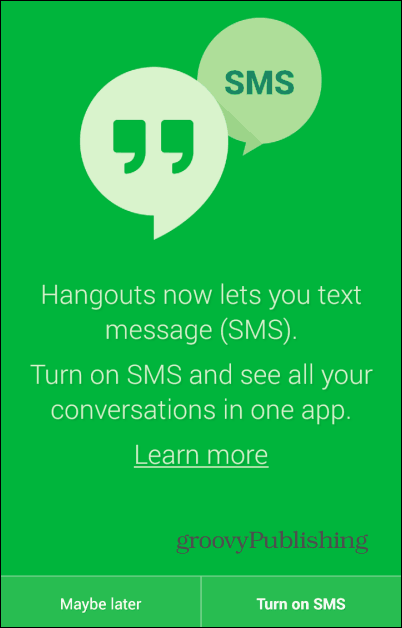

Names are not intended to be unique or, frankly, immutable. A nickname, full name, shortened name, set of initials, or even a creative symbol can all stand for the same person and it's nobody's business, especially for a free "social" site, what relationship that string of letters has to that person.
(I would like to reiterate that I am not putting "oops, can't use my middle name" on the same level as "holy cowbells, an intimate detail of my life was just revealed to coworkers and potentially-hostile reporters without my knowledge or consent." It's just a small point of overlap that gives me a tiny bit of insight.)