The beginning of the article is an excellent (though conventional) introduction to Bayes and Bayesian updating, but what I found original and have never seen expressed so clearly were the remarks about dishonest discussion tactics, especially the first one:
Formulate a vague hypothesis H1 so broad that it is not extremely unlikely (thus has non-negligible prior, P(H1) > 0), then in the updating step sneakily introduce a much more specific hypothesis H1’ that is far less likely a priori, but that yields a high probability for the evidence P(E|H1’).
If the audience doesn’t notice the bait and switch, it’ll come away with the impression that the evidence strongly supports H1/H1’ vis-à-vis H0, when it actually doesn’t.
Maybe it's just my liberal arts education but discussions like this and comments like "hypothesis H1’ ... that yields a high probability for the evidence P(E|H1’)" or "evidence strongly supports H1/H1’ vis-à-vis H0" mean absolutely nothing to me without a concrete, real-world example of what H1, H1', and H0 are.
It's not the presence of a liberal arts education, it's the absence of a mathematical one (and technically mathematics is one of the 'liberal arts'). I have a liberal arts background, but also a statistics background and reading this is no problem for me.
Reading and thinking mathematically is a literacy the same way reading sheet music is a type of literacy. Just like there are degrees of literacy for reading and writing same with these disciplines. Some people can't read sheet music at all. I can name the notes when reading sheet music, and know where they are on a piano, but, unlike many musician friends, I can't "hear the music" when I read.
Similarly it takes time and practice to "read mathematics". To someone with no practice the notation appears as scribbles. A more experienced mathematician will pause and work through what's happening. At a certain point, you start to experience the same "hearing the music" with mathematical writing.
> Formulate a vague hypothesis H1 so broad that it is not extremely unlikely (thus has non-negligible prior, P(H1) > 0), then in the updating step sneakily introduce a much more specific hypothesis H1’ that is far less likely a priori, but that yields a high probability for the evidence P(E|H1’).
H0 is "the lottery is fair" (null hypothesis). H1 is "somebody rigged the lottery". It's not outrageously unlikely, it's happened many times before and it's something people can easily understand, and it's not specific about the details. So maybe someone would say "Without knowing more, I think there's a 1% chance that happened". H1’ is "The lottery is rigged by a cult that worships the multiples of {9}" - This is the sneaky step. If it weren't such an obviously outrageous example, you might not notice that this specific hypothesis is very unlikely. However, H1’ perfectly predicts the evidence that we did observe! So basically, if you plug in the numbers, without adjusting for the fact that H1’ does not have a 1% chance of being true, you turn "I think there's a 1% chance someone rigged the lottery" into "The lottery was almost certainly rigged - 99.9997% chance!"
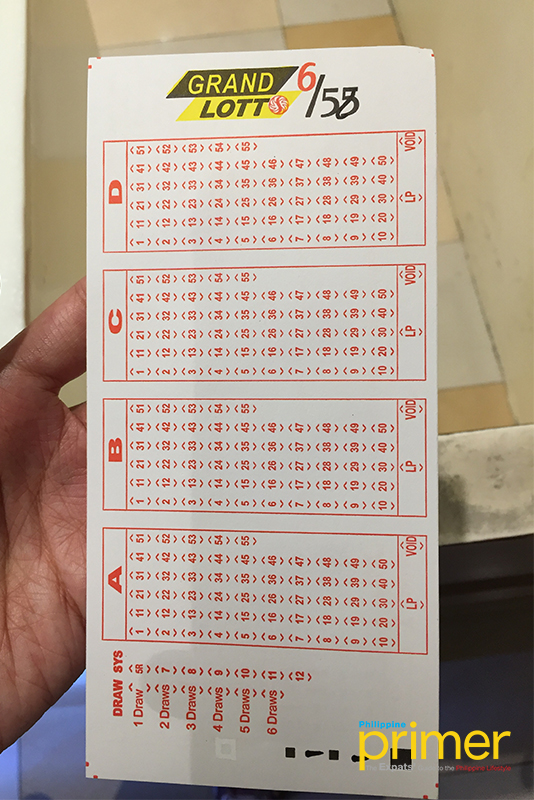
Event {E}: on October 1, 2022, the PCSO Grand Lotto in the Philippines, which draws six numbers from {1} to {55} at random, managed to draw the numbers {9, 18, 27, 36, 45, 54} (though the balls were actually drawn in the order {9, 45,36, 27, 18, 54}). In other words, they drew exactly six multiples of nine from {1} to {55}. In addition, a total of {433} tickets were bought with this winning combination, whose owners then had to split the {236} million peso jackpot (about {4} million USD) among themselves.
Null hypothesis {H_0}: The lottery is run in a completely fair and random fashion.
Alternative hypothesis {H_1}: The lottery is rigged by some corrupt officials for their personal gain.
Alternative hypothesis {H'_1}: The lottery is rigged by a cult that worships the multiples of {9}, and views October 1 as their holiest day. On this day, they will manipulate the lottery to only select those balls that are multiples of {9}.
So then with substitution:
Remark 1: The contrast between alternative hypothesis that "the lottery is rigged by some corrupt officials for their personal gain" and alternative hypothesis that "the lottery is rigged by a cult that worships the multiples of {9}, and views October 1 as their holiest day. On this day, they will manipulate the lottery to only select those balls that are multiples of {9}" illustrates a common demagogical rhetorical technique when an advocate is trying to convince an audience of an alternative hypothesis, namely to use suggestive language (“`I’m just asking questions here”) rather than precise statements in order to leave the alternative hypothesis deliberately vague. In particular, the advocate may take advantage of the freedom to use a broad formulation of the hypothesis (such as "the lottery is rigged by some corrupt officials for their personal gain") in order to maximize the audience’s prior odds of the hypothesis, simultaneously with a very specific formulation of the hypothesis (such as "the lottery is rigged by a cult that worships the multiples of {9}") in order to maximize the probability of the actual event of "they drew exactly six multiples of nine from {1} to {55}" occurring under this hypothesis. (A related technique is to be deliberately vague about the hypothesized competency of some suspicious actor, so that this actor could be portrayed as being extraordinarily competent when convenient to do so, while simultaneously being portrayed as extraordinarily incompetent when that instead is the more useful hypothesis.) This can lead to wildly inaccurate Bayesian updates of this vague alternative hypothesis, and so precise formulation of such hypothesis is important if one is to approach a topic from anything remotely resembling a scientific approach. [EDIT: as pointed out to me by a reader, this technique is a Bayesian analogue of the motte and bailey fallacy.]
It's even more complicated than that though: "dishonest discussion tactics" suggests that the person is doing it with fully conscious awareness and intent, but this is far from a safe assumption - and, it isn't a simple binary "is or is not", and it isn't only the usual suspects who commit this technique.
Maybe so, but ultimately it's up to us to take responsibility for the techniques we use in argumentation. I would agree that it's not generally a good idea to try to use an attack on the rhetorical techniques someone uses in order to win an argument. It's best to politely find a way to challenge their argument without attacking them personally for the way they put their case.
  In particular, the geometry of the lottery tickets seems important. It is plausible that 55
  numbers are set up in a 7 x 8 matrix pattern, with one wildcard (to produce 56 objects). Imagine
  that it is done as such:

   *,  1,  2, .. ,  7
   8,  9, 10, ..,  15
  16, 17, 18, … ,  23
  24, 25, 26, 27…, 31
  ..

  then multiples of 9 are the main diagonal. That would explain frequency in an easy way.
Most useful takeaway from this article: If you choose to play the lotto, don't use cute numbers. Odds are high that other people will too, and you'll have to split the pot.
> Part of the explanation surely lies in the unusually large number (433) of lottery winners
> But on the previous draw of the same lottery ...
> the unremarkable sequence of numbers {11, 26, 33, 45, 51, 55} were drawn ...
I never understood the admonishment not to play the lottery at all.
I waste lots of money doing things that are fun experiences, or buying unnecessary foods or drinks, or gadgets or toys, etc.
I can understand recommending not to get addicted to playing, or not to spend money that should be going elsewhere, right? But when that admonishment is not qualified, then it is a little silly. Might as well say, never buy extra dip for your french fries or something.
It's true that I haven't bought lottery tickets in years, but spending a few hundred cents on some longshot jackpot can be its own kind of fun.
What is the value in buying a lottery ticket? The expected value of the ticket itself is negative, relative to its purchase price. So the buyer gets additional value from the "little thrill" of the purchase and observing the results.
With extra dip sauce, you clearly value the sauce more than the money in your pocket. The dip tastes good, has calories, and maybe some bad health side effects.
Lotteries lack fundamental value, and the "little thrill" often turns into a bad health side effect.
That said, adults should be free to spend their money how they like. Those giving advice are worried that vulnerable people will get sucked into a "trap", like a gambling addiction.
I don't really agree with this reasoning, since to make it a fair comparison wouldn't you have to ignore any pleasure you get from the dip? A lottery ticket gets you a "little thrill" of the possibility of winning, and the dip gets you a "little thrill" of having your sense of taste stimulated. As you said, the other effects may be negative just as easily as they can be positive.
The framing of dip as having fundamental value because it tastes good only seems to make sense if you already like dip and don't like gambling. Possibly reinforced by some perception that feelings are bad and ought to be ignored, while hard facts like calorie counts and chemical reactions are real and admissible as evidence (this is not meant as a personal attack, it's just something that our society often reinforces).
What if we start on the opposite side of the issue than you did? You get
"What is the value in buying dip? The expected value of the dip itself is negative, relative to its purchase price (the expected value is zero, if you acknowledge that extra calories are not inherently good or bad). So the buyer gets additional value from the 'little thrill' of the eating and tasting of the dip.
"With a lottery ticket, you clearly value the experience of having the ticket more than the money in your pocket. Gambling feels good, creates the possibility of financial gain, and maybe has some bad side effects.
"Junk foods lack fundamental value, and the 'little thrill' often turns into a bad side effect (eating disorders)."
Of course, it's possible for dip to have a much higher expected value if you need those calories, but I don't think that's what we're talking about here. So what makes the sensation of enjoying how something tastes have 'fundamental value' and the sensation of enjoying the possibility of financial gain not?
Mathematically, selling used, losing tickets at a sufficient discount would have a higher expected value (also negative). Everyone not selling those would consider these to not be fun at all. So there is some value in "live" lotto tickets.
Personally, I view the odds of finding a winning ticket to be only slightly less than buying the winning one, so that's how I play.
I only play the lottery as a form of insurance. If my work colleagues are starting a pool, I'll get in because on the extremely unlikely chance that they win big I don't want to be the guy who has to come in to work the next day.
Gambling is like alcohol you get a high and then a hangover. The effects of gambling however last longer. What is lost is lost forever, it doesn't increase your odds of winning in the future.
If you find the act of playing itself fun, all the more power to you. That said, personally, I don't think the act of buying a lottery ticket would give me anywhere near the same amount of pleasure as... a dip for french fries, for example.
If you look at it purely monetarily, it's not rational to play the lottery because you're expected to lose money.
> I don't think the act of buying a lottery ticket would give me anywhere near the same amount of pleasure as...
...my once-a-year flutter on the Grand National. Having skin in the game multiplies the excitement of this horse-race, which is already one of the most exciting races there is.
Making selections on a lottery ticket, or rubbing stuff off a scratch-card somehow doesn't have the same appeal; and doesn't give you nearly nearly 10 minutes of fun.
Last time I picked a winner was about 20 years ago. Last time I got a place was at least 6 years ago. I know my money's going down the sewer.
/me not a betting man; apart from the GN, I don't bet on sports; I don't gamble on cards, and I've only once been in a casino. I'm not much of an investor.
If you like at the lives of the winners and the destruction that a jackpot often brings, you could say that you are financing the winner's destruction.
The key to getting rich and staying rich is figuring out how to risk other people's money. If you want to buy millions of lottery tickets, or launch a startup, or start a poker career, or anything really, it's far better to do it without risking your own security. Let other people invest in your venture for a reasonable return if you succeed, but also make sure you some non-trivial amount of equity for yourself so you make a killing if it's wildly successful.
This is how most VC backed unicorns have worked. The early investors made a lot, but the founders who mostly only risked their time, energy, and opportunity-costed salary made far, far, far better returns.
My reading is different, it’s more "together with the kelly criterion or a weaker version of it, you can say it doesn’t matter if you do". This is still "eh maybe I’ll be lucky" and not "it’s mathematically sensible" because
> What it means is that you would have to play the game for thousands of years with the jackpot being greater than 117 million each time in order to realize a positive expected return.
Are you sure? That article ignores the chance of a split pot, and a positive EV lottery jackpot increases the odds of a split pot by motivating buyers.
Remember reading in some book on probability and statistics that one will be better off betting insignificant amounts of money rather than not playing at all.
You might be thinking about the Kelly criterion [0]. It does go the other way around: even if the expected value of a lottery were positive, you should only bet insignificant amounts.
If I have a lottery, and you have a 1 in a billion chance to gain 10 billion utility, tickets cost 1 utility. How much of your current utility wealth should you put in?
Classical expected value reasoning would pour in everything, even though you are almost guaranteed bankrupt at the end of that transaction.
The Kelly criterion recommends an exact (small) percentage for this style of lotteries, and is therefore probably more sensible than decision making based on expected values.
Notable: Kelly only works if you're playing a multi-round game.
Also careful; I believe money-to-utility is already logarithmic for most people. We don't have a good intuition for what "billions of utility vs 1 utility" represents.
Kelly criterion assumes you will increase your bet when you win, to increase overall final value, and the EV is positive. It doesn't work when you expect to only win at most once.
I read once about a famous mathematician who claimed that whenever he plays lottery he chooses the sequence 1,2,3,4,5,6 because nobody else would. Also it seems strange that so many people would choose a sequence that most people would call "not random" and suspicious (hence the article). Maybe those people follow the advice of this famous mathematician. Authorities should check the occurrence of this series in the previous games to see if that many people really like this sequence or if it was a one time event. Thinking about this, it would be interesting to see what numbers people choose, if there are some outliers preferred by many. I wonder if there are lotteries that publish such data?
I've bought the number 1,2,3,4,5,6 on numerous occasions, but my lottery play isn't really representative of the typical player.
A few years back, the Quebec Lottery published its most frequently played numbers. It seems the original press release has been lost to the sands of time, but IIRC 1,2,3,4,5,6; 1,7,13,19,25,31; and 4,8,15,16,23,42 were the most common sequences (corresponding to the top row of the play slip, the first column of the play slip, and the mystical numbers from the TV show Lost, respectively).
Oh, and if you're interested in digging more, in my experience, the Texas lottery is quite forthcoming with their open records; you could probably find out what's popular in 2022.
You are correct. PP's mathematician was making a bold psychological/sociological claim. Maybe he has seen some research to that effect, but I doubt it.
Yes, of course he knew that all occurrences are equally probable, but he took into consideration what other people bet. Anyway as I remember when asked about that strategy few years later he said he changed the sequence (to 2,3,4,5,6,7 or something similar) to avoid potential prize sharing with people who followed his advice.
I wonder if the lottery companies takes this into consideration when setting the price of their tickets.
If all your players pick the same numbers, you as the lottery seller is in a much better spot, and you could safely lower the prices or increase the pot to draw more people into the game.
However, if you do that and people start picking random sequences you risk losing a lot of money.
This article started off really clear and straightforward, then it dove into stuff that I clearly wasn't going to be able to follow, and upon skipping it I arrived at the explanation which was was plainly obvious from common sense.
>such a number is often dutifully provided to such journalists, who in turn report it as some sort of quantitative demonstration of how remarkable the event was.
Apparently the conclusions are not common sense if you are a journalist.
Common sense can mislead, so it's instructive to make it rigorous to see whether it does indeed hold up. Not for everything or even most things, otherwise you'd be analysis paralysis sets in.
He also used common sense to determine he had no way of determining the probability of a rigged event. And therefore using Bayesian probability looked fancy but didn't help learn anything new. I remember reading first paragraph and thinking wow, bayesian has a way of helping determining the odds of that, but no.
Either he wanted to educate or is so involved with statistics that it became his default way of framing problems.
H''''': The lottery is run by corrupt officials, who want to cover their tracks. In order to do so they want to have many associates win so no single winner is subject to scrutiny. They need to communicate to this diverse group of conspirators the correct numbers to choose in a simple way, say: multiples of 9, or anti-diagonal of ticket.
Remark 4: The human mind is an amazing hypothesis generating machine. If it also knows about Bayesian statistics, it is capable of accounting for it. Paranoia is a bitch.
> Based on anecdotal evidence from other lotteries, this number may not at all be unusual. We also need to consider the many thousands of similar lotteries drawn around the world each year, almost all of which receive no international press. While such outcomes are highly improbable for any given draw, the huge number of total lotteries means it’s actually quite likely at least one of them will produce a remarkable outcome by chance alone.
The multiple endpoints fallacy also comes into play here. Instead of multiples of 9, it could have been multiples of another number, or any group of sequential numbers, or sequential even numbers, or prime numbers, or...
The odds of a particular remarkable thing happening are very low, but the odds of some remarkable thing happening can be much higher.
There have been a few national American lotteries in the past handful of years with a jackpot so big ($1.5+ billion) that it was statistically advantageous to buy every number sequence; the total price of the lottery tickets was less than the jackpot. The problem with this lotto hack was that it was not humanly possible to buy that many tickets. Also, if even 1 other person won, the person would be in the hole some 1/2 a billion $ after splitting the winnings.
Somewhat counterintuitively, the billion-dollar jackpot lotteries' expected values often shrink as the jackpots grow, because the media circus pulls in a lot of players and increase the likelihood of a split jackpot.
It's not that uncommon for a smaller lottery to have a positive expected value. I think the logistics of buying every combination in a pick-6 lottery (on the order of 10 million combinations) would be rather unwieldy, but a pick-5 (on the order of a few hundred thousand combos) could be doable with a small team.
Virginia lottery around the end of 1991: pick 6 from 1 to 44 giving 7 059 052 possible combinations.
The challengers: International Lotto Fund (ILF), an Australian investor group with 2500 investors.
ILF did't quite manage to cover all 7.1 million combinations. They only managed 5 million. They fell short because they underestimated the time it would take to buy the tickets, which they got from around 8 grocery and convenience store chains.
And no, I'm not some kind of lottery history buff. This is one of those weird bits of trivia one picks up in law school. Specifically in the class I took on transnational tax around 1995, where the taxing of ILF's winnings from this hit some edge cases in US and Australian tax law that were interesting and instructive enough for the case to make the next edition of the textbook.
The "broken" lotteries aren't for that kind of jackpot, for the reason you say. The broken lotteries are counting -caeds based: when a fixed priced pool is printed on the cards, and then part of the deck is exposed as losers so the rest of the deck has positive EV.
A few other ways to thing about the lottery question. What are the chances this sequence would occur in the entire history of the lottery to date? What are the chances that any sequence of multiples of 9 would get drawn? What are the chances that any sequence of multiples of any number would be drawn? What are the chances that any simple mathematical progression of numbers of any kind would be drawn, again in the history of the lottery not just on one day?
I play an online game called Axis & Allies 1942 Online. It uses dice for resolving battles, and in a typical game you might roll many dozens of battles and several handfuls of virtual dice for each battle. We regularly see people go on Discord or the Steam forums to complain that some extraordinarily unlikely outcome happened to them. The thing is with thousands of people playing the game, typically in several games at a time, each rolling hundreds of handfuls of dice every day, one in 10,000 odds outcomes that seem extreme are going to happen on a daily basis to someone. Often several someones a day. Every now and them one of those people is likely to go and complain about it online, so IMHO this is an expected outcome. So far this argument doesn't seem to have convinced many of the 'victims' though.
The odds of N-1 numbers being “remarkable” diminishes for each number drawn. Unless remarkable can be conjured and retconned for every number combination or every Nth number drawn. Each combination is equally likely before the first number is drawn. And equally likely at the end of the draw. But odds change when you have a partial result that’s already ruled out possibilities for each drawing.
You can’t have 9, 18, 27, 36, 45, 54 if you draw an 8. The odds of that are zero.
There's a lot of math here, but what stands out for me is very simple. If you're going to play the lottery, play numbers that have the lowest odds of others playing them too. So any cute sequences, valid dates and so on are right out. You have the same chance of winning with truly random, weird numbers. But you increase your odds of not having to share.
On the other hand, those numbers were "special" before they were drawn - which is why more people played those numbers than would be expected for "non-special" combinations.
There have to be some uncountably infinitely many statistical tests can apply to six numbers, and given any list of 6 numbers it will have to fail, be very "suspicious", according to some of the tests.
So, in this example, they took six numbers and found a test that it failed. Of course. Can always do that -- given 6 numbers, knowing the numbers, can always find a test that it fails.
There is an old remark that some probability theory guys "didn't believe in statistics". Hmm
I don't play and instead write down my selection of numbers. If I lose, I won the $3 I would have spent. If I win, well, that hasn't happened so we'll see.
Your evaluation of the price might not scale linearly with the money amount, making it a fault to focus to much on the expected value.
Example 1: you own the mafia 1 million dollar, pay tomorrow or die. You have absolutely no way to get the money before the deadline. You have some money though, and the winner of the lottery gets 1 million. Your expected value(in $) is negative, but the chance of surviving is no longer 0 if you play the lottery.
Example 2: you are a normal lower income person. You have no real chance of getting rich, or even comfortable. You can save the 4$, and maybe buy a slightly better TV every 3 years, but it will make no real difference in your life. Winning e.g 2 million on the other hand would lead to a qualitatively different (and better) life. Its not that 2 million is 2millon/4 times better than 4$, it is just incomparable. One leads to a completely different life.
You're not wrong in principle that you could have a utility function with positive expected value for playing the lottery, but that's misleading.
Generally it is taken that money has diminishing marginal utility. This is even more salient for poor people, for whom the marginal value of $1 at their current wealth is vastly more than the value of $1 at the wealth of winning the lottery; i.e. playing the lottery is even worse, in terms of expected value, when you apply a reasonable utility function.
You're correct about your mafia example, but that's highly contrived. I contest that your second example does not show what you claim; that is exactly the sort of person who should not be playing the lottery.
If you are poor, winning a large windfall is likely to harm you. You'll get a lot of attention from dangerous and desperate people, draining the EV at best.
A little money at a time changes life more per $ than a lot of money all at once.
You're better off spending your "lotto funds" on things like applying for jobs, personal networking, education, and other such things that have a random chance of increasing your wealth.


Formulate a vague hypothesis H1 so broad that it is not extremely unlikely (thus has non-negligible prior, P(H1) > 0), then in the updating step sneakily introduce a much more specific hypothesis H1’ that is far less likely a priori, but that yields a high probability for the evidence P(E|H1’).
If the audience doesn’t notice the bait and switch, it’ll come away with the impression that the evidence strongly supports H1/H1’ vis-à-vis H0, when it actually doesn’t.
Reminiscent of the Motte and Bailey fallacy.
https://en.m.wikipedia.org/wiki/Motte-and-bailey_fallacy