I think suburbia might be a victim of its own success.
As people moved out to more widely-dispersed communities, that caused commuting all the way downtown for work to be increasingly problematic. So of course that encouraged demand for business to also move out to the suburbs.
Eventually things got so dispersed that people had to start driving everywhere. Roads got congested. It became increasingly common for people to spend 1/5 or more of their free time behind the wheel. Attempts to relieve the congestion inevitably require frequent road construction projects, which only increases everyone's sense of frustration.
I think it's pretty plain to see that nobody actually likes this state of affairs, and also that continuing the suburbanization trend would only continue to make it worse. Maybe there was a period back during the baby boom when the suburban lifestyle worked out really well (from a happiness perspective; let's forget about the economic and environmental cost for the sake of argument) for the first people to adopt it, but it's a lot harder to see the attraction now that the wide open spaces have become crowded with cars and parking lots.
I wonder how much of this is related to the increase of two-income households coupled with overall wage stagnation? I mean, if a family only has one breadwinner, and work is in the suburbs, it becomes trivial to find a location close to work. But it's harder for a family to live on one income now. If both spouses want to work or need to work to get by (and I'm not talking about a small part-time job on the side), it is plausibly more difficult for both to find substantial work in the same suburb, depending on their industry, demand, and so forth. Such people may only find work in distant suburbs, causing a long commute for one or to live in a place in between to share the commute time.
I'm not claiming this is the cause of frustration, or even a significant factor. Just a thought I had.
It should come as no surprise that it takes two solid incomes in the Bay Area to buy housing close to work, because that's what the market supports. Families didn't become "better off" when two incomes became the norm -- everything just got more expensive.
I think this is one of the nasty secrets why remote work and public transit hasn't taken off like it should; who would support the crazy real estate prices if people could (more easily) choose where they live?
I live an hour outside of Chicago and mostly work from home; I'm in the city maybe 1 day per week. I fought moving out of the city for a while, but I have really come to love it, especially when it comes to raising kids. When I have to head into Chicago, I take the train. It is weird how quickly you can go from yuppie to suburbanite. My property taxes are high, but my overall cost (and quality) of living is better than if I was living in Chicago.
The housing market by me has been stable with small (tiny) growth and consistent demand. Turnover for new construction has been solid.
Retail & office space, however, is suffering. If you're close to small downtowns with character, the story is different, but strip malls and shopping centers are amazingly screwed. Great example is the Charlestowne Mall in St. Charles. Just the anchors and a movie theater remain.
That said, I look at that excess capacity and see opportunity more than peril. And, it is worth noting, that excess capacity for office/retail space is an issue in city centers as well. This phenomenon is as much a result of changes in consumer behavior as it is subprime aftershocks. It is reductionist to claim otherwise.
Good point. I've grown rather used to seeing mostly-vacant floors in office buildings in the Loop.
I wonder if perhaps we're seeing the results of a shift to the service economy in addition to the shift back to the cities. If we need fewer people to manually perform clerical work in offices, and more people to run the restaurants that we increasingly eat at, then that's going to create a definite shift in demand for different kinds of commercial space.
And different uses for existing space. I'm not a big believer in any economic theory, but I see supply-side drivers abound. Case in point, there are so many vacant ex-Dominick's you can rent/buy for a song.
While those ex-Dominicks buildings are for lease ("rent/buy for a song"), I have yet to see anyone acquire them at their old Bartlett, Schaumburg, or Algonquin locations.
Head up to Milwaukee and you'll see plenty of old Kohl's supermarkets that have all been sitting vacant ever since the chain shut down over a decade ago.
The grocery stores were vacant for a few years but I can't think of any since I left Milwaukee last year that were still dormant. Office Max, Joanne Fabrics, those types of retail took over most of them that weren't leveled.
Oh wow, did all of your Milwaukee's Kohl's shut down? We have them here (Puget Sound area) still, and when we left Missouri in 2008 they were still there doing fine.
I think changes in reproduction (and expectations to reproduce) may be driving a lot of the shift. Millenials have a relatively low birth rate compared to the Gen Xers at the same age, due, perhaps, to the economic situation. If you are not raising kids, you have a lot more free time and energy to pour into other things.
Yes - School quality and mass transportation were the defining variables in my apartment acquisition. Had I not had to worry about schooling, there are plenty of lively "bad" places where I would have been very happy for much less money - and the potential for speculative gain would have been greater.
> Millenials have a relatively low birth rate compared to the Gen Xers at the same age, due, perhaps, to the economic situation. If you are not raising kids, you have a lot more free time and energy to pour into other things.
So many activities to do in this day and age and in this economy. You can surf the Web so much..!
Have you noticed how desperate the Charlestowne real estate owner is that they're tearing up the surrounding parking lot to make pads available for tenants outside of the mall?
Only recently, with huge effort and many setbacks, are we starting to see cities break out of car oriented development and this endless suburban sprawl creating loop.
I'm a bit concerned that the advent of the self driving car could take us backward to more car oriented development and suburbia.
I love suburbia. Living in a city is stressful and crowded. I'd like to live in a rural environment, but then I'd have to drive a very long way to get to work, stores, and entertainment. Living in a quiet suburb gives me the best of both worlds. It's only a 10 minute drive to the downtown library, good restaurants, and other fun stuff. Since I picked a job that's located near my suburb, my commute is also short and avoids highways. And I don't have to fight city traffic or interact with lots of surrounding people in my everyday life.
Sure, I can't walk to ten different restaurants and an art museum, but that's pretty low on my list of wants.
I'd argue that for most, living in a suburb is in fact the worst of both worlds. You are neither rural nor city. You have none of the benefits and many of the drawbacks.
For me my decision to live in the city is one of safety (driving cars is dangerous) and time. When I lived in the burbs I spent something like 30-40 full days a year sitting in my car. That's 10% of each year in my car. That's just not a trade I'm willing to make anymore.
My suburban neighborhood growing up did not have sidewalks; not sure if that was unusual. Overall it's my impression that urban areas are much more walkable/bikeable than suburban ones. At the very least, it's difficult to leave or enter individual subdivisions in the suburbs on foot (by design).
Try going to the grocery store in the suburbs on a bike. Sidewalks are great for walking your dog. But in the suburbs, you are trapped to your car.
You can't walk, take the bus, or ride a bike anywhere. Not only because it's 10 miles away, but because there simply is no safe way to get there without a car.
If you're young and reasonably fit, you can pretty much get anywhere. But most people would never consider riding on high speed roads or where there isn't a bike lane.
Sidewalks have been a feature of every city center neighborhood I've lived in (and I've lived in many). Cities can be safer in that I rarely drive and there are visible and predictable pedestrian street crossing everywhere. While pedestrians do get run over, it's at a far less frequent rate than car-on-car accidents happen.
You're doing it right by living close to your work. Suburbs work well when they're really just small complete cities. Nothing wrong with that.
What I was thinking when I when I wrote "I'm not sure anyone loves suburbia" was that I'm not sure anyone loves that big suburban commute to the city. If that's eliminated, or mitigated by excellent transit connections (ie. pre-automobile street car suburbs), then a lot of negatives go away.
One of the chief advantages of suburban life is cost. I don't like suburbia, but I deal with it because I'm not rich enough to live close to work. Sure, I have the additional cost of maintaining and fueling a vehicle[1], and the stress of a 2+ hour commute each way, but that's far outweighed by housing being 3X cheaper, and the decent public schools (I don't have to pay for private schooling for the kid).
1: which is, really, not THAT much more in terms of cost per mile than using public transportation
> One of the chief advantages of suburban life is cost.
And that's entirely a function of bad city design. When I lived in New York, I lived in a Westchester suburb satellite city over 20 miles away from the city. I had a 35 minute commute by train right to Manhattan. There are tons of such suburbs in Westchester, because they have train lines running through the whole area.
Meanwhile, my parents live in D.C. suburbs that are similarly priced, half the distance out of the city, but where the commuting options are a 1-1.5+ hour drive. In Westchester you've got a little downtown and can walk to shops and restaurants. In the D.C. suburbs you have to drive 20 minutes just to get to the drug store.
Indeed, prewar Westchester is one of the few suburbs that isn't an utter abomination, both architecturally and land-use-planning wise. I think that's because they built them before the current bad ideas were in vogue.
And governance. The additional cost of trying to live in a city (Detroit, Baltimore, ...) that is poorly governed is quite high. Most suburbs haven't had the time to become as poorly governed as the cities, so associated costs tend to be lower.
Metro Vancouver recently did a study comparing affordability combining both housing and transportation costs. Once transportation was considered, Vancouver City proper dropped to one of the 3 most affordable Metro Vancouver cities, whereas outlying suburbs rose to least affordable. The gap in transportation costs between the cheapest and most expensive areas was several thousand dollars a year, possibly as high as $12k a year.
Might depend on the particular metro area. The cost difference between where I live, in the bumblefuck outer suburbs of the Bay Area, vs. a comparable (yet smaller) place closer to most usual tech businesses (either in SF or the Peninsula), is about $3-4K monthly. I've got cost/mile and cost/month records for my car(s) going back 15 years, including purchase price, insurance, fuel, and all maintenance, and it's not even close to $3K/month.
Exactly. It's similar in the Tri-State Area of the Mid-South. Most people in middle class to rich live in the suburbs. Reduces crime, headaches, property costs, etc with only a bit of commute on good Interstates and highways. I paid $550 a month plus $100 utilities for a good, 2-bedroom house that was 20 minutes away from city jobs or fun with 30-40 min away from downtown. Not a bad trade.
I'll second that. The mtn biking trails start at the end of my street and I can bike to town on them. Kayaking is a 1 minute drive. My office is 10 minutes away. I saw a raccoon in my neighbors driveway yesterday and deer in my backyard last fall. It's not a bad life...
The key word in your statement is "drive". I don't want to drive. I want to walk/bike. Driving means I have to get gas, I have to deal with traffic, and I have to find a place to park. I don't want to do any of that.
I would guess that has a lot to do with how one defines the term.
I love living outside of the city. I wouldn't have it any other way. When I'm ready to retire, I plan to move even further away from the city.
I grew up in the suburbs. I am raising my children in the suburbs. I detest going into the city. The traffic, the parking, the population density and the crammed nature of city living all irritate me to no end.
Unfortunately, I have to go into the city for work. That is the primary reason why I'm waiting until retirement to move further away.
Within the last 10 years we have had a real problem in the area. The gentrification of certain inner-city areas has made it impossible for the low income residents to remain there, so they've been moving out to the suburbs and bringing a lot of crime with them.
Try as we might to escape the problems of city living that drove us out two generations ago, the city keeps sending its problems our way.
That's the result of a poorly planned city, not intrinsic to cities. If you've been to Europe, or even NYC, you might have experienced the freedom of jumping on a train to downtown and back, with enough exercise to keep you healthy.
Freedom isn't the word that I would associate with being bound by train schedules and routes.
Old cities, like NYC or London were established before the existence of the automobile. It makes sense that they were designed to move large numbers of people without automobiles. I don't live near such a city.
The geography of my area prevents the kind of mass transit system that exists in NYC.
And I can pretty much guarantee you that people in London and New York bitch about their public transportation systems all the time. Maybe people in Singapore don't but they're probably a pretty rare exception. And don't get even think about getting residents of Boston started on the performance of the MBTA and commuter rail last winter--and that's one of the better US public transit systems.
I like cities with good public transit systems but they're not nirvana. And for cities that are just so-so, like SF, the people I know there who don't own cars use Uber, Zipcar, and conventional rentals plenty.
People bitch about public transport all the time because, like the weather, it is an ubiquitous shared experience. It's something that we all experience more or less the same way. This makes it an easy topic to establish social contact on.
Here, yes. I prefer those things over the list of things that I mentioned previously.
I have arranged my work schedule to miss the worst of both inbound and outbound rush hour.
When I'm outside of my regular work hours, on evenings and weekends, there is much more freedom in driving one's self as opposed to waiting for public transportation.
For those of us who are so inclined, public transportation is still an option.
As I mentioned, it doesn't sound like you've been to Europe. In a larger city in Germany for example, trains are running up to every two minutes around town, while long distance trains to other cities are every hour.
I can sympathize, Austin TX is built upon a giant rock of limestone which extremely difficult to develop into. All of our mass transit options that have come up connect to no-where.
As a former tunnel boring engineer, I can attest that mining tunnels through consistent rock is vastly easier than through mixed geologies such as Manhattan island. Also there is less stuff (utilities, metal debris, etc) underground in Austin. There are undoubtedly historical reasons why Austin lacks sane transit but technical difficulties while boring is almost certainly not one of them.
Yeah absolutely I'm critical of suburbia as I see it currently implemented.
There's nothing wrong with the concept of living outside of the city, but the problem is the design and form of development that many suburban cities have taken.
Honest question. Why should low income residents remain in inner cities? If they can afford it, why should they be discouraged from moving to suburbs if suburbs suit them, the same way suburbs suit you?
yeah. lived in a city a long time, but living in a va suburb now is bliss by comparison. trees, peace and quiet. walkable groceries were great, but choice from top grocers within a few minutes by car is even better - wegmans, whole foods, even harris teeters.
not to mention getting anywhere takes like 5-10 minutes.
what do i miss? a great modern restaurant experience, but classic ethnic is great out here - indian, chinese, mexican etc.
factor in better schools for your children for "free" and i can't see a reason to live in a city.
In what VA suburb can you get anywhere in a few minutes by car? In most of Fairfax County you have to drive 10-15 minutes just to get to a drug store. The only exception is the satellite cities (Vienna, Reston, etc). And what's the commute look like for you and your spouse?
The traffic and parking problems are there due to the lack of public transit, which is in part due to the spending of transportation funds on subsidizing you in the suburbs instead of building public transit.
The city in no way subsidizes us. Unless, of course, you mean that because we have the option of not living in the city then they don't get our property tax dollars because we chose to live somewhere else.
I pay taxes to my county and my suburban municipality. The city-proper does virtually nothing for me.
There's also the roads which allow you to get from point A to point B which are subsidizing you, and there's the federal gas subsidy which is also subsidizing your lifestyle.
And if the city proper really did nothing for you, then why would you be working there?
There's also the roads which allow you to get from point A to point B which are subsidizing you
Most of which are maintained by the county, to which I pay taxes.
and there's the federal gas subsidy which is also subsidizing your lifestyle.
From the FEDERAL government, to which I also pay taxes.
Much of the road maintenance is also done by the state government, to which I pay taxes as well.
And if the city proper really did nothing for you, then why would you be working there?
Because decades ago, my employer put offices in the city and it's more expensive to move them than it is to stay put.
Not all of us are working for start-ups. Some of us have employers that predate the interstate highway system.
As telecommuting becomes more of a factor, I will spend less and less time in the city. Hopefully, it'll get to the point where I spend one day here every five years.
We've seen the reverse of this now. Everything I've seen has shown that newer generations are moving more into the cities, back to closer to their employers.
Have to factor in population density and massive increases in the population overall. US pop in 1950 was less than half of what it is now. So I could see why it would work out back then.
I've heard that my entire life. "The city is coming back". "Its not like ten years ago when the cities were dead" I'm in my 40s. Same message for the last four decades. Think about that, four times in a row, the city has always been dead a decade ago but now its returned, no really, this time its true.
I'm told by elders that sloganeering about urban renewal and return began around 1955, about 5 years after the burbs started getting built out.
Since 2010, population growth has either restarted in many cities that lost inhabitants for decades, or has accelerated for cities that never stopped growing. New York, Boston, San Francisco, Seattle, D.C., Minneapolis, Miami, Philadelphia, Denver, and Chicago have all experienced this phenomenon, not to mention others, I'm sure. It's a huge trend.
Some cities are growing a bit, but far more people, proportionally, are heading to the suburbs, which is where all the fastest-growing places in the US are.
For example, between 2000 and 2014, SF added about 75,000 residents. In that same period, Irvine, CA added about 150,000 residents, and one quadrant of the Dallas suburbs, Collin County, TX (the northern suburbs) added about 400,000 residents. All of NYC put together in the same period added 500,000 residents, slightly beating out this one part of suburban Dallas.
I personally like living in dense urban areas, but for there to be a sea change in that direction on the scale of overall American trends, people need to be moving into cities in much larger numbers. Here's a modest goal that would represent an undeniable change, even if still only for a small minority of the population: over the next 10 years, 2-3% more Americans live in dense urban areas than currently. That's ~6-9 million more people in dense urban areas. As far as I can tell, we're nowhere near being on track for that to happen.
I wonder if increased urban demand pushing up housing costs in metro areas will eventually cause a reverse migration back to the suburbs (facilitated by telecommuting).
Increase telecommuting would solve a lot of the transportation problems. I've been full-time remote for awhile now. I turned down an offer that was almost double my current salary because I don't want to commute.
Agree, I'm the same way. I insist on being paid the same as people who live in the city though. My value doesn't change just because I live in a cheaper place.
I believe I'm paid a similar rate to other people in my city but I also believe I'm still underpaid. The market for my specific skills is starting to open up though and there is much more demand than there is supply of workers right now. I don't like when companies think they can get away with 1/2 salary for an expert just because it's a remote position.
There's also increased demand for "walkable" neighborhoods in suburban areas. Higher density housing with grocery stores, doctor's offices, restaurants, and bars all in a single development.
I know they were building that in the early 60s because that's where I grew up and where I live today. Well, I grew up in a 1930 house in a suburb, but same zoning.
Also I know there were awful exurbs built during the peak of the bubble, say a decade ago. Sometime between 1960 and "now" suburb designs went badly downhill.
I have observed over my life that suburb street layout corresponds with this zoning trend. If you live in a subdivision/burb with straight lines and many connections to the arterial road, you probably have a grocery store, dentist, bars, and restaurants within short walking distance, but if you live in "bowl of spaghetti" subdivision/burb with exactly one connection to exactly one arterial road, then you probably need to drive at least five miles to buy a gallon of milk.
I think there's potential for all of that to come into the suburbs since it will eventually be so cheap to live there. Artists and squatters can turn these abandon office parks into co-ops and urban farms :)
Perhaps the problem is less suburbia, more "hyperbia." Mid century planners focused heavily on recreating mini-cities to feed expansion from a central core. Everything you'd need (hospitals, schools, etc) should be within the city limits.
Reston, VA is a great example of this. Much of the workforce holds jobs elsewhere but the suburb is a community unto itself. One doesn't need to live in DC or make a long commute for a night on the town. Perhaps we can find in Reston a happy medium between distant exurbs and everybody on earth living in Manhattan.
The problem with places like Reston is that if you're a typical two-worker couple there is little chance you're both going to find work in the same suburb. And if that doesn't happen, you're stuck commuting between suburbs, which is usually the worst possible scenario (and a major reason why traffic in the DC metro is worse than in bigger cities). Better to have bedroom cities with stores and shops and shuttle everyone into the core city via regional rail.
Reston would be a great bedroom city if DC had proper regional rail. Standing room only in the Silver line for 45 minutes sucks compared to regional express trains in places like Chicago or NYC.
I'll caution that the situation that we came out of in the 1950s and today are very different. There are many things that are driving the congestion of the roadways in the US. One is, for sure, the move to more urban environments. Why that is depends on a multitude of factors. I'll caution that we have significantly more people in the US than we did when the Levitt-towns were being made. In `950, ~150 million americans were alive, today there are ~320 million, a 110% increase [0]. I'll also say that anecdotally, people are congregating in urban areas because there is more flexibility and agility there. You used to be able to live in a small rural town and work there just fine. Now, if that steel mill or logging operation goes out, you have to move very far. In a city, you can find another job somewhere, and possible through referrals.
It used to be, the further you lived from the city, the better off you were. Mostly because the city had scary dark skinned people, little space, and pollution.
Now, while I'm definitely a suburbanite, I'd take the 15 minute commute any day over having extra lawn to mow.
Having vehicles that don't require human operation means that cars can spend less time in parking lots as depreciating assets and more time filling transportation demand. By reducing inefficiencies, it should free up traffic congestion and make it easier to commute to these office parks, right?
Even supposing a high amount of self driving car sharing rather than ownership, you still run into the issue that cars fundamentally require a lot of space both in roads and parking and the sprawl creating results of accommodating this fact.
Self driving cars are an example of doing the wrong thing (automobile oriented development) better. The right thing is developing cities around people, not cars. This means creating walkable spaces with cycling and public transit prioritized above automobiles.
> Self driving cars are an example of doing the wrong thing (automobile oriented development) better. The right thing is developing cities around people, not cars. This means creating walkable spaces with cycling and public transit prioritized above automobiles.
Automated cars require less parking than the manual cars we drive now, especially since they don't require to be parked near their passengers during off hours and can spend most of their product lives on the road.
I'm not saying we shouldn't develop cities with pedestrians in mind, just that it's much easier to adapt a fleet of cars than rebuild an entire city.
This seems commonly stated but not actually examined.
> "especially since they don't require to be parked near their passengers during off hours and can spend most of their product lives on the road."
I'd argue that both of these points aren't actually true.
The nature of on-demand cars (human-driven or otherwise) is that they be quickly available. Automated cars might eliminate the need for the car to be figuratively outside the door like they are today, but they still need to be nearby. Making cars automated will let you stretch out the distance between user and car a bit, but there will still be plenty of infrastructure necessary to ensure cars are near their potential users.
Ditto the "spend most of their productive lives on the road" thing. This claim will likely be not true at all, considering how bursty transportation usage is. Figuratively every single mode of transportation (cars, trains, buses, you name it) is planned around massive bursts of usage, usually surrounding the working day. Automated cars are still subject to this - the reality is that if we move towards fleets of automated cars, they will be idle 80% of the time. So do you want rush-hour-traffic volumes of cars circling aimlessly for most of the day, or do you want to park them somewhere during non-peak hours? If the latter, you're back to the problem of provisioning tons of infrastructure for storing them...
IMO the most likely consequence of moving to self-driving on-demand cars is that we eliminate large parking lots in front of stores (yay!) but in exchange we get massive parking structures tying up a lot of space, and not as far from people as we'd probably like.
Height limits in construction for low-density areas will probably increase the amount of land these parking structures cover, and they'll likely be traditional ramp-based instead of some fancy robotics (that are way less reliable and can process less volume). In a sci-fi novel we'd stuff cars into hyper-efficient low-footprint parking structures when not in use, in reality we're probably just going to get gigantic, enormous versions of multi-floor parking garages in the center of the city.
> there will still be plenty of infrastructure necessary to ensure cars are near their potential users.
Ubers are rarely parked when on-duty and in a city this doesn't seem to be an issue.
> considering how bursty transportation usage is
I would like to introduce you to the Bay Area and LA freeways, where there is a lull from approx. 11am-2pm, and the roads are fairly packed until 8pm. In large metros the traffic is less bursty than you think.
> in exchange we get massive parking structures tying up a lot of space
Trains and buses are somewhat "bursty" because... they're trains and buses. Lots of people have to be riding to make it worth the trip. Robocars will work for the single-traveller-at-1AM case. But they also work for the 2-miles-from-the-metro-station-to-the-office case, so they'll make public transport more useful. Robocar owners can optimize rush-hour pricing to emphasize lots of valuable low-speed quick-turnaround trips to and from the dedicated lane in front of the train station. They'll sell a long trip through thick traffic in five outlying suburbs, but it will cost you.
Not every Uber arrives inside five minutes, so I think travelers will be similarly understanding of robocars. That means the fleet doesn't need a giant parking structure anywhere, they just need to keep a few units in every sector (either cruising or parked in surplus spots at the remote edge of store parking), with other units near enough to fill in when demand spikes in a given sector. Lots of existing parking lot owners will make a little more money when the algorithms determine they're optimally located for overnights. It's not like the supermarket needs all its parking spaces outside normal shopping hours. Robocars probably won't typically park on the street, because it's not secure, especially against taggers.
I do expect that robocruising (driving slowly in a parking-limited area while waiting for customers) will be decried as the greatest scourge to afflict red-blooded single-occupancy commuters since the bicycle. I don't expect anyone important will care.
I wonder if there could be optimizations built-in. If I'm on the way of several other passengers going the same direction, I can just be another passenger in a larger (van?) auto. Essentially a customized bus route every day. With Wi-Fi on board, this wouldn't be too bad of an option.
For a whole bunch of suburbanites of those early years (50's-70's) the "happiness" they derived came primarily from not having to send their children to integrated schools.
Rally? I always thought of large cities as victims of their own success. You get some good businesses going, they attract more people, they attract more businesses... and then you get overpopulation, air pollution, traffic jams and high prices. And difficulty of finding affordable housing.
The Car was supposed to kill The Landlord by increasing the supply of adequate housing and driving residential land prices near zero. It didn't work, for the reasons you described. First, driving itself is very expensive, especially if you include parking the damn thing. Second, the few suburbs that are desirable at all (near major cities, good public schools) are often similar in price to city housing-- and NIMBY laws keep housing scarce in them. Third, cars scale poorly (congestion). So none of that actually happened, and we're stuck with this ugly, polluting infrastructure.
Spot on. I live in a suburban town that is unique for my metro area in that it has a nice thriving downtown, great schools, 10 minutes from the downtown exit on the freeway, and really great quality of life. I have friends who want to move here and there are developers champing at the bit right to take some polluted and therefore useless and undeveloped property and clean it up to turn it into some nice condos.. it got shut down in a public vote. New houses haven't been built in the city in about 20 years, and the ones that are here are starting to show their age. The city has been in a boom, but that cycle is going to end if we don't get fresh money and new houses. The developers are moving further up the main artery to other, smaller towns, which leads to more congestion on the main roads. It used to be that the traffic started at my town, now it's starting at the next town up. But everyone is worried that their house value will go down if there is more availability. They don't realize the value will go down if the property becomes undesirable as well.
That said, I think there's a possible silver lining to gentrification that needs to seriously be considered: There's a lot of evidence to suggest that mixing people of different socioeconomic backgrounds has a large positive impact on social mobility for the less wealthy people in that community. This in turn has a large positive impact on the community's long-term economic growth.
In light of that, I think we need to be very careful about not throwing the baby out with the bathwater. If gentrification takes the form of wholesale displacing entire communities then yes, that's a problem. But if things can be arranged such that wealthier folks moving back to the city leave their gated communities behind rather than bringing them along for the move, then the long-term outcome could be transformative.


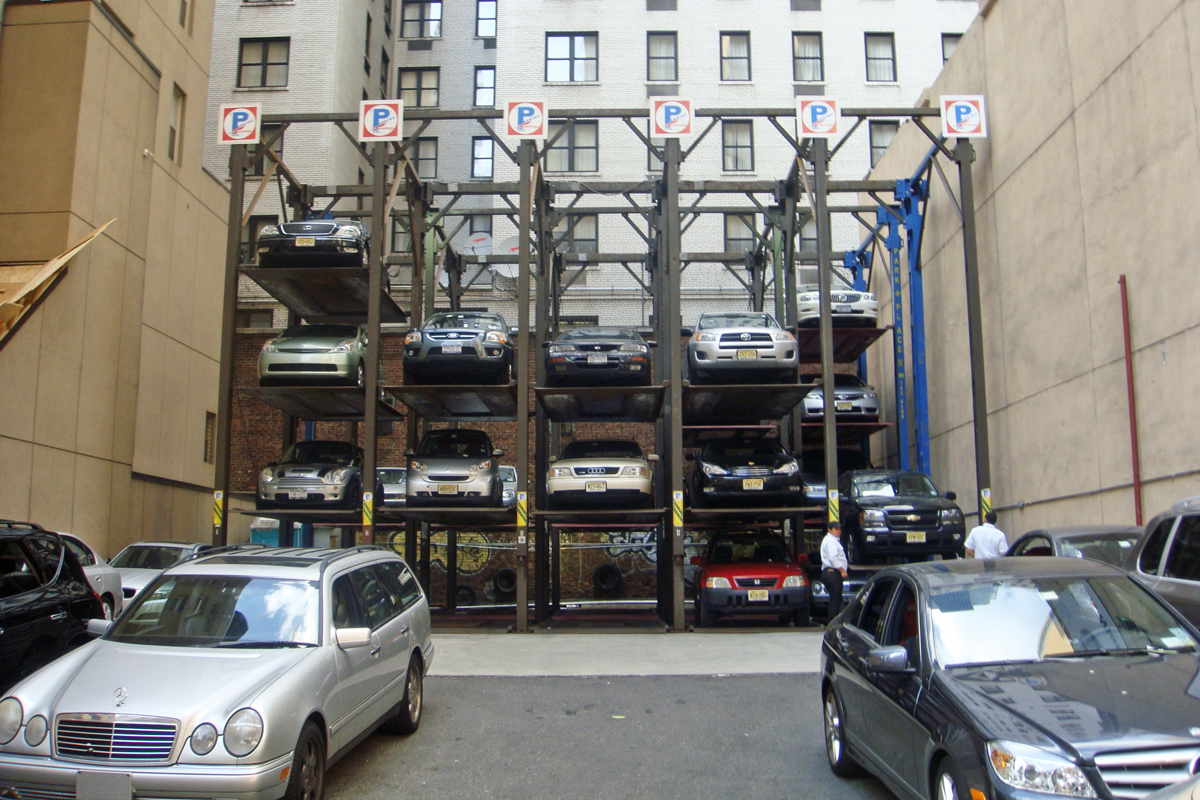
As people moved out to more widely-dispersed communities, that caused commuting all the way downtown for work to be increasingly problematic. So of course that encouraged demand for business to also move out to the suburbs.
Eventually things got so dispersed that people had to start driving everywhere. Roads got congested. It became increasingly common for people to spend 1/5 or more of their free time behind the wheel. Attempts to relieve the congestion inevitably require frequent road construction projects, which only increases everyone's sense of frustration.
I think it's pretty plain to see that nobody actually likes this state of affairs, and also that continuing the suburbanization trend would only continue to make it worse. Maybe there was a period back during the baby boom when the suburban lifestyle worked out really well (from a happiness perspective; let's forget about the economic and environmental cost for the sake of argument) for the first people to adopt it, but it's a lot harder to see the attraction now that the wide open spaces have become crowded with cars and parking lots.