> Have you ever heard the phrase “You can’t judge a book by its cover”? (...) it is an empirically observable fact that most people, when presented with a book, will judge it by its cover.
But isn't the phrase "You shouldn't judge a book by its cover"? (And even when "can't" is used, what's meant is often "shouldn't").
Of course people judge books by their cover; they also judge people by the clothes they wear, their height or skin color. Should they?
It depends. Prejudice is our own little Bayesian filtering; it works sometimes but it's not "pure": it tends to have a strong effect on reality (for example, CEOs are mostly of above-average height: not because being tall makes you a good CEO but because we expect tall people to be leaders).
> 99% of geeks will report never having buying anything as a result of an email
bought (just to show that I read at least this far!)
"The aphorism 'you can't tell a book by its cover' originated in the times when books were sold in plain cardboard covers, to be bound by each purchaser according to his own taste. In those days, you couldn't tell a book by its cover. But publishing has advanced since then: present-day publishers work hard to make the cover something you can tell a book by."
> so a) I created a mailing list, you should probably sign up and a) I would like to explain why your business should probably send more email than it is right now.
You probably meant "a) ... b) ..."
BTW, am I the only one who feels like this is just a squeeze page?
If this was what happened when I set out to write a squeeze page I'd be out of a job. https://training.kalzumeus.com is the "squeeze page" for my mailing list. Prominent stylistic elements to note: clear call to action dominating the page, lack of several thousand words linking to other people's businesses while trying to convince you to do something other than signing up for the email list.
>it is an empirically observable fact that most people, when presented with a book, will judge it by its cover.
Of course we do. At least for a first cut judgment - after all the cover has the book's title, author, and usually a blurb; that is usually enough information to either discard it or decide to take a closer look.
People do say "can't", as in "can't [accurately] judge a book". This of course leads to the advice that one should not do so, but the phrasing with the word "can't" explains why.
I judge books by their covers. Heck, I judge a lot of books by their spines. Publishers put a lot of work into designing book covers so that you can, in fact, get a pretty good idea of their content, tone and style based on their cover.
The actual maxim should be "Judging a book by its cover actually has an extremely high success rate and can be safely done in many cases, however it has a finite failure rate especially in terms of determining the quality of a book and so should be avoided in cases where incorrect judgement will cause problems".
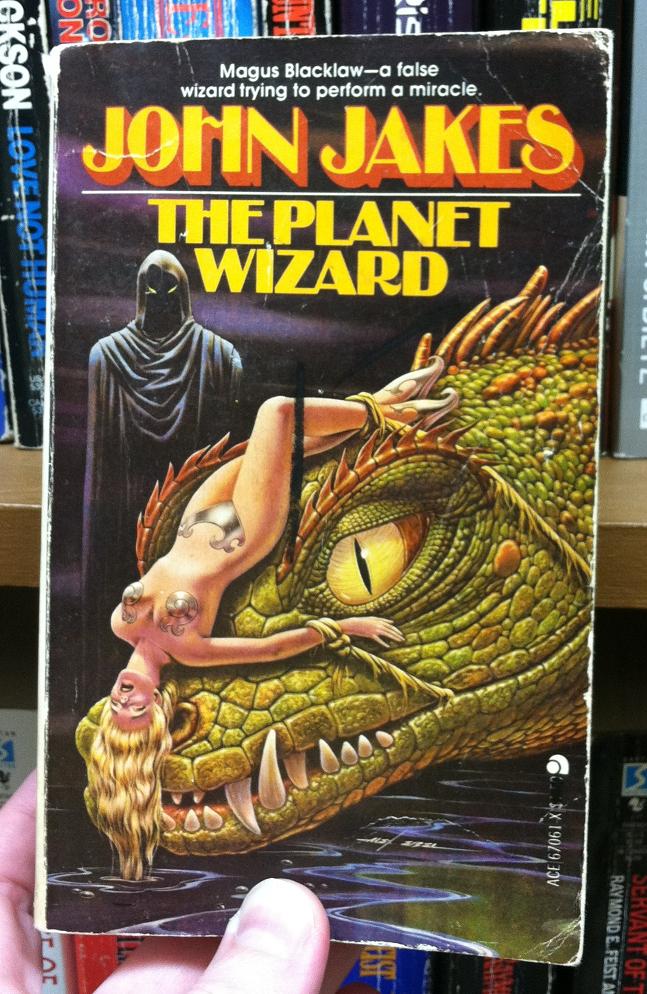
PS. Yes, I know those examples were entirely unnecessary, I just wanted to take the opportunity to show off some amusingly terrible book covers.
You shouldn't judge a book by its spine. Those are usually optimized for bookstore clerks to organize the book into the right area, and might show not really be related to the content very much.
As an extreme case, I judge books before I even see their spines. I judge books by their location in the bookstore and don't even walk into the aisle to catch a glimpse of the spine. Maybe somewhere in the "Romance" section of the bookstore there's a book that would really appeal to me, but I'll never see it.
Sometimes I even judge an entire store-ful of books without looking at 'em. I've already judged the entire contents of my local "Anarchist Bookstore" without setting foot inside the place.
There's thousands of bookstores in China that I've never even seen, and I know I won't enjoy the books inside them. Look at me, I'm dismissing billions of books that I have never seen and will never see, simply because I suspect they're probably written in languages I don't understand!
Anyway, if I ever get to the point where I'm judging a book by actually looking at its cover then that book is already getting way more scrutiny from me than most.
actually, old (~ pre-70s) sf cover art is a particularly bad choice of examples - the covers often bore very little relation to the actual contents of the book.
Given that you see a jacket with a buxom woman in a skimpy dress being embraced by a leprechaun with Fabio-pecs, would you assume that this fact has no predictive value with regards to the question "Is this, in fact, a quality work of literature?" No, of course you'd assume it is pulp, which is why people whose business is selling quality works of literature don't package it as pulp.
Most of us are not in the business of selling anonymous writing written by people of no particular expertise which is designed to have a shelf-life of twenty minutes and yet we spend extraordinarily amounts of time producing things in a cover which says exactly that. We should, instead, devote more of our limited resources to creating work in the cover that says "important things you should act upon immediately from the people you trust more than anyone in the world about this topic."
Only if it's true, though. If you try to sell pulp in a package more suitable for serious litterature, you won't reach readers who are interested in pulp and you will upset people who seek serious books.
I think the real problem you're trying to address is the lack of confidence of programmers into their own writings; their bullshit detector is too sensitive when placed too close to the source.



But isn't the phrase "You shouldn't judge a book by its cover"? (And even when "can't" is used, what's meant is often "shouldn't").
Of course people judge books by their cover; they also judge people by the clothes they wear, their height or skin color. Should they?
It depends. Prejudice is our own little Bayesian filtering; it works sometimes but it's not "pure": it tends to have a strong effect on reality (for example, CEOs are mostly of above-average height: not because being tall makes you a good CEO but because we expect tall people to be leaders).
> 99% of geeks will report never having buying anything as a result of an email
bought (just to show that I read at least this far!)