I was back in Taiwan last year after an extended absence.
It's pretty amazing how easy it is to get around with a combination of the mass rapid transit (MRT) system and high speed rail (HSR).
When I was last there, you still needed to take a bus or taxi from TPE to the city center. Now right from TPE airport, you can be in either Taipei city center in 30 minutes (MRT) or on the other end of the island in short order (HSR). Which is kind of fun because the southern end of the island has a totally different vibe.
Within Taipei, you can get to where you need to using the MRT and walk (fun because there's so many interesting nooks and back alleys anyways) or use bike rentals. There's also abundant buses as well connecting from the MRT stations.
Taichung has a single MRT line that connects east to west right off of the HSR line.
Kaohsiung has a few MRT lines and surface light rail that connect the major attractions.
All of it quite cheap to get around, incredibly clean and well maintained, and just all around made it much more enjoyable wandering the city.
The only time we felt the need for a car was visiting the more remote north/east coasts and only because we wanted to save time versus waiting for the slower trains that run those routes.
Whenever I land in SFO, I wonder who's bright idea it was to not have an easy connector to CalTrain at Milbrae (or I'm doing something wrong -- I feel like I don't fully understand the right way to get to Milbrae from SFO). Then on weekends, there's barely any service so if you land on a Sunday for a business trip, you'll waste so much time waiting for the train.
I've lived in a number of cities across three continents and I tend to think that the idea of a "car-free" city is a quintessentially North American overreaction to a quintessentially North American problem.
Like yes Wired we know that the suburb and the American commute have some serious downsides and the US leaned way too much into this model during a period of high population growth.
However it's not like other approaches to urban planning have no downsides. I personally like the Asian model of high density and mixed use zoning but here are some realities that come with it: noise, more pollution, more construction, less space, commercial usage pushing up land values etc.
There is no one size fits all so I tend to think most US cities would benefit from just dialing back the size of some of the suburban wastelands out there, keeping density low to medium and re-zoning to allow certain less intrusive types of businesses. One compact urban core, a low to medium density mixed use ring and a suburban fringe perhaps. Yes people are still going to need to cars in this city but a lot of commutes, shopping trips etc. are likely to get shorter.
For somewhere like San Francisco there's probably a great argument for the type of development you see in Taipei or Tokyo where you lean heavily into commuter rail and the train stations become big multi-use complexes and the center(s) of your city. But this is a huge reorganization of people's lives and existing property development that there's going to be a lot of pushback against and it's not all going to be nimbyism.
> But this is a huge reorganization of people's lives and existing property development that there's going to be a lot of pushback against and it's not all going to be nimbyism
If anything, I feel like Taiwan's model should prove that you can do it anywhere precisely because it was already so dense and built up on top of being in an area with very high seismic activity. It's not like they could find a lot of room to build massive stations on the surface. You barely notice the underground MRT stations at all aside from stair arches that pop out of the ground[0]. If they can make it work in a city as dense and populated as Taipei, it feels like it ought to be possible anywhere.
And on the contrary, being close to an MRT line tends to drive up the price of housing in the area given it seems a strong selling point for the folks that live and work in the city. I think the real root cause is that US society is not egalitarian enough to make this work.
I can't speak to the history of Taipei specifically, I did visit for a month (loved it) and I currently live in the center of a different Asian megalopolis.
I can say a lot of these places became what they are by bulldozing a lot of medium-density shophouses and destroying a lot of local businesses and tightly knit communities that most people including myself would consider really charming places to live.
They replaced them with places where far fewer people can afford a space large enough to raise kids comfortably and where everyone around you is a stranger.
Now I enjoy the big dense city lifestyle, I like the awesome public transit, I like the massive selection of businesses and services and basically everything, but it's not for everyone and I couldn't see myself raising a family in the middle of it, which eventually if you want your country's population to not collapse, you need people to do somewhere.
I think also considering some of the massive redevelopments that have happened in Asia over the years, you would see massive pushback in the US from essentially an individual rights point of view if you were to try to do that.
It feels like it needs to have the right mix of transit to make it work.
Wife and I both agreed that we preferred Kaohsiung to Taipei if we were to live in Taiwan. With the HSR, it would be about the equivalent of my commute from Princeton to NYC.
But that's precisely the problem, isn't it? It doesn't pay to build a subway when you don't have enough density. Most other forms of transit also get stuck in traffic.
It's tricky too, because a lot of "low density suburban wastelands" was already significantly phased out over a decade ago, in a lot of the US anyway.
People hear "suburbs" and imagine a single-family home on 1 to 2+ acre lots -- something that looks like this -> https://st2.depositphotos.com/1658611/5485/i/950/depositphot... . And while that definitely still happens, it's really limited to the exurbs in the US these days, it's not representative of newer suburbs anymore.
My first thought looking at that first "new suburb" photo was: where's the sidewalk? And the second photo has sidewalks but no visible amenities.
Sure they're denser, and townhouses are at least less materials-intensive to build, but I'm curious how this is otherwise an improvement on the old planning model of swathes of detached homes?
> I'm curious how this is otherwise an improvement on the old planning model of swathes of detached homes?
It's not. (Or at least, I'm not arguing it's better). My only point is that "more density" isn't the magic bullet fix people sometimes think it is -- because the US is doing a lot more density than we historically have in the past 60-ish years, and it's not meaningfully different in terms of lifestyle or planning.
If you want good alternative public transit, you have to just decide to build it first, and you kind-of have to do it almost everywhere nearby. (not just Division St, not just Woodward Ave, not just Hiawatha Ave, etc).
"Crank up density" doesn't magically result in a "car-free" city. You can't townhouse your way into having the Chicago Elevated, you have to actually decide to build the L. (similar to, say, Seattle SoundTransit)
This is what is happening in the US city I reside in. Developers are gobbling up land and putting in “high density” housing, but without building any additional amenities or restructuring roads that make the area more enjoyable to live in. And this is in a city with very libertine zoning rules, so mixed use is not restricted. The price/foot is about the same for the higher density housing as it is for a house and a yard just a 10-20 min drive further out, so given the choice between high density/no amenities/no parking/not walkable/surrounded by high speed roads vs a house with a yard and a garage (will have to drive in either scenario)…I’ll take the bigger house and the yard.
This is true, but that model of suburban development still tends to push necessities out of walking or even biking distance. I visited my folks in the Des Moines suburbs while they were out there and it was an hour's walk to almost anything bigger than a corner store. Of which I found, I think, one that was closer than that.
If we go by your parent's photos, my main beef with these neighborhoods is there's no commercial development. There should be (light) commercial development.
I am a big fan of the Asian shophouse. You can open a restaurant or a convenience store or a small clinic or whatever class of local service business isn't going to be too disruptive on the bottom floor of your residential property. You need to own and operate it, it can't be someone from outside the community. People eat, shop and live together and spend more locally. Small businesses get easier to create. Everyone has neighbors again. People walk two blocks down instead of driving 30 minutes to Walmart. Yes I'm stacking multiple social agendas here.
You probably do have to go towards medium density for this to be viable but maybe if you don't you still end up with people taking a lot of 10 minute car rides instead of 30-40 minute ones and then it's still a win in my book.
You described pretty well my almost-suburban New England spot. I walk everywhere, because there's stuff everywhere. There's a guy down the street who built an add-on to his house and his wife runs a convenience store out of it. It's great. The problem is that there are (particularly American? I don't know) pathologies around ejecting from the idea of a community that you see in even those relatively tight-packed suburbs, and what you describe, while great, flies against that.
My parents (who are themselves not really the sort of folks you'd expect in an urban core, ha) didn't last in Iowa very long. They moved back to New England and while they live on like three acres now, they're friendly with all their neighbors in a way even I'm not in my relatively approachable community.
There is. (both example pictures above have a commercial development less than 10 minutes walk away).
The problem is that there isn't enough commercial need for every single development to have it's own commercial block -- we already have a large overabundance of commercial space in the US as it is, adding even more of it inside each residential development doesn't magically spring forth a business to fill it.
(this is true even at city-level densities -- as lots of urban 5-over-1 developments are struggling to keep their ground-level commercial/retail units sustainably filled)
And since we do need more housing, pressure builds to just convert the commercial back into residential anyway...
Those new suburbs are just as bad. They squeeze more people into less space while retaining all the issues of the original suburbs and adding a mass of people on top.
A proper suburb should be a mixed-zone small town with proper public transport and amenities you can walk to like European suburbs are.
I think I have see a lot of places like this in US. The difference is most housing is apartments and rents usually are higher than mortgage payment for twice the size of house.
The way Taiwan, Hong Kong, Japan, and South Korea fund trains is a big difference with the US (though ironically is similar to how the US used to fund trains in the 1800s). The companies (usually in some kind of private-public partnership from my understanding) who build and run the trains in East Asia typically get land around the train stop to develop into malls, shops, apartments, etc. These sales and rents then fund the train lines. This incentive to keep everything nice on the trains and around the stops to help the other sides funding is important I think.
This is sort of the model that Brightline (Fortress Investment) is using. They are spending money on the train service in hopes of increasing the values of their real estate investments.
Its a smart investment strategy. If you can offer someone a walkable little neighborhood where they can live, walk to a a gym, grocery store, and a couple bars or restaurants, AND also walk to a train that can take them to work and a few more areas. That is an attractive offer. Even if the person still has a car, people seem to enjoy not driving everywhere.
Yes. I actually think this should apply to publicly run systems as well.
It seems like in the US we often lament that government run systems run at a loss instead of a profit, but also tend to hamstring them from doing things (like building shopping, dining, offices, housing on top of transit stations) that a private enterprise would do to make its investment profitable.
A strange thing about South Korea is that even the most expensive condos in Gangnam derive a significant part of their value from being close to a subway station (yeoksekwon). The millionaires who live there are riding the subway right beside the pleebs! No wonder they want to keep the trains nice and clean.
Yes, people appreciate the subways but not in the way you just described. It's the "wealthy" that use the subway as well as a car, but the expensive condos in Gangnam are not using or caring about the subway. The subway is just a plus.
People living in the expensive parts of Gangnam(-gu) are not riding the subway. People living in the affordable parts of Gangnam(-gu) are.
In fact, if you look on a map in Gangnam, you will find the apartments at the doorsteps to subway stations are huge complexes for generic wealthy people. But the expensive apartments are as far as possible between the subway stops, but still in walking distance:
- 서초그랑자이
- 래미안 리더스원
- 서초푸르지오써밋
- 신반포 area services insanely expensive apt blocks but is just 1 lame station.
One can always find counterexamples in a large city.
Meanwhile, the one lame station you mentioned that serves the 신반포 area is directly connected to the financial district and the airport. And just a couple of blocks away is 고속터미널 station where three subway lines intersect.
Well yeah.. all subway stations connect in Korea and are very useful?
The rich in expensive apartments don't use them. In fact in order to appear rich, people prefer to take taxis and their car. That's why the entire city is filled with cars even when they're incredibly slow.
> Indeed, it is jarring when we returned to the US.
No place is a panacea. Berlin surely has its issues. But Europe and Berlin in particular is very nice for this expat from the US. I love that I pay basically nothing out of pocket over what’s taken from my taxes for healthcare. The trains are basically ubiquitous and at least near me just refreshed with new cars. We walk basically everywhere and take transit also. I’m far healthier than when I was stateside driving everywhere. The food has far less harmful things in it. Etc etc.
My cousin who lives in Japan says similar things about Japan. He’ll never go back to Canada where he’s from. The feeling is similar to me and the US though I’ll be bringing my family home to the US eventually because I miss home and the potential for stupid high salaries and what that might do for my retirement fund. But yeah. Europe for the win for the time being.
I had the same experience when I first moved out to the Bay Area. You'd think with all the marketing that they would have solved something as simple as mass transit, maybe Jetson's style with personal pneumatic tubes.
Nope, there's barely any transit. Maybe it's okay if you live near a BART station. The best my employer could do was offer a shuttle that also had to sit in traffic for at least 45 minutes each way. I bike to work now and it takes 15 minutes here in Amsterdam.
you must also ask the question why you want to make a huge shopping trip.
If you lived in a world where accessing the shop was easy and convenient, and they stocked everything you need, and you didn't have oodles of storage at home to store it all: why would you even make such a huge shopping trip?
The culture and organization of the city means that 1) most folks have relatively small kitchens and small refrigerators, 2) actually, most dwellings are quite small in the first place so there isn't so much space to store large stockpiles of goods, 3) markets are abundant and easy to access, 4) the cost of eating out is so low that many folks do not have a habit of cooking at home and often just eat out.
So your plan is for people to have a longer commute to work, work 8 hours at the job, have a longer commute home, and then have to trudge to a shop in the evening most nights of the week (in all weathers)? Sounds idyllic. Food shopping every night can replace going to the gym or playing with your kids. And if you're elderly and would rather drive - tough luck.
>>If you lived in a world where accessing the shop was easy and convenient, and they stocked everything you need, and you didn't have oodles of storage at home to store it all: why would you even make such a huge shopping trip?
Well obviously no-one is going to buy food they can't store. If they live in a tiny pod then by all means subsistence shop on a daily basis. However, the groceries will also be far more expensive.
The issue you're having is not understanding how it can be.
The lucky truth is that this is not some hypothetical situation, it's a lived reality for me and many more people in Europe.
I'm 34 and I don't even have a drivers license; that's freedom. I never needed one.
That said: I'm not really talking about an absolute reality (IE; no cars at all). Reducing car usage actually helps those that really need to use a car, like the disabled, the elderly, people hauling large things (such as when they move homes) etc;
Groceries aren't far more expensive, but the inner city stores are, on average 5% more expensive than larger stores of the same brand. 5% on your groceries is vastly under the tax burden of maintaining huge roads, the accidents they cause (which has a healthcare burden) and even disregarding that: fuel cost and mileage on your vehicle (which increases insurance rates and decreases the longevity of your car).
I never owned a car, never felt the need to. I have learned to drive as a young adult, but unlike swimming, I never found that skill actually useful. If I had to drive a car today I would rather take some lessons first anyway, as there's no way I could actually drive safely otherwise. It's very easy for me to imagine much better ways to spend the money used to learn how to drive and much more useful "life skills" to acquire.
Getting your drivers license is also very costly, must be transferred when you move country, in countries like Sweden (where I live) you have to retake your test every 10 years.
It also requires a lot of time to do anything with it. It's an administrative document, like a passport. You can say "getting a passport is important" and I'd believe you, but better to get it when you need it rather than pre-emptively, because otherwise you're wasting valid years.
I find often that when we do things like taking a drivers license we feel like we are incentivised to use it, when we use it we purchase vehicles and register them and then we have sort of a sunk cost feeling. Once you've invested all that time and cost using it feels cheap so you are more likely to use it.
On the flip side, because I don't have a license I make subtle decisions to avoid using a car, so my life is relatively car-free, on the very rare occasions I do need a car I can hire someone and it works out significantly cheaper in the long run.
Same, that’s why I don’t want to depend on the fuel supply chain or the regulation of a car, or the upkeep of the roads.
I know that in certain cities in China they have little lotteries on which cars are allowed to drive each day based on how their license plates start as a way to avoid traffic situations. (they still have traffic situations).
How is driving to a costco, parking on a giant parking lot, walking through a massive store, loading up a cart, walking the the cart to your car/truck, unloading everything, returning the cart, and then driving home at all efficient?
People do giant shopping trips exactly because the whole process is so cumbersome.
The US has the longest commutes of any country in the world because of urban sprawl and zoning. Car-free cities offer an alternative to that way of life.
If you go once every 2 weeks, where do you get your fresh fruit and veggies? Do you just live off of frozen food? Do you plan all your meals 2 weeks ahead? What if you have people coming over for dinner on short notice?
Urbanites still have the option to go to a big-box grocery store. Mine is an 8-minute drive away, but we just never go there.
Ah, Costco isn't the only grocery store I go to. Roughly, I grocery shop once per week, alternating between Costco and other grocery stores where I buy fresh foods or smaller items that don't make sense from Costco.
My personal feeling is being able to stock up in bulk is a net timesaving benefit of car-centric living, BUT the tradeoff comes when you only need a few things from the store. On the one hand, it's only about once or twice a month that I need to go to the store because I need just 2-3 very specific things. However it's a major annoyance, and it'd definitely be nice to be able to walk a short distance to get them.
Didn't see any replies with specifics, so here's mine: Door-to-door, it takes me no more than 30 minutes for a shop, and I usually go 3 times every 2 weeks. So about the same as you. I wouldn't consider my location "lucky" either: there's 3 supermarkets alone within a 5 minute cycle from my house. Across most of the city, you're always going to be close to one.
> The US has the longest commutes of any country in the world
I lived in Mumbai starting 7:30 in morning I reach office by 10AM after changing buses and trains. Leave office at 6:30 -7 in evening and hit home by ~10 pm. And even those days I worked in IT so not exactly among poor who have to live far away.
Claiming US commute being longest is just ignoring how billions outside North America/Europe lives.
Here, "somewhere in Europe", you can order groceries online and get them delivered to your door for cheap. This kind of service really took off during COVID and then stuck. I guess people found it convenient.
We usually still go to the store, but use this service when we have a large amount of shopping to do as it just is... convenient. Instead of driving to and running around in the store looking for all the stuff we need and then carry it out to the car and into the home, we just gather around the iPad in the comfort of our living room and order what we want. The day after it shows up at the door. It's fantastic.
The MRTs in Taiwan run very tight schedules with high frequency. Commutes are relatively short. Most folks go out with their kids and get food together (Taiwan being known for their night markets).
> However, the groceries will also be far more expensive
It's counterintuitive, but groceries and food are actually very cheap in Taiwan.
In large cities you have many small supermarkets within a short walking distance from your house. It takes 20 minutes to do a quick shopping run to pick up what's needed. It's true that groceries are more expensive than at Costco...but you also don't need a massive deep freeze + pantry to keep all of your extra stuff, or a big car to carry it all in.
In the early 70's at the behest of airlines Congress passed a law that prevented Airports and State/Local governments from sharing cost of Municipal Rail lines. Which is why in the US if there is a rail connection it's always a separate feeder. I only learned of that a few years ago when congress repealed it.
There is also an unwritten law in the US that the government isn't allowed to make changes that would interfere with an established business charging monopoly rents. Putting a subway stop at an airport would devastate the business of taxi, limo, and parking concessionaires. Also can you imagine if you had a layover at an airport and could get on the subway, go downtown and have dinner, then come back?
Do you have any children? I can't imagine car free city is good when you have two or more young children. For one, groceries are a problem as you likely need to stock more food to cook. Sure you can go to the store every other day but that takes a lot of time and is more expensive. Plus you are on a lot tighter schedule. Most people with kids race home to pick up children and don't want to stop by the store and schlep back groceries.
Then you have just the stress of taking kids on public transport. You have to carry around a lot of things (snacks, drinks, diapers or change of clothes, toys and books, etc). You normally put that in a stroller but that's a huge pain to manage on a bus or subway.
I have children. 12 and 8, but we were also in Taiwan once earlier when they were 5 and 1.
It's very easy to get around. The MRT stations are nothing like the ones in the US. Bathrooms are incredibly well kept and clean at every station. If anything, I feel like it's easier than pulling strollers in and out of a trunk. That said, the sidewalks are very questionable in many parts of the city once you are off of the main roads so there is some danger for small kids.
But Taiwan may also be somewhat unique in that relatively few folks cook in their daily lives due to the low cost of eating out (really amazing place if you love food). Additionally, markets tend to be quite abundant so you are rarely going very far to get food. Houses tend to have smaller kitchens and smaller refrigerators as well so you don't store as much food as you would here.
The US is somewhat unique because of the high friction of getting food. Perhaps that's why we can have businesses like Instacart and we have such large refrigerators because the friction and cost of transport to get food is so high.
I still think it has to be more efficient to eat out and let economies of scale take over than for each of us to cook. I even say this as an avid home cook. It's incredible that in the US it costs orders of magnitudes more to have an efficient machine of humans and logistics produce the food
> Do you have any children? I can't imagine car free city is good when you have two or more young children. For one, groceries are a problem as you likely need to stock more food to cook. Sure you can go to the store every other day but that takes a lot of time and is more expensive. Plus you are on a lot tighter schedule. Most people with kids race home to pick up children and don't want to stop by the store and schlep back groceries.
Millions of people with children in larger European cities live without requiring a car to buy groceries, bring their kids to activities, etc. Also when kids are old enough the transportation infrastructure is available for them to be independent and go do their things by themselves.
I can't imagine how you cannot imagine that this already happens, in many places, and it's not an issue at all.
Well most kids would be productive human resource as soon as they are able to walk without support in that past. They would also keep themselves entertained with other kids on the street and may also get fed in neighbor's home plenty of times.
I grew up in the US in a small city. My parents owned a car periodically, but only one, and the vast majority of my peers were in car-less families.
We all did most of everything day-to-day just fine between walking, bikes, and busses. The kids over say 6 mostly transported themselves to wherever they were going without their parents. Of course, we also NEVER took our toys, clothes, or books outside of the house (wtf???) nor snacks (we ate and drank at meals) and only brought clothes somewhere if we were planning on staying the night there. If I needed clothes I'd carry them myself. I literally couldn't imagine my parents carrying around my clothes at a point that I was physically able to carry them myself. The thought makes me laugh. For babies there are diaper bags, my parents never needed more than a single diaper bag even though they had multiple kids in diapers at the same time.
Not having a car only was a problem for day trips, like the amusement park 60 miles away. We'd always make sure to bring friends and family who didn't have a car whenever we went to those sorts of places.
I live in a city with two young kids. We do very little driving. We live an easy walk to the grocery store and school. A bus stop is on the corner, with buses every few minutes. A car really isn't necessary, and the kids like taking the bus, though we don't do it often. For longer trips, a backpack gets stuffed with snacks and stuff, and we're good to go. The only thing we use a car for regularly is to get to swimming lessons, which is a bit off the beaten path. None of the things you bring up are a problem for us at all.
For me, getting to my parents would take me 2 hours vs 30m and I'd have to adhere to a strict schedule. inlaws would take maybe 4 hours versus 1.5, since there is much better transit to them. So basically my kids would see them a lot less often at a much greater expense.
Shopping locally would cost me an extra few hundred a month and take me maybe 20 hours extra a month.
If the kid is sick I'd have to schlep him to the doctor which would take 30m each way as opposed to a ten min car ride. Hope it's not raining.
I can also drive to more restaurants so I have more choices
Having a car is a convenience that makes my life considerably easier. I gladly trade money for time and convenience. And I can often even get both with more options form shopping
> You normally put that in a stroller but that's a huge pain to manage on a bus or subway.
Not in any bus or subway car build in the last 20 years.
In every EU city I rode mass transit in the last decade, all transit vehicles are "low side wagons", meaning you can just roll on from the platform/curb, the doors are wide and the area right behind the door is a large space for wheel vehicles.
People bring wheelchairs, strollers, bikes, ect. without any problems, without needing help getting on. The platforms have elevators, for the people not comfortable taking a stroller onto an escalator.
The only exception I can think of are historic drams, but those are rare.
In Manhattan, there was a supermarket on almost every block. Going to get groceries was only slightly longer than the trip to your refrigerator. I remember food being more expensive in Manhattan, but on a recent vacation to Paris, food was cheap and extremely high quality. Similarly in Italian cities a few years ago.
Things are structured differently in large cities around the world to accommodate a walking lifestyle.
As for schlepping baby stuff around, it's inconvenient but a relatively short period of your child's life in the scheme of things. But I do suppose it would be a grind if you have 3 or more children and going through that baby stage for many years on end.
I live in the US and I did the same when I was a kid - cycle, walk, or bus. Not everywhere, but many places. I even took the bus to the mall with my friends when none of us had any money because it was something to do.
I couldn't imagine being a kid and living in a location where the only way I'd be able to go anywhere was to have a parent drive me. No thanks, ugh.
I find cities in Taiwan frustrating to navigate without personal transport, at least a bicycle.
Having lived in Kaohsiung for a bit, I observed that very few people use public transport unless they go to/from intercity rail or airport. Buses in particular are unreliable (mostly used by older people), and MRT alone is obviously not enough for the sparse city.
> I find cities in Taiwan frustrating to navigate without personal transport, at least a bicycle.
Complete opposite experience; we found it actually enjoyable to navigate without personal transport.
Some days, we walked > 10 miles; goes perfectly with stuffing your face with street food.
To be fair, we were there as tourists and only for 12 days, but in any of the major metros, we did not feel like our experience would have been better with a car. Maybe bikes.
I think it's worth emphasizing just how low the bar is in the US for public transportation bike infrastructure, and walkability, even in many of the big cities.
> These (American) articles on urbanism and what not always make it seems much more insane than it is.
Wholeheartedly agree, and what is also funny that usually it is described from POV of citizen living in: tier one city center with mild weather whole year round and relatively flat topography/terrain - and at the same time it's written in a way that suggest that it's THE SOLUTION absolutely applicable everywhere else.
The solution applicable almost everywhere with some dozens of thousands of population is multimodal. Public transportation supported by infrastructure for cycling and cars relegated to their place in a multimodal system: inconvenient for shorter/regular trips, accessible for when it's needed.
Stockholm doesn't have mild weather all year long, it's not flat, and still people will use public transportation or a bike. Oslo is definitely not flat, definitely not mild year round and even there people take public transportation, bike, etc.
And again, as examples you provide two capital cities of two richest countries in the world - capital cities are rich, can easily afford building public infra and also population density is big enough to make public transportation almost profitable - but not everybody lives in a capital city.
Those are just examples of two cities I'm closely familiar. People also bike everywhere in China, many Chinese cities have decent public transportation (much better than almost any non-big city in the USA).
Small cities in the Netherlands are able to afford bus lines, and provide infrastructure for bikes which are much cheaper than roads for autos.
Good public transportation is a net contributor to a city, it provides residents with ways to be more economically active without costing them much. You don't need underground metro, not even trams in most cases, a simple and reliable bus transit system can provide a lot if it's not delayed by traffic.
You don't need to be rich to have decent and reliable public transportation, Southeast Asia has quite good examples of that.
Berlin is quite poor and it still has decent public transport and good walkability. Public transport is far from profitable in Berlin. It's entirely possible to raise a family without a having a car in Berlin.
I think you are missing the point. Yes I am currently living in Europe and yes almost every family own a car.The difference is when, how frequently its used and also the fact that you have alternatives. These article are idealiziling a car-free lifestyle that is definitely not quite ubiquitous but it does exists. Also, your idealized weather and topo do exists in the US, think California (and I would argue the entire west coast) but the infra, urbanism and often the laws do not allowe safe alternatives to cars and this is the core of the problem. Your comment make it like the whole EU has Mediterranean climate or is flat as Amsterdam, which cannot be further from the reality.
Where do you get this data from? I've been living in Amsterdam for 5 years now and all of my friends or people that I know of that live somewhat in the city don't have a car... because (1) they can't afford it and (2) they don't need it. Biking infra is so freaking amazing that it makes me want to bike all the time instead of getting the car (even if I had one). Driving around with a car in Amsterdam is just madness. I did it a few times for moving heavy stuff around and it's a mess because you're redirected across streets making it 5x longer to get to where you have to.
I think your experience comes more from people living outside the dutch cities, in more rural areas? Then it makes sense to own a car. It doesn't make sense in a densely populated area.
But anyway the Netherlands has really figured it out when it comes to public transport. No other place comes close in my experience. People who grew up here perhaps don't realize how lucky they area... and how shit it is in other places.
Not taking a side, I agree with you that trying to use a car in any of the larger Dutch cities would be crazy. But car ownership has sadly been on the rise recently.
Most people living in Amsterdam are rich, as the average house costs 500k+.
A car is probably costing 10k/year, so if they can't afford it they aren't average.
For context I've lived here 10 years and very few of my friends have cars, including me. But it's totally a lifestyle choice, as it would be worth it on a personal level.
This is likely an age thing. I suspect you're without a family? I think what he's getting at is that we cycle everywhere, except when we can't, which matches my experience.
I generally don't drive anywhere that's under 15Km away, but there are exceptions. Taking the family to certain places just isn't feasible by bike sometimes.
That's still a completely different reality than the US. Many people in my neighborhood have more than 1 vehicle per person. That's a far cry from less than half of families having a single car.
I'd quibble with the title. Based on my experience in London, most middle-class/white collar workers love car-free living. Most blue-collar workers don't like it. They continue not liking it once it becomes reality. (Although maybe they realize that it's not as bad as they feared).
I think this is basically another example of political polarization, combined with employment patterns. White collar workers broadly speaking place a higher value on their time and mostly belong to "tribes" that value their health and environment. Removing cars is great for that as bikes give control over journey times (and in most cases in e.g. London reduce them) while positively impacting the other.
Blue collar workers may not be able to do their jobs with just a messenger bag containing a laptop and airpods. Also, their political identity has been dragged further towards the radical-individualism end of the spectrum where collective action on e.g. environment is hard, and trust for bossy health authorities telling them to exercise more is low.
The slightly strange side effect is that you end up with an item which is way cheaper (a bike at e.g. school dropoff vs a car) that becomes a signifier of social status. I am sure there are loads of examples of this phenomenon but none spring immediately to mind!
I don't think most advocates for reduction in car dependency in urban environments think that trades people shouldn't have vehicles to carry tools and materials around in.
The title may imply this but the article really doesn't. Go to an actual "car-less" area of a city like Brussels and there are delivery vehicles at least in the morning, work vehicles of various kinds, street sweepers, etc. Even at the relatively extreme end of pedestrianized malls, there are still a fair number of vehicles around.
These are being targeted too, at least in the Netherlands. They were given a free ride for a while (pun very much intended) but now trade vans are also coming under the hammer.
I think this is one of the most extreme real-world examples of a "car-free" city, but they still have vehicles for taxis, public transport, public works, trades people, deliveries, etc:
These days I'm finding myself doing half my trips on a bicycle and half in a car. In my experience one of the biggest barriers to micromobility in America is cultural. Motorists can be aggressive and complacent because their vehicles are big and have airbags, and so long as they aren't impaired they won't be held accountable for harm they cause with their vehicles. Cyclists and pedestrians can act in a way that is entitled and reckless because they know they probably won't be held accountable for their behavior either. Except some of them sometimes forget that the laws of physics are less flexible.
A few years ago I was driving my son somewhere, and a cyclist blew through a red light and slammed into the side of my car. Fortunately the only injuries were the ones that the cyclist inflicted on himself through his reckless disregard for the law. Judging how much damage he did to my car, if my son and I had been on our e-bikes instead then I think that guy could have easily killed my kid.
Knowing that there are too many cyclists and motorists who behave with complete disregard for the law makes me feel like I really have no choice but to put my child in a big steel cage with airbags and crumple zones if we're going to travel anywhere on American roads. And before you ask, this was not in a big city, so public transportation was not a viable option for us that day.
My personal experience seeing peoples' general behavior and attitudes on roads in both Japan and Amsterdam makes me wish we could find a way to adopt some of that culture.
People will always be entitled, but there needn't be dangerous contact. As a lifelong cyclist, the main problem (in my opinion) America faces here is the fact that we have exclusively car-first infrastructure.
The American stop sign, to me, is the symbol of how entrenched everything is here. Stop signs make zero sense for any mode of transportation except for cars. A physical, traffic-calming rotary at every intersection, in every neighborhood would be much more sensible, and reduce conflicts.
We could add collapsing bollards to create cycling corridors that cyclists actually want to be on, instead of the insane decision we've made to mix our cyclists and vehicles with a single line of paint on some of the busiest roads in the cities we live in.
Where all of this runs into a problem is with emergency response vehicles. Because our fire/EMS infrastructure is path-dependent with our transportation infrastructure, they tend to bitch and moan any time physical barriers are put up, or pedestrian malls are introduced. The system is the way it is, and if it changes, they believe it will cause them problems. The Fire Department in SF has been one of the biggest roadblocks to creating safe parallel corridors for cycling infrastructure, blocking bollards, neutering rotaries to the point if ineffectiveness, blocking traffic calming features unless they allow for high-speed fire/EMS vehicles, thus defeating the purpose.
If anyone wanted to make a long lasting impact on American society, this is the problem I would focus on solving. I think building emergency response vehicles (specifically fire, and ambulances) that can interact with a traffic calming feature that is impassible to normal vehicles but passable to bicycles and pedestrians (say via high clearance) would do more for saving lives, reducing emissions, and stemming the tide of the American development pattern across the world than almost anything else.
I would have expected the article to give some clear pool/metric/statistics about "people hate the idea ... ". There are indeed loud people and big interest groups that oppose car free cities, but I am not sure about "people" in general.
Sure, you need means of transport and to be able to live, and you can't change things over night, but if you would ask people "would you prefer to have a supermarket 5 minutes away or one 20 kilometers away" I doubt anybody would say "no I want only things far to be forced to use a car".
> but if you would ask people "would you prefer to have a supermarket 5 minutes away or one 20 kilometers away" I doubt anybody would say "no I want only things far to be forced to use a car".
For most people it's not about the supermarket. Those are a dime a dozen and all the same. It's easy to provide those in sufficient amounts everywhere.
Now try it with jobs. Not any job, but your job. Is it possible to have your job be 5 minutes from your home. How about in 5 years when your job is underpaid or unfulfilling? Is your next job also 5 minutes away? Or do you now have to move? And 5 years after that, when you're laid off?
I find that loads of people start out enjoying the car-free experience. And then they get a job in the next town. And/or they get kids, so commute-time takes away from kids-time. Life becomes too busy to spend the extra 30 minutes commuting per day that public transport would cost.
Between the trade-off bad job, no time, and car/public transport, the car quickly becomes the best solution. Even if you don't like driving.
Groceries were a total PITA, maybe if you order a lot of delivery it’s fine, but we cook every meal and needed at least a granny cart at least once a week. And small grocers nearby had terrible vegetables; there is a lot of variance in supermarket quality. Maybe in NYC they have it figured out, but the trade off is everything cost crazy money.
I commuted by bus for this time to work, an hour each way and my hours were beholden to an infrequent bus schedule — it knee capped my career because I had to leave at hard cutoff and never could meet up for lunch or happy hour, and lost 10-15 hrs a week on a bus.
Even subway is so-so, unless they run every 5 minutes and you live and work on top of statio can add up fast, and transferring lines adds a ton of time.
Huge regret trying to live car free in an American city (not NYC).
Just for contrast. I'm living a car free life in my mid-late 20s at the moment in Denmark, and I rarely ever order delivery.
Supermarkets are close enough (I actually live above one, but were that not there, there are still three others within a five minute walk), that I rarely do a "weekly" shop and just buy my groceries when needed, most of which are of decent to high quality.
It's not really much of an inconvenience to keep a relatively well stocked kitchen without a car here. I'm really struggling to understand how a "granny cart" worth of groceries once a week is a chore? That's a couple of bags worth at most.
Buses could be a bit more frequent here, but they're still good enough that I don't have a hard cut off for when I have to leave the office. I lose maybe 7-8 hours a week on my commute, which is time I'd spend reading anyway.
This was 20 years go. I actually wish Segways became a thing. They could climb stairs, took up less area and could carry a heavy load balanced by the gyros.
> Maybe in NYC they have it figured out, but the trade off is everything cost crazy money.
Yes, living in Manhattan and Brooklyn, this was not a problem. Manhattan had a supermarket on every block. Brooklyn was a little farther, but the variety and quality of the food was excellent. This was a while ago, so don't remember how prices stacked up. Just that on an NYC salary, food was affordable for our family.
Lived in Tokyo and Osaka, but most of that time didn't have to cook much. But remember groceries being very accessible in walking distance.
Vacations in various cities in Italy and Paris, groceries were accessible, very high quality, and affordable.
So I think walkable grocery shopping is a good experience in NYC and big cities outside the US. But probably not great in the median US city.
> Between the trade-off bad job, no time, and car/public transport, the car quickly becomes the best solution
If you beat public transport by using a car then there just isn't enough public transit or the city isn't dense enough (likely the former, due to the latter). If you live 3km from your job in London or NYC then at least during rush hour it's likely to be faster to use public transport than a car.
> Life becomes too busy to spend the extra 30 minutes commuting per day that public transport would cost.
This is again based on the premise that public transport costs time, rather than saves time or doesn't matter time wise.
People who work in really dense cities but live far outside it so they need to drive from home are already likely to not drive all the way into the city center but rather drive to the edge of the city center, park there more cheaply, and take a train the last 10% of the way. The key is that that traffic in the city center is slower than public transport, including the wait times and walking required. Within some distance from the city center of a city that is dense enough and has enough public transport, this holds true. And it's in this area that private car traffic make little sense at all. But that doesn't mean people can't have cars. Or that suburban people won't drive. You might still want to drive somewhere on the weekend. Or you might need to drive to even reach the public transport.
IF you live in a city with enough density that public transport beats the car most of the time, and IF your job is in that same area too, then yes, going car-free can save time. But you need several hundreds of thousands people in the same-ish spot for both those assumptions to hold true for most people. And probably also some badly designed roads.
I live in a town of 125k people, where I can reach any spot by bike or public transport in about 30 minutes. Perfectly commutable. It has a few jobs for people like me, but not enough for a decent amount of variety.
> I live in a town of 125k people, where I can reach any spot by bike or public transport in about 30 minutes. Perfectly commutable. It has a few jobs for people like me, but not enough for a decent amount of variety.
Car-free center can work there too. But for 125k people it might just be a few blocks square in the middle. The math is pretty simple. If density is so low that there can't be stations every 5 minutes of walking, or so low that businesses like large detached grocery stores, gas stations, building material stores and so on could even think of being there, then it's 100% car territory.
But one shouldn't let it become self-fulfilling. If city restaurants have parking then they need a lot of space, which lowers density, and they become unattractive to people who are walking. So a key ingredient for a car free city could be to ensure no establishments have parking lots within a specified distance of the city center. It's nearly impossible to combine parking lots with walkability.
I agree with all of that. And in fact, that is what this city has. The car-free center thing works very well. You get a few large parking garages around the center, and inside you do everything on foot.
The rest of the city is spacious and has good car accessibility, so you can also get out quickly.
> This is again based on the premise that public transport costs time, rather than saves time or doesn't matter time wise.
This is a reasonable premise. Because a car is point to point and public transport by definition is not. I agree it is possible to maneuver yourself into a situation where you live immediately next to the subway stop and your job is immediately next to the other subway stop. Public transport will save time then. But that's very rare and also a fragile setup because as soon as you change either home or job, it's no longer true.
So for most people public transport means walking to the nearest stop, taking the subway/bus and then walking to the destination. So yes it takes more time.
> Is it possible to have your job be 5 minutes from your home. How about in 5 years when your job is underpaid or unfulfilling? Is your next job also 5 minutes away? Or do you now have to move? And 5 years after that, when you're laid off?
Yes.
Further, most people don't live 5 minutes away now, even in car-centric developments. The average commute time has been, for centuries, 30 minutes one-way:
> Between the trade-off bad job, no time, and car/public transport, the car quickly becomes the best solution. Even if you don't like driving.
I quit a job of mine in the New York metro area, largely because I had to drive there. It was hell. Every time it rained the commute would be twice as long. One wonderful evening coming back home the usually 50 minute drive took 3 hours.
Additionally the stress of having to deal with bumper to bumper traffic and the assholes and distracted drivers on the road was slowly killing me.
I swore after that job to never drive to work again. At least on a bus/train I can usually read a book, twiddle with a laptop or something else that keeps me entertained/relaxed.
This is the crux of the matter - when people worked at a company for life, they could build their life around it.
If you know you’ll be commuting to The Factory for the next forty years, you can happily take the bus or train or whatever to it. You buy your house and put down roots.
Now cities are larger and your job changes every five to seven years and either you move each time to be near enough, or you let your family stay where everyone they know is, and take the commute on the teeth.
The solution is smaller cities; not larger ones, or going back to longer term employment.
>> If you know you’ll be commuting to The Factory for the next forty years
That was not the norm historically. Average job tenure is longer now that it was in the past. And the typical manufacturing facility lasted nowhere near forty years. The average lifespan of a factory is around 10 years. Most companies aren't around for forty years.
>> The norm for most people used to be to work for the same company most of their career (if not all of it) and retire from there with a pension
Stats on that?
That absolutely was not the norm. Again, most companies did not exist long enough for someone to work at one for their entire career. Median job tenure 40 years ago was around 4 years (BLS).
A minority of private workers were covered by pensions at the highest point, and being covered by a pension plan did not mean you got a pension. A company might have required 30 years of service to get a pension. Work there 29 years and 11 months, get fired, no pension. Work somewhere ten years and then decide you hate it? Either work there another 20 years hating it or quit and lose your pension. Job hop for a raise every few years? No pension. Many pensions were not adjusted for inflation. Many pension plans went bankrupt. Pensions sucked. I know, I have one from the 90's. Worked there 7 years, that pension is going to pay me roughly the same monthly amount as I will be able to take from my last year's contributions to my 401K, even if those contributions make no investment returns before I retire.
I have no idea how young people get these fantasy ideas about the past. And do you really want to work in the same place for 40 years? A 401K is better than a pension. A 401K, Roth IRA and HSA is immensely better than a pension.
> Work somewhere ten years and then decide you hate it? Either work there another 20 years or quit and lose your pension.
That's not usually how it worked.
> I have a pension from the 1990's. Worked there 7 years. I'll get around $150 a month when I retire
As you yourself note. You didn't lose your pension by leaving after 7 years, you still get it. Sure it's minimal because you only worked there 7 years instead of 40 but you didn't lose it.
> I have no idea how young people get these fantasy ideas about the past.
I wish I was that young but I also will eventually receive a pension from a company where I worked for a few years in the early 90s. It'll be like $100 but I only worked there a few years.
Different plans had different limits. Mine was 7 years, I stayed just long enough to get it. If I had left a few months earlier, would have lost it. Pensions suck.
Yeah the problem is exactly the design of cities which make the car the best solution! The car is both the fastest and the most convenient if the roads are wide and the buildings are sprawled around. If you build the city tightly so it's easy to walk everywhere and everything is nearby, you a) don't need a car and more importantly b) there is no room for cars, this space is recovered for humans.
I'm not talking about "everything". I'm talking about jobs. Your job. Is your job so generic that almost everybody in your country can do it? Because that's what you would need for this to be realistic. Everybody living so close to enough jobs of the exact type they desire. Not just a job title, but the industry, the size and type of company, the salary level, the type of people, and a bunch of other things.
And even if it were realistic, you'd have more choice by widening the circle anyway. Get an even better job by driving a bit.
You're so focused on driving I feel you're missing the point of designing the space so driving isn't necessary. Your axiom is 'work is far away'.
But the point is it only happens if it's convenient to be far away. Design your city in a way it's convenient to be nearby and it'll be nearby. The problem is this design is completely at odds with private car ownership.
> Design your city in a way it's convenient to be nearby and it'll be nearby.
How can you possibly have every job be nearby to everyone? That's just not possible. Now factor in job changes or even career changes. Unless your primary criteria for picking a job is to have it nearby, the probability of having jobs far from home approaches 100% over time.
> But the point is it only happens if it's convenient to be far away.
No. The point is that "work" isn't a generic thing like "supermarket". A specific job is something that needs to fit your personality.
If you're the type of person that really digs working for big tech, you aren't going to find a job you enjoy in some small town. You can probably find a job maintaining the website of the local bank, but are you really going to think that's a good outcome?
Hell, for big tech the jobs aren't even commutable from anywhere if you are willing to commute by car. Or helicopter. But this problem goes for loads of people in loads of jobs. If you can commute further you have more choice. More choice gives you better odds at a job you like.
I completely agree, it's just there's nothing stopping those office jobs to be created next to train stations. Except there aren't enough conveniently located train stations... turns out there are in Paris and London though?
Car dependence is a feature of sprawling cities. If you make your city dense, the jobs will be there. The fact that everyone has a car makes the jobs be all over the place because if employees can't commute further, the jobs will move to them. It's pure game theory.
The big question is how to jump from a stable state of car dependence to a stable state of mass transit and I don't see a way to do that in general.
Maybe yes maybe no. A lot of the jobs in a big city metro are out in the burbs. Until fairly recently, my company's only office in the area was a 45 minute drive from downtown. There are more tech jobs in the city proper than there were 15-20 years ago when there were approximately zero. But a lot of the jobs in the area are still spread around the suburbs and exurbs.
I don't think proponents of the "car-free" or "15-minutes" cities have:
- supermarkets are super close
- everything else is super far (including workplaces)
- you don't have a car
in mind. I don't think that in London (the main example in the article) most jobs are a 45 minute drive from central London nor that most people drive to work.
That's probably true in Boston as well. But that's because, if you work 45 minutes out of Boston--of which there are many companies along the Route 128 or 495 corridors--you probably don't live in Boston unless you're a die-hard urbanite willing to put in a long commute to your suburban job. (To be fair, a lot of the west coast companies that established Boston outposts are in town and local suburban companies increasingly have options for people to work in a city office (or remotely) if they want to.)
Something something dense cities and good public transport. You can get from one side of Berlin to the other - not including suburbs - in half an hour and without needing to park.
It's certainly possible, but more difficult the larger the city. Actually my main concern would be transporting furniture, appliances and the cost of renovations and maintenance. Transport of large items is difficult without cars. Cost of renovations are often many fold higher for dense housing due to greater difficulties with waste disposal and higher transport costs.
That would be great, but your forebears locked in a great prop 13 basis decades ago and it would be worth more than your raise to give it up. Or you're in faux social housing in the form of a rent controlled apartment and don't want to give up that subsidy.
Or there simply aren't homes to move to that are closer because every municipality in the area has tried to build offices rather than homes since the 1970s. And thus the office park around your new job is itself so big as to require a car to traverse it.
There are plenty of alternative solutions compared to outright banning cars. Nothing beats telecommute for speed, safety and emissions for example, but even EVs can mitigate air pollution in cities. They also comfortably beat human powered transportation as soon as someone looks into the carbon footprint of agriculture. Efficiency can differ by orders of magnitude.
It's mad that you can't see that strapping two kids and 8 bags of shopping into a cargo bike and cycling 10 minutes is far worse than doing the same errand by car.
Worse how? Worse because we're all used to ignoring the negative externalities of driving everywhere? Worse because our kids are used to acting however they want in the back seat of a car? Worse because we built these horribly isolating daily transport systems where people tint their car windows so we can't even see each other and then yell at each other's driving abilities?
The point is that of course it's true that driving is "easier", but it'd be obviously worse in a lot of ways if we didn't build cities the way we did.
Not everyone can or has access to a car so people still have to and do manage that in the car-centric world you're advocating for as well. Except now it's more like walk a mile, wait for the bus, walk another mile.
If your single car is rivalrous to several other people's ability to live and work in the urban core, yes, that's a pretty good reason to discourage the car.
Massachusetts has park-and-ride, and it's pretty great!
As someone who has worked in London for many years, the difference is amazing. Biking in the city is now enjoyable, and the air quality is (subjectively, even without the data) dramatically better.
There was an incredible resistance to the recently introduced ULEZ (Ultra Low Emissions Zone) expansion, but I'm incredibly grateful for the sake of my children, if nothing else, that it has been pushed through.
I'm pretty sure I've shortened my life for having lived in zone 1 for so many years due to air pollution.
Cycling around London is also the fastest way for an astounding radius of travel. I can beat uber and the underground for most journeys using a Lime bike.
I remember about 20 years ago I was taking my bicycle on the train, and this involved a transfer through London. You can't take full-size bicycles on the London Underground, so I cycled across London from Kings Cross to Waterloo, and I definitely remember being reasonably terrified the whole way. If that has greatly improved since then, then that's wonderful.
That's a pretty short journey (probably about 15 minutes), but yes it will definitely be a lot better now. I think also part of it comes down to 1. getting used to it, and 2. the time you cycle at. Rush hour, while more hectic, actually is quite a bit easier because you're often going far quicker than any cars.
So, living in one of those cities (AMS) I have a few takes. I'm not ranting, just expressing my frustration:
1. Cars exists because they are more comfortable. I don't care that biking should better, it's not when it rains sideways, it's cold and windy. Biking sucks. I would pay top money to not be in a bike, not be outside getting drenched, and usually do ubering everywhere to the dismay of Dutch people,
2. Cities designed around biking are uber tied to public transport. I'm a lefty, I think that's great, but it's not, because the first time there are cuts to public service you find yourself living in the middle of nowhere and can only bike, because cars are too expensive to own. This happened in the Netherlands with NS slashing intercity trips, and increasing prices. I had colleagues now that now to live several hours per day in a packed commuter train. I can't see how that's better.
3. Any type of DIY activity becomes a nightmare. Want to rent move a couch? Good luck! Back home, you could load the thing on a nice Volvo and be happy.
4. Electric bikes are effectively not policed because it's the new thing we need to incentivize, and it becomes immediately super dangerous. I know people that had serious injuries because of crashes. Cars are inherently safer, especially modern SUV like volvos or tesla,
5. Accessibility becomes a nightmare, especially if you are in a wheelchair, your commute times are going to skyrocket,
All this "bikes are amazing" just reeks of some bad degrowth ideology. There is a duality between cars are bad and hydrocarbons are bad. Except they are literally the engine of growth, and for some reasons we decided that we should phase out hydrocarbons and replace them with some silly not reliable energy alternative (solar, wind). I can't see how this ends in a different way than how it went in Europe with our energy policy.
Cities are meant to grow and drive the economy, not to be Disneyland parks. If I want to bike I can go to Italy on a seaside town, I don't need to bike 356 days a year.
I think I agree with all your points, but I also think we should be doing all we can to encourage all those people who can and want to cycle to do so, and to make it as safe and convenient as possible. That's regardless of whether you "allow" cars to still be used. Improving cycling infrastructure is an action that causes benefits and very little in the way of disadvantages.
Any journey that someone makes on a bicycle means one less car clogging up the road. That's an argument that people make who are militantly against cars, but I think it's completely valid even if you think cars are things that are here to stay and you're OK with that. Car drivers should be looking at the people cycling and silently thanking them for making their drive more pleasant because the roads are less busy. But for that to happen, the bicycles need to be able to go on dedicated cycle ways so that cars don't have to slow down to drive around them.
My commute to work is about 45 minutes on the bus. Or 50 minutes walking - that's how much the buses suck, and they're actually fairly good buses as far as buses go. Or it's a 25 minute cycle. It'd be a 10-15 minute drive if there was no traffic and there was actually somewhere to park, which there isn't.
I did spend about 15 years without a car, cycling everywhere I went. It was great. One time I bought a bulky item, and called a taxi for it. I dumped the item in the taxi, told the driver where to meet me, and cycled home. I made it there before the taxi did - the driver looked well annoyed. But I recognise the cars are useful - I have a car now, and it's great for heading out into the countryside in sparsely populated areas to do some hiking. It'd be unreasonable to expect any public transport out there, and the car will always have a place serving those areas.
So, my argument is that we should be making things better for all, not pitting two views against each other.
> 4. Electric bikes are effectively not policed because it's the new thing we need to incentivize, and it becomes immediately super dangerous. I know people that had serious injuries because of crashes. Cars are inherently safer, especially modern SUV like volvos or tesla,
Starting to get interesting in Finland. Not yet bicycles, but scooters with weight over 25kg or speed over 25km/h or 1kw will soon require insurance...
And likely any bike with specs over those will also be a moped and thus require both insurance and registration...
I see no reason why those sort of limitations won't come more prevevalent.
Not even sure how you'd start off hating the idea. Less noise, less pollution, shorter commute, cheaper infrastructure, more green, more walking, improved health...I mean...just off the top of my head I'm thinking of tons of advantages. I can't think of a single disadvantage. The only reason I need a car is because the city / neighbourhood is configured around the expectation that everyone has a car.
If your entire life is based around your car, it's your most important and powerful symbol of autonomy, wealth, and personal liberty. The prospect of someone in government deciding one day that the life you live is no longer welcome and your touchstone is evil is incredibly jarring, at the very least.
If you also live in an area where you cannot imagine how you could possibly live without using your car frequently, the prospect of a car-free city sounds a lot like you're being hung out to dry by people who don't care what happens to you.
These reactions are a combination of poor messaging by those affecting change and a failure of a imagination by the car-bound. The first, at least, is avoidable.
> it's your most important and powerful symbol of autonomy, wealth, and personal liberty
Cars as virtue signaling? I'm not quite sympathetic to this case. This person's liberty is causing harm to everyone else and I don't care for their symbol of wealth. I'd like to say, "get off my lawn", were the lawn is actually my city. My liberty of not being polluted by noise and fine particles, and of easily and safely moving on as a pedestrian or biker, and of my earth's climate not being harmed is important as well.
People could have their cars outside the city, reachable with good public transport, so it's not even like they couldn't have their symbol of wealth somewhere.
It would also make sense that people don't have their personal cars in cities. We could have car sharing systems like we have for city bikes, which work great. Most cars sleep most of the times, this doesn't make quite sense. We could have fewer cars achieving the same usefulness with better a organization less focused on the individuals.
Maybe a solution is that the car stops being seen as a symbol of wealth and liberty, and more like a liability / necessary evil, because this also doesn't make sense.
Wanting to look wealthy is already a cursed concept. Why should anyone care that anyone looks wealthy? This is not what's important in life. What you think and what you do matters much more.
Of course, this is a very good point, and this needs to be addressed. To be clear, I'm not arguing with you, I'm agreeing.
Ironic given that driving is not a right—you need a license—and is highly regulated (e.g., insurance), while you can walk and cycle without any of those things.
A cop can stop you in an automobile and ask for all sorts of documents, while doing the same walking or on a bus/tram/subway would probably be against most countries' constitutions.
See the Oh the Urbanity video '“15-Minute City” Conspiracies Have It Backwards':
> while you can walk and cycle without any of those things.
A few years ago a driver making a right-on-red bumped me in the crosswalk with his car. It was reckless but whatever no harm no foul. But then he got out, incorrectly thinking he had the right of way, and demanded my "papers." He was incredulous and furious that I didn't have insurance papers to show him, or thought I was refusing to. He ended up calling 911 about it, though they didn't come.
Ever since then I can't get some questions out my head. Is that really how he thought it worked or was he just flustered? Do other people think like this? This was a middle-aged guy in a suit in a major city's business district, so presumably some sort of professional. Is he good at his job?
Probably just trying to frighten or intimidate. Someone else could easily have been fooled into thinking they needed papers. The guy could've berated them into tears. Probably just about all he was attempting to do.
Canada is a bit like the US. I would imagine France and Sweden to be the same. But I'll be very surprised if cops need a reason to ask for ID in Spain, Italy, Switzerland, the Netherlands, ...
Because that scenario isn't universal, and while you can't think of a reason, others can. Perhaps someone would rather shop at Costco because they've got a big family and need to buy items in higher quantities. You can't get a Costco in a small city setting, so you need to drive there, and even if you could, shared transit isn't amenable to getting home the types of things you buy at Costco. Or perhaps you wish to have a single family home with a yard, but work for a company with an office presence downtown, and need to take your kid to daycare on the way to work. You could do that on mass transit, but would spend less time if you could plot your own course and just go. Your ideal situation may not need a car, but it's not a universal situation. As for noise, my suburban neighborhood is pretty quiet, and I live across from a park, so I've got plenty of green. I also happen to love driving, so I don't mind that the grocery is 10 minutes away, because I enjoy getting there and back.
> Or perhaps you wish to have a single family home with a yard, but work for a company with an office presence downtown, and need to take your kid to daycare on the way to work. You could do that on mass transit, but would spend less time if you could plot your own course and just go. Your ideal situation may not need a car, but it's not a universal situation.
These are definitely preferences that exist, yeah. How do you propose we account for the externalities created by executing on these preferences?
Yeah, but if you make large enough buys in a dense city, getting items delivered is a good option. It's generally much cheaper than in sprawling areas, since a single small delivery truck can probably make 3-4 stops in the same neighborhood.
> Because that scenario isn't universal, and while you can't think of a reason, others can.
Thank you very much for this island of sanity inside this topic’s sea of bewilderment. These comment sections always seem to end with someone up asking: “How could anyone like things I don’t like??” and then a bunch of commenters just shake their heads and conclude “Those poor souls, they don’t know how they are suffering.”
I’m ambivalent about cars. I could take ‘em or leave ‘em. What I won’t compromise on is I will never voluntarily live in a dense urban environment or really any structure with shared walls on shared property, including apartments, condos, townhomes, anything like that. Since affordable detached single family homes can’t really be found right next to the places I need to go, like work and shopping, I am forced to have a car. Or more accurately, my strong preference in housing type necessitates a car.
It’s not that I want my car and like to drive 15 minutes to shopping. My car is a pain in the ass that’s always broken down and driving is dangerous. My car is the price I pay to avoid living in a city.
EDIT: And to be perfectly clear: I am not against cities building themselves toward car-freeness. I support citydwellers making their cities bikeable and walkable! I just don’t want to live there.
I appreciate your comment as well! I feel like I'm off on Preference Island sometimes, so it's good to know I'm not.
I particularly appreciate the point you make about prioritization. When I left school and started working, I lived in an apartment downtown, walked to work, hung out afterward at bars and stuff, and loved it. At that point in my life, I didn't need a car, and was fine. I'm older now. I've lived in an apartment, a townhouse with shared walls, and now a single family home. I've loved every place I've lived because, at the time, it was the right place for me. I want a yard for my dog to run in and my kid to play in, and like you, I wish to prioritize my living structure above all else. Unlike you, I do like my car. The beauty is we're both adults who know how to prioritize our lives and make choices that let us do what we want, and similarly let others live their lives.
Not to be a downer, I do sympathize with all you wrote here. But its not a simple as, people have different preferences and we should let everyone do what suits them. Cars have major externalities that harm the environment and affects the well-being of others.
Also extremely rigid ideologies and a Pol-Pot-like approach to reality (as if in: "If someone does something that I don't like, he should not be allowed to do it") have huge externalities.
Absolutely, it's a trade-off. In many parts of the country, people cannot make this trade-off though. it's cars or nothing, even in the more "urban" zones with condos, apartments, etc...
> EDIT: And to be perfectly clear: I am not against cities building themselves toward car-freeness. I support citydwellers making their cities bikeable and walkable! I just don’t want to live there.
Are you willing to pay to account for the externalities that your preferences create? If so, I'm all for it, but let's be real: most folks aren't.
Yeah basically the reason is that people are imagining their current built environment, which (especially in the US) is often solely and exclusively designed for automobiles, and imagine it without cars. It’d be a legitimate nightmare.
What we need is gradual but rather aggressive pressure against cars that allow cities to adapt their services and layout. Congestion taxes and getting rid of parking are really great first steps.
In the US cars are also a big symbolic thing due to children being pretty much totally incapable of living independent lives until they’re 16 and get a car (or their friends do), also due to aforementioned built environment.
The "gradual" part is hard because so many changes need to happen at once for a lot of these things to be feasible. Being able to get halfway to where I'm going affects me the same way as not being able to get there at all.
If you try to limit cars without adding better last-mile options (especially in the U.S. where huge portions of the population don't regularly walk even one mile at a time), people can't get anywhere, but if you try to roll out last-mile options without limiting cars, people either don't use them because they can still use cars, or they get hit by cars.
Add to that that everyone seems to feel time-crunched as it is (who do you know who feels like they're getting enough rest and doesn't describe themselves as "busy" any time you ask how things have been?), and the switch from "I could cover a mile in 2 minutes at 30mph vs. 20 mins at 3mph" and no one wants to change.
> getting rid of parking are really great first steps
Getting rid of parking in an area where people need cars is the worst possible early step. If you've ever lived in such an area you'd know the chaos it ensures.
The way to do it is to make alternatives be more attractive. Most people don't actually want to spend the money on cars and insurance and maintenance. So if you build infrastructure to make alternatives be cheaper and easier, lots of people will use them, organically reducing car usage without forcing misery on anyone.
I don't have a car and I'd love my city to be car free.
But some people think they need their car because they think they need to move a lot of stuff regularly, for instance between their home and their parents, and their parents don't leave in a place easily reachable without a car. This stuff can include pets, like cats. I think some of these people could do things differently, but maybe some of these people might genuinely have these needs.
Going to work daily to a place that needs a car is another concern. Sometimes at times outside the public transport hours. Very good public transport could mitigate this. But some people might also need to move a lot of stuff (tools, materials) for work, which might be complicated with public transports.
And when you move, public transports won't cut it.
But we could have almost car-free cities that allow these specific cases (possibly with special authorization), addressing most people / most cases with good public transport.
"But some people think they need their car because they think they need to move a lot of stuff regularly, for instance between their home and their parents, and their parents don't leave in a place easily reachable without a car. This stuff can include pets, like cats. I think some of these people could do things differently, but maybe some of these people might genuinely have these needs"
And, precisely, who the f..k are you to think you can JUDGE the needs of other people, and what other people "need" or what they just "think they need"?
That some people having a car could do without is a certitude but I can't know who.
You know, when writing this paragraph, I had a friend in mind for who I think it would be hard. Especially when this friend would prefer not to have one.
One disadvantage is that many people do travel outside the city to go to an office in the suburbs, to visit friends, and to do weekend activities. I think everyone I know in Boston/Cambridge (which has relatively decent--really!--public transit) who isn't a very recent college grad owns a car.
I went to school in Boston/Cambridge, without a car, and was absolutely flabbergasted how much more convenient the city was with one when I graduated. It was like I hadn't known what I was missing. Places I thought of as "far apart" were really only a 15-minute drive from each other.
Getting to the airport really stood out. I thought of it as a two-hour trip, because I had to walk to a bus, then transfer to a train, then another train, then another bus. It took less than half an hour in a car. As a student, the difference in fare between mass transit and a taxi was enough that I couldn't swing it (dating myself--this was before Uber/Lyft), but I had essentially been trading my time for an extremely low amount of money when I look back at it.
I did as well. The reality was that we leaned on the people who did have cars all the time. To play Thursday night hockey, to buy booze, to get to Chinatown for dinner faster... And, yes, given I was usually carrying luggage I took a taxi to the airport--which is admittedly not a common trip for the random consumer on a personal trip.
I know a couple who live in SF without a car, as much as a statement as anything else. And I see them making a lot of use of Uber, Zipcar, conventional rentals, and weekend visitors who have a car.
I didn't know anyone on my campus with a car, but I did learn a life hack by accident as a sophomore that I played to my advantage for the rest of college:
If I booked my flight to campus at the beginning of the school year with a very tight connection somewhere, I could run and make the flight, but my luggage would not. Then they would have to deliver it to me at my dorm in a day or two when it arrived!
I would just pack enough for a couple days in my backpack and wait for my suitcases later!
I think this is kind of overstating the case, tbh. I don't even live in Boston anymore--I live on the South Shore--but I drive my car maybe once a week, usually to Home Depot or rarely on a pilgrimage to Micro Center. I bought a place where I could walk to a commuter rail stop (it's how I get to my office) and multiple supermarkets are within walking distance, so I bring a backpack. About half a dozen restaurants within a twenty-minute walk, another dozen or so if I go another ten minutes further. A couple weeks ago I walked to a museum in Quincy in like 45 minutes, it was really nice.
I wouldn't not want to have access to a car, but if car/truck rental wasn't such a mess, I would be happier without one. (When I bought this place I cut back the 4+ car driveway to two cars and reclaimed a bunch of yard, and it was great. I wish it could've been more!)
I don't think we're disagreeing. I do need a car to go anyplace. But even if I only used it on weekends, I'd almost certainly own one because of, as you say, the friction associated with renting something.
When I lived in Boston, the thing that kept most of my friends from driving during weekdays was how profoundly aggressive the drivers tended to be. There are very few cities where I've seen that level of road rage
Single disadvantage? There are a few. Cities are more expensive to live in than anywhere else, have higher crime and more restrictive laws, and almost literally no privacy. Having to own a car is an expense but it is far cheaper than the difference in housing costs alone. Big city life is best for the rich or people with high-paying jobs and no kids.
In the place I love in now, there is a shoprite right across but I can't walk to it cause a highway cuts across. Google maps says there's an alternate route. Tried to walk through that route but had to give it up when I saw a pedestrian don't cross sign
Maybe you need to get somewhere fast at night; public transport doesn't usually run all night. Also, you might find your commute to work requires multiple hops. Public transport might be crowded to save costs, and that might be terrible if you are pregnant or need to take someone elderly somewhere. Taxis are expensive and some drivers are dishonest. I've had people tell me they were abused by taxi drivers.
I live in a very car-unfriendly city that invests heavily in public transport. Amongst other things, this implies that they don't invest in things like car parking space. Most residents don't have cars and cannot have cars because there are far fewer parking spaces in apartment blocks than the number of people living there. Problems include:
1. My wife (who runs a small service business) is constantly having customers miss appointments and explaining it as "I spent 30 minutes trying to find somewhere to park, failed, and had to return home". Being unable to actually use a business at all because you can't park anywhere isn't an issue you see in most cities, but here it happens all the time. You might wonder why don't they just park on the outskirts and take public transit the rest of the way, and the answer is that train stations don't have much parking either, and at any rate public transport is usually 2x or worse slower than with cars (best case), so often they just don't have enough time in their lunch breaks or after work to do that. With a car friendly city, people can pop out to a local business and back in the time they have available.
2. The city is also very keen on recycling. Bin bags are extraordinarily expensive because they are heavily taxed and it's illegal to use any other kind of bag. Fine for small objects, but what about when it's time to recycle something large like a TV or a carpet? The actual solution they push on you: there are special trams that a few times a year park at certain stops, and then you are expected to just carry the full recycling load down there with your arms. You could also buy a little trolley and use that. Is it raining that day? Maybe you're traveling and away from home? Too bad, wait another 3-4 months or so and keep the junk in your apartment whilst you do so. With a car: put the stuff in your boot and go to a fixed recycling point that's always open. Easy.
3. Car-free cities become completely dependent upon the goodwill of their public transit unions, who then exploit that dependency to earn themselves vast salaries and perks. Tube drivers in London can earn more than senior software engineers and have final salary pensions, even though the job is mostly automated and on many lines consists of pushing a button to move to the next station.
4. Transit systems are very centralized and prone to widespread system failure due to poor maintenance, e.g. if points or signaling fail at a busy junction half the city can grind to a halt. Roads are more robust because cars can normally pull over if they have problems, and people can drive around the rare car that's got stuck in the middle. Roads degrade much more smoothly than railways do.
5. Public transit systems invariably run at a loss because ticket prices are set too low for the actual overheads involved. Roads usually raise more in taxes than they cost to maintain.
6. Obviously, there's all the practical downsides that come from not having a personal space like sometimes not being able to sit together with your family, or sit at all.
Don't get me wrong, there are many positives and conveniences but it's silly to say there are no disadvantages to going all-in on public transport. There are many serious disadvantages which is why cars caught on to begin with.
This is a very late comment, but in case anyone else is looking at this thread in the future:
A quick google search [0][1] seems to prove #5 false, specifically the bit about roads bringing in more in taxes than they cost to maintain. The first article is from 2011 and is about the US.
These largely seem to be a function of how it's done where you are, not how it has to be. Your points are generally solvable.
1. Have a park-and-ride outside the urban area but with good public transport connections. These can have a lot of parking, and (at least where I live) are encouraged by the parking fee being €1 if you then use public transport into the city where cars are slow anyway.
2. Then have better recycling/rubbish systems. Here there are two options: you can call the city and they'll arrange a pickup, or you can wait until a specific day of the week when they do large items. Also, if you order something large (a new TV say) the supplier is obliged to offer to take the previous one away.
3. If they earn such, then they're clearly in sufficient demand, and are providing an important and safety-critical role. They're arguably doing a lot more good for a city than many software engineers.
4. Better maintenance. Unmaintained roads are also bad.
5. There's no problem running at a loss if it improves the overall life and economy of the city. Some places even set the price at free because of the benefits it brings (sadly not mine.)
All this said, you're not wrong in the sense that everything is about tradeoffs. If there were no tradeoffs there wouldn't be a discussion to be had and everyone would use whatever was obviously the best. For myself, I prefer a more liveable city and happily that's the way where I live leans. There's still plenty of driving (to my annoyance sometimes, cars are big, dangerous, and prone to clogging the place up for other modes of transport) but they discourage it by lowering speed limits and restricting through-traffic. So it's possible but less attractive than going by bike or tram or whatever unless you have a special case.
From my experience, a lot of the hate that car-free cities and "15 Minute Cities" get is from fearmongering from far-right voices on social media.
They're totalitarian ploys that will be used to track your every movement and have the government dictate when and where you can go. They're a plot to create new ghettos for "undesireables". They're to take away your freedom of movement. They're completely antithetical to America! Blah blah blah.
There's probably also a bit of selection bias going on. People who prefer car usage will be less likely to go live in places where car ownership is difficult. The longer a city is "car-free" the more of that bias will accumulate.
There's really not much in the article to suggest that the same people are first against and later in favour. It shouldn't be surprising that some people prefer to live in car-free places, but that's all you can conclude without doing polling the same people before and after a change to car-freeness.
N of 1 here, but I've lived extensively in both environments. Love cars, got my licence on my birthday the first day I could apply.
That said, I'm noticeably happier and healthier whenever I don't need to own one. My quality of life is higher when living somewhere everything is accessible by walking and by efficient public transport.
I'm lucky to live in a place that gives me plenty of options. And I have a tech workers idea of tenure, in that I change jobs every few years. So I've done them all.
Cycling to work is the best. When the sun shines and birds are singing. It's a miserable experience when it's pouring rain and the headwind is strong.
Public transport is kind of nice for reading, or catching up on a bit of sleep. But it takes forever, and you're dependent on its schedule. And the walk on both ends is only fun in spring and summer. Umbrella's make it less bad than cycling when it rains, but it isn't great.
Driving is annoying when the traffic is bad, but it is by far the fastest for everything over a few kilometers. The roof and the AC protect against the worst of the weather. You have full flexibility on when to go. And while a podcast or audiobook isn't as good as a newspaper or ebook, it's not bad either.
Also, you can fart in peace.
Honestly, the whole "shops are nearby" are such an uninteresting part of the car-free discussion to me. I have to get to work more often than I have to get groceries. And nowadays, I just get them delivered, just like everything else.
Yeah, there's definitely a sparsity cutoff where it stops working so well.
Possibly a climate one too although Londoners and Parisians manage fine.
I get the impression our experiences of car free living were at different densities. Public transport is a slower, more difficult compromise at one end and car travel/ownership is a burden at the other.
People tend to gravitate to what's easy for them. I live in a Boston exurb and I decided to pass on a dinner get-together last night because I just didn't feel up for over 2 hours of driving roundtrip and parking to go into the city.
I'm sure if I lived in the city, I would still own a car but I'd probably be much more inclined to do urban activities on the weekend than getting out my car and driving it someplace. And I'd favor a job that I didn't need to drive to even if it came with trade-offs.
That's okay. Not every city needs to be equally car-free. Let people naturally gravitate toward the type of city they want, and we'll actually end up with more diversity than we currently have.
Yeah, I agree. I'm not actually against more car-free neighbourhoods, in fact we could do with more. Also more congestion charges, and other kinds of pay as you go road fees.
I just really dislike the intellectual dishonesty of headlines like this.
The open paragraph regarding London is very much 'of now'. Air pollution in London in the 2000s has been the lowest it has been in over a century. The Great Smog of 1952 killed perhaps 10,000 people over a very short period. And the article doesn't make clear the ONS-estimated 36,000 a year deaths is across the entire UK not just London.
It just feels like the modern journalism's trend for hyperbole and over exaggeration. That's not to say that pollution shouldn't be reduced as much as possible. It's not so bad that you don't see tens of thousands of runners and cyclists in and around London every single day.
Car free cities are great but you have to have a lot of problems solved for them to work . You need high density, lots of public services from libraries to pools all these need to be close. Public transport has to be safe so you have to actually enforce laws and arrest vagrants. Car free needs a lot of things to go right where car full cities can be pretty disfunctional
That’s not true. 2/3 of Parisians don’t even own a car and Paris is a very average city when it comes safety. Density is also pretty low for one of the biggest European cities.
And it’s just a known example, there are a lot of cities way smaller than Paris where it’s easy to live car free.
2/3s sounds like a lot but it would be better to count how many households have no car.
And the US is covered with cities that can be lived in car-free; but the tradeoffs are too great for most people. (By definition any rural town that’s about a square mile or two is walkable.) Cars are so cheap and so good that most everyone grabs one when they can.
2/3 is very realistic even for households. It is just prohibitive time wise (it takes more times in most cities to go by car than by train) and parking wise (densities is high, parking is on the street, searching a parking slot up to an hour, ...). You do not want to own a car.
The French work week is 7 hours so they get an extra hour to fuck around with public transportation a day. So that might help quite a bit. Still I’d be curious how upper middle class folks with kids survive without cars. Maybe that 33% covers the affluent folks with kids tho.
I don’t think it’s a class issue because money won’t buy the inexistant parking lots around schools. Also money can actually buy you really nice bikes.
It’s just that driving a car in Paris is hard and awful.
I lived in a city of <1M inhabitants for the first 5 years of my son’s life without a car (in fact I had one but never used it for day to day life). Public transports and bikes can get you far faster than any car in rush hours. I’ve never had more than 30-40min between my door and my office, including depositing my son. The few times I did it with the car it took me the same time thanks to traffic and it was far more stressful.
And it was in France, where public transports are ok-tier but far from top notch in Europe.
Also the 7 hour day is pretty false. That’s the minimum time of a full-time job but most people are working 39-40 hours. It’s just that the extra hours are paid or are compensated with off time.
In practice you’ll only work 7h/day if you are at the minimum wage.
35 hour work week is for government employees. Obviously, there are a lot of them but there are still more nongovernmental employees who don't have the benefit of a government job or unions that work a typical 35-45hr/week.
> Still I’d be curious how upper middle class folks with kids survive without cars.
All my middle class friends the kids walk. Everywhere. There are public restrooms everywhere. There are buses, parks, libraries, supermarkets, stores everywhere.
I fully believe it’s possible if the density is there and the services are there to go with them. In the USA we sometimes get the density but not the public services and spaces.
Having a car free city center sounds like a good idea. It's not a car free city though (that sounds horrible, not to mention impossible). A city needs less dense areas and at some point outside the city center density will be low enough to a) not have public transit at the required frequency and b) be home for the type of places you need a car for (Lumberyard, car wash, ...).
The title is a bit hyperbolic. It's mostly about reducing the number of cars in the urban core, improving public transit, and making the infrastructure more pedestrian and bike-friendly. Which, while easier said than done, is a lot more achievable than being literally car-free--especially in more than a fairly small area.
People mock the soviet way of building neighborhoods but it was miles better.
Instead of extensive pointless suburbs where everybody has his house, they built huge 8/10 story buildings.
The buildings were surrounded by parks, benches, places for kids to play.
People aggregated a lot and everything was relatively close (building taller means you can build a lot closer to downtown).
I have lived 6 months in Ohio, Columbus, and I can't but say you live much worse. One thing I noticed is that lack of good public transport is one of the major causes for neighborhoods to become ghettos and poor. You're a guy that lives some 15/20 miles off Columbus and there's a job in the city? Well, if you're that poor that you don't have a car you can't work there either. And nowadays you need at least 2/3k year for insurance alone. This lack of public transport is one of the major reasons why so many areas around big cities become slowly poor and ruined and people have tougher chances to start making a living.
In 2024 with everybody owning a car Polish neighborhoods have transformed. Cars fill every single space. Kids are constrained to small often remote areas. Benches get removed to get more parking spaces. People don't aggregate anymore, there's a much smaller sense of a community.
In many ways, the progress I have seen in Poland made the country just unhappier and lonelier. I would even bluntly say that my parents and my parents parents had it much better. They would party and dance every week, always on some trip or vacation.
Sure, the party would have people bringing their own glasses, salami and something to drink, but people really enjoyed the times.
Cars are just one of the major factors that transformed our cities for worse.
Soviet way of building sucked. You guys had it a tad easier, but in USSR-proper the standardisation sucked big time. It's damn fantastic now that building a custom private house in a legal way is doable, even without being a party elite. And soviet style of building wouldn't have happened without totalitarian control.
People aggregating and community is ripped away by interwebs. Although in USSR-proper it was iffy in any case. Yes, people spent a tad more time outside. But community building was very superficial and it was easy to get in trouble with KGB.
Some parts of society did enjoy the times. Other parts just enjoyed drinking their days away. And for many it was quite shitty.
Nowadays there're many more opportunities to enjoy the times. And I'm not talking about spending €€€ for fancy stuff. But the problem is there're too many modern distractions. Which would have been a thing wether soviet union survived or not. Just like soviets couldn't solve alcoholism which was the distraction #1 at the time.
> And soviet style of building wouldn't have happened without totalitarian control.
Todays new developments are done in roughly the soviet style. Blocks of flats. With minor adjustments like parking (also underground), lifts that go to ground level for accesibility and border fences to increase the sense of security, top level huge flats with huge terraces for the rich, thicker walls for acustic and thermal comfort.
I think at least 90% of newly created housing in post-commie city in central Europe is built this way. It just makes sense.
It's nowhere near soviet era planning. Soviet era planning was factory-made identical blocks of blocks of flats. Typically with apartment blocks surrounding kindergarten, school and a supermarket with a cafeteria. 3 minutes city if you will.
Which works nicely if people have no choice and no needs beyond what is available in the block. And as long as whole city is just a repetition of identical blocks with identical facilities - it sorta does work.
Modern development here throws away all of that. Custom buildings with highly customised apartments. Multiple identical buildings is rare, let alone identical copy-pasta neighbourhoods. From high-raises to low-raises to townhouses to detached houses.
On top of that, many soviet planning ideas were based on idea that you work in same place your whole life and possibly get an apartment close to your workplace. That assumption does not work anymore (for better or worse). And let's not talk about running small businesses targeting niche demographics.
Projects in US instead catered to house the poorest part of society thus they became fertile ground to breed criminality and further ghetto-ization. Giving people houses in areas where there's no real jobs or connection downtown makes things even worse.
It's no surprise that a country with a better public transport, such as the UK, made its projects a largely successful experiment. In Eastern Europe this kind of housing too was aimed at the masses, not the poor.
I would not say that the issue was the city planning per se. The US is filled by poor neighborhoods/open space ghettos too.
That idea was a fork of the "seperated" areas for everything idea - and it failed spectacularly. No shops in the blocks, no thirds places. Commie blocks have done the idea of a liveable city a disservice.
All reasons are legitimate. But with proper action all can be addressed and diminished. They weren't in Poland. So now we are drowning in traffic and parking issues just like everybody else despite superior dwelling style.
You asked why Polish people bought cars if they didn't need them.
The answer is that they started needing them. Large shopping malls popped up on the outskirts of cities not easily accessible without a car.
Trains and other mass transit didn't really improve to meet the demand for travel from richer populace. Often it deteriorated. People were forced to substitute public offering that didn't keep up with private car ownership. Public enterprises are hard and when the government fails people invest in personal facilities to get by.
People buing cars is a sign of the community dropping the ball on the mobility needs of the people.
It seems to me that your "objectively better in every way" is subjective.
If it were objectively better in every way, I'd give my car up obviously.
But there's the _small_ matter of major inconvenience with places inaccessible by public transport, erratic public transport, bad last-mile solutions with private transportation waiting to fleece us for all we're worth, leaving me questioning my life choices when the last mile costs 10x what 90% of the journey cost me in public transport, not to mention the overall experience of having to switch between multiple modes of transport each way.
Climate change...yes, but I'm not altruistic enough to go through this everyday.
> But there's the _small_ matter of major inconvenience with places inaccessible by public transport, erratic public transport, bad last-mile solutions with private transportation waiting to fleece us for all we're worth,
Where do you live? I see places becoming inaccessible by car due to missing parking places and traffic jams and just love to take a bike / scooter / public transport (which could be much better even if we'd put more focus there, and would also help the poorer people) or by feet. The very few occasions I need a car could be handled by car sharing or delivery services.. I regret having bought one (:
I think it depends on, as you suggested, the location one lives. I think it is safe to say that if one has a family and live in the North America, there are few places, if there is any, that you can live a comfortable life without cars.
I live in a city with advanced public transit system (of course, comparing to other NA apparently, not other continents). Theoretically, I can go around without much driving. But there are always moments that driving a car helps a lot. One example is going to Costco. A second example is to lay one's feet 50+ kms away from home. A third one is to go to a clinic whenever I would like.
Cars enable flexibility. I think it's pretty hard to convince people to drop it, UNLESS the culture completely changes. Culture change would bring economical and political changes as well -- but that's a multi-decade process. This is why, may I say, that a car free policy is practically impossible for most, if not every NA city.
When cars first became affordable in the US in the 1910's, due to mass production and financing, they were very quickly adopted in massive numbers. So I don't think it is fair to say that people have an aversion to change.
Are you sure the annoyance isn't that they just don't want the changes you want them to want?
I don't know where this sentiment comes from, you think NA cities didn't exist before the Ford Model-T? Many of these cities existed and worked even without everyone having a private horse/carriage they just had trolleys.
My biggest point on car free cities is that it is supported fervently by the people who would gain massive amounts of power over others if nobody had a car. If you're dependent on public transport, it can be taken away from you as leverage.
Well if your dependent on oil to make your car run, the people who have the power to block oil distribution have a huge leverage.
I don't get your argument, we have a huge dependency on the oil distribution infrastructure. A switch in transportation system is a switch in the type of infrastructure, not a freedom vs control thing.
The difference is incentives. The oil company wants my money whereas public transit is ran on hope and well wishes. Winds shift and policy can change at any time
Well not on hope and well wishes, more on planning and political will. As the oil, If your gas station is filled it's not only a thanks you the money you give the oil company but a large infrastructure work and political and geopolitical framework that make it happen.
Ha what a joke. The biggest lockin is the financial burden of owning a compulsory car. Costs are transferred onto your household. It continues to keep workers poor. When you can bike you don’t need to earn the cost of maintaining a car if you don’t want to. No-one says you can’t buy a car or a jet pack, it’s the car dominance that is in question.
"If you're dependent on public transport, it can be taken away from you as leverage."
I have always lived in Czech cities with extensive public transport and I have never heard of this kind of punishment, ever. Neither against communities, nor against people.
Of all the risks, this is probably the most theoretical one.
On the other hand, suspending a driving licence is pretty straightforward and it happens daily, CZ or US. And yes, sometimes it is done for leverage in situations that have nothing to do with road safety. For example, in some jurisdictions, if you don't pay child support, they will suspend your driving licence as a punishment / motivation.
Its common in third world country where I lived as retaliation if voting went to non-establishment candidate. It would work for many social amenities like police station, dispensary, bus route and so on.
Wow, so a mayor can say "from now on, neighbourhood X will have no bus/tram", and the apparatus will comply?
That's really bad.
Technically, I suspect that mayor of Prague could do the same, but the press would eat him alive and his own party colleagues would probably turn on him because of the resulting bad publicity.
As leverage for what? If everyone is using the public transport, wouldn’t “taking it away”, if that were even possible, be a massive self-own for the local and state economy? Also, what about countries using this method with overwhelming success?
AFAIK many car free cities depend also on bikes. What do you mean by taking away public transport? Because a car can be taken away, the access to roads can be taken away, there are traffic jams and in case of a city wide emergency - when everyone has a car, no one has.
I have never been able to make use of the longer transit time on a bus when commuting, because they are always standing room only or shoulder to shoulder with barely enough room to hold a phone
I see what you're saying, but long road trips are not that way for me. I am easily lost in my own boredom and thoughts on the road. All my good ideas seem to emerge then.
(Perhaps, unfortunately, to a lesser degree I "multitask" when city driving as well.)
It's not free of cars (there's plenty of them there), but public transit is good and you can live your life without owning a car. The main requirements: a) you need to be comfortable with living in a small apartment, b) you shouldn't have any interests outside of the city c) stick "one day - one errand" rule. YMMV, but I felt essentially locked inside a big city and hated it.
It is amazing how bad we are at walkable infrastructure in the US. There are housing developments <.5 miles from a grocery store with no sidewalks in between. Why not at least have a path for bikes?
I dont want a car free city, buti desperately want a car de-emphasized city where for most trips the car is an option but its not the beat option vs walking/biking/transit with this idelly achieved by making those other methods of trnsit dramatically better not by making cars dramatically worse. Kind of like what they have done in the netherlands
More like it describes Amsterdam. Chicago is not ideal for many other reasons (taxes, useless government, crime, terrible weather for substantial parts of the year)
The funny thing that's been happening in the UK about Low Traffic Neighbourhoods (LTNs) is that there's been lots of press about them being unpopular, driven to a large extent by the current Conservative government who seem to be trying to play to their base. And the threats against people who support them mentioned in the article are real. But rather embarassingly for the government, when they did some proper research it turned out that a large majority of people want them, and they don't have nearly as many negative side effects as claimed once they've bedded in: https://www.theguardian.com/uk-news/2024/mar/08/low-traffic-...
As an American who moved to Berlin 15 years ago, I love not needing a car. We like to visit Paris, Amsterdam, London, Florence, and more cities multiple times a year and we never get a car. Between public transportation and my bicycle, I can get just about anywhere I need to and usually faster than in a car.
If I need a car for some unusual errand, which is rare like once a year, I use an app to cheaply rent a car of the needed size for a few hours.
Recently had to go to the US for a short trip and I had to rent a car. It felt insane how much time I had to spend in my car just to visit people who all live in the same metro area, due to all the sprawl.
When I was in university, I worked on a study that collected people’s preferences for different types of developments. When you asked them what they wanted, they basically said easy driving and parking. When you showed pictures of different types of development (sprawl, transit oriented development, etc), they overwhelmingly picked the car-free option. People don’t know what they want.
Yup, everyone's gotta drive to the supermarket in their 9999999 tonne landtank SUV now.
It's so bad in London now, traffic is just becoming all SUVs. I'd love for them to be banned, but consumers want SUVs...so there'll never be a ban. There's not even that much space inside an SUV either!!
Back in NZ we actually used utes and other large vehicles for what they're actually meant for.
I lived without a car for a decade (London / other towns in the UK) and then I moved to a place in EU where I need a car but things are pretty close by. I can get a bus but they're not frequent enough to replace cars.
Overall the better quality of life (food, weather, access to seaside, real estate affordability, lower cost of living in general) weighs WAY more than having to drive a car or not.
It's a nice to have but not "life-changing".
The important bit is to have the stores you need nearby so you don't have to drive 30m to get a coffee and 1h to go shopping. That's what wrong with the USA.
Most of Europe has towns like this: you still need cars, but everything is close by.
Pros:
- I can go wherever I want
- I can carry a lot more groceries / stuff
- I don't stress about timetables anymore
- No need to rent a car to do trivial work
Cons:
- Need to pay for car, insurance, parking
- Higher risk of accidents
- Risk of fines (speed limits are ridiculous, same for alchol tolerance)
Italy strikes the right balance by having car-free zones for pedestrian areas. Other cities could really use this approach. In Times Square in New York, you have a major road running right through the main pedestrian area, leading to a bit of conflict. And it's usually Ubers and other vehicles who could've easily gone a different way.
Anecdotally, in Houston at least, it does seem true that people come back from travel abroad and talk about walking around, using public transit, and if renting a car, only for drives through the countryside or a particular tour. And then complain about having to resume a tedious commute. It’s almost a cliche, like study abroad students coming home with new affectations.
Or, if they went to certain other places, complaining about how terrifying the traffic was, like “you wouldn’t believe these roundabouts, there were no signs, mopeds everywhere, it was lawless! traffic worse than here!”
To some maybe the connection is more obvious than to others, but as they say, you can lead the horse to public transportation but you can’t make it vote for people who support allocating resources for it.
What're you talking about? It's awesome driving 25 miles each way to and from work in this city with more highway miles per capita than any other city in the country.
sits down at desk; starts breathing exercises to calm the anxiety from the Mad Max-esque driving on the interstates
While this definitely does not compare this experience, it did show this young person the utility; in the early 70s when Disney World opened, we used the trams in Fort Wilderness to get around for a week; shopping and back and forth to the camp store, going to the activities in the day, evening and at night. Just running around. Did this all with and without parents, and I think they were possibly electric at that time as they stopped right outside your campsite at the corner and must have been very quiet, or maybe diesel, just don't recall. We simply learned the schedule, hopped on and then off, and simply had a great time. Like many things Disney, I thought I was looking at the future and was pleased.
> In the US, between 50 and 60 percent of the downtowns of many cities are dedicated to parking alone.
This is the part I find the craziest about American cities. You are using some of the most valuable parcels of real estate in your country as parking lots!
Part of the reason seems to be that you guys have too much land anyway, so those parcels aren't that valuable. Because if they really were prime real estate, somebody would have discovered that it's more profitable to move the parking underground and build (apartments|condos|shops|offices) above.
If you insist on wasting land on above-ground parking lots, at least put some solar panels or something similarly useful on top.
There is plenty of things we do not need. Like phones, computers, tvs, books, more than bare variety of food and drinks. More than couple of cubic meters of living space. Choosing what clothes or footwear to wear... All things we could do without...
It's far more cumbersome outside of cities because of distance/time and unreliable alternate transportation. It might as well not even be an option, if one decides to go without then they are consciously absorbing the inconvenience because it's an important ideological issue to them.
Not even sure what you're trying to say here. People tend to live where they work, and that can be rural areas. If you're saying they should be faulted for that choice, it doesn't make much sense. Few people move there in the first place, mostly young people leave to go to the city.
This is entirely incorrect. The small village I live in, in Scotland? The really crappy and unreliable public transport? Yep. I need a car if I want to get to the Reasonably Priced Supermarkets and transport the weekly shopping back home conveniently, for example.
Or if I need to travel to Place of Work/customer sites.
And then there's the long trips around the country when I want to embark on them.
So please. Don't tell me I don't need a car. Reality, practicality, beats ideology any day.
I know they've spent millions on car reduction schemes, but it's mostly wasted money. If you want people to see cycling as a viable alternative, then make it a viable alternative.
I used to live in London, and now live somewhere where I cycle anywhere that's under 15Km — because it's viable (and more enjoyable!). London is not that, and they haven't done anything to make it that.
Painting bits of the road doesn't magically give you a "cycle network".
Most cities in my country are car-free optional. I have multiple bus routes literally in front of my house. I could own a place downtown and go without a car, which im considering.
The cities which mandate to be car-free are doing so out of obligation. Mainly due to civil engineering decisions from 500 years ago which have screwed them over. They basically want to go back to horses.
So in reality, people hate the idea of car-free cities and choose thusly. There is no 'until they live in one'.
I'm always amazed how different people are. Living in a high density city made me miserable because there were constantly people around me. On the other hand I love semi-rural low density suburbs (What I can afford) and extreme rural even more. If I saw these policies enacted I would try hard to get out.
This whole idea is fucking terrifying. Normalizing not having cars i.e. making people dependent on the government from birth. If you didn't understand what Americans were complaining about with gun laws you will soon.
* Car users are quite dependent on the government for transportation, e.g. the many billions (in the US) of public dollars spent on roads each year. Hard to get around without them!
* Even if we hand-wave that away and assume car users aren't dependent on the government for transportation, surely _everyone_ is dependent for other reasons like enjoying public goods (national defense, clean air and water, rule of law), access to the social safety net, etc.?
Yes, because we're (hospitals, 911) not (schools) dependent (roads) on (water) each (trash service) other (fire and police services) other (airports) to (finance) start (research) with.
We live in a complex modern world with a lot of dependencies and moving parts.
> Normalizing not having cars i.e. making people dependent on the government from birth.
IMHO relying on cars makes us more dependent on the government, overall, because then we depend on road maintenance, fuel supply, fuel subsidies, raw materials and transport for auto parts, et cetera. The government is a critical actor in ensuring all of this.
Exactly. If you're skeptical of gun ownership, go to England and start voicing controversial opinions, or to Australia during a viral pandemic, and see how quickly you realize that "any old fool could be armed" is unbelievably important to ensure everyone keeps their basic ordinary human rights.
If you think "no cars" is a good idea, live under a government that takes away your right to public transport. It may not happen right now where you live, but if they need leverage against you, they could use that, and there would be nothing you could do.
You are already dependent on the government from birth. It is the government that has a monopoly on violence and they are the enforcers of private property.
A new government comes in and limits your ability to use it. What now? Car-free cities seem nice until they're used as leverage. No cars means massive power for a tiny number of people.
Not everyone is a troll when they disagree with you.
Who exactly do you think maintains the roads that cars need to run on? Or are you bombing around your carmaxxing city in a lifted 4Runner all day just in case you gotta Go Off-Road Because The Government Closed The Roads?
true - you feel very free when everything is accessible on foot. Healthier, more centered, less like a bag of potatoes. It's having options, agency. You can live in a car-free city, and still have a car for the stuff you see in the car commercials, just not required for the day2day.
This is weirdly projective and I'm happy to be an obvious counterpoint to it. I grew up in the middle of nowhere. I moved to a city and didn't have a car for years. It was great and I wish I could've sustained it.
As-is, I have a car (the absolute cheapest thing I could find, for Home Depot runs during home renovation) but drive it once a week and commute to the city center by public transit because New England lets you do that, even if it's not as convenient as I'd like.
I have to live in a bubble then. I never heard people express hate of care free cities, but I hear the opposite all the time, people complaining how horrible car-centric cities are.
But I’m a Western European who lived in cities all my life, don’t have a driving license, and has zero interest in cars ¯\_(ツ)_/¯
More anti-car drivel. Sure there must be a balance but car-free isn't the way and won't be a thing. They had to scrap the Streatham Wells LTN after a three-mile bus journeys took two hours - and not everyone can walk three miles, let alone the entire route.
Well, might be unpopular but... I hate cities, no matter with cars or not: I hate cities because I love efficiency AND evolution.
- creating large buildings, so large aqueducts, that normally have to grab water far away, altering MUCH the natural water distribution cycle for a big radius around cities, so large sewers who push much concentrated pollution (recall: without oxygen we die, with too much oxygen we die as well, in nature "a poison" is something at a poisonous concentration) is not a good thing, yes we spare land, but we consume MUCH more, not much less contrary contrary to common belief, which I suspect is the result of interested propaganda;
- large cities, large buildings are things we can't quickly evolve. There are too much people, to physically near interests to being able to agree and realize something new, and in a changing world, so a changing society being able to evolve is needed;
- large cities often are somewhere because in a far past there was much reasons to have them there, sometimes some reasons are still valid (like local climate, water availability, accessibility, ...) but sometimes are not there anymore and other reasons NOT to be there are much more relevant. Again moving light homes/sheds/compact warehouses it's far easier than moving large complex. Jakarta is the extreme example and the new Nusantara is a good demonstration of the insustainability, similarly "most efficient modern cities" like modern Fordlandia, like Telosa, Arkadag, Prospera, Innopolis, ... are good example of the same: cities are giant factories made to transform citizens into workers, that do not own the factory, do not decide their jobs, that have nothing and mush follow the stream to been able to earn enough to get services, and services costly enough to ensure they keep working at maximum, getting essentially nothing in the end. Trapped in a process they can't really control or direct.
Modern cities can ONLY works with mass transit, private cars in such dense are are an unsustainable nightmare, but modern cities are unsustainable and a nightmare themselves. Like money in modern world is a tool to extract values from most, in very few private cleptocratic hands, cities are a tool to force people working and conform to the few who organize them. I like freedom, so I do not like cities.
If you try to REALLY be curious in the scientific sense, you'll end up simulating costs, raw materials and so on of a fictional city vs a fictional spread area, NOT like USA suburbs but like European Rivieras (meaning work and residential areas intermixed) and the result is that the spread version (not too much spread, not too dense) is CHEAPER and obviously can evolve better. Oh, yes, a multi-storey NEW building is more efficient than a set of NEW homes. Today. In 50 years you can't upgrade the multi-storey now not so new building while you can upgrade/re-create from the ground small homes. So in the long run the initial energy efficiency drop. The bigger structure demand much more raw materials than many little/lighter ones as well. Similarly trains are more efficient than roads, but demand much more to be build and kept up. Going by air demand a lot more energy to go from A to B, but do not demand an road/rail infra between A and B and so on. In the past we have experimented mainframes, than we understand clusters are better, more resilient, easy to evolve and so on. Sure, they are harder to be made and used efficiently, but that's is. Try, for sure and think about dense city life vs sparse life. Think about how much you spend depending where you live, think about how much packaging you use just to eat/drink downtown vs at your own home, how efficient a small food domestic stock can be respect of buy grocery every days and so on. I've done the math and tried myself having left a big city for mountings (of course, in a not that remote area).



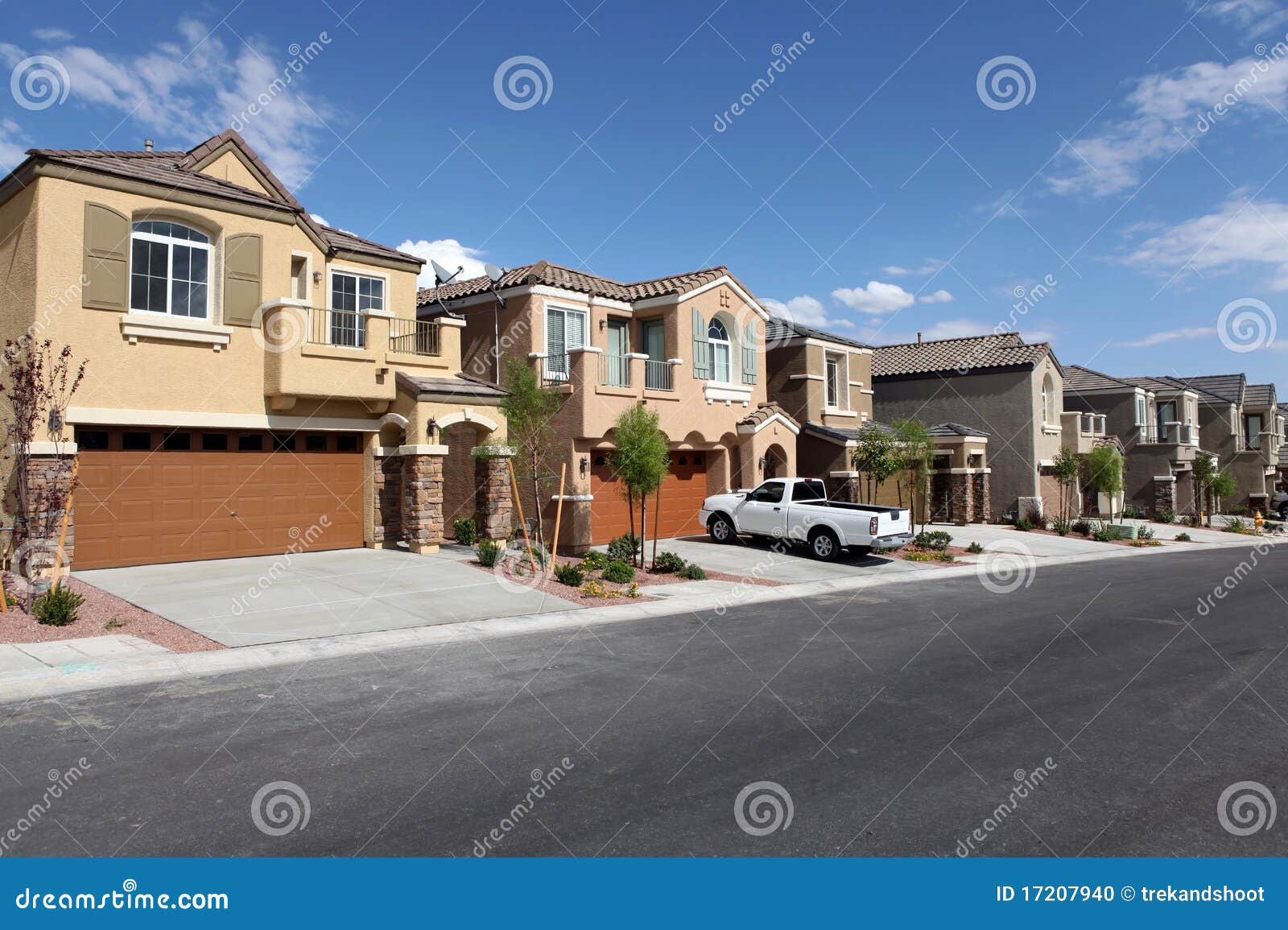
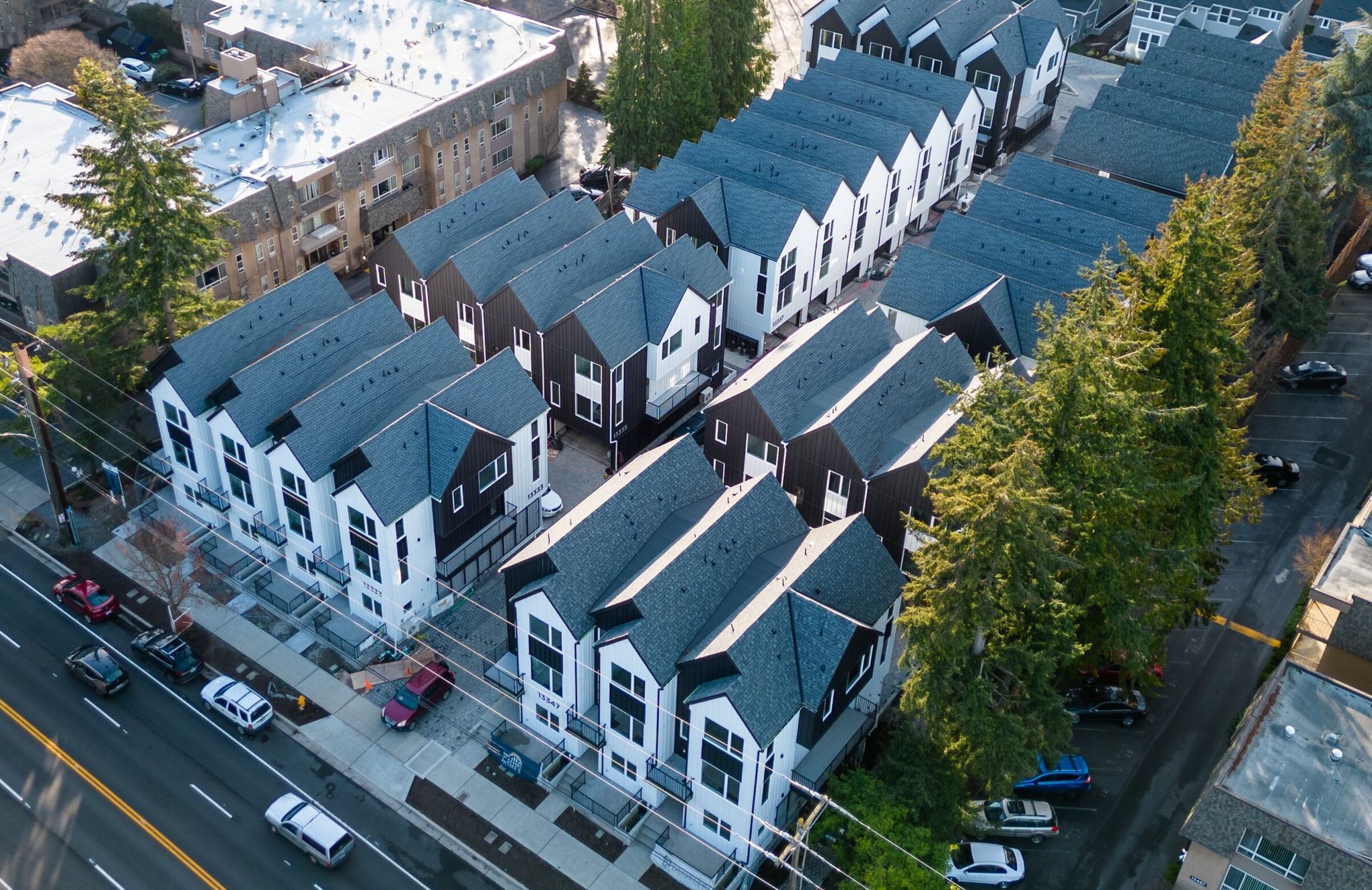
It's pretty amazing how easy it is to get around with a combination of the mass rapid transit (MRT) system and high speed rail (HSR).
When I was last there, you still needed to take a bus or taxi from TPE to the city center. Now right from TPE airport, you can be in either Taipei city center in 30 minutes (MRT) or on the other end of the island in short order (HSR). Which is kind of fun because the southern end of the island has a totally different vibe.
Within Taipei, you can get to where you need to using the MRT and walk (fun because there's so many interesting nooks and back alleys anyways) or use bike rentals. There's also abundant buses as well connecting from the MRT stations.
Taichung has a single MRT line that connects east to west right off of the HSR line.
Kaohsiung has a few MRT lines and surface light rail that connect the major attractions.
All of it quite cheap to get around, incredibly clean and well maintained, and just all around made it much more enjoyable wandering the city.
The only time we felt the need for a car was visiting the more remote north/east coasts and only because we wanted to save time versus waiting for the slower trains that run those routes.
Whenever I land in SFO, I wonder who's bright idea it was to not have an easy connector to CalTrain at Milbrae (or I'm doing something wrong -- I feel like I don't fully understand the right way to get to Milbrae from SFO). Then on weekends, there's barely any service so if you land on a Sunday for a business trip, you'll waste so much time waiting for the train.
Indeed, it is jarring when we returned to the US.