I think the VC world's obsession with growth has tainted how we (me included) view things, especially stuff like social media. There is a fixation with growing and doing it rapidly that I believe is harmful. I don't know when this switch flipped, but I've felt it gradually building up over time.
Things can just be what they are, grow naturally and then die naturally. I suspect that injecting cash and attempting to achieve an unnatural growth is probably not good for both the quality of the product and the long term stability of it.
I would love to see more niche things grow organically and fill a role for some people, at some time and not try to be everything for everyone. Because when that's the case, does anyone really enjoy it?
It has really made me pessimistic about tech and products in general. There's the free and great stage, then the market is captured, then enshittification, then death.
I don't get excited about new products or new tech because I know the cycle. Hype then bust. New thing comes out and I'm just meh about it, because it'll bust soon enough so it's not worth getting invested in it. Or new version will come out next year and break what I was used to, or it'll be an implicit subscription of having to buy new thing every year. But it's not really going to fix itself because it seems like everyone else loves the dopamine rush from the hype cycle, and they don't really seem to care about how ephemeral everything is.
> It has really made me pessimistic about tech and products in general. There's the free and great stage, then the market is captured, then enshittification, then death.
Mark Zuckerberg an hour ago: "Our approach will be the same as all our other products: make the product work well first, then see if we can get it on a clear path to 1 billion people, and only then think about monetization at that point." https://www.threads.net/t/CuW5-eWL34x
The ironic thing is that he lists monetization last, but simply by uttering that sentiment he tells us that they are really thinking about monetization first, aka the end goal of the product.
Even if he didn't say it, it's implicit in who they are. Do you really think a massive social media corporation is going to launch another social media platform, just for funsies?
No, no, just pointing out the blatant contradiction in the statement. Although I do wish an app intended for a billion people had a component of goodness to it!
I don't think he's ever suggested Facebook is anything but a for profit enterprise, but I think it is an extremely cynical take that "build a product a billion people would use before thinking about monetization" actually means "think about monetization first".
Framing things this way suggests that the reason the metaverse is failing so hard is because facebook insists on jumping straight to enshitification without spending time on the stages users actually enjoy.
Meta did not spend enough time thinking about monetization in the long term, realized they were in a really rocky position due to Apple and Google owning the platforms Facebook ran on, and then desperately had to come up with a new platform they could monetize.
They've pushed it so hard now because they didn't think about monetization early.
It will always be a fascinating piece of historical trivia that Zuckerberg was represented as an iconoclastic hacker in The Social Network, when he had already turned into a turgid adtech executive by the time the movie came out.
It is so foreign to me, to choose greed as your personal identity. These individuals will gleefully stride onto a stage with a microphone and boast about ideas and actions that 1/100th of would fill my mind with such incalculable guilt and embarrassment that I would never sleep or show my face in public again.
Love this. And it’s very disheartening how society fetishizes how much personal wealth one accrues, so much so that it’s natural for the youth to grow up idolizing that and not once step back and consider the larger effect it has on the community.
An interesting thought is how many people are inadvertently bad, simply as a byproduct of what I touched on above
It's hard to overlook the role of institutional capital in shaping the landscape of nearly everything.
As a teen I grinded for a few months building a b2b SaaS. A competitor launched a better version for free. The founder had a Harvard MBA and used VC funds to build this marketing tool.
Growing a product organically puts you at a disadvantage to companies that can ignore market fundamentals for years at a time. And if you do manage to grow, acquisitions that amount to life changing generational wealth is hard to ignore - and it's not like the future of your product is guaranteed.
Wall street needs returns. Tech is just the first to adapt to the loot-box economy but it'll spread. Anything that can be turned into a subscription model will be. Air-bags to air conditioning. We will own nothing and like it.
A lot of people reject political ideas (i.e., regulations) because they have an idealized love for our free markets. Meanwhile small profitable companies are going out of business to larger unprofitable companies.
It begs the question, how did the larger unprofitable company become large in the first place? It wasn't by delivering goods and services at a fair price, it was by currying favor with those already in power. The romantic view that to succeed in a free market you sell goods and services at a fair price doesn't hold.
“A lot of people reject political ideas (i.e., regulations) because they have an idealized love for our free markets.”
No, it’s that regulation is often used as a political tool to wield power over the players in the market.
Free markets are far from ideal. But they do make it a bit more difficult to game the system because there are fewer ways for a third party to interject itself. Don’t get me wrong, I’m not saying it doesn’t happen or even that it’s rare. Just more rare than if you turn politicians loose on the system.
I’m always amazed that people implicitly trust politicians, as though they’re unbiased referees trying to keep the game fair. Nope. The reasonable regulation you pass today will turn into some bizarre fiefdom in 10 years.
I have a small agency and a product in a niche market and even there big consulting and IT services companies are starting spin offs to address these niches, and even bidding at a loss (especially when you take into account pre sales investments) to displace remaining niche actors like us.
...or a perpetual zombie state as a "brand" that has absolutely nothing to do with its original owner. Trusted names from my youth (GE, Westinghouse, Frigidaire, Maytag, Zenith, etc.) mean nothing these days. Packard Bell has been resurrected twice now.
The British transport YouTubers I follow, particularly Jago Hazard, every time they mention the Great Western Railway, are careful to remind us that it has no relation to the original company of that name.
I get exactly what you mean, and I've felt the same thing: this pervasive stormcloud over my head as I wonder "is EVERYthing doomed to an eternal september?!"
However, I think this depressing outlook is an artifact of how much technology is fixated on social capture in a digital space. In that medium, yes, it's all just ebbs and flows. The article put it beautifully: we kept thinking that usenet or AOL or myspace or facebook were going to win, but it has taken a few decades for us to realize that in actuality they are just fashion trends that happen to require some very technical people to knit.
However, that doesn't mean that _technology_ is this way. And in fact, this speaks to the odd word mangling we've all adopted in which "tech" has started to mean "social web oriented silicon valley startups or juggernauts". Technology is so much bigger than that, and true innovation stands on its own and persists through time. An actual _invention_ doesn't need to win hearts and minds, and it doesn't need to set trends. A wheelbarrow is a wheelbarrow, and once somebody conceives it, it will always be useful whenever you need wheelbarrow-like functionality. Its utility will be obvious and non-controversial. It is still possible to use our intellects to think of pure pareto improvement arrangements of atoms and bits that do a useful job. I think the engineering profession and the world has gotten a bit distracted from that truth. Uncharitably, you could blame it on a greedy obsession with taking over the world, which comes at the expense of doing well-defined and prosaically useful things for the world.
The way you get around this type of crap is by diving deep, and when you think you've gotten deep enough, go further. Academia, for all it's faults, is a fantastic way around the bullshit you get with industry hype, by mere virtue of open peer scrutiny. You want to understand whether the current "AI" hype will last? Research and understand the theory and academics behind it - therein lies your truth, and if it doesn't align with what you see in industry, you know it's grift. Hint: it's usually grift.
Once you've identified the grift you can rest easy knowing that eventually it will collapse and the grifters will be left with nothing but society-warping amounts of money.
> It has really made me pessimistic about tech and products in general. There's the free and great stage, then the market is captured, then enshittification, then death.
This is an accurate summary. And it’s completely normal to not be excited about this. I love tech, but this isn’t tech. The tech is just bait to achieve market dominance. The new age vultures do everything in their power to eliminate competition, the very fuel that makes markets work. So it’s not even business in the traditional sense either, it’s more similar to political power games.
The big wrinkle is they're mainly free while they're burning VC money on user acquisition trying to 'win' some niche they can exploit to justify a crazy evaluation. The free money fueling that early golden age directly requires the eventual enshittification in the current model because the VC doesn't want a stable profitable enterprise they're all swinging for the unicorn fences.
This is a huge tangent, but I've started harboring similar feelings for video games. Go read comments for the latest game and 90% of the comments will be about item drops, skins, loot drops, whatever. It's absolutely mind boggling because all those things IMO suck the fun out of the game which it to kill something, kill someone, or explore some world.
I winced hard at the $70 price tag on Tears of the Kingdom - but damned if I didn't get more than my money's worth. One of the things that makes that game so fun is that the whole thing is just there in front of you and you are largely allowed to approach the game however you want. One of the best games ever in terms of respecting the player's intelligence and creativity - just gives you a set of tools and says "fuck around and find out."
Nintendo is sometimes very good at what they do. Another example is the Pikmin series. Miyamoto's favorite. It's never been a real seller, but they do another version every ten years and it gets better every time. One day we'll look at these games and realize how much they invented.
I was first a bit torn about Tears of the Kingdom, it was hard to get back to the world of Breath of the Wild. Then I found this cave, and then it was 2am, and four hours disappeared somewhere. Now I can't let it out of my hands...
I'm actually arguing against the gamer in this case. For the most part, I enjoy those games because I don't work myself up over loot drops, skins, etc.
I mostly play single player games these days because they've been spared. I played a Plague's tale a few weeks ago. Really strange premise but a lot of fun!
They already use procedural generation for worlds and stupid NPCs. If adding Open Source AI makes offline single player games more credible, I'd be all for it. If not also because that would force them to make online multiplayer games a lot more palatable. The point is creating competition, not discouraging multiplayer.
I only play single-player games anymore because I won't play any game that requires a connection to a server somewhere. So it's not a stance against multiplayer games (I still play old multiplayer games with my friends. They just don't require connecting with a third-party server) but a stance against phoning home.
That means there are quite a few single player games that are off the table for me as well.
Who are you competing with, speed runners? I've played all of them but I never thought i should look online and find some other player to compete with in kill time or something.
Edit: oh funny. I forgot they had pvp in them. Because I've always ignored it and in Elden ring you can't get invaded unless you ask for it, so I never was.
I've basically given up on AAA titles and don't bother anymore. The only games I can tolerate now are indie and story driven games like "The Quarry"[0]. I think studios such as Ubisoft are the biggest offenders in this space, if you look at all their latest release , it is all free to play, looter shooter "live service" games. On second thought, everything related to tech is becoming junk in general: from Social Media to Games to Subscription based Note apps to Mobile apps.
Just stop playing most AAA or mobile games and that should solve most of that for you. The exceptions being the God of War series, the Mario and Zelda series. I still get excited for those. And probably the next Elder Scrolls or Witcher game.
But other than that, lately I've been far more excited about the Persona series, Nier Automata, Spike Chunsoft games (especially Danganronpa), The Witness (a bit older now), The Outer Wilds, Subnautica, Slay the Spire, Inscryption, and Vampire Survivors.
Tears of the Kingdom is probably the best pure exploration game ever made, with Outer Wilds being better in some ways, as it's simulating an entier solar system in real time and has some really clever ideas in it, but it's a smaller game overall. I think I pretty much fully explored Outer Wilds (except the expansion) in 20 hours, I've aleady put in 80 hours into TOTK and I've seen maybe 40% of the content so far.
Yes, it's a disaster. A lot of industries are out to maximize profits, even if it means destroying their own product. What economic forces would drive you to ruin their product? Are these corporations looking ahead economically and concluding it's best to destroy their product and just accept the money?
It's mind boggling how many people enjoy that though. You're right. Clash of Clans et all really changed the gaming dynamic.
Just as an example, Halo Infinite came out and it had warts, but also had a good fundamentals for gameplay. Good speed and weapons. Every single comment was about armor cores and skins. I just didn't get it.
The thing a lot of these AAA devs don’t seem to get is that what works for Clash of Clans doesn’t work for AAA games most of the time. Also, the Clash of Clans devs are liked by the player base because they take community feedback very seriously (and, as a counter point, the Clash Royale devs are despised because they don’t).
Buying a monthly pass for one of those games ends up feeling like a pretty good deal because it enables you to increase your engagement with the game by a lot for what feels like a good deal. AAA shooters that go down this rabbit hole feel like they’re spending more development effort pushing skins I don’t want while giving a half-backed game with the promise of improvement in the future that often never happens.
For the price of a monthly pass for Clash games, I’m easily getting more hours of enjoyment than dollars invested each month.
> Buying a monthly pass for one of those games ends up feeling like a pretty good deal because it enables you to increase your engagement with the game by a lot for what feels like a good deal.
You have no idea how right you are. It increases your engagement. Not your enjoyment.
> Good speed and weapons. Every single comment was about armor cores and skins. I just didn't get it.
You have to play for something. To reach the end of the story. To grow a thing (city builders, minecraft). Or... for skins in a competitive shooter. But there are no skins unless you pay real money for the game you've already paid for. Oops?
The surprising thing is how captive we our to the chemical responses of our brains. These companies measure out dopamine like a drug and use their games to drip-feed it methodically to maximize your cash spend.
I would like to add completion mechanics and badges to this list of things as well. Reddit is obsessed with 100% completion. It stops being a game and starts being work at some point.
I don't know when it happened, but at some point in the past it stopped being about playing games for fun, and turned into playing these things for something else - status maybe? I don't know how to describe what I'm thinking.
> I suspect that injecting cash and attempting to achieve an unnatural growth is probably not good for both the quality of the product and the long term stability of it.
Right, but that's not the point. VCs (and most founders / anyone holding equity) just want to get our before the hockey-stick graph starts turning into an S-graph. The product itself is mostly irrelevant (to everyone except the users that is).
> but that's not the point. VCs (and most founders / anyone holding equity) just want to get our before the hockey-stick graph starts turning into an S-graph.
Most efficient system in the world, ladies and gentlemen
> There is a fixation with growing and doing it rapidly that I believe is harmful. I don't know when this switch flipped.
Gradually? I happened around 1995 and it’s only ever slowed down for recessions.
It’s not a trend of companies it’s a trend of funding sources and strategies. If you take fifty million in funding, those guys want it back. And they want it back 10x. So when your favorite little company takes a funding round that is five times more money than they’ve ever seen total, let alone at once, your favorite little company is about to change into something ugly.
I think it's a problem outside of the VC-adjacent space too.
There's a sense that if you can't solve a huge societal problem (ideally several), it's not worth doing anything. It's really disempowering mindset because most of those problems are really hard to solve.
It's like all the focus is on what effect the thing you're building will have on the world, rather than just building something because you think it would be kinda neat if it existed.
The latter type of projects are the only sorts of projects I've had any success with. It's really liberating to not have to play some five dimensional chess game guessing what will make other people behave in certain ways and just using your own judgement to build what you like.
> It's really liberating to not have to play some five dimensional chess game guessing what will make other people behave in certain ways and just using your own judgement to build what you like.
I think people underrate this idea, way too much.
Humans are a pretty diverse set of people. But we're similar enough that in a population with ~10^13 people, there's probably 10^4 people who are pretty much clones of you, in terms of your preference, taste, etc.
With the internet, it's never been cheaper to find them. Preconditioned on it being you or me, 10^3 of those people are probably browsing this website, for example.
I hope the fluctuations of fashion lean more towards assigning social value to smaller, more sustainable builders. The migration in that direction deserves to be bigger. I observe it happening personally, but tech media is lagging significantly behind, mainly because these people don't spend money on advertising or PR.
Oh man well said, I had this uneasy feeling while reading your comment.
I think the world is fucked, especially in how it's planting incentives in our brains. For girls it's clothes, make-up, being fit. For guys it's cars, games, sex. And of course there's general consumerism that doesn't gender-discriminate anyone.
For tech people there's something else I hate with passion: creating images of great, world changing people. We aspire to be Zucks, Musks, Gateses, Holmes (yes, theranos). It's always bullshit to sell something or gain political power but the damage is done anyway. It's hard to live a simple life and enjoy simple things when everyone around expected you to look up to them and change the world. Many people believed their narration and became sociopaths that maximize gains on every opportunity. Even I was very drawn to "growth hacking" before. Now I see how crazy it all is.
For me, I think the big mind-shift was the dot.com explosion/implosion.
VC driven growth at all costs ("GaaC"), monetize later. That's when I first saw it.
Prior to that what I remember was mostly building a small business.
On one you grow and grow fast, needing multiple rounds, to exit.
The other was build a business with one or two rounds, then have a product that generates profit.
The GaaC method also means spreading the company into all kinds of things - maybe away from the core - which I think causes loss in the original value prop.
It's funny because having lived through that, we all thought the implosion of .com companies that worked this way, during the .com crash, was a repudiation of this strategy. But it came back within 10 years, and stronger.
I also remember clearly that at the beginning of things with Facebook there was a strong sense from the press of "how the hell will this thing ever make money?" and big questions like that around the IPO. Hell, there was that going on for Google around their IPO, too.
There was a brief period from about 2001 to 2007 or 2008 or so when there was perhaps more responsibility to try to start on a more even revenue-earning foundation with sounder business plans. But that all blew up in the 2010s.
It's possible this was all tied into the massive cuts in interest rates, and QE etc after 2008 that made debt really cheap.
I believe it's really the outcome of capitalism and greed taking something that was organic (forums and chat) and monetizing it to death. Facebook monetized your family and friends, Instagram monetized your vanity / creativity, etc.
I would agree with greed but push back on capitalism. There are many ways to be a capitalist. Greed is a common choice, but there are more humanist approaches, too.
From your example, Craigslist is itself is a capitalist institution, making >$100mm/year. Patagonia, Wikipedia, King Arthur Baking Company, Darn Tough Socks, Lodge cookware, are all capitalist too.
I think it's important for entrepreneurial-minded folks to have positive role models – it's possible to develop wealth for yourself, your customers, your employees, and your environment, and to do so with respect and dignity. In fact, a well-operated business is probably the most effective vehicle for having an outsized impact in your community, so defined.
I understand growing rapidly, especially for a social network, where you need to quickly reach a certain amount of user content per day to provide value. If you can't get to that point fast enough, then you'll crash and burn.
I think the bigger issue is equating success with active user count. Social networks love to brag about their number of active users. It's all they care about. It doesn't matter if they're making the world a worse place, ruining lives, making people depressed, turning everyone into swiping zombies, taking information that was previously accessible and moving it inside a walled garden. That doesn't matter. If they have more active users, they're more successful.
However, look at HN as a counter example. It's a decent community and I think the reason for that is not setting growth as the metric of success. HN has enough content to keep people interested. What's the purpose of more users after that point? Yes, they'll create additional revenue, but if they can't provide equally engaging content or comments, they're just going to drag the quality of the community down (a trade that most businesses gladly accept).
This is the world we live in though. Everyone is focused on numbers. All people care about is followers, likes, or subscribers, and they'll happily sell their soul if they can grow those numbers. Companies don't care, they'll promote whatever garbage gets the most clicks and keeps those active users up. Advertisers don't care, they'll sponsor whoever has the highest number of views. It's a sad state of affairs.
While this is true and I think most VCs are idiots, there is a natural phenomenon of the internet which allows for exponential growth and which means that startup = growth is a very real thing. What VCs and a lot of startups try and do is fake the actual utility of a product through forced marketing and Glamour.
Yea I actually think it's similar to something that happens with my 2 year-old. He thinks putting shoes on means we go outside. So when he wants to go outside, rather than saying "outside", he goes and gets his shoes.
The internet' scale allows great products to grow exponentially. A bunch of great software, sites, and tools took off and grew at a rapid rate. But we took the wrong lesson from this and thought "rapid growth=great product". So VCs have put growth above everything else, and are hoping they can figure out a product after, like a 2 year-old thinking that putting on his shoes will mean he gets to go outside.
Many companies fail because they take on investment and then have to grow into their valuation. The fast growth creates enormous inefficiencies inside the company, because management and tech cannot keep up. This often mans that the company eventually has to shut down.
On more than one occasion I've worked in places where we were asked to be at our tidied up desks because VCs were about to be paraded through the office.
Every time there were more of us. Basically, "look at how we are burning through your money by hiring all these people. Growth!"
Now, the actual growth, daily active users and all, that is an area of rampant fraud, but VCs seem to be OK with it until the company runs out of runway. THEN it's a total scandal, even though all they need to do is pop the hood for 5 minutes to see how the numbers are arrived at.
If you are taking hundred of millions in funding, sure you need to capture the market of "all the people". If you build something that's just for a certain group of people, you can compete by just having a better product that specifically addresses those users needs.
Look at HN, I know, run by a VC and it's not without some issues, but it is still better than most forums and social media to me specifically because of what it doesn't try to do. It has a specific goal and doesn't feel the need to try and extend beyond it.
My ideal is that in the future we will more communities like this, where it's built to address a group of users needs and not try and expand beyond it. Where the content and information is shaped in a form to meet the specific needs of the group using it and not generalized into the lowest common denominator so ad sales can go up. It feels unlikely at this point, but I still have hope.
> Things can just be what they are, grow naturally and then die naturally. I suspect that injecting cash and attempting to achieve an unnatural growth is probably not good for both the quality of the product and the long term stability of it.
Maybe this actually IS, the natural way to grow and die for a global social network
Yeah, at some point VC became synonymous with tech. I mean here we all are, discussing this topic on a VC's forum.
The two are heavily-overlapped, for sure. But in the last 25 years, it feels like the horse (tech) has been steadily placed further and further behind the cart (VC).
> I suspect that injecting cash and attempting to achieve an unnatural growth is probably not good for both the quality of the product and the long term stability of it.
The people getting rich with these methods don't care about quality or stability.
At this point there needs to be a very big and popular anti-capitalist push before anything good comes back.
I'm all about the human rights as my first concern so any fellow SJWs reading can rest assured they don't need to interrogate me about whether I know about this or that type of oppression. BUT, can I just for a moment talk about how literally tasteless life has become?
Here in Canada, we have for my whole life had a different Special K than USans. Closest I could describe it is it was like flat rice krispies with a different kinda flavor, sort of like the American one but not completely.
The private equity that owns the Kelloggs brand now shut down the Canadian factory, which is the only place that made that Special K. Now we have "Original" on our shelves, in an extra bit of gaslighting.
I like candy, always have. I took the notion the other day to go find some Kraft Chocolate Flavor Caramels. Lately they're called Fudgies. Most lately they're discontinued.
Nothing small or niche that doesn't produce a specific profit margin is safe.
> Mass publishing is more useful and valuable the more people you can publish to at once.
Absolutely, but that was happening long before the likes of Facebook, Twitter, etc., came around to monetize it and convince people that they are the only ways to do it. They're cultural parasites.


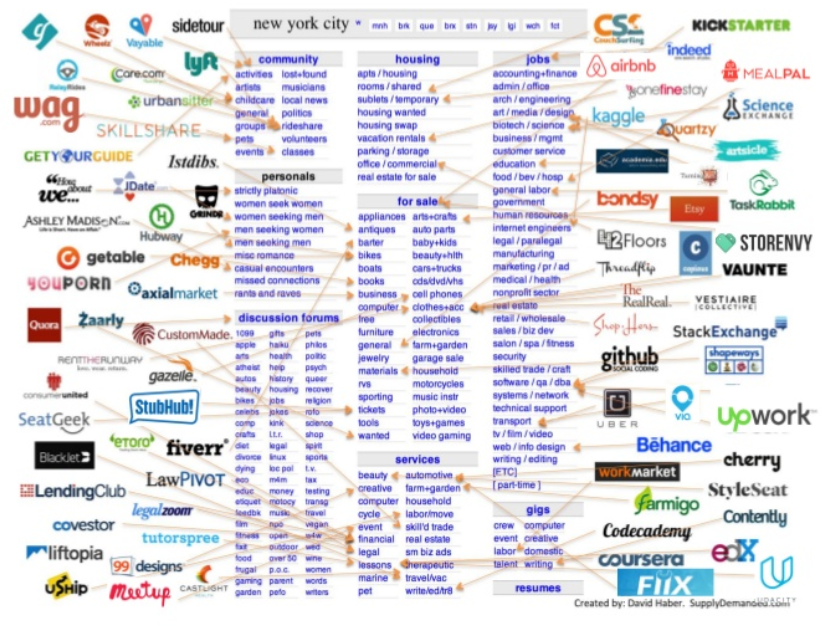

Things can just be what they are, grow naturally and then die naturally. I suspect that injecting cash and attempting to achieve an unnatural growth is probably not good for both the quality of the product and the long term stability of it.
I would love to see more niche things grow organically and fill a role for some people, at some time and not try to be everything for everyone. Because when that's the case, does anyone really enjoy it?