I am from a generation which grew up with phpBB forums of various kinds, and I loved the format.
I still struggle with understanding why we can't remain within decentralised forums. Was it such a hassle to check like four URLs a day to see what was happening in the threads you participated in? Are centralised feeds such a core necessity to us?
I don't think the problem is user retention so much as upkeep. That the web is an extremely adversarial environment.
Popular forums are high value targets as they both tend to be central in the PageRank graph (so link spam has historically paid off very well as black hat SEO); while also sitting on large user databases with associated emails.
So there are non-stop intrusion attempts and ceaseless bot spam. Operating a forum is a lot of thankless maintenance. It's not made better by the fact that a lot of the older forum software had nightmarish upgrade procedures.
tl;dr: Anecdotally, the attention span of the person is now three seconds. If you can't grab that three seconds; next.
> Operating a forum is a lot of thankless maintenance.
If you are to run any sort of site, you just kind of got to expect it. Who here thanks HN for their service?
Their favorite IRC server SysOP, Discord server owner?
Forum's were slow on delivering content.
The world is now driven by media and that was a PITA to host. If the webmaster didn't allow image uploads and even when so, you couldn't normally link elsewhere; were forced to register an account. Wait for a verification email, wait for an administrator to approve your account and then gain 10 posts. Text is time consuming to read and too write, like this comment.
They were more a leisure activity rather than what the internet has become now. Adaptability never happened and with the failure of evolving with real-time with the next generation who were starting out with internet enabled phones and gadgets caused their downfall.
They may of suited the generation, however they were not a fit for the upcoming younger generations. And if you can't
target and gain their attention; expect to go extinct.
Code bases were too lumpy and such a mess; to make any modifications, to adapt it to anything else took a fair chunk of time and skill.
Proboards, Zetaboards, Invasion tried. Services where you could spawn an instantaneous forum for you and communities. It had momentum and than fell apart as did the death of AngelFire, GeoCities.
even if they didn't, why should they? this site is used as advertising for YC and their job ads. why should they get extra thanks for maintaining a forum for its ad space? do you also thank Facebook or Twitter for its moderation?
> tl;dr: The attention span of the person is now three seconds. If you can't grab that three seconds; next.
I don't know this is true in general. Only in very noisy environments, which is like the opposite of what a forum is. The harder you clamor for attention, the harder it is to actually capture it because you're creating an environment where capturing attention for more than three seconds is impossible.
If you create a low-noise environment, you can capture attention for a long time.
All of social media suffers from a paradox: you need enough users contributing valuable content to make it worth showing up, but not so many that it degrades to memes. The key benefit to centralized social networks is solving this by having a huge user base but letting you curate the content you engage with (subscribing to users, joining subreddits, etc.). Small forums have a huge discovery problem.
I loved forums, but with the modern legal landscape, liability for uploaded content, DMCA requests, etc. I would never want to run/moderate one - and that was true even before the current swarm of LLM-generated spam.
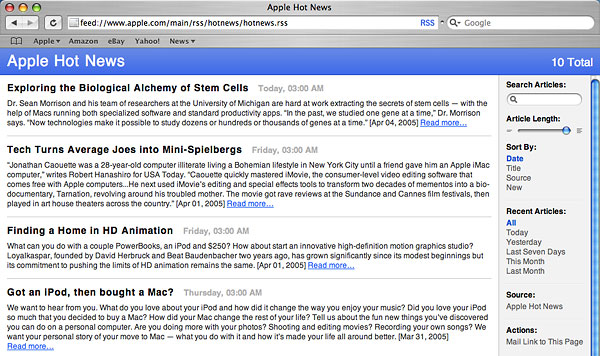
People keep using this word when talking about what’s been happening with the internet recently- but they don’t realise how close it is to the actual answer. RSS has been around forever and it’s exactly what is needed. A feed reader can check thousands of blogs, comment sections, youtube channels, newsletters (imagine never being asked for your email randomly ever again), podcasts, whatever.
The real issue is (and should be) discovery. Make feeds more obvious (say, it was integrated into modern browsers. Some sort of first class “feed detected” icon) and then all you need is search, which has also been solved forever (hopefully it stays that way…).
> Was it such a hassle to check like four URLs a day
People decided to check more than 4. It's inevitable, you find a forum and start checking it, then find another, then another, and soon you have dozens of low volume forums, all adding to a small amount of messages.
RSS would have solved this problem, if the sites that published feeds actually made the feeds work. There's no need of centralization of the creation, but you must be able to centralize them someway.
And also, sharing a login between all of them is a very nice feature. Managing accounts is always a bother.
It's cynical, but because McDonald's only has so many humans to do social media, and they can't be everywhere all the time, so it's in their better interest to hype the fast horse and back it. We wouldn't want them infiltrating our forums, but they want our attention, and it's more cost effective to get it from Twitter and Threads than a million decentralized forums.
As I've implied elsewhere, I like little geek communities too, but the big easy networks can and have fulfilled an important purpose of essentially being a better world "town square" than, e.g. network news.
They're incredibly far from perfect, but they've done a LOT of good, and are likely to continue to be necessary.
I would say that up to the point when they started for forcefully manipulating their content for direct payments or indirect "retention", yes, the benefit outweighed the costs.
By 2015 they were almost all incredibly harmful and mostly valueless.
As a Black person in America, I'm not in the slightest. Documented and spread proof that "we're not crazy, look at this stuff that actually does happen."
I think it's more that forums weren't really made for boosting engagement. It's like email, just a tool to do something not to keep people addicted. GenZ look at forums and they go eeewww.


I still struggle with understanding why we can't remain within decentralised forums. Was it such a hassle to check like four URLs a day to see what was happening in the threads you participated in? Are centralised feeds such a core necessity to us?