Free or extremely cheap transportation is a fascinating development. I always found it odd that the rhetoric around transportation was that it should make money. We don't expect other parts of the government to turn a profit. Why transportation?
If Amtrak went that direction and made its transportation close to free, I wonder if we'd see more people try it out. Maybe it'd gain some popularity and we could finally see a shift away from cars. Public transportation is a difficult process because until the money is spent and the line is there, people are not sold. Whereas with cars, even if a highway is not built, people still have a car by default. Therefore the government needs to float money, either in infrastructure or in subsidized fares. At least subsidized fares is a little less binary than infrastructure.
As someone who has chosen to get rid of my car and rely on public transport I would say the biggest problem public transport faces is quality and not cost. For people to trade in their cars connections need to be fast, frequent and a comfortable ride. This requires large investments and having high enough fares helps offset those investments. Making it free makes it harder to achieve that level of quality, so while it will sway the most price-conscious group, it would never convince the masses to take a train instead of their car.
I will push back there. Automobiles rarely pay the cost for their transportation infrastructure. Some of the roads are good, some are bad, some are congested some are clear. The populations adjust their life around the infrastructure not the other way around. Since the streets are already free, for public transit to compete in any way, it also ought to be free... we should expect people to adjust to ideal public transit living locations for the exact same reason.
Most Americans would probably not feel safe biking for their commute. Our bike infrastructure is patchy and insufficient to provide sufficient separation and protection from massive speeding tons of steel.
I lived for over thirty years in the United States, but mostly stopped biking there. Now I bike everywhere.
I agree with everything you say but you're missing a key point - the active hostility that a significant number of drivers have for bikes.
I biked in Canada for ten years, and drivers there (at the time) were mostly indifferent to bikes.
(And yet I say this, and then I remember that one of Canada's rising bike stars at the time was permanently paralyzed by a driver who had repeated tried to force him off the road before (in his small community) and who had been reported to the police many times for it, and yet suffered no penalty other than a temporary license suspension. This was in the early 80s, and I haven't thought about it in 30 years, but I still feel a rush of rage.)
Now I live in the Netherlands, and cars are actively solicitous of bikes. Let me tell you that the center of Amsterdam has a lot of cobblestone streets with no separation between bikes and cars, not even a line on the street, but (nearly all) the cars treat cyclists as if they are delicate and breakable, which is actually the case.
I mean, that could trivially be changed by waving a magic "this section of the road is for bikes" wand. We feel unsafe on bikes because there are too many streets designed for cars and too few for bikes. Switch out 10% of streets effectively for bikes only and you'll suddenly see people biking.
It's literally happening in SF, Minneapolis, Portland, and NYC. Caring about the Overton window is a concern for people who don't actually want to change anything ever.
The amount of lane-miles dedicated to bikes in NYC is <1%. At the rate bike lanes are currently built in NYC it would take centuries to reach anywhere in the 10% neighborhood.
Cyclists keep getting promised the world around the country. I’ll believe it when I see it.
I didn't find the distinction in the Wikipedia article, but in the US "public transit" is commonly used to refer to local transit options and "trains" usually refer to intercity travel.
Right, while in the uk with much higher density of towns and train stations, people also use them for local travel to get into town or one town over. The extreme case is something like a million people use trains to commute into London every day, with another million or so on each of bus and Tube (subway).
>* Users of the highway passenger transportation system paid significantly greater amounts of money to the federal government than their allocated costs in 1994-2000. <https://web.archive.org/web/20170628114204/http://www.rita.d...> This was a result of the increase in the deficit reduction motor fuel tax rates between October 1993 and September 1997, and the increase in Highway Trust Fund fuel tax rates starting in October 1997.
>* School and transit buses received positive net federal subsidies over the 1990-2002 period, but autos, motorcycles, pickups and vans, and intercity buses paid more than their allocated cost to the federal government.
>* On average, highway users paid $1.91 per thousand passenger-miles to the federal government over their highway allocated cost during 1990-2002.)
US highways literally the least of anyone's concern. They are totally sensible even if we had walkable/bikeable cities.
The real costs are tied up in surface roads and what lies underneath them. Repaving, sewer, cable, electricity, drainage... all that stuff has to be replaced regularly, and when it does, it's a massive subsidy from the people who don't drive cars on those roads, to the people who live or drive heavy trucks on them.
Building efficient transit systems and moving away from the most inefficient system, that also happens to kill 100 people every day will make people's lives better.
Which is why public transportation needs heavy investment now.
It is much better for 80% of the people living today and 100% of the people living 50 years from now who will be dealing with the devastation caused by our CO2 emissions.
The claim I'm responding to is that, rather than making heavy investments to adapt transit infrastructure to people's lives, people should just adapt their lives around the transit infrastructure we have.
...because we let them for some reason, because public transit is for "other people" in america. We don't allow camping on the road, because it's what we expect people to use. Other countries don't allow public transit to be treated like shit because most people use it.
The vast vast majority of street damage comes from heavy trucks. Cars and light trucks likely do pay for their road usage (a car causes something like 1/10000th the wear as a tractor trailer).
If there is no per-mile fare, then there is no incentive not to use the road. Using gasoline as a proxy does not charge the people using complex and expensive overpasses more than people using surface streets.
There is no incentive to minimize construction and maintenance costs at all. No pay-as-you-go model like busses and trains have.
As someone who has dealt with Lightfoot's destruction of the CTA. (Well not so much as destruction as much as intentional neglect and lying about it over a long period of time) I completely agree with this. CTA used to be mostly reliable and good. Now, there are serious questions as far as to trust it to go out drinking or using it for everyday commuting for work.
As a result our roads have become chaotic to drive on.
It worked in Germany. Peak rush hour traffic is down everywhere. Plus the German trains, trams and subways don't smell like urine, or make horrible screeching noises like BART.
Anecdote: I use the free (9€ is close enough to „free“) trains every week since the ticket was introduced two month ago. The trains are more crowded than before but I never experienced anything like the problems you mentioned.
> I'm not just mentioning: I'm linking to the facts.
Well, my experience is also fact. I use trains every week now, I have visited half a dozen cities with this ticket and used local public transportation there. It's crowded but otherwise fine. Just because these experiences aren't reported on the news does not make them less real.
> 9€ for you, €2.5 billion+ for us.
"us" does a lot of lifting here because "us" is literally millions of people (including I). This statement also compares costs of a ticket for a single month with the total subsidization over three months.
> I'm against the government doing populism and burning our money like that.
I think we have to agree to disagree here. I think it is money spent well.
It didn't work in Germany. You have the impression that it worked because people are in holidays [1]. The trains are mostly overcrowded, partially working and the work force is burned out[2].
TL;DR:
"The Transport Ministry is providing €2.5 billion over three months to compensate for the loss of revenue caused by the artificially low ticket price — and yet no money was made available for extra personnel, buses or trains." With that in mind, he does not see how the scheme can feasibly continue after August. At least not at €9 per ticket."
So they learned on their first iteration how to do it better. Honestly, it's like everyone is desperately searching for that dark cloud of desapair...
Point is, it reduced automobile use by a significant amount because people do prefer to use the train when the price is right.
Which means that with appropriate subsidies you can seriously improve the existing transport infrastructure. 10B a year is a pittance compared to the good it would do - Especially with the looming energy crunch.
No they didn't learn about the iteration. Actually they learned, that the populism cannot be sustained (the plan should be named 90 euro ticket 1 euro/day, but for populism they "removed one zero"), again, they borrowed our money to be able to follow a populist agenda, but the Federal government said already that they won't be able to keep up with that: with a ridiculous excuse: "It is not a federal issue, but the federal states are responsible for that" https://www.tagesschau.de/inland/nachfolgemodell-neun-euro-t...
>the biggest problem public transport faces is quality and not cost
There is an interesting, very American, solution, which is ubiquitous, active surveillance on every form of public transport. Not just for violent threats, but for enforcing (current) vandalism, littering, and even assault laws cheaply and at scale. For the low low cost of a dystopian panopticon you could have, theoretically, a cheaply maintained public transportation system. (The other option, which many other countries employ, is a rigorous culture of respect for public places and public facilities -- for example Japan and Northern Europe.)
That does nothing for trip times, added walking distances, or convenience of transit (e.g. how easy are connections). You're replying to a post that mentioned "fast, frequent" first as their measure of quality.
> This requires large investments and having high enough fares helps offset those investments.
Does not follow!
I have a beautiful bridge ten minutes bike ride from my house. This was a significant investment by the municipality. It would not be improved by being a toll route.
Right now the city is digging up the street in front of my apartment in order to completely redo electricity, plumbing, sewers and telecom. This task would not be improved by our block having to pay for it.
Public goods are not an "investment" because they bring in revenue.
If you're a hard-core capitalist, you believe that they are an investment because they dramatically facilitate profitable businesses with very low friction. Other people believe that public goods like bridges, roads, transportation, schools and parks are an intrinsic good in and of themselves because they make everyone's lives better.
The only economic case for user fees is to deliberately throttle a scarce resource. But given the climate emergency, all our societies should be building public transportation as quickly as humanly possible.
The reason to expect money to change hands is not economic - it's purely the moral idea that everything has to involve money.
Interconnections too. I have had to keep a car around because even if the train can comfortably take me to my family's city, I would then need a bus to the bus central and from there a bus to the specific suburb.
Point two, I've now a daughter, and in a car I can stop whenever she needs, find comfortable places to fix whatever the issue is, and resume journey.
I've used public transportation in NYC, Chicago, and LA. Even with my minimal use of such services during vacations my bar for trading in my car would be extreme enforcement to remove the homeless/drug addicts/etc that make the experience feel unsafe. I feel like free use would exacerbate that problem.
The intended beneficiary of public transportation is, well, the public. That includes people whose presence might make you uncomfortable. Those people exist, and they have the same right to use the system that you do. This is fundamentally an issue that law enforcement cannot solve.
Also, for what it's worth: as someone who uses the NYC subway extensively, it does not feel unsafe.
I have no problem with anyone "using" the system for its intended purpose: to get from point A to point B. That is not what I'm referring to at all and you know it.
Unhoused people are only “misusing” the system because the broader system has failed them. And their presence isn’t hurting anyone. I have very little patience for wanting a state paramilitary force to violently remove others for the crime of reminding them that not everyone has a bed to sleep in at night.
Here in the Netherlands it’s most often cheaper to go by car. In addition the trains are horrible unreliable and stacked with people so odds of getting a seat are very small. I’m not sure how we got here.
"When it comes to punctuality, Dutch railways are in the top three of the world, right behind only Japan and Switzerland. The Dutch railways, also known as NS, have seen an average of one million train commuters every day with 92.6 % of trains arriving on time, an incredible stat for the Dutch railways. If you are from the Netherlands, you probably can’t make the excuse of the train being late anymore. With this level of punctuality, Dutch railways are continually looking for innovative technological ideas to keep its spot in the top three."
All of this is well-known. I think the reddit term for "telling lies to push car ownership" is "carbrain".
You should be ashamed of yourself. Really. Do you have nothing better to do than go out and tell the most transparent lies on the Internet?
This is such an insane comment. Yes, trains in the Netherlands could be better, but they're still world class. Nothing unreliable about them, and they're definitely not packed.
I don't know if you just don't have perspective, or if your comment is a joke and I just didn't get it.
I used to think that the Netherlands public transportation sucked in comparison with Germany. The trains were normally "dirty" specially toilets. To commute between cities were normally uncomfortable, specially in the rush hours. Now in 2022 (I was in May in Utrecht, went by train from Germany) and i felt like in paradise.
I think the point would be that even our "world class public transport" kinda sucks. I can visit my parent by bus/train/bus and it'll take at least 3h and longer as soon as one ride is delayed. Or I can take the car and be there in 1.5h.
No my experience is that I sit in the hallway every time I take the train. I often get redirected because there’s something on the trail and or I miss my next train because a few min delay caused the quite tightly planned next train to be missed.
"When it comes to punctuality, Dutch railways are in the top three of the world, right behind only Japan and Switzerland. The Dutch railways, also known as NS, have seen an average of one million train commuters every day with 92.6 % of trains arriving on time, an incredible stat for the Dutch railways. If you are from the Netherlands, you probably can’t make the excuse of the train being late anymore. With this level of punctuality, Dutch railways are continually looking for innovative technological ideas to keep its spot in the top three."
If it is cheaper to go by car, that depends on how you compare it. If you travel 1 day a month, the train will almost certainly be cheaper because you don't have to buy the car and pay the taxes. If you travel a lot, a car _might_ be cheaper, but even then I doubt it. Don't forget that unlimited train travel in The Netherlands is roughly 380 euros. Is it extremely expensive? Yes. But depending on how often you travel through the country, it might be cheaper than a car.
Secondly, I complain about NS a lot about delays and about not being able to sit. I am not going to argue that it isn't a problem that has to be improved. During rush hour (and plenty of times, outside) it is sometimes impossible to find a seat. But, horrible unreliable? that is not how I would call it.
Along with that, don't forget that our train system is extremely busy. For example, the trains that go from Amsterdam Zuid to Schiphol is the 7th busiest station in the country and it has only 4 lines, all of them which are almost constantly in use. The moment anything goes wrong, that has a domino effect on all other trains.
Personally, I own a car and I use it quite a lot. But I also use public transport quite a lot. For point to point travel outside of cities a car is a no brainer, if you stay within the cities, it is probably not worth it to have a car.
Finally I want to point out that our train system has problems, it has delays quite often, there aren't enough seats, and it is expensive. These are all things that we really have to improve. But It is nowhere near as bad as you make it out to be.
To get space or to be able to sit? It makes sense for there to be so many seats that during rush hours they are all fully used. Having more capacity would be a waste…
I'm not sure that's true. Does it matter where the money comes from?
I think what gets missed is the market signal or imperative to respond to that signal. But then, I'll make the uninformed assertion that private rail companies aren't that good at that anyway, and/or the industry doesn't lend itself well to that.
And if rail was "free" I'd definitely use it more. It's not necessarily about the money, although that matters, it's the freedom to "just go" (ignoring there'd probably still need to be a booking system due to high demand)
What people tend to forget is that "free" normally means, no way to hire as many employees are necessary, no way to pay what they want or need, no way to keep the infrastructure or expand it. As usual in everything involving Government, Free would mean more expensive with a lower quality than now.
Generally, I agree. My gut says the rail system is a special case.
You cannot have 10 companies competing on the same stretch of rail, which leads to weird attempts to bring the 'market' into play. I'm thinking of the UK in particular.
fair point. But I think having the ticket 1 euro/day (365 euros/year), as in Austria, and investing the 2.5 billion Euro in the infrastructure itself (improving trains, hiring and training employees, increasing the offer) would be much better than making it simply "almost free"
If I were a transport operator, I would be worried about losing access to the trip data you get from people constantly scanning their tickets at the start and end of journeys. How do you know how people are using your services if nobody is scanning tickets any more? Maybe counting passengers gives you enough info to deliver capacity at required times. Hopefully the need for data on what actual trips people are taking (to influence line design etc) is not so necessary that operators start doing facial recognition. Yuck.
> How do you know how people are using your services if nobody is scanning tickets any more?
The light tram I use often (https://www.vltrio.com.br/) has a sensor above each door which counts how many passengers get in and out of the vehicle at each stop (the payment is done within the vehicle through NFC card readers near each door; the count from the door sensors allows estimating the amount of fare evasion). So these kinds of sensor do exist, and don't need facial recognition to do their job (this particular one wouldn't be able to do facial recognition even if it wanted to, due to its placement looking straight down).
(The presence of these sensors on that particular tram line isn't well known, so it's a bit hard to find more information; a quick web search found https://www.semanadetecnologia.com.br/25semana/wp-content/up... which has on its page 4 some sample images from these sensors, plus photos of the NFC readers).
Operators occasionally run surveys where I live. This is useful anyway because you really want additional information that you'll never be able to get otherwise, like "what's the purpose of your trip?" or "how did you get to the station and how long did it take you?".
In New York, the Staten Island Ferry is free, but you still pass through turnstiles to enter. I assume that that is how they get usage data even though no one needs to buy tickets.
You don't need image recognition to count passengers, there are other sensor types that could detect bodies. Or you could get rid of the facial recognition parts and just focus and record body shapes, explicitly avoiding trying to track or identify individuals.
You missed the distinction between counting passengers on a platform or in a bus, and figuring out what people are using public transport for. “When people get on at this stop, how far do they travel? Are they having to sit on trains for 2 hours or do they only go a few stops? Should we draw a new line here or there?” That’s a different question from “how many trains do we need to dedicate to this line between 8 and 9am on a Thursday?” which can be answered by counting. You can kinda guess with the numbers only, but many paid transport systems have had near perfect info on this their entire service lives. It would be weird to lose it.
> You can kinda guess with the numbers only, but many paid transport systems have had near perfect info on this their entire service lives. It would be weird to lose it.
This level of indiscriminate surveillance is absolutely abnormal from a historical perspective -- it's "weird" they have it in the first place! There's no reason to think that it's necessary. (And since most public transport systems are at least partially government run, and your travel card is associated either implicitly or explicitly with your real identity, travel cards have become an excellent way for the government to surveil every member of the public indiscriminately, allowing for retroactive surveillance -- though of course rubber-stamp courts would give them access to this information from private companies too.)
Most public transport systems have not had access to this information for the vast majority of their existence (and managed to botch expansions just as well as they can today with the benefit of all this data) and have only gained access (along with law enforcement) to it recently.
The issues with increasing public transport coverage is not a lack of data, it's a lack of funding and interest.
> many paid transport systems have had near perfect info on this their entire service lives.
Only if they were entirely built in the last decade and a half. During the hundred years before that, nobody was tracking riders with anything approaching that type of precision, and public transportation was better.
>When people get on at this stop, how far do they travel?
Very few systems that I've ridden on in the US track this kind of information. Most of the time you buy a one way ticket and ride for however many stops you want. There's no tracking for when people get off.
The funny thing is: in German public transit there is no ticket scanning. You have to stamp single use tickets in rather old stamping machines, so no data collection there other than the count of stamps. Any longer time-ticket isn't scanned or stamped per travel anyway.
Not sure whether they use the camera systems these days for this purpose, but in older times they would do statistical counting, e.g. have people (often students) ride certain trains and collect passenger counts.
That isn't universal. There are places which have no stamping machines anymore. Because any ticket, be it bought at a ticket machine, or the driver, already is "stamped". There may be some leftover installs in older vehicles, on lend from somewhere, or occassional use out of the "Verkehrsverbund", to be lended elsewhere, but they are getting rare. I actually can't remember when I've last seen them.
In my city, the metro decided that this summer it will be fare-free on weekends. The bus operators count people in their system as they board. This is how they simply track the usage.
Depends on the transit agency. LA metro fare collection rate is probably 50% based on what I see. As others say the door sensors are the more reliable measure than the tap machine. Some train stations don’t have turnstyles and the ones that do don’t have the emergency gates alarmed anymore because people triggered them so much to avoid having to hurdle the turnstyle.
> Travel Time Systems work through the analysis of collected traffic data. This data can be collected via cellular providers, GPS vendors, mobile app vendors and most popularly through Bluetooth and Wi-Fi Scanning. Bluetooth and Wi-Fi scanning technology makes use of non-intrusive roadside sensors to detect the unique addresses of the Bluetooth and Wi-Fi radios inside of driver's vehicle and smartphone. By picking up a unique radio ID at one sensor location and then another these systems are able to calculate the travel time experienced from sensor A to sensor B for that unique vehicle/driver. These systems collect and calculate thousands of data points like this in order to determine the average travel time between any two sensors on the road.
> If Amtrak went that direction and made its transportation close to free, I wonder if we'd see more people try it out
My understanding is that in north America the big problem with passenger rail is less cost and more the fact that there's a bias towards freight in track right of ways. Even if you're willing and happy to pay a lot to travel by train, scheduling is still likely to be screwed up somewhere by a big ass freight train in the way and there's nothing you can do about it.
Edit to add after a double check: I guess in the US it's technically the law that passengers be given priority but it's poorly (or just not) enforced[1].
I've ridden Amtrak a few times on different routes, TX to CA as a child, midwest to DC as a student, and northeast to southeast (NE corridor +) with a pregnant wife.
The main issue with train travel in the US is that many passengers are going to need a car when they reach their destination.
If I could pick one major rail investment for the US it would be to follow I-95 from Florida to New England. There is a lot of commute and vacation traffic along that interstate (I-95) that can be stressful and people would probably happily move over to Amtrak if the service guarantees are good.
> The main issue with train travel in the US is that many passengers are going to need a car when they reach their destination.
It's not a big issue as you may think. This is the case with air travel too, but people would gladly fly and then rent a car. The biggest barrier is the cost and the time it takes.
Unless you make the trains go 900km/h, you are talking about very different things. “I need to rent a car at the end of this train journey, which itself is about the speed of a car” is dumb — just rent the car, don’t waste money buying a train ticket as well, and travel on your own terms. So the only thing it offers is being cheaper than renting a car for one extra day for long journeys.
I really wanted to take a train or greyhound, wasn't super picky, for my last two trips but it was stupid. I had naively assumed the tradeoff was going to be adding about two days to the trip for travel there and back but in exchange it would be a lot cheaper than a flight. Nope. I guess. For some reason. Same travel days, same destinations. Not only were flights, obviously, faster but they were cheaper too.
Pay more for fewer departure/arrival options and turn a few hour hours into +1 day on each end seemed not worth the vibe.
> So the only thing it offers is being cheaper than renting a car for one extra day for long journeys
Nope. It also offers not having to drive. I can read a book on a train, which I can't do in a small car even if I don't drive because I'll get car sick. I can even walk around and have luch in the train restaurant, go to the bathroom without having to stop.
It depends. It's definitely usually easier to get to your hotel (often by walking) in NYC from Penn than from any of the airports. Less true in Boston (though there is a suburban stop south of the city) and in DC Reagan is pretty convenient on the metro. But, generally, downtown train stations with good transit tilt towards train travel relative to airports an hour out, especially without good transit.
I'd say the biggest issue is that trains are slow as fuck. If I take a plane I can get to either coast in a few hours from the Midwest. A train will take 1-2 days.
Trains are ideal for middle distances. About 1 or 2 hour flight equivalencies. DC to NYC, Tokyo to Osaka, SF to LA or Seattle, The Houston, San Antionio/Austin, Dallas triangle, etc. NYC to SF is not ideal for a high speed train, take an airplane then.
With a high speed train you can have downtown to downtown service, not need any security checks or slow onboarding / off-boarding processes and more, which eats about 1.5 hours minimum on each side.
I struggle to understand why you are so sure of this. Traveling by train is already far, far more popular than traveling by plane in most parts of the world, but you don't see security checks there.
Maybe if someone figures out how to slam a train into a skyscraper. This seems rather impractical though, as terrorist attacks go.
But that's what it took for air travel. Hijackings were even relatively common pre-9/11[1], and they didn't even bother to start locking the pilot cabin door (probably one of the only security measure implemented after 9/11 worth anything at all) until someone did something that extreme.
There's no way to make a coast-to-coast trip in the US as fast as a plane ever. It's like, what, 4500km? Even with the fastest regular passenger train in the world which runs at 350 km/h, this will be a 12 hour trip and that's not including the time the train will spend below that speed e.g. for stops. Compared to that, your average Airbus A380 hits 900 km/h as regular cruise speed, rendering that into a much better 5 hour trip.
Not to say high-speed rail doesn't have its uses - by far not, the chief one being replacing flights < 2 hours - but anything above the 2 hour flight time is better kept served by plane.
You make good points but you forgot to factor in the 2 hours early that you need to show up at the airport. Getting on and off a train can take only minutes.
I've only ridden Amtrak once but I guess there are also security requirements that do take some time also (as opposed to most European countries).
I've also experienced lots of unexpected delays on flights whereas trains seem to be exceptionally on time (especially in a country like Germany). You're also assuming a direct flight also (though this is probably more related to cost which is another issue).
All in all, a coast to coast journey that takes 12 hours vs. 7 doesn't seem so bad if:
- I can spend maybe 8 of it sleeping in a bed
- The difference is 5 hours
- I can eat some real meals in a dining car
- I can walk around reasonably
I semi-recently (two years ago) did an Amtrak trip from DC to LA and there was 0 security. I got there early because I didn't want to miss a leg of a 3 day train trip but there was no need.
I’m visiting Peru soon. People choose to take day-long bus rides rather than a <2h flight getting from Lima to Cusco. I find it hard to believe that a train wouldn’t have at least some interest for budget travelers or people who value time less than most of us here
I live in Peru. There actually are incredibly expensive trains connecting Cusco/Puno/Arequipa. No one really uses them.
The problem is the terrain doesn't lend itself to trains at all without a super expensive investment, and the population of Peru is spread out so much once you leave Lima.
Flights in general are terrible in Latin America in terms of cost which is why the bus is popular. More so international but even domestic is pricey for the quality and distance. Plus stopping in Paracas/Nazca/Arequipa makes the bus a good way to cheaply hit those spots. Flying back to the start is a good move though
Any idea on why flights are so expensive there? I felt the same way traveling in Africa where it was around the same cost to fly back to any major EU capital as it was to go to any other major destination in Africa even when relatively close (e.g. Doula to Lagos) and I'm just wondering if there's some dynamic at play given you can get super cheap flights in Europe and somewhat in the U.S.
I think lack of competition is a big problem. There aren't a ton of major airlines here. The population is also pretty spread out compared to Asia/Europe.
Domestic is usually okay. I just recently flew to the edge of Peru to visit Bolivia by land because it saved enough money to justify the extra time.
Interesting, thinking about it more I wonder if part of it is also that airline companies are one of the easier things to tax too? Many African govs have a tough time taxing local citizens and businesses, but companies, often major ones that are probably multinational and have to strictly follow laws and have major assets that can be seized are likely a better target for high taxation (what are you going to do, not land at the one airport in the city?). Between that and a lack of competition, I bet that explains a good portion of it.
If you also take into account the time you spend at an airport and the possible slowdown from the wind (900km/h is airspeed) while having a theoretical but technically feasible 450km/h high speed train as well as the time it takes to go to and from airports (you can put train stations downtown and near public transport) you can actually achieve parity in most situations, or near parity in others
I've taken night trains and have liked them. But for a lot of business setting people would rather take an early morning flight than lose a night with family.
I'd say the cut off time is more like four hours, with the delays incurred by airport security and the fact that airports are huge and therefore more likely to be located further out from city centres.
In France they closed flights up to 500km competing with TGV.
500km is less than 2h in TGV, you show up 5mim before departure, you have no annoying security check and stupid questions asked, and you arrive in city center. Planes cannot compete with this offer.
Even more since SNCF launched their low cost TGV (Ouigo).
Sure, but building a rail network that is able to compete with four hours of flight is orders of magnitude more expensive than building out decent HSR between major clusters of larger cities (e.g. California HSR).
That bias is correct, at least outside of the North East corridor. Amtrak owns most of the track in the North East Corridor which incidentally is the only place it is profitable. Outside of this corridor the tracks are mostly owned by 5 railroads [1]. Passenger rail is supposed to have priority as Amtrak was the entity created in order to relieve railroads from being required to provide passenger service. This however is an area of a lot of friction. For a recent example of this mess see"
That sounds like the perfect situation for high speed rail; take the passengers off the slow rails completely freeing them up for freight. The high speed lines themselves would be massive loss leaders financed by the freight.
Possible and done in other countries, but less feasible in the US because many existing lines are privately owned.
You can make a targeted tax to get something financially equivalent.
Politically popular although? Probably not. Americans really really love their cars & suburbs and would also get angry at everything getting more expensive due to higher freight costs.
our railways prioritize freight because that's the customer that actually uses the system. as long as passengers are rare, there's no reason to prioritize them. if passenger trains were actually a critical part of the transportation network, i'm sure we'd stop letting freight pre-empt them.
yes. and one of the ways to stop letting freight trains preempt passenger trains would be for amtrak to build their own tracks. but as long as amtrack has to rely on operating revenue for that sort of project, it's never going to happen because they can't attract enough customers.
Build their own tracks where? Through and adjacent to both natural environments and people's homes. The America where you could do that kind of thing is long gone.
> Passengers are rare? Most times when I've taken Amtrak, its packed
Certainly compared to other modes in most circumstances. If, on a particular route, there's one train a week and 100 planes a day, the train can still be packed while "train passengers" are still rare.
IIRC, Amtrak was created because the railroads were losing money on passenger traffic and wanted to get rid of the service. I imagine that's because the service had a lot more competitors than it did in rail's heyday.
I don't know why people are bringing up hypotheticals that are so far from reality like one train per week. That's just not how trains are scheduled with Amtrak. I take the train on a regular basis and your example is entirely removed from the reality that I have personally observed.
How many planes are there per day on a single route in the Midwest? Because I doubt its hundreds
I've only seen that in the northeast. Don't think you'll see much of that riding from Houston to Chicago or heading out west!
Edit: While I haven't ridden trains in every corner of the USA, the best I saw were in the northeast, and I did have a nice ride from Seattle to Portland once, but in middle America you almost never hear of someone riding a train (my grandmother rode them in Texas in the 1930s and a buddy of mine took the 24-hour trip from Texas to Illinois one time, but those are the only stories I have personally heard around here).
That tells you the ratio of train seats to train passengers, not the ratio of train passengers to other transport users, nor the ratio of spending on train conveyances for human passengers versus cargo.
For others reading this, this not entirely accurate. Amtrak seems to sell seats in price bundles.
Practically, if you're looking for a trip at a particular time and day, you'll find that seat prices will vary as bundles are sold through. To find a cheaper seat I:
- Buy either a several weeks OR a few days before my trip.
- Tend to travel Tues-Thursday.
- Check repeatedly for a few days if I don't see the price I want.
I travel a lot on the Northeast corridor and found that I can usually get a ticket for $25-30 that can be as high as $60-$120.
Amtrak is 1000x better than driving for me because:
- Free wifi and power at every seat.
- Roomy seats and tons of legroom.
- Zero security.
- Quiet car.
- Huge free baggage allowances.
- No traffic.
I love Amtrak. Definitely better than flying for these trips.
And Amtrak is often more expensive than car travel. I posted this last time it came up a few days ago but it bares repeating here;
>I wish the train was more economical then I could take the train more but it is not economical (on the west coast of the US). I live approx half way between Seattle WA and Portland OR and there is a train station within walking distance of my home. Every time I have checked the price of a Amtrak ticket to either city it was significantly cheaper to drive and pay for parking then to buy a single train ticket.
Forget driving your car, on some routes Amtrak is slower and more expensive than Uber (for two people, not even considering the fact that you pick your time and get dropped at your door)
Per road vehicle. But 1 train car fits what, 1.5 trucks worth of cargo? Versus 20-30 passengers. Is it better to eliminate 2 truck trips or 10+ personal car trips?
An intermodal train car with double-stacked containers will replace 4 trucks. Even a traditional box car or grain hopper is much larger volume than a standard semi trailer.
If you look at the wear and tear on the roads, then 30 passenger cars are much better than two trucks.
If you look at emissions, I guess this is a pretty close one, too. And since so much freight is already on the rail in the US, this is the much easier fruit to pick.
While I don’t think this stuff needs to make money, I think the goal should be at least be to break even, as people’s willingness to pay seems to be the best proxy of its actual utility to society. (E.g. trying to avoid bridges to nowhere [1])
The question then becomes how much if at all do want to subsidize transportation.
That’s not going to work out in your favor for the simple fact that roads already exist and maintenance is extremely cheap. It’s paid for with gasoline taxes.
Whereas rail is unbelievably expensive. The MTA budget for the NYC metro area is $18.6 billion. Compare that to the $11.8 billion budget for the entire New York State Department of Transportation.
>...roads already exist and maintenance is extremely cheap. It’s paid for with gasoline taxes.
According to [0] no state derives more than 71% of its "State & Local Road Spending" from gas taxes. Unclear to me what proportion of the spending is maintenance though.
The best number I could find for maintenance cost was [1], which says in 2015, the average per-mile maintenance cause of US roads is $28,020.
Can anyone help find a comparable figure for rail maintenance?
No, in "expected to break even" I was referring to total costs.
Including maintenance, externalities and construction.
(though while I would apply the same standards - I would not expect such infrastructure to directly pay for itself. But expecting it only from rail while not expecting it from roads is extremely weird.)
I've seen it estimated elsewhere that a km of heavy rail track is slightly cheaper to build than a single freeway lane. To what degree all the surrounding infrastructure, maintenance and externalities change that equation I'm not sure, but a single track is surely capable of moving a lot more passengers per hour than one freeway lane. Of course there may be relatively few situations it actually does, but if your goal is to get as many people from A to B as quickly and cheaply as possible, rail is surely cheaper.
The MTA is also known for being riddled with mismanagement and waste. If they worked on optimizing their use of funds/directed funds towards worthwhile improvements, credible vendors, and rooted out waste/corruption, that number would likely be a bit (maybe more than a bit) lower.
Not to mention, the 2nd ave line seemed like a big waste.
The implication in this is that railroads don't already exist, which is simply false. In fact, nearly every town in the Midwest established before 1950 were built on a railroad line. A few notable examples are Las Vegas, Los Angeles, Sacramento, Birmingham, Chicago, St. Louis, and Portland Oregon. Moreover, many suburbs were formed around a streetcar line, which were later torn up to let cars drive there instead.
> maintenance is extremely cheap. It’s paid for with gasoline taxes
That is demonstrably false. Gas taxes as of 2011 do not cover road maintenance (at most it's RI with almost 80% and median of about 45% [1]). Furthermore, the federal gas tax (which is supposed to pay for the interstate system) hasn't been increased since 1993, and isn't indexed to inflation. The United States Highway Trust Fund has been relying on non-fuel tax revenue since 2008, and that doesn't look to be changing any time soon [2]. Of course, regardless of the actual costs of effective maintenance, you can make any public works project much cheaper by simply not maintaining it. If maintenance was actually "extremely cheap," then it stands to reason that the US would be getting more than a 'D' on roads [3]. Even after all of that, it still doesn't factor in the legal requirements for private expenditure on roads, such as minimum parking requirements and extensive R1 zoning. It also doesn't factor in the vast negative externalities of cars (yes, even electric cars).
> Whereas rail is unbelievably expensive
I'm going to ignore that you chose the MTA, a famously corrupt organization that is responsible for tunneling under the densest metro area in the country, as a baseline for the cost of rail. Instead I'm going to point out that car roads have nearly every bureaucratic advantage in the US, for a multitude of reasons. There is a lot of nuance to this, but for anything short of HSR, the expense in railroads is not engineering. If you're interested in a jumping off point for learning more here, check out [4].
> I'm going to ignore that you chose the MTA, a famously corrupt organization that is responsible for tunneling under the densest metro area in the country, as a baseline for the cost of rail.
Great idea. Maybe we should try paying the cost of car travel via gas taxes. We could start by just paying the for the entire road, bridge, and highway network, and then add in the costs associated with climate change.
And that's important as well because a lot of people who don't personally drive cars on the roads use goods transported in that manner, take long distance busses, etc.
yes, free inevitably means unvalued and creates distortions in markets that lead to unintended consequences (like homeless people using trains as makeshift housing). in contrast, market competition is one of the reasons cited by the tokyo transit system for why they're so good.
also, economists are capable of estimating the ratio of private good to public good for a transit system, and we can simply apportion the funding of the network accordingly. if 40% of the value of transit accrues to the public, then pay that part out of taxes and set fares so that they pay for the other 60%. i'd rather have a system that responds in some proportion to market signals than one that is entirely immune to them.
in LA, they're trying to make transit free, and while i'd benefit from this, i oppose the initiative on these grounds.
Surely the free road system is the most serious distortion in the market. And free access to public transport could help rebalance that. We may end up with unintended consequences, but that is likely to be better than the negative consequences we live with right now.
yes, we should better price in the cost of free roads rather than try to rebalance by making public transit free. i'd suggest making registration fees even more contingent on length and weight of vehicles, on a superlinearly escalating scale (e.g., some folks suggest to the 4th power due to that being the factor of weight on road wear).
The reason the Tokyo transit system is so good is that the government built all the infrastructure up until the 80s, then private companies came in and reaped the profits. It's a product of planning, and of government infrastructure and spending, not of private competition.
In fact, JR these days makes money by buying up real estate, building a station, and seeing land value skyrocket.
yah, i've heard something like that before. competition wasn't the only factor, but it was a meaningful contributor. the tokyo operators compete on service and amenities (differentiation strategy), which is what allowed them to find profitable niches beyond just ticket sales (complementary/flanking offerings), and buoys the marketplace itself.
in capital intensive infrastructure businesses like rail travel and telecom, it actually makes sense for the government to provide the high upfront capital to build the common infrastructure and lease it to the competitors (but not sell or give it away) to create viable markets like this.
nah, nobody gives a shit about service and amenities. You choose the train that goes where you need to go fastest, that's the only thing that matters. Agencies coordinate with each other to build complementary lines. Nobody chooses to use a train because it's run by Toei vs JR, and train lines generally do not overlap.
Have you used Tokyo's multi corp transit? It can be a real headache.
Also, the MTA is private (mostly) and the subway costs a fare, yet there's homeless folks everywhere on the trains. Implementing a fare !== homeless people not setting up shop in subway cars or on the platforms.
* the homeless and housing situation is a deeper issue with many variables. Just pointing at the claim that was made
If you don't have to budget or care to, then sure it's not. Otherwise, paying for a fare only to have to pay another to transfer between the different train company lines is a headache.
my experience of tokyo was as a tourist some 10 years ago, so i can't speak to the breadth of the transit experience there. i just remember being very impressed with the quantity and punctuality of trains and don't remember any homelessness. that's not to say i saw no homelessness in tokyo, but it seemed tiny compared to LA. i also rode the shinkansen between tokyo and osaka, which felt almost like flying, in contrast to amtrak's acela train on the east coast, which feels only slightly faster for a few short periods.
Agreed on the impressive quality and timeliness of the subway trains. Seen homeless in Tokyo (not on the subway or at least it wasn't apparent) and it was a culture shock to see that those roughing it still took their shoes off and left them outside of their sleeping areas, and kept their areas neat/didn't obstruct space outside of what they needed.
My point was private companies/fares won't prevent homeless people from staying off the subways or other unexpected results that are assumed to come with "free". MTA is a perfect example of that.
LA's metro, like MTA, also currently has fares and doesn't keep out the homeless, as fare enforcement here is a complete joke, so i hear what you're saying. i think the point was that being unvalued would mean that people would be even less likely to do or say anything about it, and it spirals into an even worse tragedy of the commons situation (the unintended consequences).
i'd personally like to see metro raise base fares, and provide larger discounts to lower income riders via their LIFE program to offset that potentially regressive burden. in the best of times (before covid) fares only covered about 20-30% of operating costs, i believe.
use that money to implement better service (more and more punctual trains), more social/community officers to help the homeless, peace officers on the trains themselves (currently they mostly just walk around stations every once in a while), and more rigorous cleaning and general maintenance.
this all needs to be coordinated with getting housing and services to homeless folks, removing roadblocks to density along transit corridors, and emphasizing multi-mobility (like converting street parking to bus & bike lanes).
Why does it need to break even? Basically no other public service is expected to be cost-neutral.
I do think it's worth putting _a_ price on it, since that money can go directly into funding more lines and the like. And hey, popular lines could totally be made profitable. But "it needs to be profitable/break-even" is what leads to public transportation removing unprofitable lines.
And then after you do that a lot, turns out you have terrible coverage and your whole system becomes way less useful!
In the spirit of people paying the true cost for things, in the USA airline tickets to rural airports are heavily subsidized, they would lose money at current rates or could charge the market rate (which I think they should), it's now about 300 million per year, measured per passenger this is higher than Amtrak's subsidies AFAIK. Also the security at airports should be fully funded by airline passengers, instead of only partially being paid by passengers.
Surely people able to go place to place easily and quickly (and presumably generate tax income at those places) is worth more than whatever fare they paid to get there?
I think this is true in aggregate, but not at the margin where you are making the decisions. Marginal utility should theoretically decline as you increase capacity (five lane road, six lane road, seven lane road - ignoring capacity induced demand for a moment), if the marginal rider is not willing to spend $2.5 to get where they are going how valuable can the economic activity be at their destination?
It needs to make money, or break even at least, because it's expensive as hell. Specially since I'm a modal rent and I don't live in Madrid or Barcelona, so hardly able to benefit from this. I can't say I'm very happy subsidizing this operation.
Maybe I'll pay some visit to a city nearby, but I have to be quick since everything which is not HSR has a target in the back for the public operator.
Noone is going to ride two disconnected bus services that run four times a day and require walking 30 minutes in between.
Add a connection and make them all run every 30 minutes and suddenly it's viable.
Add a metro with right of way that runs every 5 minutes and has 5 minute walk or 2 minute walk + bus coverage to the entire city and why would you spend money on a car?
So you can leave the city. Even people I know who live in cities with decent transit systems that they use mostly still own cars to get away on weekends, do larger shopping trips, etc.
There's a decent alternative which is car rentals. Having decent car rental services (and, honestly, pairing that with making car ownership expensive as hell) can resolve a lot of these kinds of issues.
Yeah it's annoying, but it's private transportation! A massive luxury if you think about it long enough. And it means that most houses don't need parking lots.
But only the latter group is having that choice made for them and then having their tax money spent on infrastructure designed to burden them with car ownership.
In germany (currently month 2 of 3) there is an ticket for 9€ per month for using local public transport. Millions of tickets are sold and people are using the so much that the trains are litterally full. And the users are still enduring it.
For those who don't know it: german trains have an lowsy reputation at best, no cooling in the summer, no heating in the winter and every user has to plan for the case the train is 15 minutes or more late or broke on the way down.
That's not an accurate representation of the service at all. I'd say it's a lot closer to, say, New York City's subway service: something people love to hate, but that is, despite some flaws, quite successful, especially in comparison. The trains being full, literally, littoraly (to the coasts), or figuratively also calls to mind Woody Allen: "Nobody goes there anymore–it's too crowded".
All trains, even regional ones, also have heating and cooling. And while Acs tends to be underpowered and is broken more often than it should be, I don't remember heating, which is much simpler anyway, to have similar problems.
" I don't remember heating, which is much simpler anyway, to have similar problems."
On the contrary, it is way too warm in the trains in winter and badly vented. And you cannot change anything about it, because for safety reasons it is no longer possible to open a window even a tiny little bit.
I’m writing this from a German train (Regional Bahn, not even the ICE), and it does have air conditioning. Not too crowded, smooth journey for the past 2 hours.
I’ve travelled all across Europe, and German trains aren’t what I would call “lousy”.
While the German train system can definitely improve, it's hard to come up with many countries that actually have a better service. France and Japan, maybe Spain? I don't know about the Netherlands and Nordics? It's still too rare to have such an extensive network.
Austria and Switzerland definitely have better train service than Germany. In fact the Austrian federal railways (ÖBB) even bought up the majority of DB's night train routes after DB considered decommissioning them ^^
It's all relative, I think. I've met Americans living in Ireland who were amazed by how good Dublin's public transport was. "Good" is not a description that anyone in Dublin, or anyone in Europe, would use for Dublin's public transport.
I've always thought that German transport was generally excellent when I'm over there, but then I'm from Dublin :)
> "Good" is not a description that anyone in Dublin, or anyone in Europe, would use for Dublin's public transport.
Light rail in Dublin is quite good, but coverage isn’t great. I used DART a few times, and it wasn’t a nice experience - long waits and less than ideal trains. I traveled by rail between Dublin and Cork, however, and it was quite good - modern and comfortable, and relatively fast (Ireland is small and fast rail feels like overkill)
> Ireland is small and fast rail feels like overkill
Not sure I'd say that; a modern TVG/ICE-type service could do Dublin to Cork in less than an hour, vs 2.5 hours for the current service. That would be a game changer.
There are vague plans for such a service, and more solid plans for upgrading to 200km/h (the trains already support this but the line would need upgrading).
Well, there will be more LNG terminals at the ports soon I would guess, but it does seem like there is a huge hesitancy to build more gas infrastructure that would diversify away from Russia because it isn't green
Although it's been a few years since I lived in Germany I strongly disagree with this sentiment. I never had a bad train trip and I took them semi-often for work via Berlin-Munich and many times for pleasure around the country and continent. They far surpassed those in Eastern Europe for instance (although the train from Romania to Moldova was fun partially because it felt like time travel into the Soviet era)
I had quite a few bad trips. Two of them left me at trainstations without any other transportation method (one of them was an fallen tree and the other an broken train). My median for delayed trains gets smaller but is still in the 15 minute region.
Taxpayers (and residents in general) of the USA pay out the nose for streets and roads, parking, car-centric planning requirements, massive subsidies to suburban sprawl, fossil fuel industry subsidies, lives lost and healthcare costs due to automobile pollution and traffic injuries/deaths, and the follow-on high cost of everything else in the society. (And let’s not even get started on global climate change.)
Paying for rail infrastructure is not fundamentally different, except insofar as it is generally cheaper, more efficient, and long-term much healthier for the society.
I was talking about individuals but thanks for pointing about one of the biggest scams regarding climate change.
It had to be said that I am not at all opposed to the idea of accepting one's responsibility. It's just that how would we implement something like that in a non-dystopian way?
If there's some externality in the way that someone is using public air, like burning garbage in their backyard, then they should be expected to pay for it
As American housing is mostly sprawling and low density, it isn’t terribly well suited to mass transport like rail in most places. Perhaps light rail or even (eventually) self driving cars might work better. Alternatively, change planning rules to encourage higher density although it is probably already too late for any meaningful change.
Might not be too late. Car culture has heavily influenced planning in the States. If the focus shifted to public transportation maybe the planning would follow, though it'd take a lot of time to change
There’s little point putting in transit if dense development isn’t also allowed to follow. I concur though that it’s not too late.
Especially if you consider, car-centric development is bankrupting many smaller US cities. There’s a strong economic case for promoting dense, mid-rise, mixed-use development: it brings in much more in property taxes relative to the cost of city services required.
Simply put, every foot of road or pipe or power cable serves far more people (and economic activity) with dense development.
1. The downside of private sector investments is that they will only invest in projects with the most lucrative returns, which comes at the cost of serving further and smaller communities, more decentralized communities, and other less-profitable sectors, which are in the broader long-term interests of the whole society to maintain (despite being unprofitable). See how privatizing bus routes leads to the shutdown of many smaller businesses and communities, because less profitable routes are not served. This makes life worse for everyone.
2. Good, it's a progressive tax, instead of being a regressive one. Transport costs disproportionately affect the lives of the working/labor class.
3. Market signals are only ONE factor to consider. And you don't need ticket sales to measure demand. Building infrastructure often creates demand where none existed before. Any long-term planning must also take into consideration unprofitable longer-term projects that provide immeasurable benefits.
4. Yes, the user has an incentive to avoid overcrowded trains. You don't need to fleece them for it.
5. There is no realistic alternative for large-scale infrastructure projects - these are natural monopolies. This is a rail network, not a software company. What is a user going to do if they don't like the service? Start a new rail company? An average citizen has more recourse with their local government than with privately-owned monopolies. They can vote at the ballot box every few years.
>1. The downside of private sector investments is that they will only invest in projects with the most lucrative returns, which comes at the cost of serving further and smaller communities, more decentralized communities, and other less-profitable sectors, which are in the broader long-term interests of the whole society to maintain (despite being unprofitable).
I dispute your assertion that those things are the broader long term interests of the whole society. Their unprofitability is factual undeniable evidence that they are in fact unwanted "services" who are having resources poured in to them not due to their own merits but due to political decisions unrelated to their merits.
I want to be very clear here, because there are many people who seem to be under the misconception that profitability is something bad.
It is not.
Profitability is literally a measure of how much value a given thing is providing to society. There is a 1 to 1 relationship between profitability and societal and individual benefit.
When you say "Public services don't need to be profitable" or express similar ideas, what you are actually saying is "Public services don't need to provide societal benefit".
I agree, and I think that's a really insightful way of framing things, though there is a caveat: Often government services are of the sort whose value would be rather difficult to capture commercially.
For example, while I doubt many would dispute that having an active police force provides a significant societal benefit, actually capturing that value via a market-based system would be exceedingly difficult. (E.g. You just caught and jailed a murderer. Now, who do you bill for that?)
Thankfully, trains don't suffer from that problem; their value is extremely easy to capture (and thus quantify) via a ticketing system. But I felt I should point out that it isn't always so easy in the general case.
Except externalities are a thing.[1] Externalities are positive or negative impacts on society that do not accrue to those who cause them. Typically, rail transport leads to an increase in land prices and rents, but these additional profits are not recovered through fares, but fall into the hands of landowners. For this reason, railroads have historically been funded through land grants. For the same reason, most infrastructure is government-funded, such as airports, roads, or schools.
Yeah, and that's after they had been publicly funded, amortised, and then sold on the cheap to private company. The perfect example of how not to do it.
It used to be done properly, for things like long bridges and such, where there would be a toll until the invested money was recovered.
Also, there is still the extensive network of nationales, départementales, and other streets and avenue that are still free.
We also all benefit from decent public transport, even drivers because it helps with congestion. (Also, as several other mentioned, we don't seem to be very reluctant subsidising roads and car-related infrastructure despite the issue being very similar). Your arguments sound nice in a vacuum, but are not very convincing when considering the broader context of society.
To number 2, we all pay for it one way or another and if it exists or not. IE, without good public transit, subsidized or not, we sit in auto gridlock and/or “overspend” on auto infrastructure. People have to get around and we (USA) currently spend and build on some of the least efficient transport (individual auto for almost all transit needs).
For road, government is providing the road and public pays for bus ticket, personal car, delivery services etc.
For rail, usually railway building is already covered by government. People only pay for the train. Upkeep is usually covered by all sorts of subsidies.
I don't believe it only gets paid from the revenue of taxes that are relevant to car usage. Probably a share of it is paid by what I pay in income taxes
> The investment can come from the private sector, it takes the risk instead of burdening the tax payer.
Public-private "partnerships" are right-wing propaganda and disastrous to the public purse. Why? Because how they work in practice is the government absorbs all the risks while the private entity consumes all the profits. It's textbook rent-seeking behaviour.
> Free rail for all burdens all with the cost of rail, it removes freedom of not paying for it.
You mean like roads?
> No ticket pricing means no market signals that would show if the operator is running it's business poorly.
We don't need ticket sales to track total passenger movements.
> No adjustable pricing mean that the user has no reason to adjust their usage in terms of avoiding peak times or utilising quieter times.
Another way to put that is that people have more opportunity and mobility. I'm completely fine with that.
> No competition means no alternative, if the monopoly provides a terrible service that fleeces the tax payer, well tough luck for the user.
When is there ever competition in public transportation? Why is competition viewed as a good thing for what is an essential service? Do we need competition for the post office now to satisfy free-market cultists?
It's exactly the same as the government not paying for cars.
The UK recently privatised it's post office, there's lots of competition in its postal market (thank goodness).
The UK railways where private before 1948, then nationalised, it didn't work out well. Then privatised 40 or so years later because the government couldn't afford the investment required.
Are you in favour of nationalised air travel? UK tried that too and it was terrible. Exactly the same for telecoms. I'm just glad we don't have a nationalised food supply.
Most rail investment in the UK is ultimately paid for by the government. E.g HS2, line upgrades etc. Train companies might make a contribution to the cost of buying new trains through the cost of leasing them from the government regulated monopoly companies that buy them with government money. We basically have a system where everything is paid for by government but in a really complicated way involving lots of complicated contracts written by very expensive lawyers. Our trains are now some of the slowest most expensive and most uncomfortable in Europe.
UK railways are terrible, so you are saying it was _even_ worse when it was nationalised? It's expensive, a lot of strikes, and trains barely arrive on time, and the trains are bad
The UK would have a nationwide fibre network if the government didn't step in to tear down public telecoms in favour of privatisation. Now it's 2022 and other major European cities have 25 Gbit fibre, yet there are parts of London still limited to ADSL2 and copper wires.
6. Annoying people on board. I simply don’t take the train anymore in France, there are 76 onboard thefts a day declared in Marseilles only, they are loud, they are not disrespectful but downright playing with the first one who complains, and most importantly, they have the controller siding with them.
All of this because the CAF gives them fares for almost-nothing, which is affordable when you have drug money.
Because anything organized by the state tends to obey the incentives of each clerk and government, ie at the beginning, incentives are well set, but it all goes to hell as time passes?
Here’s a video of drug dealers taking the high-speed train in France, singing, not having a fare, not being arrested: https://youtu.be/VMJenDMIbqg
The issue is usually capacity management. Pre-covid most places with decent transit had crowding issues during rush hour. In 2010 Guangzhou made fares on its subway free to ease congestion during the Asian Games, and the result was a more than doubling of ridership. Users reported queue times of more than 20 minutes to enter stations, and eight busy stations had to be turned exit only as an emergency measure. https://humantransit.org/2010/11/guangzhou-abandons-free-far...
A fair amount of places have tried free transit. Usually the result found is that most trips were diverted from walking and cycling.
>If Amtrak went that direction and made its transportation close to free, I wonder if we'd see more people try it out.
On the Northeast Corridor it could change the driving equation for couples and families. BUT Amtrak on the Northeast Corridor already runs at pretty high utilization. In fact, I believe there are expansion projects underway.
That too. Yes. To a first approximation Amtrak makes a fair bit of money on the Northeast Corridor which is then loses it pretty much everywhere else in the country. (There may be a few city pairs that are profitable but not many.)
Many public libraries in California do struggle with homeless patrons. Librarians serving those libraries are sometimes required to take specific trainings to be able to provide help for the less amicable homeless crowd, and some are even equipped with narcans for emergencies.
The problem of homeless who reject housing, reject care for serious mental health conditions, or have uncontrolled substance abuse issues cannot be solved by the unconditional provision of hotel rooms or tiny homes. Those who fit these categories make up the bulk of the chronically homeless. They also create the majority of safety and health hazards for those around them.
They tend to avoid shelters because of rules against drug and alcohol abuse, favoring instead tents or public transport such as Palo Alto's "Hotel 22" bus route:
The carrot-and-stick model works pretty well as most regions that adopt it: You fund/build enough housing and public programming to get enough of the unhoused into shelters/homes (carrot) and then ban public camping and street sleeping (stick).
Most cities rule out the stick unless the carrot is provided, which is correct. But a significant number of those on the side of handing out carrots don't want to tie it to the stick.
So homelessness is rampant and everyone is unhappy. Perfect.
There is approximately no headroom between California's population and its actual + buildable living space. The idea that homeless people are going to beat Fortune 100 executives and literal billionaires for access to the scraps that remain in our zoning maps and after discretionary reviews, CEQA, etc. is more of an "after the revolution" daydream than a serious policy proposal.
Policies around behavior in public spaces are actual live debates.
> I always found it odd that the rhetoric around transportation was that it should make money. We don't expect other parts of the government to turn a profit.
While it shows a deep misunderstanding of the concept of a public service, there are lots of other parts of government we do expect to be self-sustaining on user fees. Like the Postal Service.
You could, however, functionally live on the transit system if it were free (or cheap enough, or fares unenforced), as we see in New York or Philadelphia. Granted, that’s a problem of enforcement and other social ills as much as it is one of a cheap system.
Any time there's a debate about building or enlarging a road, the idea of induced demand is brought up. More capacity leads to more demand (i.e. people bring able to travel more and/or further then they otherwise would have), causing traffic to increase over time until the new road is also congested.
A similar pattern would emerge for any infrastructure investment, really. Some regulating force is needed, or it will emerge naturally via congestion and queuing.
Edit: though once the tracks etc are built, public transport scales much better than roads so maybe it never becomes an issue.
That is correct, but induced demand here is capped by each person only able to travel so much. Even if the person lives on the train he could only occupy one seat at one time. And I would imagine a very small subset of population would actually want to do that.
> Even if the person lives on the train he could only occupy one seat at one time.
Living in NYC I've seen hobos lying down across 6 seats on the subway smelling so bad that 10+ seats or an entire half of a car is vacated because of them.
Right, but in his example, you are also capped by the ability to also only drive one car at a time. And yet highways are overflowing with cars during peak commute hours.
Induced demand itself isn't a problem. The problem is that it counteracts congestion-relief efforts, which is often the (stated) motivation for things like road-widening.
Whilst road-widening can improve other things, like throughput (a congested three-lane road can shift more people than a congested two-lane road), once we start comparing such measures we find that public transit, etc. does even better.
The same argument doesn't apply to induced demand for transit (we can't do even better by switching to public transit, since that's what we're already doing!). At that point, maybe there aren't any easier options; and maybe we have to build more (bus) lanes or rails, or run more vehicles, etc.
Because they don’t have capacity for all of the population and also because public transportation is so terrible people prefer (or have) to endure congested traffic over it.
'Free PT' is an idea that sounds good but hasn't actually been shown to solve the real problems of PT such as service quality or safety or the ability to actually get where you need to go. I'd characterise it more as a distraction than anything else. Compounding this it means that the more people using it actually means less revenue per person which is problematic when you need to scale based on the number of people using it (basically you become entirely dependent on public revenue allocation which can really suck if your city/country has political issues with funding PT). My experience has been that when 'free PT' gets floated it's usually instead of actual infrastructural improvements since it's trivial to implement.
And yeah, all these issues exist with 'free' roads and car infrastructure too. Again, toll roads are unpopular, and free car infrastructure is a vote winner. Doesn't mean it's actually a good idea at a systems level.
One theory is if its free, more people might hop on the bus and use it for a block or two since they know its free and they don’t have to keep up a current transit pass. This basically catches the car users who might occasionally use transit but aren’t familiar with the pass system as it is. Free fares aren't even so much for low income people, as at least in my city low income people already have their fares subsidized. The more people using transit the more likely ballot initiatives pass even if they only occasionally use transit.
In the UK you get on a west coast train in the evening and it's rammed, with people paying 50p per mile.
That service costs money to run. We could increase public spending to run the service, but you won't get more people on the train because it's already full.
Now how are you going to increase that spending? Raise taxes? Cut other public services? Borrow more? Miraculous "efficiencies" no doubt.
We could make it more cost effective, by building a new line instead, which would carry more people per operational cost. HS2 is this (1000 seats doing the journey in 1 hour for 2 members of staff is 500 seats per person hour, vs 500 seats doing it in 2 hours for 3 members of staff which is 83 seats per personhour, thus staffing costs drop 84%). And that's what we're doing.
> I always found it odd that the rhetoric around transportation was that it should make money. We don't expect other parts of the government to turn a profit. Why transportation?
Because it’s competing with private industry. It should be revenue neutral at least if you don’t just want to use tax money to destroy public businesses and operate something economically inefficient.
Why not have the government make an electric car that is free? Why not a government airline that offers free flights?
Seems to work fine for libraries, infrastructure, education and health care. Obviously nationalizing any existing market that's been given over to private industry will have consequences for that industry.
Most countries don't expect publicly funded transportation to turn a profit, or even break even. The reason Spain has to find new avenues to waste money is due to the unnecessarily large EU recovery fund, of which Spain was the biggest recipient.
This is not even Spanish tax payers money, but I'm sure they'll have no problem finding ways to spend it, like all the other hand outs.
The problem is train transportation is not making a profit here. Specially since we have the second best high speed network which doesn't see much use and cost us an incredible amount of money.
This is going to be a disaster, the only way they'll sustain this is with (even) higher taxes.
> I always found it odd that the rhetoric around transportation was that it should make money. We don't expect other parts of the government to turn a profit. Why transportation?
That sounds like a straw man. This probably varies, but where I'm from public transport is about half funded by ticket sales and half subsidized by tax payers (some of whom don't use public transport).
The reasons I'm aware of againt free public transport are (1) the economist view that a free service (that in reality costs money to operate) leads to inefficient and wasteful use and (2) the city-planner view that over long term free public transport leads to thinly spread out residential land use development which in turn leads to high infrastructure costs for roads, pipes, electricity, schools, etc. and also emissions as not everyone will use public transport for all their trips.
I think free public transport is an interesting thought especially give various modern challenges, but seems prone to shallow argumentation that doesn't quite match the complex dynamics of the matter itself.
I would! I want to do the california zephyr. But hard to poney up just for a scenic ride when the cars aren't even very nice and cost more than a flight in some cases.
Seems like the problem though is Mr Buffet's rail monopoly? Maybe if the Govt got a right of way...
Services have to (at least in some part) listen to those who pay for it. As long as tickets are priced to cover costs, there is an incentive to ensure enough people travel and that it hits a comfort/safety/trade of that most people are happy with. When people are not paying, there is no incentive to do anything but what is required to get the government subsidy.
In addition because it is so cheap there is a lot less competition from people taking the car instead, which means that there is even less pressure to make the train ride nicer. This hurts everybody, including those who do not have a car as an alternative.
Basically: by paying the fee you get a vote. If it is free you don't.
Not really, the government has a competing incentive for people to consume transportation as it has knock-on effects on economic activity and tax revenue while at the same time driving down the marginal cost of transportation
As a counterpoint, the us post office is expected to make money as well. There's a number of onerous rules around that in fact..
During the Trump administration the head of education was a big fan of charter schools, which is a way of turning public schools into subsidized private schools.
The concept of government providing services that are taxpayer funded and do not turn a profit is something that the Republican party became opposed to around, I guess, the Regan administration.
The problem with "free or extremely cheap transportation" is that it's neither free nor cheap. It's expensive and paid for by tax payers through constant budget deficits and debt issuance that will indebt future generations.
Unlike a car, which comes for free with your birth certificate, as well as a voucher for lifelong supply with gas. And don't forget about all the highways that get built for free!
I don't immediately see how one would be more or less expensive than the other.
Putting aside the absurd attack labeling my argument as pro-car (don't own one by the way), I'll I'm saying is that public transport ain't cheap nor free, and has a cost. You can cover your eyes, be against x or y, but that won't stop things from being different.
>We don't expect other parts of the government to turn a profit. Why transportation?
Because it's on demand, and a significant part of it is recreational, if every means of transportation was free, even just in a state or country, people would move a lot more and the cost would be astronomical
Car travel is often recreational, yet roads are typically not expected to make money; they're simply seen as something to enable economic activity and increase quality of life.
Parking is free nearly everywhere, highways are free nearly everywhere, and the US hardly taxes and cars at all compared to the rest of the developed world.
I live in Tokyo now, but I'm from Valencia, Spain. I knew the train there was bad when the local subway network, called "metrovalencia", was known locally as "metrovalenshit" (there's even a twitter @metrovalenshit), but compared to other cities or specially Tokyo it's like a toy. In here (Tokyo) they make major station changes without even disrupting traffic[1], the only time traffic is disrupted meaningfully is when there's a major earthquake/typhoon.
Back in Valencia, the gvmt started building a new line, but then they abandoned it for over a decade. In some weekends with strong rains it floods. At least we got to see really beautiful pictures when someone entered and navigated with a boat! Multiple times across the years[2][3].
If you go a bit more local (smaller towns) and want to take a bus that is scheduled every 20 min, you go to the bus stop and hope that one will come within the next hour. We had to help a foreigner once that was gonna miss her flight since she was waiting for over an hour with no sight of a bus.
> I live in Tokyo now, but I'm from Valencia, Spain. I knew the train there was bad when the local subway network, called "metrovalencia", was known locally as "metrovalenshit
I’m sure your experience of your own hometown is accurate, but as a person who’s visited Valencia a few times I’ve found the transport to be excellent: my whole family used the metro to get around without any hitches, and we were always surprised by how clean, quiet and efficient it was.
The train between Valencia and Alicante was like boarding a luxurious airplane: an attendant ushered us on and came around with a food trolley. The ride was smooth and almost silent, and the ticket price included small extras like a free pair of headphones for listening to the onboard radio. This was all just regular economy.
I think it may be a national characteristic to rundown your own country, as my family background is also Spanish and all my relatives always say Spain is a ‘mierda’ (shit) and speak lyrically about how wonderful everything must be in my current country (Sweden), but in fact the last few weeks the train service here in Sweden has been sporadic and continuously interrupted by various problems, as it often is both summer and winter. A Swede will rarely admit this to outsiders though.
So I’m willing to give this initiative a very enthusiastic welcome, instead of instantly dismissing it as a gimmick, or gloomily bound to fail.
I don't want to invalidate your experience, but as a frequent public transport user here in CZ and an avid tourist who uses public transport abroad, I notice that the tourist experience tends to be a lot better for many reasons.
First, tourists frequent certain routes that aren't the same as routes for daily commuters. They tend to be much shorter.
Second, tourists rarely travel around in the rush hour and delays are not as crucial for them. You aren't under such a tight time budget when on holiday, unless you need to catch a plane or so. (And most people take a taxi to the airport, given that they travel with baggage.) On the other hand, even a 15 minute delay experienced four days out of five during an average work week gets old fast.
Third, tourists tend to visit cities in periods of good weather, when long waiting etc. isn't very arduous.
The real resiliency or fragility of any system tends to show under stress, and the most stress that a public transport system can be in is in the rush hour under inclement weather conditions (heavy snow, wind causing trees to fall on the track, freezing temperatures etc.), 30 km from the city centre.
So those are precisely the conditions that tourists tend not to encounter during their holidays, and form an inadequately rosy overall picture as a result.
I am a swiss expat living in Sweden and I can confirm the trains are terrible over here. They are rarely on time, cancelations are very common and incidents can deadlock an entire region. I had to take cabs a few times at the last minute after cancelations to not miss a flight.
Let just say things are quite different in Switzerland.
The only thing swedes do right in trains is that they are very civil, make it easy for bikes, strollers and old people to use them, but that's about it.
Oh no I'm very happy for this initiative! My comment was not about the initiative, but about the corruption, incompetence and delays that plague the Spanish train systems. At least now it's free so that's great news! See in my other comment, they had to force airlines to make planes more expensive because people were using planes instead of the Madrid <=> Valencia train.
Also I'm comparing it to Tokyo, which as others comment is a bit unfair since it's basically the best train network in the world.
you should also try the LA metro for how bad a transit network can be under poor management and corrupt city government. we have some of the best weather in the world, where multi-modal transportation is imminently viable, and yet we've built for cars and sprawl instead.
i remember in tokyo that train headways during rush hour is as little as 90 seconds. and it's punctual as hell. in LA, we're lucky if we get down to 10 minutes, plus or minus 20 minutes. LA is not quite as big or rich as tokyo, but it's on a similar scale, yet we have an order of magnitude worse public transit. it's so frustrating.
We have enjoyed riding metros in Mexico City and Guadalajara, and everywhere more prosperous where we have been, and were eager to try out the LA metro last February. NEVER AGAIN!
The smell alone is sufficient, but the headways, good lord. Spotted several sets of foreign tourists just as astoundingly bewildered as we were.
So we rode buses. Good god. Never again. Sorry LA. You suck. No, I don't enjoy driving in LA gridlock (done it many times). What an apex cultural disaster.
I have to admit the transit was really cheap. I'd pay double for Paris's transit in a heartbeat.
it's infuriating. LA would be 17th by GDP in the world if it were a country. for comparison, tokyo would be 10th (if it were a country) and mexico is 16th. we have perfect weather for 8 months out of the year, and for the other four, it's a bit hot or a bit cold, but humidity is mild and we never get snow.
yet, we can't have world-class transit because it's only for poor people. the only reason we're building any transit right now is because the olympics are coming here in 2028 and the rich folks sponsoring it can't deign to be embarrassed by the dearth of viable transit here.
You make it sound that your experience visiting a few times to Valencia is more relevant overall than someone else's that lived there for decades, 7 days a week. As a local, you have more chances to see the big picture and all the problems that appear from time to time, that are invisible to the occasional tourist.
One thing that I have noticed about Spanish natives in my five years of living in Spain, is this frequent comparison with every other richer country.
By almost every measure, life in Spain is great. Public transport is great, but you compare it with Japan which is the best in the world. Security is great, but you compare it with Luxembourg. Unemployment and salaries are... OK, above average at least, but you compare it with Germany.
Spain has issues, but every other country does too. There's a reason "eramos felices y no lo sabiamos" is a Spanish expression... I really wish people here would appreciate how good they have it.
You are mixing being happy with being in a country with great economy/salary/transport/etc.
e.g. the job situation is ridiculously bad, and that's not a "compare" thing, it just is. I've seen people break down crying in class in my degree that hated it and studied it only because it's one of the few that you were kinda promised employment when you finished. Many friends all around Europe, or jobless for long stretchs of time, depending on their family.
I have similar anecdotes for how transportation or security can be troublesome in Spain.
Sure you can be happy with little, as Spaniards normally do, but that doesn't mean everything is great or we shouldn't try to do better. How do we improve if we don't see the problems within?
True, I'm just saying that while I knew other cities/countries were better, but I didn't really know how many orders of magnitude better until I lived in Tokyo. It wasn't until I left the pond that I learned that there was not only a lake, but an ocean.
Spain has the 2nd largest high speed train network of the world, only after China (and only in the last few years, it was #1 before). So I don't think it's a problem of investment, it's a problem of how well you maintain things, if you overbuild and then cannot finish or maintain it then it's a problem that has little to do with economy.
Another example of high speed train, they forced flight companies to make the Valencia <=> Madrid flights more expensive because people preferred going by plane than by train (faster, easier, way cheaper). Yup, instead of making the train better or cheaper, just force the private companies to be worse so the public infra can compete. Why was it so expensive? Because of it being many times overbudget? Why? Because everyone was taking money.
Flying is artificially cheap to the point the ticket prices make no sense. It's massively subsidized, so it's not really fair to compare it with the train.
Anyways, I have to hard disagree on flying being faster and easier than going by train. Flying is a pretty horrendous experience in comparison, and if you account for the time spent in the airport and getting to it it's not faster either.
Shouldn't the national high speed rail be at least as subsidized as private flight companies?
This particular flight I'm discussing it's more convenient. Getting to the high speed train station is tricky (there's no subway there!), you have to go to the closest one and then walk 10-15 min, which is just slightly faster but harder.
Let's see times:
• Train: 15 min to the station + 15 min early + 1.5h in the train + 15 min in destination = 2h15min
• Plane: 30 min to the station + 30 min early + 30 min flight + 30 min at destination = 2h
(this is domestic flying where you normally just walk in fairly straightforward)
You overestimate the speed of the train (30 minutes of flight = 3h by train) but underestimate the time it takes to fly.
I live in London and my closest train station is 10 minutes by foot, the closest airport is 1h by car or 2h by public transport. Also I tend to arrive 2h before departure, so flying burns at least 4h before even sitting in the plane and maybe as many hours when you land. It's a whole day affair. Domestic flights aren't any better. You save maybe 10 minutes not queueing for passport control.
Flight is terrible unless it's intercontinental. But most prefer the plane because it's vastly cheaper.
No, this is high speed train so it's shorter. My numbers were off both by 20min though, I searched harder numbers and the flight is 53 min while the train is 1h50min, but luckily that doesn't change my overall comparison.
You live in London as you said. That's a totally different experience from a local domestic smaller airport in Spain. Budgeting 30min for a domestic flight (no traffic, no check in, no passport, 2-3 min walk to any gate, literally just the security check) is enough, if you want to be extra careful sure plan to arrive 1h early, but every time I've regretted it since then I had 50 min to wait.
As a Spaniard, I think that's highly suspicious of being one of those internal internal consumption narratives of how bad everything is.
Do you have any proof of that scheme you're mentioning? I say this because, believe it or not, one of the things that Spain does right is building infrastructure on a budget. There has been corruption cases and places when it has been horrid, but in general is well managed.
You'd be surprised how bad it is in many other countries deemed better by your average spaniard. In terms of cost overruns, time, and all kinds of nasty shit.
US is too big and too sparsely populated both on a large scale and small scale for trains like Europe, Japan and China.
There's a part where no one talk about, and that's the infrastructure within the city are not conducive to trains. People get to a train station and they need to get around and unless you're talking about New York they really just need another car.
This in comparison to European and Asian cities where your friend can just post you an address and you can use public transit all the way to the last block.
US is big is a silly way to reject trains. So are China and India. Both have extensive train networks that allow people to take a train instead of long road trips. The trains are packed. Mobility is super high and abundantly available. Quality may differ but it's improving because people want it. Either way, it keeps cars off the road leading to less pollution, less metal junk and less inflation.
US land is amazingly well suited for HSR and cities are well suited for subways. We also have the money. The only problem is political.
Why would I want me and my family on a packed train with our luggage and gear rather than in our comfortable, climate controlled, and spacious vehicle? Who would seriously vote for that?
I’m grateful to live in a country where having a vehicle is normal and not just for the wealthy class. I’m happy to not be packed onto public transit if I want to take the family to the beach or go hiking or something.
> Why would I want me and my family on a packed train with our luggage and gear rather than in our comfortable, climate controlled, and spacious vehicle? Who would seriously vote for that?
You don't need to. It's not like those countries with extensive train networks don't have cars and interstate highways. They do and people use them. The point is that in those countries, cheap options exist for all income brackets and all use cases.
Poor people in America have cars generally speaking. In the USA our idea of poor is very far from what those countries consider poor to be. Our poor are solidly middle class by their standards.
I'm afraid my experience with poor people has been very different. You should go visit some poor people in a suburb and hear their conversations - "I need to do an oil change but I can't spare the $100. I wish I had a ride to the grocery store"
Then again, at least the comparison with India doesn't work given the massive gulf in costs, safety standards and historical context (India's railway network being inherited from when it was a colony and there were less ethical 'restraints' on how to control costs).
The US has a massive setup cost problem, any significant infrastructure project takes years of regulatory hurdles and then legal challenges as competitors and NIMBYs try everything they can to slow things down.
Thus ending up being way more expensive than countries where they still have slums to ruthlessly tear down or land to seize from small-time farmers to make room for new infrastructure (not to imply that the way it works in the US is much better).
> The US has a massive setup cost problem, any significant infrastructure project takes years of regulatory hurdles and then legal challenges as competitors and NIMBYs try everything they can to slow things down.
This is exactly what I meant by political problems.
> Thus ending up being way more expensive than countries where they still have slums to ruthlessly tear down or land to seize from small-time farmers to make room for new infrastructure (not to imply that the way it works in the US is much better).
India razed slums and farms for trains, the US razed forests and farms for interstates. It's the same thing. Slums in India have a land value to them. The government doesn't get that land for free. Just pay out property owners market value+20% for infrastructure and build the thing that is so direly needed.
It's a catch 22. The excuse for not building proper transit is sprawl and the excuse for sprawl is not having proper transit. Sprawl always wins in the US.
It's a very short sighted excuse to use for not building transit. Sure if you don't have a land-use plan, but then why build the transit in the first place. These things always go hand-in-hand; many towns started as a train station.
You didn't read the local scale problem did you? New England is as populated as Europe but that's moot because you still need a car when you get to the station because suburbia.
In European cities you have bus service in trackless suburbia. Tracks are always better but need bus service in addition as practically you won't be building tracks everywhere.
The Yamanote Line doesn't run through the countryside. You could just build it around LA, and then build dense housing near stations once people don't need cars...
I live in the burbs currently (3 minutes from a train station and convenience store). This station has a decently sized parking lot and people who want to have yards can always find parking there.
Public transport in London is notoriously expensive though it is true.
One major failing of the NYC subway in my mind is the near total lack of signage. There is like one map per carriage (which is often hidden behind people standing or sitting), and the platforms have almost no signage or maps or directions. You look out the window to see where you are when you pull into a station and there are no signs. Perhaps there is a single letter initial every 30 meters or so... WTF? At least in London the station name is repeated all the way along the platform (along with route maps and network maps and colour-coded signs to other lines etc), there are like 8 maps in every carriage at above-head-height so you can see it over people etc.
The express routes in NYC subway are awesome and I wish London had those
Many train lines in Japan are funded in a public-private mix.
I don't want to overstate this too much, I dislike the JR privatisation (including a part where a lot of the public-era debt ended up in the gov't's hand), and all the train companies here do a combo of offering the train service and doing loads of real estate offerings at each station (making them very successful organizations overall). But I believe that we would see much less train coverage without continued gov't financing in these projects.
In both cases the people benefit, but in one the people benefit and it's still public property, whereas in the other the public goods were sold to business people and the business people are now getting a cut. [0]
If somebody is making money off of a transaction, that money is coming from somewhere. At the margins that is fine but when we're talking about 10s of billions of dollars it just looks like a handout from the general public to people who had enough money to invest in a transportation corporation during its privatisation.
Counterfactuals are not resolvable though, but I think we can look at how this stuff was built out and decide if there are structures to do it without having to just let go of democratic control of vital infrastructure.
[0]: yes I understand that there's a universe where the public-run version just falls apart and doesn't exist.
The US government spends about as large a percentage of GDP on healthcare as the UK does. It's just that in the US we double-dip for asking the users of healthcare to pay the same amount again.
On the topic at hand, though: Scotland has recently introduced free bus travel for resident under 25s, which is really useful. When I was that age I'd always take the bus over to Glasgow, because it was cheaper than the train. Between long-distance and local bus services, my teens can get most places in Scotland reasonably easily. And even down to Berwick or Carlisle, although they'd need to pay to go any further into England.
Agreed. Spain is leading the world here. It's frankly embarrassing
given our population density, love or railways and history (inventing
them), we have "Railtrack" plus a dozen foreign-owned totally rubbish
train companies. We are more concerned with ticket barriers, CCTV
cameras and Orwellian tracking of passengers than getting people from
A to B so the economy can prosper with the smallest environmental
harm.
I recently rode the metros in Barcelona, NY, Paris, and London and the ones in Barcelona, Spain were the best and highest quality subways I have ever ridden. No comment on the ones in Valencia but it seems odd that there would be such a difference within the same country.
Apples to oranges, I am sorry to put it so bluntly. I agree we should strive for better transportation and services overall, but comparing Tokyo with Valencia?
City public transportation, at a very minimum, should be free. The NYC Subway should be free. The Tube in London should be free.
The standard American response is to object on the grounds that we're subsidizing something and it's a wasteful government expenditure. You know what else that applies to? Roads. We subsidize roads and everyone is OK with that.
Charging for public transport is just a regressive tax on what are typically the lowest paid workers.
Regional transportation is more interesting. I'm not sure how that'll work in practice but I'm open to it.
In my city a big deal is made about the public bus service requiring a 50 million subsidy and no one thinks twice about spending 250 million (plus maintenance) on a single overpass.
Public transportation drivers strongly, strongly disagreed in Seattle, which was one signal to get it banned. The very people who deliver the product were against it.
"Bus drivers have consistently supported eliminating the free-ride area, saying that letting people board without paying leads to more frequent fare evasion, as well as disrespect for Metro’s Code of Conduct, which forbids alcohol, harassment, litter, eating and reclining, said Paul Bachtel, president of the Amalgamated Transit Union Local 587."
Public transit is already heavily subsidized. The revenue generated by ticket sales isn’t nearly enough to cover overall expenses. That money has to come from somewhere, and unless you’re going to raise taxes that means taking away from other public services. It’s no wonder there aren’t many politicians in North America advocating free public transit
Not always true. TfL in London was (before COVID) famously unsubsidised, recovering its entire costs from ticket sales and adverts.
So the idea that you have to subsidise public transport is crap, the oldest, and one of the largest public transport systems in the worlds managed just fine without a subsidy for over half a decade, and is only struggling because government policy basically banned the use of public transport for a year.
Roads are way more subsidised than public transports. I suggest we make drivers feel their impact on cities.
Of course it won’t achieve anything, because it’s impossible to make people understand how bad the current system is, especially in the US. So far gone…
In the US, money from gas taxes is used to fund non-road-infrastructure, but conversely money from other taxes is also used on road infrastructure. It seems like on the whole gas taxes and toll do not cover roads (see eg [1]).
but even if not free (free should be the goal) heavily discounted prices would already be good enough, especially for regular users that typically are the lowest paid workers.
Also, the farther you travel, the higher the discount should be, to disincentivize the use of private transport.
Making regional transport free will make it easier for people to choose to go by train rather than drive. This will help to improve air quality and congestion for goods transport and deliveries.
> The MTA spends almost $19 billion per year. You want it to be free?
100%
> Go find $19 billion in the budget.
A combination of:
1. Taxing private vehicle ownership in NYC
2. Congestion charging, primarily in Manhattan
3. Charging for street parking below 110th Street; and
4. Increases in NY city and/or state income tax.
> Roads aren’t subsidized
Yes, they are [1]:
> The reason is simple math: The gasoline tax that bankrolls the federal Highway Trust Fund is politically untouchable, leading lawmakers and presidents of both parties to balk at raising it since 1993. But the money to pay for the nation’s growing needs for roads, bridges and transit has to come from somewhere — and the main answer has been to borrow it, adding it onto the yawning federal deficit.
Your evidence is lacking in evidence. NY isn’t Florida, and federal gas taxes have nothing to do with state roads within New York. New York roads are paid with New York gas taxes and New York road tolls.
As for the rest of your ideas they are trying to implement most of those just to cover other budget shortfalls. And they aren’t going to generate anywhere NEAR $19 billion per year.
Good luck convincing the highest taxed city in America to add $19 billion in additional taxes.
> ... federal gas taxes have nothing to do with state roads within New York
Yes and no. I mean Interstates run through the state of New York obviously. But the funding picture for state and local roads is complicated and is funded by a mix of property taxes (and possibly other taxes) as well as state and federal grants [1]. Obviously those grants come from somewhere. Property taxes are more direct.
We've decided to give road access away mostly for free (eg obviously there are toll roads and there really shouldn't be) as a political decision because of the collective benefit. I'm simply saying we can and should make that same decision for public transportation, which creates a lot of public good.
> Good luck convincing the highest taxed city in America to add $19 billion in additional taxes.
You realize New Yorkers are already paying $19 billion a year right? So, at worst, it's just changing how that $19 billion is generated. It's not additional tax. That's propaganda.
My point is that rather than charging a server who earns $2/hour plus tips and an investment banker the same $125/month to use the Subway, we should collect that $19 billion is a less regressive way.
That $125/month will make a substantial difference to the low paid workers who are absolutely essential for the city to function but that investment banker paying slightly higher taxes will have absolutely no impact.
You do know that the bridge and tunnel tolls in Manhattan are used to subsidize mass transit? Drivers subsidize transit users in NYC, not the other way around.
Not for highways. Those are paid for by gas taxes, and before you bring it up, the only reason the highway trust fund is insolvent is due to diversions to fund transit. Local roads are also funded with property tax money as well as gas tax/car registration money, but good luck having a functional city even if every person uses transit without roads, so its hard to argue that drivers are subsidized because of that. Buses, taxis, bikes, and delivery vehicles need roads too and heavy vehicles damage roads significantly more than cars do.
The fact is that parking taxes, gas taxes, tolls, registration fees, etc. are often diverted to fund transit, but transit fees are not diverted to fund auto infrastructure. Transit is subsidized at a much higher percentage basis than roads are; I'm more than happy to pay the true cost of roads (excluding arbitrary """externalities"""), but I doubt you would be willing to pay unsubsidized transit fares. As an example, only 24.44% of the MTA's operating expenses are paid for by fares [1], and NYC has a higher farebox recovery ratio than most cities. If you lived in New York, would you really be willing to pay $11.25 each way (so $22.50 round trip), instead of $2.75 ($5.50 round trip), for a subway ride? That's the equivalent of driving 19.2 miles one-way (38.5 mile round trip), including the cost of the car, gas, insurance, and taxes paid to fund the roads (using the IRS rate of 58.5 cents a mile, which in my experience is an over estimate on actual costs incurred). In the city I live in, which dense but not Manhattan level dense, the unsubsidized cost of a rail ticket is around $30 a trip, or $60 round-trip, which almost no one would be willing to pay (those numbers came directly from the agency's budget). None of the transit numbers include capital costs, so the real unsubsidized cost is even higher. Roads are not subsidized to the tune of 75+% of total cost.
I visited Berlin this summer and Germany has a 9 euro ticket that gives you unlimited travel on local/regional transport services during until the end of the calendar month. The ticket can be bought only throughout the summer months.
For a tourist that was in town only for a few days, it was just amazing, no worries when taking any public transport for ticket zones, right tickets or time of availability. I imagine it was great for commuters too, price-wise at the very least. To me it seems like a great idea, honestly, I'm just not sure what the _real_ costs were and how financially viable such a measure would be over the long term.
As a German: It is amazing, but not just because of the price, also because of the unbelievable simplicity that it makes possible.
You pay 9€ and you get 1 ticket. The transport company then charges the government back based on usage.
Why is this a big deal? Well, try finding out how to get anywhere in Germany not using the national railroad. Here's the map [0].
Not only is there hundreds of local transport companies, they are also all part of different, partially overlapping, partially non-boundary-aligned conglomerates for which your ticket might or might not be valid.
The 'normal' system being complex is a bit exaggerated here - if you have to travel one-off via local multi-mode transportation you'd usually just get a regional Deutsche Bahn day ticket which will generally by accepted by local transport companies as well, and I believe various variants of these would also exist for longer-timespan tickets.
Still, that would not be as handy as the mostly unified billing system using NFC cards we have in the Netherlands since the late 2000s, where if you do not have any entitlement valid on a particular mode of transportation, it uses a charge card balance as such.
While this isn't as innovative nowadays as it used to be, it's still notable as it works in the entire country, which, while small, is still not a city-state.
> if you have to travel one-off via local multi-mode transportation you'd usually just get a regional Deutsche Bahn day ticket which will generally by accepted by local transport companies as well
I believe that applies in the areas on the map marked in yellow (that are not shaded yellow+gray). So I agree that this applies widely but certainly not everywhere. I must admit I come from an area of Germany where this doesn't apply.
But then you lose a lot of flexibility and pay insane prices. Where I live regional travel (what's being called complicated here and what the 9€ ticket is valid for) can reasonably cover distances of 50-100km where I live, which covers quite a lot of cities.
> The ticket can be bought only throughout the summer months.
The ticket is a new thing, by the way. The reason it's only available in "summer months" is because they haven't finished thinking about how it's gonna be after that.
However the transport companies already manifested interest in continuing with the ticket for €69 [1]. Sure, not €9 but still progress. Some parties recently suggested €365 per year. Both are still a great price IMO considering I used to pay €40 a month (€63 in total, my company pays the rest), for a ticket that only covered Berlin!
€69 is still a great price. Before I started to work fully remotely I was driving by train to work I found that our local train carrier here in Poland (Koleje Dolnoslaskie) have something like this in offer. For 320 zł (~€67 back then, I’m not sure about current price) you can go wherever you want by their train. So basically covers entire Lower Silesian Voivodeship. What’s also great about them is that they are buying all railroads possible to put trains there and their goal is to: (1) all cities have train connection available and (2) they want it to be free somewhere in future.
It’s already great and there are way more people travelling by train than it was about e.g. 10 years ago.
I'm not sure I'd pay 70€ a month, but 30€/month would be attractive. 70€ or more would totally be attractive if the service was actually of good quality.
Imo viability should be considered if the price that the government pays is worth it, the 2022 budget seems to be around €457.6 billion. 2.5 billion seems to be totally worth it, as you agree.
If the measure would be kept year-round, it would cost around 10 billion, which seems a tad high. Are these costs offset somehow by the symbolic price of the ticket? Until 15 of July they sold around 30 million tickets so overall over the 3 months, maybe 40-45 million tickets would be sold. That makes 360-405 million, so around 14-16% of the cost. I'm not sure if this money goes to the transport companies or is used to offset the government's costs. If the ticket stays, but the price increases 2x or 3x (that would still be an enormous bargain IMO), costs would be offset even more, probably.
It's debatable of the economical effect that this measure already had, taking in consideration higher efficiency of public transport, more disposable money for the population, freer roads that might lead to more efficient transport services etc. Except the flat cost for the government and the long-term cost of infrastructure (which might be huge) I really can't see many negatives for this measure.
Statistics show a huge increase in rail traffic, but only a small reduction in road traffic between cities. People just started taking extra train journeys for pleasure.
I did the same, visted Berlin a few weeks ago. It was indeed nice that I could take any S-Bahn or U-Bahn without checking the times or zones.
I hope they’ll continue with this type of ‘unlimited’ tickes. If only during peak summer/winter months. I guess a lot of people would gladly pay more for such unlimited (no worry) tickets.
I've been staying in the Torbay area in the UK where the local bus company has a 5 GBP ticket for unlimited local travel in one day, or 18 GBP for a week.
I think that the point is that once you reach the point that all the locals who will take the bus are already taking the bus then you have to consider how to attract people who don't normally take the bus (train, etc.). At this point the marginal cost of carrying an extra passenger is almost zero so any extra sale is almost pure profit. So you can drop the price quite low, just make it competitive with the cost of parking a car and away you go.
I'm in Rome and the full year pass for all public transports (including trains but only for transits between train stations in Rome) costed me 125 euros.
It costed the state 2.5 billion euro for three months. The ministry tasked with evironment protection, nuclear safety and consumer protection has an similar budget in 2021.
The difference between pennies and free is substantial. For tourists, navigating each system’s ticketing system is a pain. Even as a New Yorker, the antiquated paper mechanisms of the AirTrain are often enough to nudge me into a car.
As someone who was traveling a lot pre-pandemic and does tend to take public transit when there are good options available--I am always shocked at just how bad so many ticketing systems are for someone who is unfamiliar, may very well be tired/stressed, and may not even speak the language. It's not even just the ticketing. It can also be which piece of paper goes into the turnstile etc.--while the people lined up behind you are getting increasingly annoyed.
Heck, after not using for quite a while, the contactless ticketing in my home-ish city wouldn't work for me for unclear reasons when I tried to take the subway and I ended buying a new card.
Every bus company that I have used in recent years (UK, Norway) has an app that allows for route planning and buying tickets. In many cases it is an umbrella app that covers all transport in a given region. So if you have a smartphone there is no paper ticket.
That can be a nuisance if you don't have a roaming subscription on your mobile I agree and you do need a smartphone. But you only need to find somewhere where there is wifi to do the download and then register a credit or debit card with the app.
I think the sweet spot is to charge a nominal fee as opposed to making it outright free. We tried free in Seattle and it resulted in buses full of nuisance activity such as drug use, harassment, violence, toilet use, and other unpleasantries that resulted in a lot of people avoiding transit altogether.
If you have a large number of people for whom a free bus is the only reasonable shelter then that is what will happen. Most European countries deal with homelessness, drug addiction, etc., differently. So I'm not sure that the experience is transferable.
Unfortunately the majority of Seattle's homeless population actively refuses proper shelter or assistance [1], but if that's different in Spain then I can see how it would lead to different outcomes.
I believe homeless shelters have policies such as not allowing dogs, and searching for drugs/alcohol, and they aren't always very safe and full of nits/flee infestations.
The better option is to house the homeless or simply give them money. Utah enjoyed great success giving homeless houses in the 2000s.
The difference is ultimately money. A while ago (early 90s?) Switzerland voted to spend lots of money on the railway network to make it work the way it does. It was discussed on HN before. The video you linked notes single tickets are expensive and most commuters get half price or free travel paid by their employers. It's still a marvel, and I'd love to have the Swiss train network in my country even if it costs the same, but definitely worth pointing out when comparing to countries who don't have the political will to spend more on their railways.
I agree. I might need to take a train to London from a regional city on Monday. Cheapest ticket is £150. Even with the high fuel prices currently it will cost me £60 to drive instead.
> The new plan has some limitations. While Germany’s 9-euro ($9) passes cover all public transit except faster train services, Spain will restrict itself to regional and suburban rail services, which are not as extensive as they are in Germany. While it might be technically possible to travel across Spain using only regional trains, it would not necessarily be easy because the slower network is quite patchy.
To be honest the German situation is not so different from the Spanish one.
Going from Munich to Berlin with the 9-euro ticket requires from 3 to 6 changes, and from 10 to 15 hours.
I think it is expected to be somewhat complex, considering you're using regional trains only. These trains serve a different purpose compared to national lines.
I would be incapable of finding an easy regional journey between major cities in the countries I can think of.
Living in England, I don't even dream about having free travel. But having very affordable local trains and buses would be good enough. And it's quite feasible too.
I really wish these kinds of things would be properly framed as "subsidized", rather than "free". There are plenty of arguments for (and against) many kinds of government-provided goods/services, but the mentality that this elicits is one where the public seems to think that the government has a magical wishing well out of which anything can be summoned at no cost.
For what it's worth: I think subsidized public transportation is a great use of tax dollars, and it's cool that Spain is extending this to train travel.
I apologize for not being explicit enough in my original comment. The issue I was attempting to raise is not with how things are named ("Freeway", "Free range", etc.), but with how they are presented. For example, "London undertaking $55 million in road projects this summer" and "London undertaking $0 in road projects this summer" are very different things.
The traditional train pricing system seems to result in underutilization of a valuable service. Train transit system cost is dominated by fixed costs of the rail network and adding extra cars to trains is relatively cheap, so free or heavily subsidized prices that raise utilization just under congestion level are good policy.
It's good that it focuses on regional rail. I have never understood why drivers don't favor free public transport paid by road taxes: it would take cars off the road and make drivers' lives easier!
Normally, I worry about things be free, but beyond transit turning into mobile homeless shelters (see the "Hotel 22"), I'm not all that worried about regional transit being free. There isn't much marginal cost, it takes cars off roads, you can save by not having to do ticket sales and fare enforcement, and traveling is enough of a hassle, I don't see it inducing that much demand for transit for shorter distances.
Pretty cool. Imagine if it was free to get around. Right now in the US we have a shit tier system. You can get to a lot of places on a mega bus for cheap. But you will hate every second of it.
I wish all public transit was free as well as Amtrak's.
I'm not hoping in a train and travelling free to Madrid. This applies to ciertain rail pass used mostly by workers.
The thing is that renfe has been closing many medium travel lines outside Madrid and Barcelona in exchange of HSR, so in reality everyone else is subsidizing Madrid and Barcelona...
Maybe a quick look to Germany might help. The 9 Euro ticket was / is a great success on its own. However, the more important thing is that people are now actively talking alternatives for transportation, like cheaper / free public transport, investing and building and so on. That kind of discussion would've been unimaginable some years ago.
It’s not free it’s tax payer funded. If Americans hate the idea of paying for someone else’s healthcare they’re not going to like paying for their travel either
It's tax payer funded all right, just not by Spanish tax payers (if there are any).
Spain was the biggest recipient of the (obviously unnecessarily large) EU COVID recovery fund, and with all those billions burning in their pockets, this is unlikely the be the only avenue they'll going to pursuit. Expect more fresh ideas until at least the latter part of the decade, unless the Brussels manages to conjure another handout for the south.
Believe it or not, at least in my country there is a lot of people that is not aware of what you mention. Educated people like HN readers do, but populist governments (like the one in my country) love to highlight all the "free" stuff that they give to the people.
Come to Argentina and talk to people. It's very cheap right now for foreigners. There are situations that people who was raised in an educated home in the first world find it hard to believe, but that happen anyways.
Edit: I'll elaborate the point. There are people here that for more than 3 or 4 generations lived without working, being totally maintained by the state. Also a lot of that people never finish elementary school. So what happens is that they never think about where what they get comes from. It's normal for them to live 'for free' without ever considering how that works.
When someone gives you a "free" candy bar, no one thinks it materialized out of the sky. We all know it had to be made somewhere and that process cost money. People where you live may not all have sophisticated understanding of taxation and government expenditures, but they are not so stupid as to pretend things just happen by literal magic. They know a doctor they visit gets a paycheck and a train the ride costs money to maintain and that these things aren't paid for with magic.
So what is their explanation when you talk to them? Do they actually say it is magic? Or do they acknowledge the universally-known fact that stuff costs money? I can't think of a third explanation, so it must be one of the two.
They may not share you same perspectives or understanding about how taxation works, who is paying those taxes, how those taxes are spent etc. But I seriously doubt they think it is faeries and wizards.
> do they acknowledge the universally-known fact that stuff costs money?
No. They don't. I understand if it sounds absurd to you. But that's how it is here.
It's simple: by default they don't think about it. They evaluate only considering the short term results. Its like this:
Free -> like.
Pay -> don't like.
Of course if you talk with them they are able to understand, but many of them never ever gave any consideration to the matter. They don't believe magic explanations, they just don't think about it. For generations they got most things for free, they don't care how it works.
I'm just explaining facts that most people in Argentina would agree with, and get downvotes because what I say sounds completely absurd to educated people who live in developed countries. Argentina's economy is a mess and there are good reasons for it. If you want to check what I say, you can go to /r/argentina and ask there.
Spain contribution/benefits to the EU budget has been pretty much flat after the latest EU expansion to the East, so no, the Spaniards are paying for this themselves. Spain was a large beneficiary of the EU budget in the past though.
Exactly. The State cannot generate wealth itself. The State, through its representatives (aka Politicians) take people money's by force to do such stuff.. unbelievable.
I think we all have an understanding that this is through taxpayer (corporate or resident) money. Is it really a myth? Free, in this context, is implied and inferred as 'the consumer doesn't pay directly for the ticket'. There is no trickery here.
In Argentina, many people that what the state gives can really be free. Just talk with people from Argentina, ask in forums, if you know people from the country ask them, ask in reddit. It's not a strawman, there are many cases. You may be fortunate and not see them, but in poorer countries with worse education it happens.
Who thinks that except maybe some very small, very ignorant and insignificant minority of people? I don't understand why people feel the need to point this out - everyone already knows this.
I will raise an exception to the use of '«know»', which is not really defined in terms of "actually discriminate" vs "being able to discriminate". Meaning:
It is not that "people know that money does not come from cornucopiae": it is more that they are supposed not to hold the idea. Or: it should be implicit knowledge, not explicit. Or: you do not need to think about it to avoid dreaming that "streets are maintained by volunteers" (for lack of more absurd insanities at hand). Or: it's mental hygiene not to be delirious and work through a "yes/no" system - you are supposed to have plentiful buffers that avoid you holding weak ideas...
Edit: or, if really that is something you find in society, you have a big elephant in the room (education) with priority over trains and everything.
Can you provide an example where you would “actually discriminate” that something is free? It seems to me that the same obnoxious technicality that opposed ordinary uses of the word “free” can be applied to literally any usage of the word “free.”
(I am not sure we have fully understood each other, but.)
You know that (the software application) Audacity is free (in some sense of "free"), because in your exploration you found the notion.
You do not need to know explicitly that Audacity was produced our of an effort that cost resources to the developers and other facilitators, because the proper mental process involves much more that you do not develop the opposite idea.
There may be again a link with the words of the late Prof. Patrick Winston: "Intelligence is that you do not need to run around holding a bucket full of gravel to reliably imagine what would happen" (not literal quote).
> Who thinks that except maybe some very small, very ignorant and insignificant minority of people? I don't understand why people feel the need to point this out - everyone already knows this.
The same could apply to what you just said. If everyone knows it, presumably everyone knows what you said, as well.
Is that true? You appear to be making a point about government spending, which, sure, go for it. But I wouldn't resort to straw men like "people think a free train service costs nothing".
In my country, Romania, most people believe the state has their own money that are used to pay for stuff. Even if they pay taxes, people still believe there is no strict correlation. Is it an education problem? Yes. Is it an important distinction that needs to be made every single time until they understand? YES. And I saw that in most of the countries around (former Eastern European Communist countries). This is because nobody tells kids and young adults in school how the basic government financing works, not even in most universities.
A couple of million of these Romanians live in Spain. Guess what they think about "free trains".
And where is the rest coming from? Borrowing money? I have an extreme experience and knowledge about the finances of my country, I can tell you are wrong at least for this country.
Income from government-owned assets, borrowing money, and printing money are the principal other sources of government spending. For Romania you can also add disbursements from the EU.
Goverment dependence and eradication of normal transportation means in the name of some cause. That doesn't sound too appealing to me.
The pace at which socialism on HN and progressive circles is being propelled is quite alarming. The same hand that feeds us, Capitalism, that's now being exercised in Asia to lift people out of poverty at an astonishing rate; the same hand is being bitten off by people who are enamored with the emotional appeal of socialism. It is too easy to sell socialism to public. An entire generation of people who value emotions over rational thought.
Countries like China are not capitalist. They may use some aspects of capitalist systems but the political systems there are thoroughly authoritarian communist.
What are you talking about? China's economy is absolutely capitalist, even modeled in the same way (Shenzhen economic zone akin to Ireland's) with some state intervention as of late. China's adoption of capitalism, as well as post-1991 India, is the precise reason for flourishment and lifting millions of people out of poverty.
The Light Rail isn't even free here. Of course, about 10% of passengers actually pay, 90% refuse to pay because fare enforcement is racist... or something...
When free buss passes were issued in Bucharest, Romania, to people over 65 years old there was a major problem with some of these people taking the bus across town for most of the day during winter and turn off the heating at home. Others were crossing the town for several hours a day because they were bored at home. It was reported in local newspapers and even national TV. One does not need to be really homeless to figure out it is convenient to occupy a bus or a train.
Public transport has been free for people over 66 in Ireland for as long as I remember, without a plague of old people living on the train. That seems more like a local problem.
Old people would do that in my town too and they had to pay for the ticket. I don't see anything wrong with it.
Loneliness among the elderly is a problem that needs to be addressed though.
> It was reported in local newspapers and even national TV.
But did you also experience it IRL? Usually the things that are newsworthy are not the common standard that everyone is actually experiencing in day-to-day life.
Correct, my statistical experiment with a sample of 1 is more relevant than several, independent journalists doing investigations. I will better myself.
I did see that with my own eyes, I was just telling this is not mandatory for me to believe it, I heard it from too many sources, some quite reliable. I can know things that I did not personally encounter, it is a human characteristic.
There's a difference between (1) a statistical survey, (2) "the news found it somewhere and needed clickbait to stay in business", and (3) regular people are reporting seeing it. Of course, properly collected statistics is best, but short of that, I'd be more inclined to believe it's widespread if ordinary people are reporting it's around them. It's the news' job to go around and look for a story, so they're likely to find it somewhere. Neither is proper proof, only statistical survey would be, but a combination of 2 and 3 is close enough for me and you've already said it was on the news, thus my question.
Berlin is not an example of a well run city by western European standards, despite the well paid tech sector and being a capital city of Europe's strongest economy.
It helps that they have less civil rights in Europe. Or less civil liberties. In America the state is very restricted in how it can deal with the homeless.
I'm not sure exactly what sort of "dealing with" you're imaginging, but the lack of homeless folk on our public transport isn't because they've been locked up, it's because they're (for the most part) sleeping in a building. For reference: https://www.gov.scot/publications/homelessness-scotland-upda...
Only 1% of Scotland's homeless were intentionally homeless, and 4% reported sleeping rough the previous night -- a total of 690 across Scotland. Which is still 690 too many.
And yes, it's not free of charge to the public purse, but it's significantly cheaper than not providing support and then needing to deal with the consequences.
While it'll obviously vary by country, in general the state "deals with" homelessness by offering free or subsidised housing (preferable) and/or temporary and emergency accommodation. Not sure what's particularly anti-civil-liberties about that.
The U.S., specially certain states, has what other countries would call extreme limits on its ability to deal with mentally ill vagrants. An inability to involuntarily institutionalize them, or even throw out the stuff they abandon on the sidewalk. It isn’t from lack of money spent on these people.
So you see them riding the BART in San Francisco, making a nuisance of themselves, while also, the city spends a ton of money and has homeless shelters.
Also, the basic ability of police to hassle people is less.
Trying to use a ticketing system as a solution to the inconvenience of having to see people without homes is a particularly awful take.
Solve the problem of homelessness by making homes and putting the homeless people in them, don't use a public transportation ticketing system as a means of driving them out of sight.
Train travel may consume less energy than car travel, but it is still energy intensive, so I doubt this makes sense if reducing CO2 emissions is the goal.
The results of Germany's 9€ ticket were profound - where it was more meant socially due to rising fuel prices, it had tremendous impact even on traffic jams, and people that were not expected to switched over.
As public transport is usually publicly founded and/or subsidized, it also just makes sense to make it free for the public.
Sure, the riches didn't like their Sylt getting invaded by Punks ... but except that I think your fear is unfounded, people don't travel just for fun, except for vacation/recreation, and it is much unfairer if the poor family cannot even do that, while better of people can do anything in their megavan (or to the extreme, in their private jet).
Bostonian sounds like Boston ;), is it really so ingrained in the US that everything free or social must be bad?
Some kind of mobility is imo kind of basic right, and it wouldn't hurt us richer nations to more support it. (just to make it clear, saying as someone who likely more pays for it than having any use).
One could argue that neoliberalism has been the dominant ideology in the USA for both parties since Ronald Reagan. Democrats and Republicans simply argue about whether the government should do very little or nothing at all. (Unless they are providing protection to big business, and then the government springs in to action.)
According to Wikipedia, the total government budget in the US is around $20k per capita[0] which is on par with some very rich European countries like Germany and France.
The problem in the US is extreme waste/inefficiency and unequal access, not lack of spending.
By the way, neoliberalism is the dominant ideology in most countries now, not just the US. But neoliberalism doesn’t mean “no state spending”; that would be an exaggerated caricature.
What you’re describing is more like libertarianism (in the US sense of the term) which indeed is rather unique to the US, but not the dominant ideology.
Japan is often claimed to have the best trains and subways in the world. They are privately run for profit and the train companies own real estate and business around their stations so it gives them a positive feedback loop. more riders = more patrons for their other businesses.
conversely a public system someone is always trying to cut the budget as it's just an expense from the pov of most governments
In Spain the stations are run by the infrastructure operator, which is a public entity. They don't seem very ambtious though. Arguably many stations are old and it's difficult to transform them to shopping malls. They typically run just a bar and a couple of shops.
Train transport is far less, about seven times less, intensive per passenger than cars. Trains allow the production of CO2 to be centralised into a few power plants, owned by a handful of companies that are easy to monitor, regulate, and put around a table to coerce into emission-free solutions. Spain’s electricity carbon intensity is expected to fall from 167 g/kWh in 2020 to 37 g/kWh in 2050 thanks to the exceptional potential of all types of solar and abundant opportunities for wind farms.
If you don’t believe me, plot the numbers yourself: train impact will literally be the width of your pen.
Your suspicion is correct, under conditions that generally apply.
Trains on level ground have extremely low rolling resistance. This means that if you have enough train sets for peak service, running the train sets all day often makes sense, because the additional cost (in terms of CO₂) of operating a train set for an additional hour is so low. It also means that adding passengers to a half-full train is practically free (again, in CO₂).
Diesel trains are better than diesel cars. Carrying a 1000 kg shell for an average of 1.something persons with its own engine and air resistance, and needing to be able to stop in a few hundred meters even at top speed, is less efficient than having one engine and one front side to push air out of the way and low rolling resistance for transporting many people, if you compare equal fuel sources.
But then cars are more flexible because you can take your portable shell anywhere at any time, not like the train. Then again, I like train rides (especially the Arriva trains between Sittard and Roermond are super comfy). There's a future for both, I'd say as someone who takes the bus and train at every opportunity (including for daily commute) but still finds himself in a car regularly.
If the train is free people will choose it more often than driving or taking a uber/cab thus saving on CO2 since the train would've been running whether it's full or empty.
There are multiple aspects depending on what you're trying to accomplish.
Your list is great if the target market is upper middle class (great for voters and private interest groups). Convenient and plentiful are really the ones that matter for economic mobility (person that can't get afford car, gas,insurance)
“Nobody ever goes there anymore, it’s way too crowded!”
Really though, how is this an issue? A few people might not use trains anymore because they are packed full of new people? The net result is more people using trains
In Spain, public transportation already suffers from many problems. And this can only make it worse, because guess what? The government isn't spending a single cent in improving our network, it's only going to allow people to board for free. And I don't think anybody already using his car will now use the train, because despite being "free" now, it's not going to be better than using your own car. But you're right, I don't think anybody using the train will switch to the car again, because fortunately, this will only last until December. And it won't start until September, because the government didn't want the tourists to benefit from this measure.
On top of what sibling comment said, trains will go anyway, so increasing occupancy means less total carbon since otherwise you'd have train+car. And for some people, this might mean not taking the plane, although I'm unsure about the fraction.
Maybe true but still a bad take. Reducing the surface area of a problem like this makes its much easier to iterate on energy efficiencies than having millions of cars to replace periodically all with variable lifespans


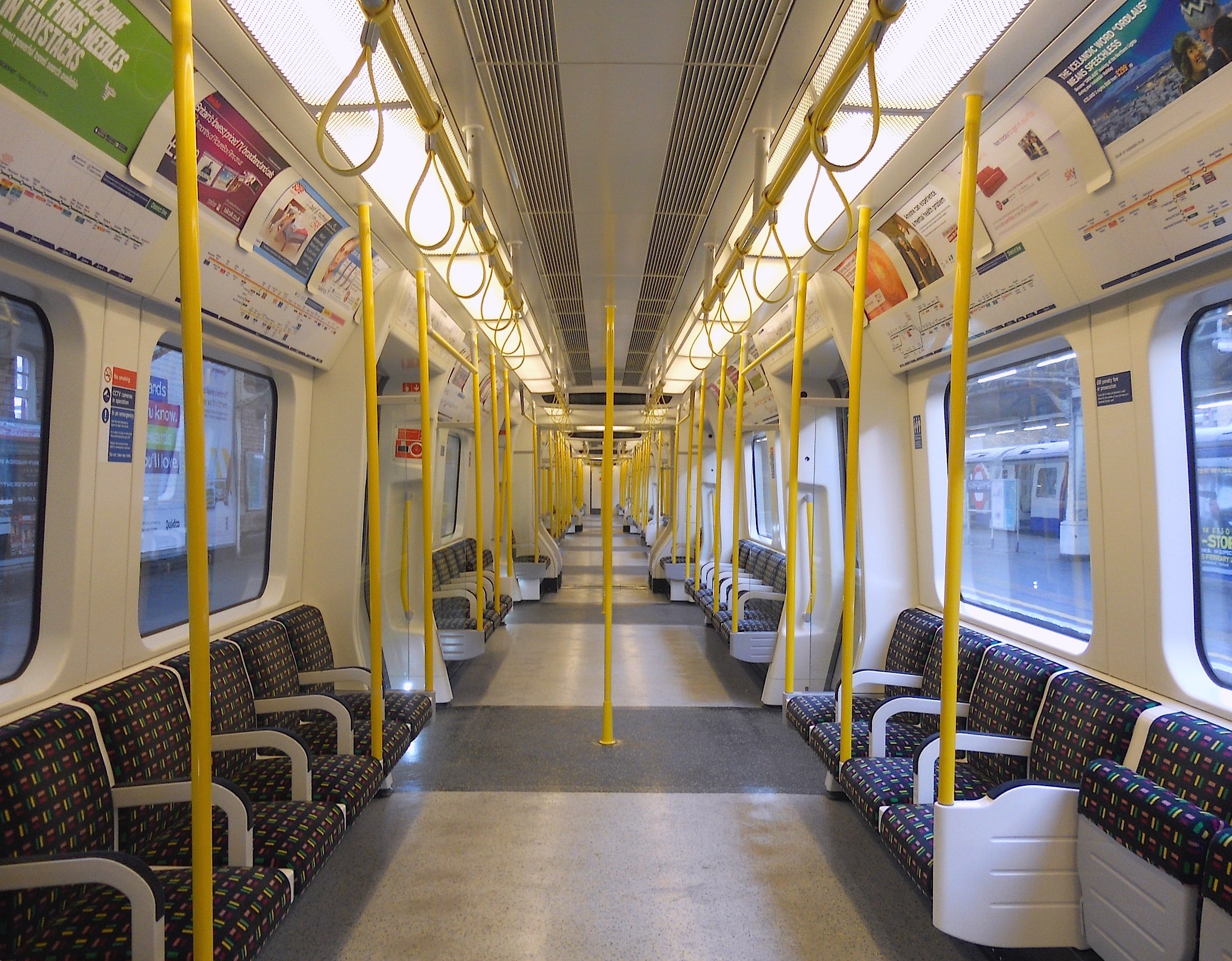

If Amtrak went that direction and made its transportation close to free, I wonder if we'd see more people try it out. Maybe it'd gain some popularity and we could finally see a shift away from cars. Public transportation is a difficult process because until the money is spent and the line is there, people are not sold. Whereas with cars, even if a highway is not built, people still have a car by default. Therefore the government needs to float money, either in infrastructure or in subsidized fares. At least subsidized fares is a little less binary than infrastructure.