Lots of articles quote a $XXX billion dollars per day figure, but those numbers are normally for "worth of goods delayed" which, while interesting, doesn't tell the story to me.
Are there any estimates as to the actual cost of this "mishap", due to e.g. spoilage, financial/contractual repercussions of late deliveries, personnel/fuel costs?
Probably the actual cost will require an army of accountants and lawyers at a dozen major logistics corporations arguing with each other for months to even try to compute. I doubt us regular uninvolved people will ever get a "real" number.
How do you even try to calculate and reveal the cost associated with say a manufacturer in the middle of a supply chain deciding to source their parts from a different vendor for this run because their usual source was delayed due to the Suez blockage and they didn't want to leave their factory idle?
Agree it's incalculable, I don't mean that in the "it's too big of a number" sort of way but in the "we can't possibly know" kind of way:
1) The scale and depth of the disruption makes it impractical to figure in any kind of accurate way and
2) The disruption will have introduced hypotheticals that nay spiral out themselves (butterfly effect style) e.g. some retailer may have lost a customer who went elsewhere, some supplier may have lost a retailer who went elsewhere, etc
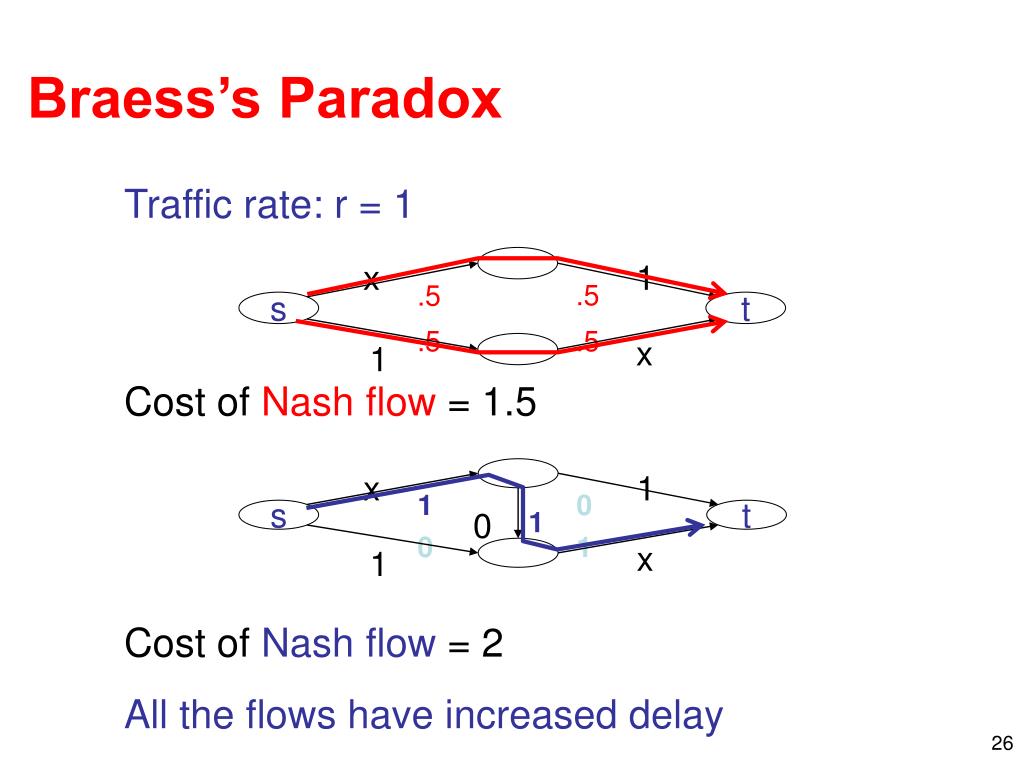
This happened with the bridge collapse on I-85 in Atlanta [1]
I used to take the access road parallel to the bridge and avoid a lot of traffic that was south bound. When the bridge collapsed and I-85 was blocked off, everyone learned about the parallel access road, and it now became a cluster of a traffic hot zone too.
Prior to that, a lot of people were not aware of the alternate route.
The discovery of the alternate route by "everyone else" means that the roads are now in more usage.
Unless the bridge collapse resulted in increased traffic levels afterwards, the same traffic that used to go over I85 is now distributed over 2 routes.
While there's a net negative to you, it's likely that a lot of people ended up saving time on their routes.
We theoretically may have avoided, for the next few decades, the risk of a truly dangerous infectious disease being underestimated, something halfway between Covid and extinction-level threat.
I think it's hopeful humanity would prevail a more deadly pandemic, many countries closed borders very quickly and there are island nations with understandably quick responses. Civilization as we know it could definitely still get wiped out though.
That article doesn't link to the study and leaves out major questions about the methodology:
1. How did they decide that the benefits would continue over the course of 4 years?
2. How did they determine what "time lost" was? I imagine it's greater than just extra time waiting at the station. People probably also got lost trying to find a new way around, and were late to things important to them. Unexpectedly being late to a job interview is a very different kind of time lost than saving 3 minutes on your regular daily commute.
You can get a rough idea by thinking of this as if it were a natural disaster, and from that perspective I think the toll is probably not too bad. No casualties, very little property damage, and a week is not really all that long.
However... that is no excuse to shrug this off. We were very, very lucky that it was only a week. The ship could easily have broken in two, which would have been a catastrophe of the first order and likely shut the canal down for a year. The world dodged a major bullet here.
After Egypt intentionally blocked the Suez Canal during the Six Day War and an operation was taken to reopen it after the Yom Kippur War it took around 7 months to clear the ships that were scuttled to block it[1]. I would think a cleanup with more modern technology dealing with a ship that wasn't scuttled for the purpose of blockage would take less time.
This has a rather odd diagram, and I'm not sure if it supports your comment or not.
It shows Suezmax as having "unlimited length", while Chinamax is given as 360 meters, which I think is smaller than Ever Given.
Obviously unlimited length can't be literal, if the Suez isn't perfectly straight, right?
On the other hand the Chinamax diagram says "unlimited air draft" which again, can't be literal since at some point it would be impossible to keep upright?
The Chinamax designation seems to imply a greater draft, which does make sense, but it's only 20% greater than the greatest stated for Suezmax.
Chinamax means ships that can use specific harbours, which imposes a length limit. Panamax likewise has a length limit because the ship has to fit inside the locks in the Panama Canal.
The Suez Canal doesn't have locks, so in principle the length isn't limited. In reality it of course is limited by the harbours you intend to use. Apparently ships longer than 400m also require permission from the Suez Canal Authority.
More important for the claim that Chinamax is bigger is the tonnage. Chinamax can carry 400,000 tonnes, while Suezmax is typically under 200,000 tonnes.
> Obviously unlimited length can't be literal, if the Suez isn't perfectly straight, right?
It looks to me from the map like the tightest turns in the canal are the southern exit near Suez, and the turns between Timsah Lake and El Qantara el Sharqiya (depending on which channel you're in, and whether you're allowed to use both channels in your turning maneuvers).
It would be a fun problem to find a good way to figure this out exactly, but it looks to me like a ship 3000 to 4000 meters long would not be able to complete those turns even in principle without running aground. (Presumably the actual practical limit is a lot lower.)
The longest ship ever built (which exceeded the draft limits for Suezmax, so it was out for a different reason) was 458 meters long
I am not an expert but what I think they mean by 'unlimited' in this context is 'limited by engineering, not limited by 'geology of man made structure.'
Worldwide salvage capacity isn't up much. Mammoet Salvage and Titan Salvage exited the business a few years ago. Smit is one of the few salvors with worldwide reach and their own heavy equipment. The business requires huge equipment on standby, and trained people waiting for the next crisis.
Smit is now part of Boskalis, which is a big marine engineering firm. They have dredgers, heavy lift ships, tugs, and barges, which are useful both for marine construction and for salvage. So the fleet can do other things between crises.
That feels like the kind of non-obvious claim that should come with a source (even just a blog post by an analyst that lays out the relevant vocab terms and the general theory).
That's no joke. Salvage operations is such a fascinating topic, which I'm sure many (me included) found themselves quickly obsessed with. The sagging and hogging threshold of this ship is the critical key here. I'm curious how close/or not the hull came to being compromised.
That's why Smit has naval architects on staff, and the program Hecsalv.[1] They will have calculated the limits of how much the stern could be pushed without damaging the bow before pushing it.
Not necessarily. I pay only $1 a day for water, but if you stop giving me water for 7 days the damages are going to be a lot more than $7. That doesn't mean it's reasonable to charge me more than $1 per day for water.
Obviously an extreme example, but the situation with this ship is likely similar. The damages probably far exceed the $15m/day in revenue (though I suspect they are far lower than $7b per day).
The reason water is cheap is because it's plentiful; there's a lot of competition to supply it. But there's only one Suez canal and sailing around Africa is much worse. So you would expect Egypt to be extracting a significant portion of the value the Suez canal adds.
You're forgetting about the stick, namely, the literally armies backing these massive shipping companies.
If you're going to run an extortion racket, you need the power to secure yourself against the inevitable challenges to your station. Egypt is in no position to handle and armed threat from the US, China, or even most European nations. Their government would be toppled and a sympathetic one would be installed who would lower shipping prices to something on the cheap side of fair.
The Suez Crisis's failure by the British and French had nothing to do with Egypt beating them militarily, and had everything to do with American pressure. One of the West's biggest strategic failures.
The Israel, British, and French insurrection completely dominated the Egyptians. The US wanted to carry favors with Egypt to prevent them to falling into the communist sphere, so it applied a pressure campaign against the British and French that completely wrecked the European economies (and from which they never really recovered). It didn't work, Egypt did not become an American ally in any meaningful way, and instead the West lost control over one of the most important shipping lanes in the world, turning it into a corrupt mess where you have to pay for passage in cigarette boxes and bribes.
It was one of the biggest foreign policy fuck-ups of the USA, in my opinion.
1. We're not talking about what's reasonable, but what's expected.
2. This isn't like a monopoly on water supply, because the ships don't have to go this way. To make the analogy work you'd have to add something like "everybody already has a well, but supplying tap water is cheaper than using a well". In such a situation, a water company that's maximizing profits would charge just a little bit less than using a well, and while it would annoy people it wouldn't harm them.
3. The government stops water companies from gouging for the good of the citizens, which isn't a factor here.
We could argue about how fitting it is, but I'll just say this:
If we want to go with "everyone has suitable access to rainwater for important household use", then it changes the impact of the water company overcharging. It goes from despicable to mundane.
The subject was predicting the cost of the boat getting stuck by comparing to the known cost to Egypt. The moral aspects of the water situation don't transfer across the analogy unless you also think that Egypt are charging less than they could because they think they have a moral obligation to shipping companies.
The houses just 100 yards away from me have wells for water. There is a large upfront cost of making the well but after that you have "free" water other than the electricity for the pump.
Yes, but you said it yourself, the value the Suez canal adds, compared to going the long way. It's much smaller than the value of being able to ship from A to B at all.
There is no major city with two independant water supplies, with their own sets of pips, purification systems and suers. Thays what water supply means. So no, there is no competition, and a supermarket water bottle is not competition.
> That doesn't mean it's reasonable to charge me more than $1 per day for water.
This is where someone steps in and says something to the tune of "Whatever price you're willing to pay is by definition reasonable" and completely ignore the ethical/moral issues with essentially holding someone's life for ransom by charging the maximum price they can get for something they need to survive.
The suez is the site of massive imperial intervention. The Suez crisis was precipitated when Egypt nationalized the canal. Western militaries and economic leverage are deployed to keep the prices low for the benefit of those governments.
It's a huge mistake to regard any international trade in the middle east as regulated by simple supply and demand curves. This is a site of world geostrategic focus, usually at the expense of the people that live there.
It's not 100% negative - clever Egyptian governments have managed to charge an extra "price" in diplomatic and geopolitical advantage. e.g. using selective closures as a weapon, selective opening to military traffic as an incentive. You just have to be careful not to take actions that affects everyone, like a massive and "unreasonable" price hike; these invite the kind of great-power consensus against you that is very dangerous.
(Interestingly, both have been practiced towards Israel at different times, as the countries have gone from bitter enemies to cautiously aligned against both Iran and Sunni Islamism of the Brotherhood/Hamas flavor.)
Someone else in one of these canal threads said that Egypt charges slightly less than it would cost to sail around Africa. If that's true, that Egypt is probably capturing around as much value as is possible from the canal.
That example was pretty idealized, starting and ending very close to the canal. Most voyages are probably not affected quite as starkly by the canal, and I doubt the canal can or does charge ships based on their overall itinerary.
> I doubt the canal can or does charge ships based on their overall itinerary
You'd be wrong there! They actually have a rebate system[0] based on a number of factors including origin and destination. Basically, they try to make it so that its always cheaper to go through the canal, rather than sail around.
Depends.. their fees are likely based on the saved time/cost of circling Africa, and calculated so as not to encourage other nations to construct workarounds themselves (if that’s even geographically feasible).. not on the cost of their service being down once people are already committed to it.
The cost to traverse the canal is likely to be as close as possible to the cost of the alternative routes (eg Cape of Good Hope) that Egypt can make them, while still providing the advantages of saved time and operational cost.
The cost here was for the interruption to the schedules, not the daily cost of operations normally.
I doubt it. It’s a significant source of revenue for a country with limited revenue sources.
End of the day, the big shippers can price in the two week delay to round Africa, and higher tolls could make a competing railway feasible. As it is China will probably have built a rail corridor in a few decades.
10 days is not a big deal if it's just one shipment. It's a huge deal if it affects every ship that would otherwise have gone through the canal, i.e. 50 ships a day, 18,000+ ships a year. That's 180,000 extra ship-days per year. That's a pretty major bullet in an economy built on just-in-time inventory control.
Aside from the additional ships, you need additional containers, employees, etc. It also costs more in bunkers, etc. For JIT it wouldn't matter too much though. As long as it arrives on schedule it would be ok.
> 2) The disruption will have introduced hypotheticals that nay spiral out themselves (butterfly effect style) e.g. some retailer may have lost a customer who went elsewhere, some supplier may have lost a retailer who went elsewhere, etc
And some retailers and suppliers may have gained customers
And the increase in profits of that second supplier might surpass the losses of the first supplier if the customer made their original decision based on cost. You can frame this as increasing economic output. Let's break all the canals[1].
That is why most of the people are fine with $XXX million per day as it is not practical to narrow it down to thousands of dollars.
We lost $100 millions, so it does not matter if it was $10k or $20k more or less because that is less than 1% of the total. There is no meaningful decision you can make based on that 1% difference.
This makes me question that shouldn't we have another canal built? Like if so much of the world's economy depends on this route shouldn't we build an extra canal to speed up the transportation and also act as a redundancy
It should be pointed out that the northern part of the canal has a second canal running parallel. The southern portion is the only part that has only a single passage.
Political instability is definitely a contributing factor to the fragility of the southern corridor.
Israel at some point was considering setting up a rail track between Eilat and the rest of the country. The main benefit of doing so is that cargo ships could unload and Eilat (red sea) and have cargo transported to a port in the mediterranean sea. https://en.wikipedia.org/wiki/High-speed_railway_to_Eilat
That plan was frozen after the Egypt-Israel peace agreement.
It's been floated after the peace treaty too; it's just unlikely to justify the massive cost, now that the strategic consideration of bypassing an Egyptian blockade is past.
It's a lot further to dig, but the next best thing would be to dig from the Persian gulf through Iraq, Syria and probably Lebanon. Not forgetting half the Persian Gulf is Iran. It's not exactly the most stable geopolitical area.
A quick look suggests that the Tigris is mostly navigable up to Baghdad, which would get you halfway there.
As an alternative (and ignoring the obviously substantial geopolitical concerns), is there a geographic reason not to dig a canal on the other side of the Sinai from, say, Aqaba to Rafah? If you had to dig that far, it would seem to be the next best option.
It's kind of hard to tell, but it looks like the Suez canal was on super flat land and I recall most of Sinai is desert. The Israel-Egypt border doesn't look that flat based on the colouring on the leading image of [1].
Absolutely, I imagine the insurance alone would make the Persian Gulf route unviable. Pirates is one thing, but governments confiscating boats would be a huge disincentive. The other side of the Sinai is probably much more palatable even if Egypt and Israel aren't best buddies.
Not to mention the terrorism/sabotage/non-state actor destruction opportunities that route would present that are moderately prevented on the Red Sea side (if you can get past the Horn of Africa).
I can't see Egypt approving an alternate canal that Israel would have any control over, but I could absolutely see Israel going in on a chance to a) take business from Egypt and b) add a defensive feature along that border.
Both a) and b) would require a real increase in tensions. Israel and Egypt have a cold peace, with several common enemies/interests; the prospect of a direct military confrontation is nil, and neither side will go out of their way to harm the other economically.
The terrain along the Negev route is extremely hostile. Bypass proposals have mostly focused on rail lines from Eilat/Aqaba to the large and well-developed Israeli ports on the Mediterranean, but even constructing rail lines there is quite difficult.
An underappreciated fact of Israeli and Palestinian geography is its mountains and hills; any major transportation project [1] requires extensive tunnel and bridge work.
[1] Examples: the TLV/Jerusalem high speed rail, the Haifa highway bypass, or a proposed transportation corridor connecting the main West Bank population centers along the ridge of the Judean and Samarian mountain ranges.
Reportedly this was during high winds, so they could also reduce the speed limit even further in those conditions.
Or they could have Suez specialists be the ones piloting large ships through the canal rather than the ship's normal crew. (As I understand it, that's pretty standard for harbors. Not sure if the Suez already does that.)
Or maybe there's a technology solution, something like stability control for cars, except it's for ships in narrow canals.
The slower the boat travels, the closer to the wind it has to point in order to avoid being pushed into the leeward shore. (assuming it doesn't have significant thrust-vectoring capabilities at both the bow and the stern which as far as I can tell seems to be the case for large cargo ships)
Because the boat is longer than the canal is wide, for any nonzero perpendicular wind speed there is a minimum boat speed below which it would not be able to avoid running aground. The solution is to either not permit such large ships to transit the canal during high wind events or to send them with enough tugboats to counteract the force of the wind.
As is standard for canal transit, the Evergiven was piloted by a Suez pilot at the time of the accident. Because this ship's main steering force comes from the rudder, it has more force when it goes faster. Maybe they even accelerated to counter the strong winds.
Navigating canals and major harbours requires a pilot.
Pilot was on board, but there seems to have been some kind of conflict between Master and Pilot that resulted in high tension environment on the bridge.
I don't see how the report in the linked article is related to Ever Given. It certainly isn't of the fateful trip because it's about a southbound journey.
It contains a report of the behavior of the local Pilots that are supposed guide the ship through the canal.
Last line before the report
>Read this Statement and ask yourself – can such incident lead to accident like grounding or collision?
If the professionals are not doing their job and even causing issues on the bridge;
i.e.
>As soon as the master picked up the VHF and called Ismalia Port Control on Ch8, the pilot raised his volume high, started shouting, snatched the VHF from the master’s hand (which also resulted in advertently pushing the Master) and threatened that if same was reported “It will not be good for the vessel”.
>At that very moment, in his raised volume he called for fwd and aft stations and for both anchors to be lowered to water level, as he insisted on stopping the vessel and arresting vessel for faulty steering. He said vessel will be held at Bitter lake until sea trials were carried out.
Fwd station was immediately manned however anchors were not lowered as ship was doing 9 knots speed.
I find that the difficult conditions at the time are sufficient to explain the accident. Maybe we'll learn that there was unprofessional behaviour by a pilot. But until such time, that is unwarranted speculation.
The linked article is a hodgepodge of random factoids and hearsay. It even confused the poster into thinking the report was from the Ever Given. Doesn't look like a good source to me.
Of course everything has to be repacked into little tubes and back into containers on the other end, but let's not let these things get in the way of a solid plan. Elon Musk!
I'm not sure the collective "we" will ever truly know. I'd imagine a LOT of that livestock died and they aren't going to be jumping up and down to volunteer how many/much given the negative PR. If they did divulge that would probably be the easiest jumping off point for hard losses.
Probably the actual "damage" that was caused will be given by the insurance companies as a sum of claims covered, but there will be a lot of companies that simply have to eat the loss incurred by idling factories and the likes because their supply contracts allow for delivery delays or because pursuing coverage isn't worth the effort (e.g. for those who still had sufficient stock to cover a week of delay and no "real" damage occurred).
A many weeks long shutdown (in case they had to unload the Ever Given) would be many orders of magnitude more expensive.
> but there will be a lot of companies that simply have to eat the loss incurred by idling factories and the likes
Factories will know enough in advance of this problem. They can fly over some supplies to keep the factory running. It's entirely normal to do this. They usually do _not_ idle or shutdown the factory. Who pays is for lawyers and so on.
A shipping company will know about these clients and prioritize that cargo.
those numbers are normally for "worth of goods delayed" which, while interesting, doesn't tell the story to me
Is it just me, but hasn't the mainstream financial news over the years taken on the feel of reality television? The talking heads are usually pushing some sort of narrative. Occasionally, reality overwhelms their ability to spin things, and they have to readjust and do damage control, as sometimes happens to the producers in a reality TV show. The aim of their manipulation and spin seems to be mainly to keep up the level of drama, just as in a reality TV show.
Real economics is boring for most people and the only way to make it attractive to the masses is to be sensationalistic. Mainstream financial news has never been good and never will be.
Real economics includes game-theoretic incentives to distort reality and craft narratives, including framing what is allowed to considered "real economics".
> Real economics includes game-theoretic incentives to distort reality and craft narratives, including framing what is allowed to considered "real economics".
You're not wrong, but you could replace "economics" with almost anything and it would still be a valid (and usually meaningful, although context matters) statement.
> Real engineering includes game-theoretic incentives to distort reality and craft narratives, including framing what is allowed to [be] considered "real engineering"
I mean how else are you going to push back against the clueless PMs who can't be bothered to learn how to code?
> Real art includes game-theoretic incentives to distort reality and craft narratives, including framing what is allowed to be considered "real art"
Of course, how else do you expect to create value for something unique that is not easily priced by the market?
> Real science includes game-theoretic incentives to distort reality and craft narratives, including framing what is allowed to be considered "real science"
I'd say this accurately describes academia. Honestly this last one is eerily insightful.
Facts are supposed give rise to an emergent narrative. That is good journalism. What we have in 2021, are people curating facts and only including those that fit their pre-determined narrative.
While it would be naive to pretend that pre-determined narratives aren't a huge factor, I think that model leaves something out: that journalists and organizations are often incentivized to distort the facts into arbitrary narratives, based not on values or ideology, but on virality and cognitive/emotional stickiness. "Person X is a hero" and "Person X is a villain" will both tend to outcompete nuance ("Person X is flawed but well-intentioned and has done both good and bad things.").
journalists and organizations are often incentivized to distort the facts into arbitrary narratives
Those aren't arbitrary. They are often pre-decided by higher ups in the company, or pre-decided as the prevailing groupthink in some forum or mailing list. People have been calling this stuff out online for years! Funnily enough, it stays out of the consciousness of normal people, because it's never covered in the mainstream news. Invariably, the people doing the exposing are then labeled something unsavory, so very few people bother to look into it. Some of this stuff is bunk. However, some of it is clearly real, and kinda disgusting.
No dispute: journalistic institutions are power concentrations that invite pressure from all sorts of private interests, in addition to prevailing internal groupthink. (In the Twitterati era, I'd say the latter problem is both top-down and bottom-up, and they compound much more often than they cancel out.)
What I'm saying is that even if one corrects for ideological motives, obsequiousness to power, etc., one is still left with an independent incentive towards maximizing eyeballs, and therefore torturing complex realities into digestible narratives, and that can be a problem in and of itself.
Early on it was reported that it could take weeks to reopen the passage, with a cost of billions to the world trade. Now, just one week later it's open again, barely enough time to make the alternate route a good idea.
These rather unrealistic projections seem to have started with the Coronavirus reporting and is an interesting phenomenon in itself.
I am not sure the projections were unrealistic. The full picture simply wasn't known or even knowable. The best likely scenario with the known information was a few hours; the worst likely scenario was weeks.
Boring, facts and research based industry/financial news exists. But it can cost upwards of a couple hundred thousand dollars per year. If you want real news, you'll have to pay for it.
What are your recommendations for real news? I've heard FT, WSJ, and the economist, and am looking to finally commit and sign up instead of relying on free. You get what you pay for is true in this case, and I don't wanna put drama based narratives in my head, which form my perception of the world.
- Good if you care about mostly business in the developed world (Europe and US).
- Really, really, really good features, solid visualisation, and a fairly wide breath of writers in terms of opinions.
The Economist:
- Very opinionated, but extremely diverse coverage of lots of different parts of the world (I've never come across a better English language source on Africa, for example).
- Weekly, so if you only want to read news occasionally, it may work for you
WSJ:
- Pretty good coverage overall, the US business/tech coverage is much better (in depth) than the FT's
- Their opinion section is like the NYT in bizarro-world.
In terms of price FT > Economist > WSJ.
It really depends on what you're looking for, but the FT works for me as a daily driver (I ended my subscription to the Economist, and only signed up for the WSJ about a month ago).
Thank you, this is insightful. I fall squarely between FT & Economist, so I may end up subscribing to both, but given Economist is weekly, this might be a better match for my lifestyle.
I meant more industry specific news rather than general news. Organizations that cover niche topics, usually catering towards businesses or investors rather than the general public. In my case it's things like Covenant Review, Xtract Research, Debtwire, Reorg, etc. There are likely similar services catering to shipping and logistics that would provide better analysis on this situation than most general news organizations.
principle agent problem and always has been ... what’s stunning is that civilization manages to create some amount of value despite this ... imagine what the world would be like if humans learned how to actually cooperate at scale and maximize long term in an antifragile way
In my bedroom as a young teenager I used to think a worldwide event which affected every person equally, like finding life in another planet, would surely usher in a new era of common interest and a shared view that we're all but the same thing: human.
I've since turned more cynical and believe that greed is as essential to humanness as empathy, if not more, and without a strong moral code (and fear of being ostracized for breaking it), selfishness wins.
The pandemic has violently dispelled any remaining expectation I had for a future cosmopolitan society.
I had high hopes for a pro-social silver lining around the pandemic as well, but it's simply too distant and indirect (especially given that the outcomes ranged so widely to those infected: from death, to the worst flu ever, to no symptoms at all).
What gives me hope is the fact that our species has altruism at all, even if it isn't as widespread as we would like; it's evidence that cooperation is at least sometimes a competitive advantage. Looking at nature, we see both symbiosis and predation as successful survival strategies. The tension between Good and Evil we will have with us always; the bad news is that Good will never definitively win, but the good news is that neither will Evil.
> I've since turned more cynical and believe that greed is as essential to humanness as empathy, if not more, and without a strong moral code (and fear of being ostracized for breaking it), selfishness wins.
It's not the baker empathy that brings you bread, but his greed
> The pandemic has violently dispelled any remaining expectation I had for a future cosmopolitan society.
The pandemic makes me hope more people will see governments for what they are: restricting their freedoms for no good reasons, so it's better to starve the beast.
Imagine a toy example: 2 bakers in a street. John and Jill. John has a heart attack and his bakery is closed for the week.
- John gets nothing that week, from his perspective you could say he lost a week of sales
- The people in the street lose Johns cakes that week, but most are ok with going to Jill, as they are close enough. 50% go to jill, and the other 50 decide to save the money.
- Jill gains 50% of johns customers for the week.
How would would you even assess the "global damage" in such an example for 1 street. Let alone the global economy.
The money is there to drive things, pulling it out from one perspective is like looking at one weight in a neural network.
Not only does Jill gain 50% of John's customers for the week, but let's say that 20% of those customers decide that they actually prefer Jill's goods and stay as customers of Jill even after John has re-opened.
Yes, but some of Jill's customers come at lunch and couldn't afford to wait in the longer lines. Those customers now go to John's having waited a few days to look for an alternative. Jill gets 20% of John's clientele, but John gets more [impatient] customers than ever!
There will probably be some additional flow of customers as people realise they're too lazy to walk to Jill's/John's, Jill's was only better when they were doing the extra trade (freshness), or that Jill's is back to being quicker service (and then you have a chaotic effect as more people drift back the wait time gets longer).
The potential complexities of such simple systems are fascinating.
Late delivery penalties aren't really an economic loss, it is a wash mostly. Similarly loss of revenue is mostly a wash
The freight costs are in the range of 0.6%-3% of the cost of the goods transported on average. This is for the amortized cost of purchasing the ships, maintenance, the labor and fuel costs. If you estimate the value of the delayed goods at $10b, and the freight costs at an extra 2% that's $200m in damages.
Most food transported this way wouldn't be spoiled by a delay of a week. If 10% of the goods were food by value, and 15% of them were perishable, and they were worth half as much after being delayed delayed a week that is another $75m lost to spoilage. But it isn't always a one week delay, many ships are delayed less to start, and there will be increased congestion in the ports and ground transport for many of these ships.
If we count only missed revenues for Egypt, this incident cost them about US$100 million. Canal revenues were US$27.2 billion in the last 5 years (https://www.reuters.com/article/egypt-economy-suezcanal/egyp...) which is US$15 million in revenues per day, and the canal was closed for 7 days.
They run the canal at maximum capacity indefinitely. Due to the lack of downtime, any delays are in effect the same thing as a cancel from the perspective of the canal owners.
The canal was blocked for only 6 days. Then 10 days to clear would suggest the opposite, that there is not spare capacity. All shippers have to eat a permanent delay that will never be caught backup, everyone is 10 days behind forever.
And re-routes around Africa don't count as spare capacity for the canal itself.
Of course there may be some *literal* spare capacity, that could be realized by violating processes. But the canal is in fact run at maximum capacity according to the maximum that official process allows.
What is so critical about the Suez Canal. If it were down for a month/year. what do you think the impacts would be? Would most ship traffic simply go around Africa?
Accepting that globalization wasn't such a big thing then, the closure between 1967 and 1975 would be a good source of objective 'what actually happened' data.
I'd start by computing the number of ships that went around the Southern tip of Africa as a result of the stuck ship. I wonder how much the cost of extra fuel and food/pay for all of those ships doing additional miles will be? And the resulting increase in wholesale/retail costs?
Regarding penalties re late delivery, I'm less worried about that. Cargo ships always have language about loss and force majeure. I think a stuck ship would qualify as force majeure. And a week shouldn't affect most perishables e.g. grain, that go into containers.
I believe that we can simply look at the channel fees lost due to the downtime - as far as I understand, the fee for using the channel is intentionally close to "the cost of extra fuel and food/pay for all of those ships doing additional miles", a bit lower but not much lower than the alternative of going around Africa.
Container ships burn horrible, cheap bunker fuel, and the shipping industry is infamous for hiring crew from low-income countries like the Philippines, paying them a pittance, and treating them like modern-day slaves.
I'd strongly suspect that the costs for spoilage and knock-on effects from late delivery etc would outstrip crew and fuel costs by a large margin.
> If the canal does reopen quickly, vessels waiting now should be able to make up time without too much disruption to the supply chain, which is already weighed down by port congestion and inland transportation delays.
There is a term for the cost of just holding something you can't move: the carrying costs. Different commodities have different carrying costs, so you can look at the forward prices for wheat, oil, pork bellies and so on and get a sense for how much it costs to hold on to something for a week or a month etc.
(On rare occasions the curve is inverted)
It won't tell you how much it costs this tanker to delay delivery by a week but it will tell you on average how much "the market" values a week's delay.
It is still a chore to go through and tally all the goods but I think a few main goods (oil, wheat, coffee etc) would account for a large chunk of it and if the carrying costs as a whole would give a sense of the order-of-magnitude of the economic loss.
The loss itself may be distributed between various risk sharing parties like insurance companies and so forth.
According to this paper by the National Bureau of Economic Research, the average loss of value per day of delay from the cargo on these ships is between 0.6 and 2.2 percent [1]. According to other research I've seen, somewhere between 12% and 30% of daily global sea trade goes through the Suez Canal. Anyone want to do the math?
Agreed that just quoting the delayed value does not tell the whole story.
But it could be a pretty good proxy: to some approximation, everything in the supply chain would be set up to work with the 9.6 Bn daily flow of value - everybody's financing payments, payroll, working capital, etc. The time is gone. Just like if you had to take two weeks off (unpaid) because you were sick, you could work more later to get that money back, and recover some of it if you work overtime, but you still missed that window to make money.
But isn't "worth of goods delayed" a reasonable figure?
For example, if there is a total of X shipping capacity a year, and no reasonably priced alternatives (or extra capacity available via rail/air/etc), then disrupting $Y worth of goods for D days reduces the total amount of goods that can be traded that year by $Y*D.
Well, the Suez canal is optional, and comes at a cost just to use it. When the cost of fuel is low, you might opt for the long route.
But there's definitely discontinuities that emerge when the option is taken away -- oil refineries lose supply, which increases the cost of fuel, which makes the long way more expensive.
I work on an IoT product, and operations is already talking about potential production delays because of this. There's already a global plastic shortage, and this is only going to make things worse.
Livestock is often/always transported by ship, and they are more than "fresh", they are still alive.
Whether that trade is humane is a separate question.
There are also containers that are maintained at a fixed temperature/humidity for transporting "fresh" items. They still have a limited transport time.
Ever Given is a container ship, containers don't carry live animals. Other ships that were stuck behind it have live animals(cattle mostly) but they are on ships specifically designed for animals.


Are there any estimates as to the actual cost of this "mishap", due to e.g. spoilage, financial/contractual repercussions of late deliveries, personnel/fuel costs?