My late father was early to the antique car hobby, he got started in the late forties when you didn't have to be wealthy to buy rare cars, provided you did most of the restoration work yourself.
Of all the cars he owned, the one he liked the most and kept the longest was a 1926 Wills Sainte Claire roadster. He sold that car so that he could send me and my sister to college. My earliest memories from around age 2 were watching my dad wrench on that car.
I borrowed it from the owner with the help of the president of the Wills Sainte Claire museum for my father's 100th birthday. Our entire family felt such a strong emotional attachment to that car, but none stronger than my Dad.
> Bill told me about the sounds that the engine and transmission made as we shifted gears were just as he had remembered them many years ago.
It's fun how these sounds imprint on your mind. I've (obviously) owned many cars, and when they're in a movie I can tell if the sounds the car makes are correct or if they were from some other car dubbed in by the foley people. Not just the engine/transmission sounds, but the sounds the doors make, etc.
I've restored a couple of cars and nobody that sees the end result will ever truly appreciate the amount of work that goes in to a job like that unless they've done it themselves as well. Your dad looks so happy in those pictures!
Thank you. I said at my father's funeral that he collected everything to do with the Wills Sainte Claire. He befriended C. Harold Will's two sons. The widow rode in my Dad's car in a Detroit parade.
We were at a Wills event and coming back from the bathroom I heard two ladies talking about riding in the rumble seat of a car with their Grandmother in a parade in Detroit. I said would you like to meet the guy whose car you rode in? They were delighted and my Dad wrote letters to them until weeks before passing away at 101.
My Dad served as a great example to me although my passions are more of the geeky kind.
Such a treasure. I was talking to a priest the other day about a nun that is alive today at the age of 117, to imagine all the things that she's seen for the very first time during her lifetime, to have conscious memory of two world wars and everything that has been invented during that time. That must give such a tremendous perspective on life.
You are - and you probably already know this - very fortunate to have had a father like that.
> Built to “outclass, outrun, and outlast” any car on the road, the Duesenberg Model A revolutionized the straight eight.
Still does. Frederick and August Duesenberg were automotive geniuses, with unparalleled engine designs, top speeds, and exteriors/interiors for the day. Jay Leno did an episode on an original, unrestored Duesenberg from 1931. It will help you get the feel for these incredible cars:
I inherited a 1928 model A from my dad last year that he’d had since the early 1970s. I’m looking forward to giving it a drive, but it’s in a garage at the top of a hill and I’m afraid if I drive it down I’ll never get it back up. If anyone had tips for caring for and operating old cars, I’ll take any advice I can get!
The Stutz building is a former auto factory in downtown Indianapolis that is now an office complex. Stutz is another Indiana luxury car manufacturer from around the same time as Duesenbergs. Last I knew, Turner Woodard [0] is the owner. Back in the 2000's Mr. Woodard had his extensive auto collection housed in that complex, including Duesenbergs, Stutz Bearcats, and memorably, a 1920's Reo Speedwagon fire engine.
My point is this, if you can get in contact with his people, you are likely to find experts in maintaining those old cars. I definitely remember watching Duesenbergs used in parades when I was growing up.
Thank you for the resource! I’m realizing through these replies that I’m talking about a different (and much more common) Ford Model A- but it looks like he has one of those in his collection as well.
Careful on the gears, the gearbox is unsynchronized so you can't just switch from gear to gear, keep it in neutral in the middle of changing gears, release the clutch and then re-engage the clutch before revving up or down to your next target gear speed then move the gearshift and release the clutch (see 'double declutching').
Read up a bit on how to deal with manual spark advance, what it does and how to operate the lever, that's probably the biggest difference to running a modern engine, and of course you're going to have to manually operate the choke.
Make sure that you have the right gas for that engine, add lead replacement additive to ensure you don't wreck the head and the valves.
Starting it is a nice little job by itself, here is the 'short' checklist: (assuming everything works...):
- gear in neutral (better get this right or it will be an expensive day), roll the car a bit if you want to verify that worked
- ensure handbrake is on (just in case...)
- set the spark advance to the 'start' mark or if it isn't there to 'retard' or all the way up
- close the air intake to the carb ("choke") to let just a little bit if air in (open this up once the engine is running bit by bit)
- ignition to 'on'
- throttle about 1/3rd to half open
- open the tap to enable fuel to run to the downdraft carb
- wait a few seconds for some fuel to make it down
- next depends on whether you have an electric starter fitted, look for a button on the floor. If you do, it's like any other car at this point, if not:
- slowly rotate the engine until you feel backpressure on the starter crank, then whip it through that point and be ready to pull the crank rod out if the engine starts. This is the most risky bit, if the crank rod does not nicely disengage the 'u' will be more than happy to break your wrist so make sure that the starter hole is clean and that the rod moves in and out smoothly, and put some grease on the tip where it engages the crankshaft.
- in warm weather it should be a lot easier to start than in cold
- to shut it down: reverse the order above, obviously without the bit about the hand crank
If it doesn't start: prepare to learn a lot about this engine :) But that's time well spent.
After you've shut it all down double check that fuel stop because if it is even a little bit open you'll end up with an engine full of gas!
Take it easy, and seriously, very easy.
The reverse gear is a lot lower than 1st so if you can't go up a hill in 1st try doing it backwards, good chance that will do the job.
Also: it got to that garage at the top of the hill somehow so I'm assuming that it either got there under its own power or there was some means of transporting it there, that may still be around.
The engine in there is a flathead 4 cylinder, if you are nice to it it will last forever. Make sure you check the fluids before going on a trip and ensure that the brakes work, especially if you're going to start downhill, they could easily be seized if it has been sitting for too long.
Check your tires for any visible damage or drying out.
In driving: plan your breaking points on your calendar. These old drum brakes are nothing at all like modern disc systems so get a good feel for how good (or terrible) the brakes are before rolling to a stop behind someone else's car in traffic. And prepare to bang your nose on the wheel the next time you drive a 'normal' car ;)
This is helpful! As noted in my other comments I’m realizing that the car I’m talking about is a Ford Model A which is completely different- and an indication of how much I have to learn. This post reminds me of this guide I found on my dad’s computer after his death:
BEFORE STARTING
Connect fuse at starter motor.
Turn on gas under dash.
Retard spark, which is the lever up position.
Open up gas mixture at choke lever a turn.
Turn over the car while pulling out the choke in short bursts, usually the car starts on the first choke pull.
WHEN THE CAR STARTS
Advance spark which is the lever down position.
Gradually close the fuel mixture down to a 1/4 to 1/2 turn out (in the 9-12 on the clock range).
WHILE DRIVING
Retard the spark at stop signs and the care while idle more smoothly.
Open the fuel mixture up to 6 o'clock if the car lags on hills.
PARKING THE CAR FOR THE NIGHT
Turn off gas under dash.
Disconnect fuse at starter motor.
put up top to keep dust and water out.
GENERAL THIINGS TO CHECK
Water level, if you can see water everything is fine.
The radiator temperature gauge works by the way
Tires, 30-35 psi is about right.
Oil, not apt to be a problem.
THINGS TO REMEMBER
THIS IS A 6 VOLT POSITIVE GROUND CAR, WHICH MAKES JUMP STARTING ALMOST OUT OF THE QUESTION.
WHEN CHARGING THE BATTERY, THE BLACK CLIP GOES ON THE STARTER MOTOR POLE, RED ON THE FRAME.
I have a British 1920's car and I can verify that this is all on point. It's an amazing machine to drive but you do first really have to get to understand how that machine works.
Modern cars are very good at doing a lot of the hard work for you to the point that by comparison you're not actually really driving the car :p
Holy hell, this is terrifying! Let me get this right: do 14 different things you're not at all used to doing. And if you make a small error, you can easily trash the motor, break your wrist, cause an accident. Have I summarized this correctly? Wow.
No, you won't trash the motor, but if is full of gas it can get pretty hard to get it back out...
But if you're not prepared for the backlash of the crank then you could easily get hurt, so better be careful, after all it is an engine.
There is a good reason starter motors were not considered to be a luxury by the public at large, even though Henry Ford thought otherwise. He lost a lot of market share due to that decision alone. With some luck there is a starter motor there, which will make this a lot easier.
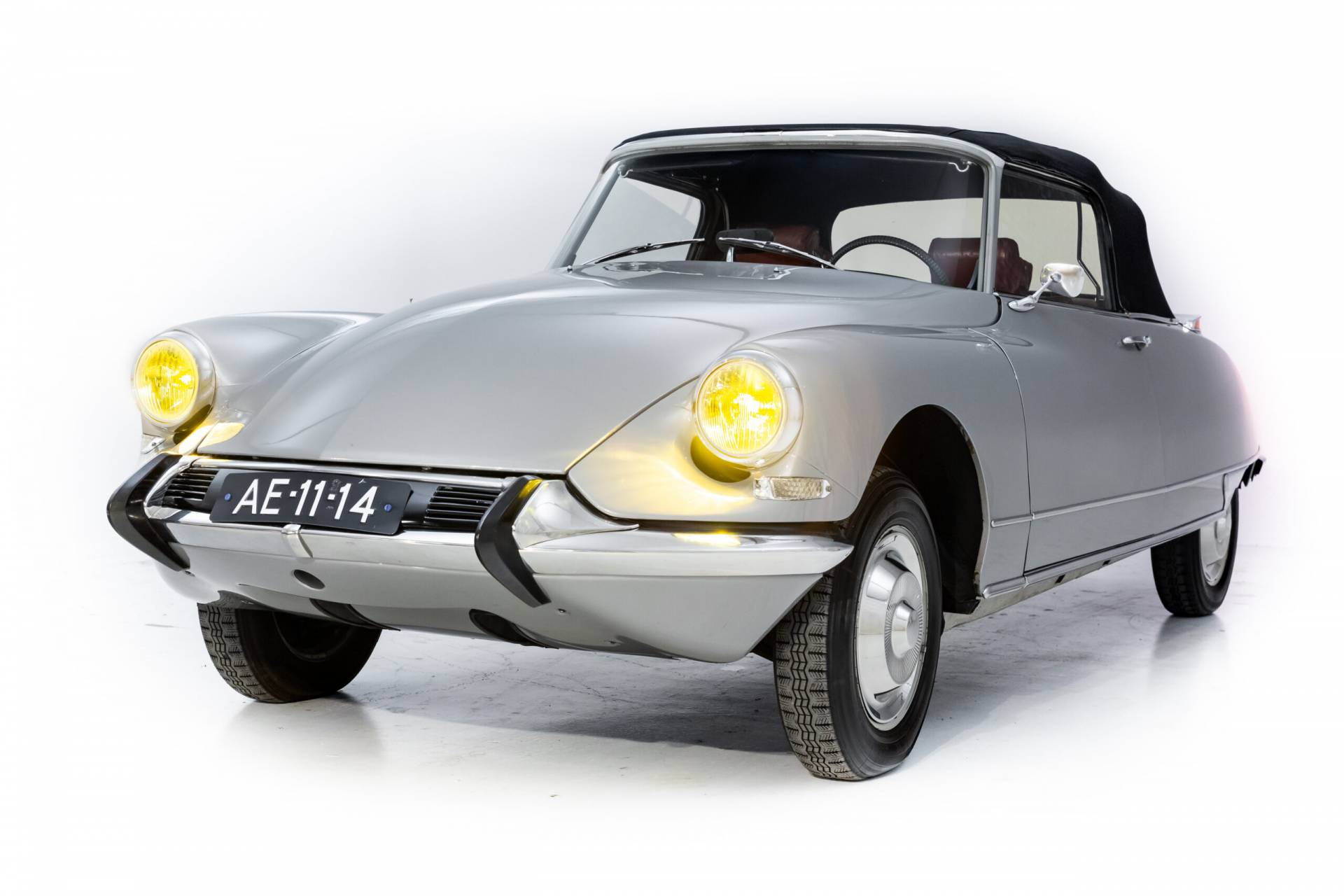
Fun fact: the Citroen DS's sold in 1975 still had an emergency starter crank shipped as a standard, and you could , if you really wanted, still crank it by hand. I tried once and figured that it had more symbolic than practical value.
If anything then getting such an oldie to run and take it for a spin will make you appreciate how much you take for granted when operating a modern car, and that even though conceptually nothing has changed the implementation itself is what makes all the difference.
Generally, find a club, or group, or forum that specializes in whatever vehicle you have. But, Fred & Augie only made 444 Duesenbergs, so I would start with the ACD museum to get a recommendation for someone who could look it over for you and show you the quirks. Leno’s YouTube channel has several videos about them to start you off. Trivia: they were all
made in the same year, but the depression struck, and so they were all sold and titled over the following decade.
Good tip. I am realizing that the Ford Model A I’m referring to in my post is a totally different. car but I know this advice still stands- my dad had forums he would visit to find parts, I wonder if I can figure out which ones those were.
There also appear to be a number of state/regional
groups. Decide if your near-term goals are
a) a safe running car
b) a clean looking unrestored car
c) restoration/concours with a big budget
and then try to connect with a retired enthusiast
who has plenty of spare time and a willingness to
share info and advice. Safe travels.
ps. Everything jacquesm wrote, plus grasp the crank
gently with your thumb still next to your index finger,
not around and on the other side of the crank. Avoids
a broken thumb on backfire.
> he shipped it all the way back to Indiana in the late 20s, and the Duesenberg company updated it with a Model J steering wheel, luggage rack, and lights.
>Duesenberg built the chassis and engine at their Indiana plant, and coachbuilder Bender Body Company of Cleveland, Ohio, was tapped to customize the Model A.
Bender Body Company??! I'd kiss their shiny metal ass!
>Greta Garbo, Clark Gable, Gary Cooper, James Cagney, Mae West, Lupe Velez, Joe E. Brown, Dolores del Rio, Howard Hughes, William Randolph Hearst, HM King Alfonso XIII of Spain, HM Queen Marie of Yugoslavia, HRH Prince Nicholas of Romania: many famous Hollywood stars and members of high society owned a Duesenberg.
Duesenberg Model J Limousine-Landaulette Throne Car
>This car, the heaviest, longest and widest Duesenberg ever built weighs about 3000 kilogrammes. The car is intended to seat ten: American evangelist ‘Father Divine’ and his ‘courtiers’. Father Divine established the International Peace Mission Movement in the 1920s. Amongst other things, it campaigned the rights of minorities and expanded rapidly in the 1930s. Father Divine’s followers came from all layers of society.
I also saw the Swan Car and the Baby Swan Car at the Louwman Museum. It had brushes to clear the elephant shit from the road, had glowing eyes, and could belch steam from its beak to clear people from street in front of it, while it could even dump its own simulated bird shit behind it to mark its trail. And it even had a Cygnet / Baby Swan Car daughter!
>This Brooke Swan Car is truly extraordinary. It was the creation of the eccentric and wealthy Scotsman Robert Nicholl ‘Scotty’ Matthewson, who lived in early 20th century Calcutta, the capital of what was then British India
>Matthewson wanted to shock the local elite with his car, and he certainly succeeded in doing so.
>The bodywork represents a swan gliding through water. The rear is decorated with a lotus flower design finished in gold leaf, an ancient symbol for divine wisdom. Apart from the normal lights, there are electric bulbs in the swan’s eyes that glow eerily in the dark. The car has an exhaust-driven, eight-tone Gabriel horn that can be operated by means of a keyboard at the back of the car. A ship’s telegraph was used to issue commands to the driver. Brushes were fitted to sweep off the elephant dung collected by the tyres. The swan’s beak is linked to the engine’s cooling system and opens wide to allow the driver to spray steam to clear a passage in the streets. Whitewash could be dumped onto the road through a valve at the back of the car to make the swan appear even more lifelike.
>The car caused panic and chaos in the streets on its first outing and the police had to intervene. Matthewson sold the car to the Maharaja of Nabha, whose family owned it for over seventy years.
>The car was discovered years later in its original state, albeit in poor condition. The sumptuous Indian silk upholstery had been eaten away by rats.
>In 1991 it came into the ownership of the Louwman Museum and was fully restored. New upholstery was commissioned from an Indian weaving mill following the discovery of remnants of the original material under the seats. All the gadgets were made to working order again. In 1993 the Swan won the Montagu Prize at the prestigious Pebble Beach Concours d’Élégance in California.
>To accompany the large ‘Swan Car’ The Maharaja of Nabha had this smaller version made for use on his estate in the 1920s.
>The body was hand-beaten from steel sheet and fitted with an electric motor. It was called the ‘Baby Swan’ or ‘Cygnet’. Note the cygnets at the front. This is probably the oldest Indian-made automobile.
>Both cars are now reunited in the museum, like ‘mother and daughter’.
Jay Leno borrowed it for a while, but it's back in the Louwman Museum now (which is currently closed, but reopens March 3):


Of all the cars he owned, the one he liked the most and kept the longest was a 1926 Wills Sainte Claire roadster. He sold that car so that he could send me and my sister to college. My earliest memories from around age 2 were watching my dad wrench on that car.
I borrowed it from the owner with the help of the president of the Wills Sainte Claire museum for my father's 100th birthday. Our entire family felt such a strong emotional attachment to that car, but none stronger than my Dad.
https://www.hemmings.com/stories/2016/07/07/wills-sainte-cla...