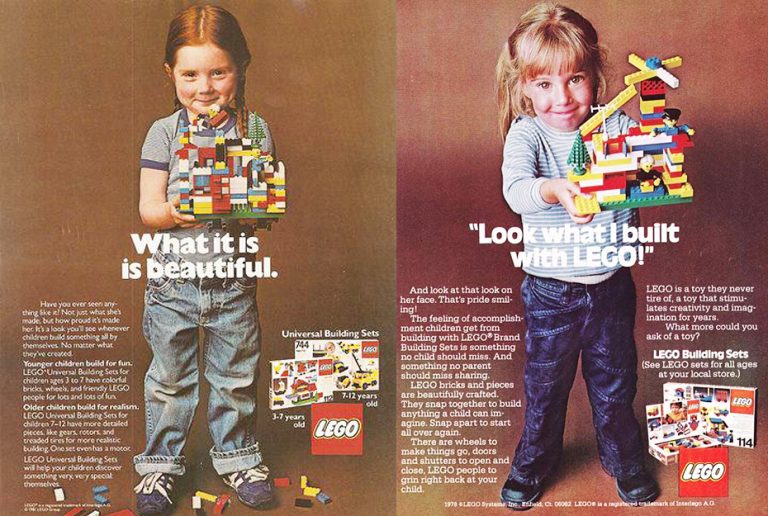
This didn't address my favorite theory: that (some) kids are programmed to learn as much as they can about the nearby megafauna, and in this world the closest approximation is these big garbage/fire/construction vehicles.
There's also a similar theory to explain why boys are more interested in cars than girls (which my kids have proven convincingly, albeit with a low sample size): boys, as future hunters, are attracted to preys that move, hence, in the modern environment, to balls and cars.
All this back-and-forth about whether and how it's nature or nurture. The point of modern gender freedom is not to deny there is a strong nature influence, it's to nurture kids to go whichever directions they like.
All these anecdotes about how this kid and that kid displayed common traditional gender preferences seem to be offered as an argument against trying to upset the traditional nature of these preferences. Sure, maybe only 5% of girls are ever going to want to race cars, but the idea is to make room those 5%, and that takes conscience effort.
That's the correct way to see things but it's contrary to public policies that say things like "there are less girls doing physics, so we're going to make quotas to get more girls doing physics". That's not supporting individual propensities at all.
Overwhelmingly the feminist position that's pushed to the fore is "any lack of equal representation of females in a roles that're desirable is down to patriarchal actions and unrelated to any natural differences between the sexes; which differences are an illusion".
Wow, parent comment and this one summing up what often turn into X000 comment flame wars that dang has to bag up and send out to the flag truck, now that is a feat of summarization.
> Overwhelmingly the feminist position that's pushed to the fore is "any lack of equal representation of females in a roles that're desirable is down to patriarchal actions and unrelated to any natural differences between the sexes; which differences are an illusion".
How do we as a society address this point? Whether one argues that the above statement has merit (me) or not, many people on both sides (and probably me in many cases) have such emotional investment in their points that attempting to soberly look at where society is and where society should be on the spectrum between 'the above statement is categorically true globally in 100% of cases' and 'the above statement is categorically false globally in 100% of cases' can feel to me like trying to do laproscopic open-heart brain surgery.
I'd have more sympathy for critiques of feminism (and similar policies designed to help minorities) if even basic indices of equality like pay for equal work were fixed, and there wasn't clear evidence of discrimination on grounds of gender in interviewing, police treatment etc.
In the UK equal pay for equal work is a legal requirement, and many women have successfully sued for it.
"Equal pay" statistics here purposefully ignore choice of occupation. Also the equal pay stats show (or did last year, they're put out monthly) that even ignoring occupational variations women under 30 got almost the same pay as men, and indeed that men lag behind women in wages for part-time work. I strongly suspect of you discount upper management that you'd find wages very equal -- in which case it's primarily an issue of wealth gap, so not really about sexual disparities in the general population but about sexual disparities in the C-suite (still an issue if there are artificial barriers there based on sex) but it might be busy as hard to break in for someone of the wrong class as anything else.
Which might make harping on "equal pay" (which we have) move focus away from the primary factor of income disparity.
"Because men tend to work more hours than women, especially if they are married, and even more if they are married parents, this could explain a large portion of the pay gap."
"As years pass, men accumulate more practice and training than women. The job market pays more if the worker has more experience. In other words, the gap widens as men acquire more experience than women."
Why do men choose to and why are they allowed to do all those things differently? The reason is gender roles, that’s part of the equal pay discussion. Probably the biggest part, in fact.
The “multi-variable” is no answer at all. Each of those variables is part of the discussion.
Seems like everybody has a comical view of the pay gap: a big fat cigar chomping man conspiring with his cronies to set low wages for women. It’s far more broad than that, so please get serious about those variables before trying to blow the whole thing off.
Starting point: how do we better make care work less gendered and pay appropriately?
> Why do men choose to and why are they allowed to do all those things differently? The reason is gender roles, that’s part of the equal pay discussion. Probably the biggest part, in fact.
The data says otherwise. Countries that are more egalitarian and have more equal gender roles (e.g. men doing more childcare and housework) actually see lower rates of women in fields like tech as compared to places like the Middle East and Indonesia with very strict gender roles.
This also plays out internally within countries. The United States had larger rates of women in tech during the 70s and early 80s, which saw stricter gender roles as compared to today. These rates of women in tech dropped during the 90s and 2000s during which time fields like law and medicine saw substantial growth in women's representation.
Making work less gendered and making pay non-discriminatory are two different discussions. The solution to the latter is straightforward: stop discriminating.
People (not just men) choose differently because they have different preferences and they are free to follow those preferences.
Saying the wage gap is because of "gender roles" is no answer at all - it suggests you should target the pay scale.
Multi-variable analysis is an attempt to piece out the answer. If the wage gap is $10, and the multi-variable analysis shows it is $2 education, $3 experience, and $5 career choice, then you can investigate why those factors differ, including possible effects of gender roles, without the specter of "gender discrimination in pay".
> Starting point: how do we better make care work less gendered and pay appropriately?
As with everything, either reduce the supply or increase the demand. As long as there is a sufficient supply of people willing and able to provide the service for a low price, the price will be low.
Remember that "price" is not a direct measure of "value". Air, water, and the first 1000 calories per day are incredibly valuable, but they are very inexpensive because there is excess supply.
For what it's worth, limiting supply and providing government subsidies is a great way to make things cost more - health care and the university education are prime examples. Note that these should be viewed as cautionary examples, not recommendations.
Exactly. While it's entirely possible and likely that some nature is involved, far too often that's taken as an excuse to actively exclude or discourage women in certain jobs, and that does make it patriarchal action holding women back. IF we can get rid of that and allow people to freely choose without getting judged by their gender (or ethnicity for that matter) on the way, and then it turns out people have different preferences, and that's totally fine. But we're not there yet.
In your opinion, is that viewpoint shared by a plurality or majority of what we can loosely define as the feminist crowd and adherents?
Admittedly, I don't have a big world-shattering new point to add or logical argument to segue to based on the results of the question, I'm just curious.
We have to be careful not to draw too strong a line between any differences in attitudes between the sexes and career choices. When the Hollywood stereotype of a programmer was a lab-coated professional working in a team on an idealistic project which runs amok then just as many women as men entered programming. When the stereotype shifted to a loan hacker in basement waging a solitary war against The Man gender ratios went lopsided. You can blame teenagers for being foolish in how they're affected by pop culture but it's more effort than most people expend to figure things out better at that age. And there is a real gender difference in that the archetype of the hacker is more appealing to men, but for the vast majority of programmers the old Hollywood stereotype is actually much more accurate.
So even if gender differences are in some sense causal in differential representation that doesn't mean that they're inevitable or that they're something we should just accept.
This take disingenuously ignores the fact that society has forced gender roles since the beginning. Policies like that aren't an attempt to disregard nature, they're an attempt to undo some of the damage that has been done by society.
I think this along with the two parent comments sums up the current challenge with feminism. Often things are made and optimized for the majority for natural reasons (efficiency). How do we the make (equal) room for the 5%? Equal rules tend to not create an equal environment, since it sure to natural reasons is skewed.
PS. As pointed out by another comment, there's of course a significant road we have to travel just to get to the baseline, like equal pay for equal work.
> maybe only 5% of girls are ever going to want to race cars, but the idea is to make room those 5%
This is something that should be said more frequently, maybe packaged up in a catchy slogan, as it would enjoy nearly universal agreement. Whoever does that will end the culture war.
I hope so, but I'm more sure that claiming progressives are trying to deny nature altogether is a useful straw-man for detractors with evidence only from the fringes. But how could you and I be more sure of what's really going on?
Perhaps the progressive movement should dig a little deeper for "proof" that a mere difference in rates of participation. The mere fact more men do something seems to constitute both proof that there is systematic sexism and that those males who are over represented are sexist. It gets tiring.
The problem is it's basically impossible to raise a kid free from acculturation about gender norms to get the best data on nature vs nurture, even if the home environment is set up to be neutral about gender roles they're going to interact with the outside world which still has a lot of gender bias in job roles.
My stance is if there is a natural preference it's probably slight and even if it isn't we should build a system that silos people into jobs because most people like them may prefer to do a particular thing.
It's not just about denying nature, but denying all the choices along the way by so many parties. You see something like, Company XYZ hires 2/3's men for something. They are called sexist, the people working there are sexist, it is a hostile work environment, etc... and it's the 2/3's number that is offered as "proof".
Further, just proposing that nature is the cause can get a person fired.
My stance is that lack of proof is being met with lack of proof by a group that is tired of being the target of constant accusations.
> Perhaps the progressive movement should dig a little deeper for "proof" that a mere difference in rates of participation.
This is the basis of "critical X theory", the new non-scientific, default theory for all of society's woes! So if there are any differences between two groups of people, it is assumed from the outset that there is a systematic (evil!) force causing that difference, typically to the detriment of a (perceived, in the case of women) minority group!
So, for example, if there are more men in high-paying jobs, regardless of what the job is, that is Prima facie evidence of current systematic sexism against women to keep them out.
Same with the fact that there are higher rates of Black people in prison, or lower standardized test scores for Black children are, in themselves, proof that there is current systematic racial bias against them by White people.
This has resulted in incredible "solutions" from adherents to this type of theory to this, such as The Progressive Stack, in classrooms[2]
It is noteworthy, that this does not go the other way around! So, for example, the fact that such a small rate of East Asians are in prison, or higher rates of high salaries, or higher standardized test scores, are not evidence of pro-East-Asian bias, it is simply accepted as a combination of nature and nurture that works out for them! However, the fact that a small percentage of East Asians are represented in film and TV, is taken as evidence of coordinated, systemic bias to keep them out.
Agreed. You could make a similar point about race when it comes to sport abilities. It would be horrific to offer sports activities to children based on race, even though, in effect, some children will have a much smaller chance of becoming professionals at some sports than others. But let's never discourage a kid who wants to try whatever he or she likes!
>Sure, maybe only 5% of girls are ever going to want to race cars, but the idea is to make room those 5%,
I love gals who race. I once had a female instuctor who was wickedly accurate in forumla ford; Molly could consistently put half the tire off the pavement without dropping it into the dirt, no mean feat that. Females are perhaps better suited to some forms of Motor sport than men are--they can be truly topline drag racers.
I don't necessarily agree with conscious effort sentiment however. Race drivers do Not discriminate against females on the track--we Hate every other competitor equally...it does not matter your race, creed nor gender.
Anybody that is not making room for girls to play with race cars, if they want, was is a jerk in the past, present, and future. Unless they are Betty Draper, I can't imagine a parent that would take a toy away from their kid.
I think that, these days, in western countries, it's much worse for boys. Girls are still actively shamed for stereotypically male activities within extremely conservative and religious groups, but outside that, there's been a big push to get girls interested in "male" things.
The same is absolutely not true for boys. Just look at what happens to a little boy if he decides he wants to wear girls' clothes or play with dolls. Whereas a girl wearing pants and playing with trucks will, at worst, be called a tomboy.
How much of that is due to the efforts of men or boys? Or how much is due to bullying by other girls in middle school and high school?
As far as I can tell, schools have put in enormous effort to stop boys from fighting each other. I can’t find much evidence of their efforts to stop girls from bullying each other by spreading rumours. Girls are highly susceptible to peer pressure, particularly from other girls.
I've never studied parenting across the country, and I acknowledge that there are definitely cultures around the world where women are treated like property, but I've never witnessed a parent enforcing some gender stereotype for toys. It's hard to imagine a parent even caring what toy a kid is playing with, unless they are hurting someone.
The generous view of the dads worried about sons playing with girls' toys (no quotes around girls', because I guarantee the marketers intended them that way) is that they're concerned it'll signal "ostracize me and kick my ass, please; I'm an easy mark for gaining social status at the expense of another" to their peer group. Which doesn't make the effect any different, but the intent might not be to limit their sons' play per se.
[edit] what I mean is simply that those kinds of sentiments might be a reaction to perceived bias in culture, expressed as bias but not driven by same, if that makes sense. A kind of re-enforcing meta-bias. Again, doesn't make the effect any better.
It does still quite a bit, it's easy to forget how varied the US is. My cousin married a guy who's very into traditional toys for his son, a few Christmases back his son was playing with a doll with the other kids and he was not a fan of that at all.
It's much more subtle than that. A child isn't raised by his/her parents alone. If you have daughters, your family and friends (and their friends) will by default mostly buy them stereotypical girls toys
Are you perhaps discounting the societal influences pushing your kids towards their respective interests?
If they view any amount of advertising or interact with other children who do, for example, they could already have ideas about what is "appropriate" for them to like.
I also think there is a crazy push to say that no, boys/girls definitely don't like certain things naturally, it MUST be social conditioning, and if you even dare to suggest that there is any natural difference to how children develop you must be sexist/patriatrchist/etc etc.
All I want to say is that there seems to be a stupid amount of aggression towards even the mere idea that statistically girls/boys might like something other than boys/girls do even if social conditioning were completely removed(which is a nonsensical idea in the first place, a child is a member of the society from the second they are born, they are not goldfish).
I totally agree that insisting it MUST be social conditioning is close-minded and silly. We should be open minded about various possibilities in nature vs nurture.
But on the other hand, lots of people have a tendency to think and say that certain things are "obviously true" based on what they are used to seeing in society, like that boys like cars and girls like dolls, and even start rationalizing it ("This is what is natural and right!") and even actively fight to maintain this "natural truth". They treat boys who like dolls and girls who like cars as deviants who need to be corrected.
And that's bullshit, even if there is a natural inclination towards trends for genders, that doesn't mean that's "natural law" and we ought to make sure to maintain and protect it.
> I totally agree that insisting it MUST be social conditioning is close-minded and silly.
Isn't it somewhat likely though? Kids are born with all of their genes and they can't do anything straight out of the womb. What has zero impact at that point is nurture though.
Nurture therefore seems to have a huge influence, this somewhat downgrades genes to only push what's already been established by culture.
Well, that's assuming that genes are all maximally expressed from the moment somebody is born, and that nothing can lie dormant, so if we don't see the behavior right away it must have been "added later" by culture.
I agree, but the reality is we don't know. Also there's evidence that cultural norms do substantially shape our opportunities (e.g. Denmark vs Saudi Arabia) and we should be mindful of this always. This cuts both ways too — men in Scandinavia are much more likely to be involved in child rearing through choice, and this is something men in other cultures miss out on.
Oh yes, I never meant to imply that nature vs nurture has some important moral implications. Ultimately it doesn't matter if something is the result of nature or nurture, we wouldn't let people murder if there was a "increased murder likelihood gene" because our genes does not decide what is correct.
The real fallacy has always been people who think that if something can be proven to be nurture rather than nature, that means it's "naturally right" and should thus be encouraged, and deviancy from that norm "corrected".
It's totally okay for boys to play with dolls even if it turns out nature makes boys favor toy cars over dolls on average.
Are you really saying that in our society there is a more stupid amount of aggression towards things being gender neutral that are actually gendered than the reverse?
This seems absurdly out of touch with reality.
To give just one example, but I hope you'd agree there are literally millions if you think about it for a second: There was a recent Hollywood movie and documentary about the true story of a man who was beaten into a coma and permanently brain damaged for wearing the wrong kind of clothes for his gender. And that doesn't seem particularly unusual to me (it's not really the focus of the movie).
I can't think of anything close to that in reverse?
> Are you really saying that in our society there is a more stupid amount of aggression towards things being gender neutral that are actually gendered than the reverse?
GP did not say anything about x > y. The post merely pointed out that some people like to link everything to social influence.
I dunno, they didn't explicitly say anything about it, but it seems about the same as someone getting really angry that someone thinks pi = 3 in a society that has for centuries legally enforced, on pain of death, that pi = 10.
Yes, pi is not 3 but are people really unaware of the social signals they give off by being so outraged at the mistake given the context?
To extend this analogy far beyond what is wise, I'm not really sure there are that many people who think that pi is 3, probably mostly 3.1 or 3.2, which makes fixation on extreme outliers who might believe it's 3 extra odd.
I don't know why you are being downvoted because I wanted to say much the same. There is a clear asymmetry in our current cultural practices, and the assumption is often that activities are 'naturally' gendered, even when there is evidence to the contrary.
My girl was 9months when sh started acrively pushing for bracelets, fancy hats, etc.
I took her to a bike shop, an she immediately went for the pink Helmet with stars.
We dressed her in neutral cloths (second hand), we dont have a TV. Her mother does not wear juwlery or makeup.
To us this appears innate.
I don't think your child is interested in jewellery and fancy hats for the same reason as a grown up. My children of both genders enjoy that stuff too, to the point where my none of my wife's jewellery is in one piece.
One thing I've noticed is that I can't look at them without a cultural confirmation bias. So I've completely lost faith that anyone can judge these things without a stringent experimental method.
Which shows nothing. The natural allure might be for girls [in general] to go with pink, and the use of pink for boys (is/was it something to do with hunting?) might have been pure social conditioning.
Aside: Are their examples of paintings showing boys in pink? The only historical "pink" I know of is "hunting pinks" which are bright-red.
I imagine we're only talking "aristocratic boys", as red dyes were expensive and most boys through history will have had natural coloured clothing, I imagine.
My eldest boy used to adore his pink handbag, fwiw. That's a very limited data point, however.
Edit: found https://en.m.wikipedia.org/wiki/List_of_historical_sources_f... it does strike me these are selections to prove the point, ie poor statistics. Also there might be errors (blue for a boy, and pink for a boy - sounds most likely to be an error). Also that a lot of the pink for a boy quotes are for babies; seems like what mother's choose for babies is different to what children/juveniles/adults will choose for themselves.
Nope. Historically, pink was considered a masculine color, because it's a shade of red. It was like this for centuries, until the 20th century in western nations.
Not quite sure what your nope refers to, but you release that's not a reason. All you've done is shift the question from "why is pink for boys" to "why is red for boys" and still haven't countered any of my observations, particularly that it might be "pink" was for boys because of social conditioning in the past.
I'm not sure what you're getting at. I'm just pointing out that this whole thing is entirely cultural, and that it's changed very, very recently (within the last century or so). There's no underlying biological reason for pink to appeal to little girls; it's just a cultural artifact. If little girls were dressed in lime green all the time from birth and the culture militantly pushed the idea that "lime green is only for girls!", then little girls would want lime green toys and clothes.
Pink was a color that was selected arbitrarily by some department store in order to sell more baby clothes. And the colors (blue/pink) were switched almost immediately by customers.
I wonder if there's some social constraints that babies naturally seem to rebel against (or at least be less interested in). Cooks used to be mostly women, now they're mostly men. Accountants used to be mostly men, now they're mostly women. https://www.weforum.org/agenda/2016/03/a-visual-history-of-g...
Programming is a good example here. It used to be women's work, mainly because it was relegated to women (men didn't want to do it, and it was seen as not that important). Now it's reversed; there's lots of money in it.
This is frequently repeated but rarely with supporting data. Programming work during the 70s and 80s, during which women's representation in programming reached its peak, was well paid. According to the BLS entry level salaries were $20k for the lowest level of "computer programmer" and $40k for the highest. Entry level "systems analyst" is listed with $28k salary [1]. The current BLS statistics for computer programmers does not break down by seniority, but lists an average annual income of $90k [2]. Adjusted for inflation, and the salaries are pretty similar. In Silicon Valley, entry level salaries above $100k are common but this is not replicated nation wide.
My daughter (almost 2) doesn't like dolls, fancy hats, jewelry, etc (and neither does her mother); she prefers vehicles ("toot toot") and puzzles. We dressed her neutral (though including some blue and pink at times, also other colours), and sometimes girly (for parties like anniversaries etc).
Oh, and she loves the police/ambulance/fire dept, but most of all, the garbage truck!
Yeah, my sister, who was born into a family of three significantly older brothers and plenty of boy toys, didn't start to express feminine traits until a bit older. But puberty is, of course, when the biggest differences emerge.
If this is the same research that always gets cited, then it more accurately shows that boy and girl monkeys played with the wheeled toys an equal amount, but the girls played with the doll toys more.
That still shows a gender imbalance, but I find it interesting that it always seems to be used to imply that girls don't like trucks, rather than boys don't like dolls as much.
(A similar rhetorical trick is used when talking about favorite colours. Apparently lots of people's kids just love pink and this tells them it's all genetic, yet if you survey women their favourite color is the same as men, blue. They just collectively prefer pink more than men relatively speaking)
The preference for dolls is likely related to the role of females in childcare. Males are more the explorers and hunters. Women never explored nor hunted very much.
Newborn babies exhibit differences, by sex and on average, regarding what captures their interests.
EDIT: I looked into this more and could only find studies on 9 months old, which is potentially old enough to argue for socialization, although the studies obviously tried to control for that.
It's probably hard to get much meaningful info out of kids in the under-6-month range because their senses, including eyesight, tend to be, to use the technical term, shit.
Fair point! But I have been fairly neutral (except unconsciously...). I have also observed marked differences as early as 15 months. And it matches the experience of a lot of parents.
What societal influences? If anything society is discouraging boys from being boys and telling girls it's cool to do boy things, yet boys still end up being the ones interested in technologies that were developed by men before them like engines, cars and computers.
Yeah, it's likely little to do with hunting, more to do with mechanistic thinking. The same sex bimodality is observed in other primate species, from young ages, and most primates may be omnivores, but they tend to be more interested in seeds and fruit, and they aren't going out hunting the way humans and protohumans had.
Also, not all ancient hunting was dangerous enough that only the disposable sex would engage in it.
It's almost like you can make up whatever bullshit story you like to dress up your personally preferred gender roles as "we evolved that way so it's just a biological FACT".
Nope, hunting was primarily a male task. In 97.6% of 141 societies hunting was done exclusively done by males. In 98% even setting up traps was done by males. Interestingly, cooking was overwhelmingly done by women.
Such evolutionary just-so stories can be used to explain anything and there is no way to falsify them. However, just applying common sense: Wouldn't it be more beneficial for their survival if kids were programmed to stay away from megafauna? It might eat them or step on them.
How do you know how to stay away from something if you don’t understand it? It’s big enough that it can come to you in the middle of you doing something else. Best to know what habits of its might make that happen.
That, and the megafauna that have existed alongside humans have pretty much always been herbivorous mammals. Mammals seem to be universally capable of recognizing which members of another mammal species are children of that species, and are less wary around them, and tend to (for the herbivores) even be intentionally gentle toward them. Mothers of many mammalian species even choose to adopt and care for orphaned children of other mammalian species that don’t look particularly like their own species (and I’ve never heard of this happening with a non-human mammal mother adopting a non-mammal, or a non-mammal adopting anything, so AFAIK it seems to be mostly a “mammal thing.“)
Of course, this same awareness of child-ness leads the carnivorous mammals to think of another species’ children as easy prey. I think humans do have an instinctual understanding of the difference between a herbivorous/“friendly”-looking species, and a carnivorous/“predator”-looking species, and human children do seem to have much less of a desire to attempt to wander up to lions or Tasmanian devils than they do to approach e.g. elephants or giraffes (or horses or cows, for that matter.) And even the kids that love dinosaurs certainly have very little compulsion to approach crocodiles, snakes, or birds of prey. They might think they’re cool—but there’s a component of fear to that admiration.
Humans don’t seem to have any instincts to avoid approaching omnivorous megafauna, and that’s seemingly a hit-or-miss proposition, but maybe this is where the perception-of-child-ness thing comes most into play. An adult human definitely shouldn’t provoke a gorilla or a bear, because an adult human is a viable threat to them, one they feel they have to respond to; but a human child won’t be as easily read as a threat, and might just be ignored, the same way humans don’t really worry about gorilla infants or bear cubs getting near us. (That, and there just aren’t that many omnivorous megafauna, so maybe we don’t have any instincts about them.)
So kids can instinctively discern between a large herbivore and a large carnivore, but cannot instinctively discern between a large herbivores and a garbage truck?
They get close to that theory, but from a zoo animal angle as opposed to local animals.
"Add that to the fact that children frequently conceive of a vehicle as an enormous living creature—“It has lights and those look like eyes, so suddenly it’s got a face,” Toubes pointed out—and it’s almost no wonder that some kids look at garbage trucks like gigantic zoo animals visiting their home."
Or adults like me, upon learning about all the advancements in paleontology in the last 30 years. But that might be more "fascination with the unknown" than sheer size... which I guess is another human evolutionarily advantageous trait.
To be fair, legos took over before Minecraft. Minecraft was basically a virtual manifestation of legos with some really clever role-playing and survival mechanics built in.
I have a different theory, but it's mostly a cheeky, incomplete one. I think infants start out not understanding conservation[0,1] and there is some programmed primitive instruction in humans to understand conservation. It would explain why modern physics exists, and would also explain why kids are obsessed with garbage trucks -- because where the hell does trash actually go? One you understand conservation enough to ask that question, it is inevitable to be obsessed with garbage trucks.
It's an easy and facile analogy, because we work with computers all day, and are intimately familiar with them. That's precisely why the analogy is wrong.
Humans (like all animals) are obviously programmed in some way. Babies don't decide to start breathing or suck milk or poop, they're predetermined by their genetic code to do it. The only interesting question is which behavior is programmed and which isn't, not whether there is genetic programming at all.
This is fun. I grew up on the other side of the world (albeit a "western" culture), and was also amazed by garbage trucks from the day I remember. The whole lift/squash mechanism, their bright orange color (in our parts), the ease by which they lift the containers, the colored control lights/buttons on the side which the cleaners use to operate the lift, the blinkers. And made funny noises. It was something straight out of the toy shop, in full size! I wanted to be a waste collector when I grow up. My parents were keen to make fun of me because of that once I enrolled in PhD studies.
Same goes for fire trucks, I had multiple fire engine toys. But a fire truck is a rare thing to see in action in person, so I guess that's why it was easier to relate to the loud trashcan on wheels :-) .
I'm a full grown adult and I'm working on self-driving cars. For a special project we had to put amber flashing lights on one. Just like the ones they had on garbage trucks where I have grown up. Totally unreasonably, but I was giddy with excitement when I first turned the lights on. That was probably the closest I will ever get to my childhood dream of becoming a garbage truck driver.
I was giddy with excitement when I first turned the lights on.
I know that feeling. I once worked in a place where we occasionally had to drive on airport property, and the company trucks all had giant yellow light bars on top. It was awesome.
To add my pet theory, it's a attractive to kids because it's an immediately understandable job. "Pick up all the rubbish, put it in the truck, press the button, move on". You can imagine a kid watching the whole routine and feeling like they understand every part of it, the wider context and the minutiae.
The classic "what do you want to be when you grow up" responses (Firefighter, Police, Doctor, Chef, etc.) all have that property of being immediately relatable.
I actually wanted to be a garbage truck driver when I was little. I think it was the power to crush stuff that really stirred my imagination. The smell never really bothered me much and I figured that you would get used to it anyway. The dirty never bother me much either; I was constantly playing in our neighbors backyard that we called the dirt-hole. Yup, garbage man was almost the perfect job.
Instead, my love for computers (ahhh, VIC-20) grew and I went to college to learn more. I really love what I do but if things went sideways I could see myself being a garbage man.
I did this job for a couple of months over a summer when I was in college, (via a temping agency). I did actually kind of enjoy it. The sweet smell of putrefaction from the truck made me retch for the first week and then became kind of homely. Brutally early starts (4am?) but done and home by midday. My crew ran everywhere. They teased me for wearing gloves (broken glass, nappies, tampons... I'll take the teasing, thanks).
Pay for regular employees was okay, by which I mean it was not as bad as you might expect (and considerably more for the driver, for an easier job). There was notable attention from the public, somewhere between condescending and touching, who perhaps didn't know that: the old lady who saved me a pair of jeans ("These were my son's, and I noticed yours are ripped"); the old guy that wanted us to come in for coffee; free lunch from an independent fast food place on Wednesdays.
The size of the operation marked me: the number of 14-ton capacity trucks snorting at the depot at dawn, the scale of the dump, the size of the crane fingers. The amount of garbage. Houses. Businesses. Farms.
Winter months and middle age would probably make the job less attractive but it certainly wasn't a dreadful experience.
The New Zealand agricultural industry seems to run mainly on tourists (young rich kids on work-and-travel visa) and it's working just fine.
I actually think it's a great idea, because most of the jobs are not very attractive or well-paid, easy to learn and an adventure/fun for about one summer. It wouldn't work for many places, but for New Zealand it works.
Yeah, I'm pretty sure most folks doing "real" work don't care who you are as long as you show up on time, get shit done, and aren't (the wrong kind of) an asshole. And the last part's negotiable.
I think there are companies offering controlling-excavators-as-an-attraction (or the always creative team-building), maybe there is also a market for this?
You'll notice that kids don't get as excited about other things that are just as big, or bigger, though. For example, my son can barely even be bothered to look up at 18 wheelers. He sees them as common and boring.
But a garbage truck? It's loud and interesting. It does stuff with its tusks. Honestly, garbage trucks are still fascinating even to me, as an adult.
There is also the rarity. Garbage comes once a week. He may not even see it every week. It is true that he gets to see it "in action" so that helps. He probably sees 100 18 wheelers everyday. They are just different cars and nothing special.
I took my 2 year old to the safari at animal kingdom and said: "Hey, there's a hippo!" and he said: "Wow, look how big that _rock_ is!" Kids don't know what's unusual to see at age 2.
Once saw a kid at the zoo mesmerized with a chair-sized boulder. Mother kept continually pointing at the lion just a few feet away, beyond some plexiglass: "Look, a lion! Look at the lion, Billy!"
And the dad said, speaking hypothetically on the kid's behalf, "Yeah, but here's a rock!"
I hadn't thought about this since I was a kid, but I loved watching the garbage truck. Especially when they used the compactor after emptying the cans. I guess I was lucky that they came to our house during the day because everywhere I've lived since a kid the trash pickup has been extremely early. I don't know if my kids have ever seen it.
now I remember why I liked it as a kid. Hanging on to the back of the truck is super cool. I grew up in 3rd world country where adults can hang up in Public Utility transports and it was seen as cool. Parents obv don't allow you to do it since its dangerous so I thought it's cool if your job gets to ride at the back of a truck.
When I was younger I wanted to be a garbage man too. I always made sure to be outside when they came by and made sure I was wearing my little work boots. My nephew is really into them right now and loves being outside when they come by making sure they know he is there.
>But most of all, she loves waiting for the truck driver to stop and say hi
I think the last sentence of the article really says a lot, this is what stuck with me from my experience. The garbage men/women always waved back and acknowledged that I was there. It's an interaction that kids don't always get to experience while watching something super cool happen right out front of their house.
When I was a young boy I was obsessed with trucks. My father was friendly with a local rigger and we visited his yard. It was heaven with trucks, cranes, and machinery all over. But the centerpiece was his heavy hauler Peterbilt with a large multi axle lowboy trailer. He put me in the driver's seat and I vividly remember that arched "corvette" dash covered in shiny polished gauges and switches and the high up view. Felt like I was sitting atop a building. I wanted to be a trucker! Well it don't quite work out that way but still to this day I have a great appreciation for them and went to a few antique truck shows. I even bought a 1961 MAck B61. It's a slow yet fun resto hobby. Everything is massive and takes considerable effort to manipulate.
Growing up in Toronto, I used to watch the show Mighty Machines[0]. I loved it - it would show construction vehicles and airplanes, and I ogled at it for hours. I can still remember the theme song. Makes me so very happy right now remembering it.
Loved large wheeled vehicles when I was a child. Made buses out of toothpaste cartons and toothpicks and buttons with my grandma.
Loved to go by the train station to wave at the train. Pretty sure it's all just that they move and are big machines. Didn't take much. We lived out in the country in a different nation where big garbage trucks didn't exist.
I remember the time before Garbage Trucks. Our housing complex had a separate garbage hut with split door. Every month a lorry or horse-driven cart came and men shoveled it empty. It was great fun to watch. Sometimes a rat escaped and there was a competition to kill it. Helsinki City paid good money for rat's tails.
When I was a kid, the coolest part of being a garbage collector was that you got to ride on the outside of the truck. They don't do that anymore these days, and garbage trucks don't seem to hold the same attraction for my kids as they did for me.
I don't think this is garbage truck specific fascination. Many years ago, I recall reading a story about a father who noticed his kids being glued to the apartment window watching a construction site next door. They were fascinated by the large and loud machines. He built a DVD video business from filming busy construction sites for kids. It was a success. Kids love big loud colorful things that move.
The electricity company technical guys sometimes ride on a truck that has (as best as I can describe it) a snake-like elevating chair. That's so impossibly cool.
I think part of the excitement is the noise. The screeching of the brakes as the truck pulls up and the crash of the rubbish out of the bin. It's a whole performance for the little ones.
Ha, I always thought this was a weird fascination only I had
When I was younger my favorite movies were a set of pseudo-documentaries (that my mom would rent from the library for me) made for kids about mining, recycling, trash collection and a few other things.
I would watch them over and over and loved the parts where they dropped whole cars into the crusher.
I also distinctly remember being fascinated by a part where after collecting recycling they melted down the metal and they just showed a big molten pool of aluminum.
When I was a kid, it was all about catching the truck running a compaction cycle. As children of a mechanical engineer, my sister and I both found it fascinating.
I loved street sweepers as a kid and would always rush to the window to watch them go across our city street. I loved the idea of taking away trash/dirtyness, something about that simple purpose was cool. It was easy to understand, unlike business or insurance (what my dad did)
Same, I never paid any attention to garbage trucks but I was fascinated with street sweepers and similarly fascinated with the spinning brushes at car washes. Still am, and while I don't see street sweepers much anymore I genuinely enjoy going to the car wash and watching the multi-colored swirls of goo being slapped around my windshield by hundreds of little strips of fabric.
Gave it a quick read, and there seemes to be no mention of garbage trucks that aren't "modern": where there are other men running around carrying heavy trash bags and single-handedly throwing them into the back of the truck