> a lot of pseudo-English words (Denglisch) such as "beamer" (protector) and "handy" (mobile phone)
These are real German words. The reason they sound like English is because they were imported and adapted like any other neologism. Denglish (or Frenglish, Ponglish, Spanglish, etc.) refers either to words that don't exist in any of the 2 languages but borrow heavily from real words (a lot of corporate lingo in most languages has these fake words adapted from English), or to using literal translations of expressions or “false friends” between that language and English even if the meaning inadvertently changes.
And "beamer" is actually used by a lot of non-native English speakers to refer to a video projector when speaking English.
For example words like "substance", "amusing", "mobile", or "confusing" are of French origin but since they are in the dictionary they're not considered Frenglish (Engch?).
Now this started making sense :) I never realized it was named after a word for a projector. Perhaps because I didn't read the wikipedia article until now.
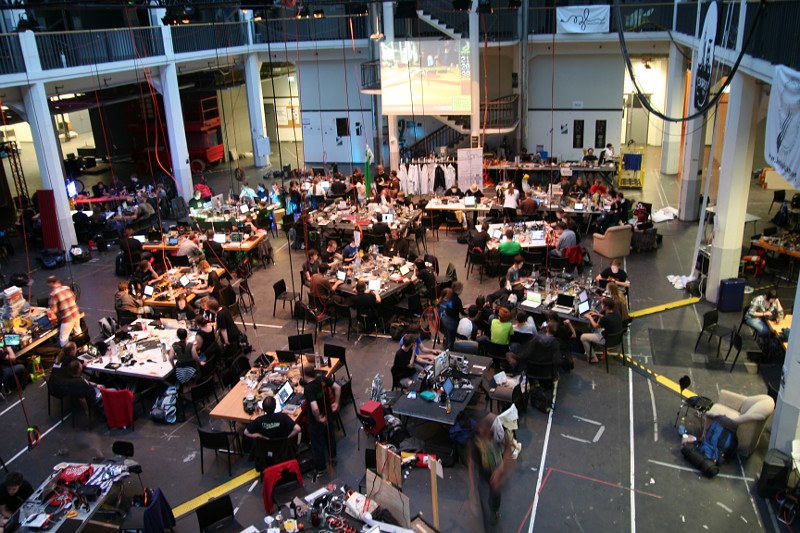
That's correct. The naming was due to it being initial built to show information (=info) on a projector (=beamer) at a German hacker conference to inform visitors about talks, tweets and more. You can actually see the very first public usage in this old image from 2012: Note the projection in the top middle: https://entropia.de/images/c/cf/GPN12-atarifrosch-20120609-0...
I think that Beamer is way older than 2012. I first used it around 2005 when I was learning LaTeX for the first time and wanted to use it for everything, incl. presentations.


These are real German words. The reason they sound like English is because they were imported and adapted like any other neologism. Denglish (or Frenglish, Ponglish, Spanglish, etc.) refers either to words that don't exist in any of the 2 languages but borrow heavily from real words (a lot of corporate lingo in most languages has these fake words adapted from English), or to using literal translations of expressions or “false friends” between that language and English even if the meaning inadvertently changes.
And "beamer" is actually used by a lot of non-native English speakers to refer to a video projector when speaking English.
For example words like "substance", "amusing", "mobile", or "confusing" are of French origin but since they are in the dictionary they're not considered Frenglish (Engch?).