Most men I know are pretty heavily in favour of equality. That might change if we treat equality as a war against men, instead of something we all work towards.
Adapting behavior is reasonable, but there's men also need to be able to have a voice, or you're going to get some major pushback. Hopefully we can keep this kind of war at a low simmer when trump is up for re-election.
More specifically, that means making sure that men do have a voice. I've seen a lot of silencing tactics deployed that are based on gender, or social class. It's all well and good to say "well that's how minorities always felt", but it doesn't actually make any part of this situation better.
The problem with silencing tactics currently in use that doesn't seem to be understood by those using them is that there is no such tactic that works in the voting booth. As long as we have secret ballots, the Shy Tory Effect is going continue to catch the censorship crowd off guard. I doubt this is going to be kept on simmer because we're already past that point. To continue the analogy, the pot will eventually boil over but eventually run out of water.
Strict equality of outcome means quotas, and that if the distribution of races, sexes, genders, sexual orientations, etc doesn't exactly match the entire population (or exceed it for certain disenfranchised groups) then something is horribly wrong and needs to be fixed. Very few people are in favor of that.
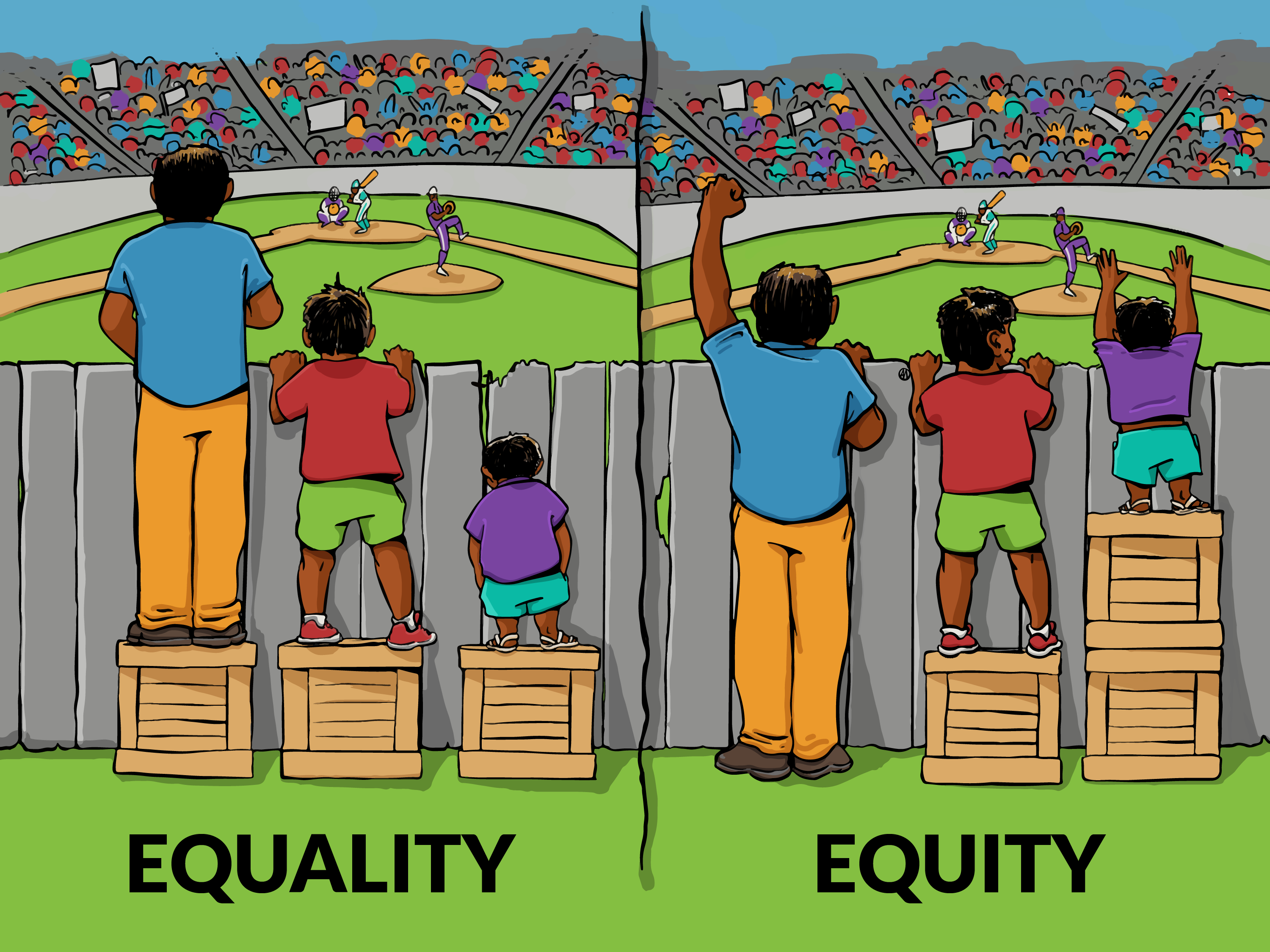
That being said, you can't have a strict equality of opportunity without acknowledging which people didn't have that opportunity. I think it's much easier to fix this problem if you focus on the person (e.g. Sandra couldn't afford college) rather than the group (Sandra's black and statistically less likely to have been able to afford college).
The problem is people use these bullshit heuristics that happen to suit their mental model of how they want their neighborhood/workplace/world to look ("We don't have a black woman in accounting, what's wrong with that hiring manager?" or "Everyone on the database team is Indian why can't they hire a white guy?") rather than just trying to be fair while still acknowledging systemic issues people have had because of the groups they may belong to.
Strict equality of opportunity is a pure lottery, which is just as absurd (if not more) as strict equality of outcome. Otherwise, it is claiming that certain factors (maybe, genetics or upbringing or geographic location or whatever else) should contribute to inequality of outcome, while others should not. The whole phrase, therefore, is a thought terminating phrase, allowing a speaker to ignore the nuance of which specific inequalities they belive are just vs not just, and why.
You can't control every factor. Arguing for "equality of opportunity" really just means taking a laissez-faire attitude as to who succeeds. It means not making explicit exclusionary rules as to who can participate, but also not undertaking a vain attempt to equalize every conceivable variable.
And one thing to remember is that (a) actual random distributions are lumpy, not evenly distributed and (b) there is pretty much no equality of outcome in whatever outcomes or input categories you choose. Anywhere. And very often the distributions in different places also look different (though there do seem to be some patterns).
Equality of opportunity a way of saying "fair treatment by some measures, unfair by others". You are picking which traits inequlaity should happen by and, huh, imagine that, they probably happen to be traits that overall benefit you.
"Equality of opportunity" is a phrase I no longer trust, because it obfuscates the true differences in moral ideology. Just be explicit about which factors you think should create unequal outcomes, and which ones shouldnt, and a real conversation can happen from there.
Equality of opportunity is meant as: Inequality should rise from personal choice and decisions, otherwise, why should anyone strive to be better than anyone else?
I suggest looking at the history of states that favor equality of opportunity (equality) against equality of outcome (equity).
I'll leave you with this Soviet joke: 'They pretend to pay us, we pretend to work.'
I agree, but "equality of opportunity" tends to follow "equality", so I think the "equality of opportunity" folks are trying to advance the conversation, but other folks are trying to stop it at "equality" (presumably because elaborating on their idea of the word would expose it to lots of obvious scrutiny).
I agree with you, but from the opposite direction. On its surface the idea of equality of outcome seems terrible. It will never be achieved without oppressive totalitarian intervention. So any measure of equality or progress which is predicated on the goal of equality of outcome is a non-starter for me.
The only discussion I'm willing to have is one in which we discuss a particular area of treatment or opportunity.
It is very clear this is not equal opportunity but equal outcomes. Trying to make equal outcomes requires some serious mental gymnastics because numerous decisions collectively contribute to our direction, standing, and potential in life.
I can count at least three points in the guidelines[0] this comment violates.
> Be civil...Don't be snarky. Comments should get more civil and substantive, not less, as a topic gets more divisive. (could be multiple but is the same paragraph so assuming combined as 1 point)
> Assume good faith.
> Please don't use Hacker News primarily for political or ideological battle.
I wasn't however assuming bad faith, I was attempting to use humor to jolt someone out of uncritically adopting what I consider an asburd position (that there is any danger of a metaphorical "war on men", in any sense other than as a talking point).


Adapting behavior is reasonable, but there's men also need to be able to have a voice, or you're going to get some major pushback. Hopefully we can keep this kind of war at a low simmer when trump is up for re-election.
More specifically, that means making sure that men do have a voice. I've seen a lot of silencing tactics deployed that are based on gender, or social class. It's all well and good to say "well that's how minorities always felt", but it doesn't actually make any part of this situation better.