"Based on the best available evidence from fossils and preserved footprints, a heel strike pattern appears to be the norm for our genus for several million years. The recent discovery of the 800,000 year old Happisburgh footprints records the meanderings of a group of Homo antecessor and reinforces a thoroughly modern gait pattern with a strong heel strike seen in a 3D reconstruction."
I'm Canadian. You wouldn't think that would be very different from the U.S., but... when I first visited the U.S. as an adult (Boston), I had to change my gait IMMEDIATELY. I was a fast walker, and had been trained as an actor to hit toe first "for better energy" - that is, to appear more energetic on stage. Trouble is, that makes you quieter, and Americans in the Eastern US back then simply assumed that anyone gaining on them quickly and quietly from behind was probably a mugger. Pedestrian after pedestrian after pedestrian would whirl around to look at me in a startled way, even during the day, nevermind at night. So I learned to thump my heels down noisily for my stay and that eliminated the problem. I could walk fast without frightening anybody, as long as I was conspicuously loud about it.
Noisily thumping along is also a way to get people who are walking slower and blocking your path on busy Boston-area sidewalks to notice your presence and move out of the way.
Gait and personal spaces are strange cultural artefacts. I can even tell if someone is from a large city like Delhi in India or a small town based on how fast they walk and how tolerant they are of others encroaching their personal space
It can also be gendered; a strong signal of male/female (or at least masculine / feminine) is in the gait. Men walk with their shoulders, women with their hips.
It’s not social at all, transexuals can attempt to mimic this but your precession is dependent on your pelvic structure.
Any forensic or surveillance grade gait analysis software can easily distinguish between the sexes and it’s not fooled by sex reassignment operations or sexual orientation.
I am very skeptical of this claim. There is enough variation between individuals of either gender to make positive identification close to impossible (not to mention that muscular / ligament changes in the hips on hormones can cause the hips to rotate over time into a different position). Sexual dimorphism in humans has such significant overlap and grey area that positive identification from physical characteristics alone is going to have a significant error rate.
Interesting! Another way you can tell it's cultural is that the running community does both kinds of gait. I'd never noticed Indians toe-walking, but I do meet recent immigrants from India on a regular basis, so I'll have to watch for this in the future.
It might be cultural, but things like these start out from basic needs and just become absorbed into cultural standards. As is demonstrated by the fact that the introduction of better shoes led towards the change of heel-first walking due to laziness.
Rigid shoes are not strictly “better”. Arguably they are in many ways worse, stunting development of small stabilizer muscles throughout the foot and lower leg (through disuse), reducing flexibility and dexterity, encouraging poor posture, and leading to various kinds of injuries especially among runners (heel-striking when running puts a lot of repetitive shock on all of the hard tissues from the heel up through the hip, even when wearing very padded shoes). Shoes with even slightly raised heels in particular lead to reduced ankle flexibility, which impairs squatting and jumping (this is compounded by a lifetime of sitting on European-style chairs for hours every day). They also tend to not be very foot-shaped, causing blisters and cramping people’s toes inward: adults in rigid-shoe-wearing places end up with really weird shaped feet, bunions, etc., sometimes requiring surgery to fix. I suspect that many mobility problems among the elderly are caused or exacerbated by a lifetime of wearing rigid shoes. Maybe less importantly, they lead to much louder footfalls.
Their main advantages are (a) they are more waterproof, (b) they are more durable (especially on hard rough surfaces canvas or thin leather shoes wear out quite quickly), (c) they offer some protection against sharp objects that you otherwise have to pay more attention not to step on.
My orthopedic doctor had me switch from arches and heels (typical running and dress shoes) to flat souls and minimal pressure on the back of my heel (flip flops, Keen sandals, those thin shoes from New Balance). It both helped clear my plantar fasciitis and my flat feet got some arches.
Personally I think it is even absurd that someone needs to point this out in a video! As a kid in South America I used to walk 80% of the time barefoot or on sandals. It is clear that in such situation any faster movement needs to be done toe first. So, fighting, dancing, running, would be done toe first in such cultures. On the other hand, heel-first is more energy efficient, so you do that when walking slowly barefoot. It was modern shoes that allowed people to do everything heel-first.
We moved back to NZ where I grew up, and our kids went to a 50-person primary school with not a pair of shoes in sight. You learn where the patches of prickles are and avoid those bits of the grass. (Data point: the prickles are in the same places at the beach and community hall as they were 40 years ago when I were a lad)
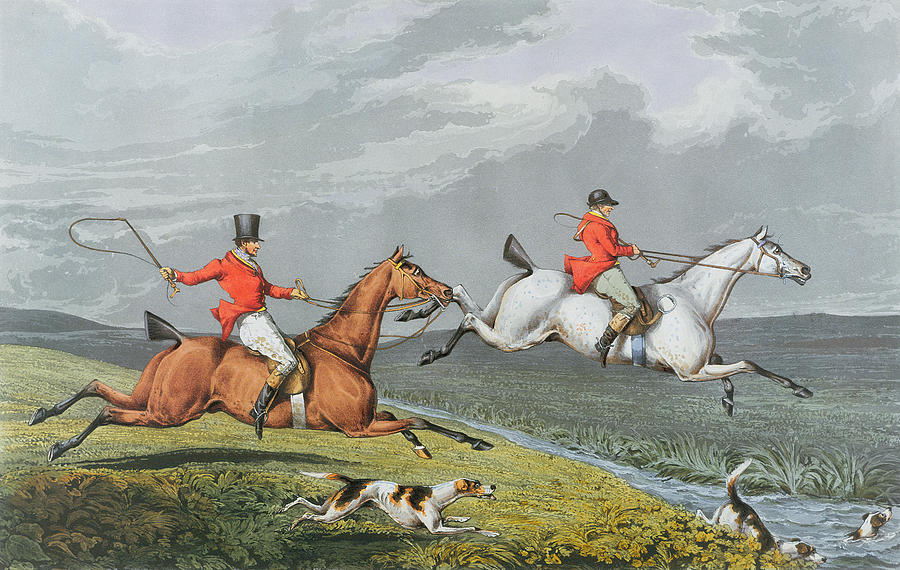
The purpose of the shoot was to determine whether a galloping horse ever lifts all four feet completely off the ground during the gait; at this speed, the human eye cannot break down the action.
That’s ridiculously interesting, but is it really comparable to a walking speed human? Sounds more like an issue with the human eye than older paintings in general
If you look at the middle right image and compare it to the painting it's not all that wrong. Note: horse on right it jumping, not simply running. @ 20 seconds: https://youtu.be/oLvAxzVeyLs
I switched from “normal” western shoes to minimalist “barefoot” shoes about 4 months ago. My motivation was to mitigate some pain I had in the balls of my feet.
Since then my gate has changed from heel to toe walking. The reason is that heel walking hurts when walking (nearly) brarefoot. However the change is subtle.
The guy in the video is anything but subtle. Based on my recent experience I strongly doubt people walked that way.
Since switching, my feet feel better, my knees feel better and my back feel better.
I’ve bee wearing xero brand shoes. They are super comfortable but I’ve been disappointed in their quality. Can anyone recommend “minimalist” shoes they like?
I’m a fan of Vivo Barefoot minimalist shoes. The quality has significantly improved over the years. They’re available from their website and Zappos will usually have some as well.
I've reviewed dozens of minimalist shoes and gotten some custom made.
Vivo is hit and miss in terms of quality. Some models are quite good. In my opinion, their classic desert boot Gobi is the best item in their lineup. Some variations are offered with insulation and/or water resistance.
IMHO, the very best minimal shoe money can buy is a Russell Moccasin [1]. And I say this as a European that in principle prefers high end English (Edward Green), Spanish (Carmina) and Austrian (Saint Crispin) shoes.
Some words of warning, though. It's a traditional company. Orders are very slow and there's little feedback. Plus their QC is sloppy. Some pairs are very well finished, others are not.
For those following the link, the shoes on the initial page are not what I personally would consider "minimalist" shoes as they have significant soles. There are others which are more moccasin like, such as
How cold are we talking about? I find that thin uninsulated flexible shoes often keep my feet much warmer than more insulated inflexible shoes as long as I keep moving, because they require a lot more muscle use by the feet and lower legs, and blood ends up circulating more. When just sitting around they can get cold though.
You could try a knee-high leather moccasin or the like.
New England winter. I have snow boots for heavy snow. But I find that I’m cold in the Xero shoes when walking on frozen ground (sidewalk, driveway, etc) even without snow.
Just to add to your request, is there any literature which goes over the effects of wearing minimalist shoes? Everything I'm finding on Google has to do with running, not with wearing them as an all-purpose shoe. Would be interested to know what effects these shoes have on gait and posture (currently have some knee pain and think something like this could help).
I don’t know any research but I can speak for my own experience. I am not a runner and wear them almost exclusively for 4 months.
I’m relatively fit and work at a standing desk (mostly standing sometimes sitting). I have small miniscus tears in my knees. When I exercise regularly (bike or elliptical 2x per week) my knees don’t bother me. I also had some pain the balls of my feet.
For the past few months I have not had the chance to exercise regularly.
After switching to minimalist “barefoot” shoes, the pain the balls of my feet are gone and even without the regular excercise my knees feel pretty good. I’ve even felt good after working our booth at 3 long tradeshows this past fall.
I don’t think I’m one to fall for fads. I’m converted to this style shoe now.
I wear sandals as much as possible. When I need something that covers my foot, I've been getting Converse All Star Slim Ox and stripping out the insoles. One aspect of minimalist shoes is that there's not a lot there: they're generally not really built to last. The Slim Ox are pretty cheap (when they're available: they aren't always) and are a good compromise in my experience.
Instead of the Converse shoes, which have a somewhat rigid rubber bottom outsole, consider buying some plain canvas-bottomed shoes. You will wear through all of the layers of canvas within a few months, but if you get them from China (e.g. on Taobao) they only cost like $5–$10 per pair.
Alternately, thin leather moccasins can also often be pretty cheap (or can be made yourself).
If you want something a bit more durable, I find that most styles of Vibram’s finger shoes last a fair while, but plenty of people seem to dislike their appearance.
Sure, there are alternatives. The Cons run about $45 a pair, last about a year, and don't call undue attention to themselves. I find they strike a pretty good balance. Plus, they're Cons :)
Why do you say that “not built to last” is a characteristic of minimalist shoes? To me that is a characteristic of the brand. The soles of my xeros have hardly any wear but they are ungluing from the upper and split at the edge.
In the sense that there's generally not very much there to be sturdy. I can't think of any highly durable materials or construction methods that are suitable for shoes that aren't also relatively bulky, which minimalist shoes are often striving to get away from. It's a tradeoff. I don't think it's something they're designing for. There's likely an opportunity here, but I'm not sure how big the market is, particularly at prices that would be competitive.
I have spent a few years mostly walking around either in Vibrams or in canvas shoes I bought for $10/pair in China, and frequently walk like this.
The guy in the video is exaggerating his motions a lot though (could explain part of why he finds it takes so much work for his calves). In particular, my steps end up being small, with my feet staying under my center of mass, my stepping leg is bent, my steps are almost directly in line, and I find that my torso moves very smoothly without bouncing up and down or stopping and starting.
I have spent a decade walking like this, and I agree with you.
It seems that he wants to make his movements clear to the audience, but in practice I would expect he is walking with short balanced steps.
I walk like you describe you do, but in the end I also developed calves like those you see on the folks in paintings from the 1400-1500s!
A parenting aside: I want to make sure that my daughter grows up walking the way she already naturally does, but it is hard to find good footwear for it in kids. The materials are all heavy relative to the size of the shoes and so it is hard to find a shoe that is both flexible and resistent to the weather. I'd love to hear any suggestions.
I'm not so happy with their adult shoes. Some are good, like Gobi. Others are pretty bad, and they change their designs pretty radically so they never improve their weak points.
For example, I spent a few hundred on the first Porto iteration, and it fell apart in less than 2 months. Their German shop refused to honor the guarantee.
How old is your daughter, and how is the weather where you live?
My son is about 17 months old and has been walking for about 5 months. We live in one of the warmer parts of San Francisco, so for the first 3–4 months it was warm enough that he could just walk barefoot around the neighborhood. We sometimes get strange looks/questions from other pedestrians, and his feet get very dirty, but it’s easy to wipe them before going inside. When it gets too cold (i.e. he would sit down and refuse to walk on the sidewalk) we put some of these soft leather moccasins on him. https://amzn.com/B014EQ6OXM/
For cold rainy weather or older kids I’m not sure what the best choice would be. I’m somewhat of a mind to just buy some leather and make shoes at home; it doesn’t seem impossibly difficult (there are many straightforward patterns from e.g. North American tribes).
Thanks for sharing the observation about calves! I thought I got stronger calves from weight lifting. But perhaps it was the barefoot shoes as calve changes correlated better with me switching to wearing only barefoot then with my weightlifting.
Yes it is possible to change your gait, even through exercise. I do wall-facing squats. It's the kind of squat that makes it impossible to cheat and use bad form, but it's quite a bit harder. The last time I did 131 total, including 40 in the last set. I'm aiming for 200 or 300.
I noticed differences in how I walk, especially on incline, decline, and walking up/down stairs. These squats teach you better balance and strengthen more muscles. My range of motion is also fuller when biking, instead of the newbie's typical "pedal pushing".
Running barefoot and dancing also affects gait, so why not type of shoes ?
I tried walking toe first like in the video with an anterior pelvic tilt. Surprisingly, it's almost impossible - my upper body locks up. Since your butt is so far back, your steps are stilted, too.
Changing to a posterior pelvic tilt (or just neutral I guess), yeah I felt like I was doing ballet. My posture immediately improved, my core was engaged, even walking toe first made more sense.
But, I dunno. Unless I'm barefoot in the woods at night with feet used to being wrapped in shoes, toe first doesn't come naturally. Landinf on the ball of my foot? Yes.
What do cultures that don't use shoes at all, do?
If anyone is interested in ant. and post. pelvic tilt, the great aha moment for me was the Cat/Cow poses in yoga. Practicing flossing between them gave me a ton of awareness over my posture.
I did re-enactment for 20 years in the UK, and you wouldn't believe how much of this sort of shite goes round in those circles.
And I wore "leather socks" for the events, not modern shoes, and my gait didn't change at all. Unless I was walking on wet stone, grass or concrete. Leather is really, really, slippery when wet.
It takes months if not years of frequent deliberate practice to change your unconscious gait as an adult (or at least it took a year or two for me; maybe some people are prodigy athletes and can master new physical skills faster). Just switching shoes won’t do anything by itself or overnight.
This is sort of like saying “I’m used to using a fork, and I couldn’t pick up anything when I tried chopsticks a few times. There’s no way people actually eat with a pair of these, I’m sure they actually just stab their food with it like a skewer.”
If you want to learn, I recommend you try switching to walking entirely barefoot all the time for a month or two, including while walking on hard surfaces (e.g. concrete sidewalk). You’ll be forced into a dramatically shorter more balanced stride irrespective of which bit of your foot touches down first, because a long straight-legged stride will be painful for all of your joints. It will be even more dramatic if you try walking very fast or running. Frankly the difference between forefoot striking and heel striking when walking is relatively minor, compared to the difference between a long bouncy straight-legged stride and a short balanced bent-leg stride.
Walking on rough surfaces (e.g. loose gravel, trails strewn with twigs and small rocks, ..) and warm or cold surfaces (within reason; don’t burn your skin off) will also be instructive – after a lifetime of walking in protective shoes which prevent you from feeling the ground this will seem very painful on your sensitive nerves/skin, but within a few months you will become desensitized and tougher and be able to handle walking barefoot in a much wider variety of conditions.
It’s also fun (feels nice) to walk barefoot in the grass, in the mud, in the rain, climbing up trees or over rocks, on cobblestones, ...
I do this when I'm walking around the house (no shoes allowed), partly because my heels eventually hurt when walking on hard surfaces with no padding, but mostly so I avoid treading on a lego brick or a type G (UK) power plug (though this is the first time I've thought about it, so these are assumptions).
I also run on the balls of my feet, but I never thought about why I might do that until I read an article about it a few years back.
I think I do a lot of toe first walking around the house. My wife complains it's so quiet I'm like a ghost always suddenly appearing and startling her.
But it's partly out of taking short steps - to maintain balance. If your feet are too far apart you're vulnerable to tripping and leg sweeps and getting unbalanced by being hit in general.
I find it impossible to do toe first if my step is the usual length.
I've walked like that for all my life (I would stand on my toes a lot), so you saying it's not abnormal when walking around the house makes me feel better.
I've moved to a house with hard / laminate flooring recently though, and it took some time to adjust - even with my weird gait the floor was uncomfortable to stand on for extended periods of time without shoes.
There’s a German barefoot shoe manufacturer called Leguano. They swear by the toes-first walk. I think it’s a bit silly to walk this way.
But I got a pair of Leguanos anyways (for the barefoot shoe experience) and I definitely walk different in these shoes. Before, my stride was quite far. Too far for my body height. Now I take smaller steps, there’s less pressure on my heel. Overall, I can say that barefoot shoes are great. First shoe that I actually enjoy wearing.
So I guess going toes-first could make sense, but simply taking smaller steps with less pressure on the heels could have a similar healthy effect.
One of my cousins naturally toe-walked similar to the video at least into his teens. Of course his mother wondered out loud "What type of sport is that good for?", and at the time I didn't have an answer ready to fire at a moment's notice.
Myself, I naturally heel-walk and rather heavily as well. You can imagine the wear-pattern on my shoe soles.
Shoe wear is an interesting investigate tool. The most easily observed wear, sole wear, is the result of friction due to foot motion relative to the ground, not force.
Midsole compression and heel counter distortion better correspond to force pattern, but they are integrative and themselves affect gait.
Women in ancient China had their feet bound [1]. There were rules on how to walk properly as ladies. Court women had stricter walking rules; those in Qing Dynasty (the last in China) wore high-heel shoes, which made walking more difficult and painful so the women must take very small steps. Men back then had sexual fetish for small feet. I am so glad foot binding is illegal and no longer practiced in China.
Warning: "foot binding" on the Internet may contain disturbing images (including on Wikipedia). You may not like what you see, so I recommend just watch [2].
Many years ago I remember seeing a little girl about 6 or 7 who was the daughter of a friend. She walked around on her toes. I asked why, they said it was a disorder (learned/self-taught behavior) they were trying to correct.
I have that (toe walking), went to a physical therapist for it and everything. nowadays it just looks weird and my shoes wear in the front instead of the heel. The doctor (rightfully) said that the passive standing on toes (for whatever reason I did that) would pass on its own as I gained weight (it did), but the gait never really changed. It did mean things like squats are more difficult, ankle flexiblity was a bit shit. It's a bit better now though, but it takes active effort to stretch and whatnot.
I don't have cerebral palsy or Duchenne, but not sure about autism :p.
I had a colleague who I'm sure did ballet or something too, he had a very upright, tight posture of sorts. I did read that women ballerinas need to (re)learn to relax their abdominals when they're pregnant to avoid certain complications.
My personal experience matches what the article suggests. After I started to use barefoot shoes not just for running, but for all daily activities, I noticed few things. I walk slower, like 15%. I do strike more with the toe than with with heel, but this is very surface-dependence. My balance improved. Barefoot shoes in general have less traction, but I have found that walking on icy pavement became easier. The most puzzling aspect was that I get tired less at least subjectively. The last summer I was able to walk non-stop 40 kilometers, when previously I restricted my daily hiking tours to 15-20 km.
Which “barefoot shoes” are you talking about? Most of the styles of e.g. Vibram shoes have rubber soles (and in particular you end up being able to shape your foot to the surface) so there is relatively good traction compared to other shoes. Leather moccasins and especially canvas shoes can have relatively poor traction. When walking entirely barefoot, skin has very good traction.
Either way, walking with a forefoot strike (or even walking with a heel strike in unpadded flexible shoes) generally implies keeping your steps small and your feet directly under your center of mass. If you are on ice, the more you keep your center of mass over your feet, the less sliding you’ll do.
I use Vibram for running and vivobarefoot.com as daily shoes. My experience with both as on slippery surfaces like rocks after rain when hiking and on icy pavement was that traction was definitely worse compared with good ordinary hiking or winter shoes/boots. But as it was much easier to keep balance, the net result was improvement.
I suspect with barefoot shoes even those with a rubber sole with a pattern the depth of the pattern is just too shallow. So effectively the weight is distributed over the whole surface of the foot. With ordinary shoes pattern on the soles and heels make the contact surface much smaller and pressure higher improving traction.
I guess I haven't walked much on ice. There the standard bearer is probably something with metal spikes. I found vibrams pretty good for e.g. climbing around tide pools.
I've been a toe walker my entire life, so this is fascinating. Sometimes, this is indicative of cerebral palsy, but this isn't true for me. I'm not sure why I started to do it, but my parents said that ever since I was a toddler I have always toe walked—perhaps I simply like the feeling of my toe alighting on the ground first. Curious enough, my toddler now toe walks as well.
And I can confirm: my calves are huge, especially relative to my skinny frame. I also find sprint sports easier, like tennis and soccer.
Same aaand same. Started toewalking not long after I was able to walk, and I'd unconsciously stand on my toes when just standing idle for some reason. I replied in another comment chain, there was a link to wikipedia [1] that also linked to autism. I'm fairly sure that it's just one of those things that doesn't need to have a medical reason though. Especially not when hipsters do it due to barefoot walking shoes and such :p
ive spent more than a few summers in turn-shoes, which were a dominant construction method of footwear in medieval europe. mine are modern recreations made in as correct a way as seems feasible.
you absolutely cease to heel-strike in about a day. your gait shifts. when fighting, you take many quick short steps. hills and slick grass are interesting.
i haven’t tried hobnailed boots but my friends who have think they improve traction at the cost of some comfort — you’re basically walking on permanent cobbles. they absolutely destroy flooring.
My hobnail boots are pretty comfy, great for combat on rough terrain. They’re not a turnshoe though, the sole is nailed - so could be different I guess. Running on concrete gets interesting... and you need to avoid treading on bare feet. Other than that they’re awesome.
but the rich (which more or less represent the whole lot of people found in portraits and paintings) seemingly used them commonly when outside, particularly in cities, while the rest of the people would probably have gone barefoot or had anyway wooden sandals or similar.
This makes sense to me. If you watch babies learning to walk, they often walk on their toes first, vs heels. He mentions that you are leaning forward, that keeps the momentum up to make it easier.
So if it wasn't for Buster Brown, we would all be able to toe walk easily.
Not sure if this is true, but I walked solely barefoot for a few months and definitely noticed changes in my gait. Rather than just dropping my foot onto the ground, I almost gently slid the foot to the ground to minimize impact, and walked more toe forward.
I remember when learning to scuba dive we were told to walk a similar same way when doing a shore dive - slide your feet forward and explore with your toes so you don't step on something you shouldn't like coral, sharp rocks or a ray.
I recall hearing that some American Indians were noted to have a similar stride. If the thin leather shoes in Medieval Europe were like moccasins some tribes wore that might lend weight to this claims made here.
The author was talking about a time before that where people didn't wear shoes. He focuses on Germany. The shoes you wore is from a later time and different place.
I'm familiar with the era, and Germany in that era, and no, I wasn't wearing shoes from a later time and a different place.
In fact I don't own any "structured shoes" like the article mentions as leading to heel-walking, although I do wear wood patten overshoes when it's muddy.
Just because walking a certain way makes sense under some conditions does not mean it's the one true way under all conditions. When walking on uneven terrain or moving surfaces, in bad visibility, when trying to walk quietly, when fighting, generally when there is a greater requirement for stability and control, humans (especially when barefoot or wearing minimal footwear) tend to instinctively adopt a fore-/midfoot first strike.
When walking on solid, even terrain in good visibility and without imminent danger, most people would naturally use a heel-first strike, as it's a lot more economical in terms of muscle/energy usage. In that sense - if you're looking to build your calves, I have little doubt that consciously walking with a forefoot strike all the time might just do the trick, especially considering that calf muscles have a larger percentage of slow-twitch muscle fibres responding to a larger volume of submaximal loads.
You just have to make sure to take smaller steps, bend your knees a bit more than people generally do and fix your anterior pelvic tilt if you have it so as not to look too awkward (that is, if you care about the social aspect of it.)
When running barefoot or in minimal shoes on a hard surface almost everyone trying to use a heel-strike will quickly and painfully realise what a terrible idea it is and would naturally revert to a fore-/midfoot strike in order to take advantage of the body's natural shock-absorption mechanisms. Only modern thick-soled shoes make heel-first running possible, as they absorb a lot of the shock at the heel so no pain is immediately felt there.
They also make it feel somewhat natural, as when the feet are isolated from the natural ground sensation by centimetres of padding, there's somewhat of an instinct towards a stronger impact to regain that sensation. There's a reason for the extremely high number of nerve endings in the feet. Unfortunately the result is a running mechanic to which we are simply not physically adapted and a huge amount of preventable injuries, which are largely unknown in parts of the world where shoes aren't a big thing.
Feet in the western world are so universally deformed by the continuous usage of modern shoes from a very young age, that I would speculate there aren't many present day podiatrists who've ever seen a healthy real-life foot with naturally spread-out toes and a strong, healthy arch.
Big, strong supportive shoes (especially ones with pointy/compressive toe boxes) are really bad for you, unless you're walking in very dangerous terrain with lots of sharp pointy things, in which case they're great for you. Not the pointy toe boxes, those are always bad for you, but they look better, so you know. Pick your poison.
While biomechanically we're certainly screwed up quite a bit, I would say the solution is retraining according to an intuitive understanding of natural basic movement principles and their application to each specific situation, rather than blindly following a single recipe no matter what.
I don't believe for a second that people walked forefoot-first all the time at any point in human history, although without modern perfectly even roads and thick-soled shoes, they probably did it quite a bit more often. Just check out any video of indigenous people online, they walk heel-first all the time.
Source - lots of personal research, observation, experimentation and some application of common sense. I am not a professional in any related area.
Some further advantages of forefoot walking: it is much quieter; it is easier to precisely place your feet (e.g. 10 people can all walk in the same footprints and hide their numbers); you can very quickly and easily transition between walk and run or other types of motions (jumping, climbing, backing up, scooting sideways, crouching, diving to the floor, ...); it is more stable / easier to recover from sudden forces if e.g. the ground gives way or someone shoves you; your torso bounces around a lot less, which can make carrying certain kinds of loads or wearing some types of clothing easier, and also really helps if you are trying to aim a video camera while walking.
Absolutely. In terms of effective, controlled movement, it's better in pretty much every single way, except that it costs more energy, which is why it's generally not a particularly natural, intuitive thing to do all the time. Like probably every living organism, we're not generally programmed for unnecessary exertion.
EDIT: That being said, a lot can be improved in most people's heel-first gait, among other things - taking smaller steps, pushing the pelvis slightly forward into a neutral tilt, staying a bit closer to the ground (slightly more bent knees), making contact with the ground before shifting the whole weight, not throwing the legs forward and letting the heels slam on the ground. Getting all of that right makes heel-walking a lot more controlled and less bouncy. It also feels great.
The bit about developing bigger calf muscles from walking on the toe rings true for me. I always ran on the balls of my feet, with my heel almost never hitting the ground - I played a lot of basketball, and you're always moving forward and back, side to side, rarely in a straight line more than a couple dozen yards at most. It's common to say you got "caught flat-footed" if somebody blows by you when playing defense, and we routinely did a drill we called "foot fires," where you step in place on the balls of your feet as fast as possible, keeping balance.
I still have to be careful buying pants; I've blown the inseam out of a few pairs of slim-leg jeans below the knee pulling them on too quickly.
The muscles you use to stand up on your toes are quite distinctive, if I dance on-your-toes enough I end up with a bulge in my calf similar to women who frequently wear high heels.