Canada as a whole has been pro immigration for a long time, but our immigration system was broken in recent years, and the most visible consequence of that has been an enormous increase in low skill, low wage Indian workers. A lot of people who have never had issues with immigration policy before have become very anti Indian immigration as a result.
I think there's some particular niche immigration programs (ie. TFW) that have been broken because bad actors are aggressively defrauding the government, but I wouldn't say that Canada's system is broken beyond that.
I'm skeptical that an increase in so called "low skill" workers are even a problem considering that the country is experiencing labour shortages that have contributed to construction costs being so out of whack that building new buildings is unviable.
Now we've "solved" that problem by turning immigration down to zero but that is a kludge and not an actual long term solution to systemic problems.
It's pretty hard be critical of the need for supposed "low skill" immigration when pretty much all of our settler ancestors were penniless dirt farmers.
I agree for the most part. I said immigration is broken, but really the problems are almost exclusively to do with the TFW program and degree mills. One area the TFW program has hurt the country, is in the significant reduction in the number of jobs available to high school students. Anecdotally, I know of many high school students who have been unable to find any work for years, and a stop into any local fast food restaurant or superstore will back that up. These kids looking for part time jobs don't show up in unemployment numbers. They could help the labour shortage, but instead are silently being added to it, in favour of temporary foreign workers filling the positions.
We do need immigration long term for sure! Canada is and will always be an immigrant country. That said, I also don't think an appeal to the past (the fact that almost all of our ancestors came as penniless farmers) should enter into the conversation. To my view, this is a dispassionate conversation about politics. Concerns over hypocrisy are irrelevant.
Construction is not really a low-skill profession anymore, and needs highly qualified workforce to thrive. Buildings of 2026 are de facto complicated industrial robots.
>I'm skeptical that an increase in so called "low skill" workers are even a problem considering that the country is experiencing labour shortages that have contributed to construction costs being so out of whack that building new buildings is unviable.
I'm skeptical that those migrants helped add more to the housing pool than their own needs.
That's more related to the fact that housing policy in this country is more oriented to helping landlords stuff ever more renters into a basement suite than it is enabling people to create homes.
Questioning immigration policy is not racism. Anti-Indian sentiment in Canada is relatively recent and happened after a decade of mass immigration that is now widely agreed has contributed to a noticeable decline in the quality of life for all.
"Widely agreed" meaning the National Post and other foreign owned conservative press banged the drum on the issue endlessly for years and years and now people are thoughtlessly repeating the talking point.
This is undoubtedly happening (and we need to do something about foreign owned press in this country), but I think this is too convenient a story. I am a socialist and I have become extremely concerned about immigration in recent years. I want to talk about those concerns and work towards solutions that are amiable for our country, Canadians, and immigrants. Unfortunately, a lot of people who otherwise share my beliefs, don't seem willing to acknowledge that people like me (who strongly oppose the National Post propaganda organ) exist.
You don't understand, and your unwillingness to approach this issue with the nuance it deserves will only drive people towards right-wing extremists. These people are not racists! The federal government increased immigration (largely of TFWs and students) by far too much, and that has put an enormous strain on Canada's housing and job market. Canadians are turning against broken immigration policy, which has naturally become associated with its most visible aspect--the recently arrived, unskilled Indian worker. You must understand the negative sentiment is driven by association with bad government policy, not naive racism towards Indians. Of course, none of this is the fault of individual immigrants or TFWs, but they are part of the problem, because they are symptoms of it.
Racism is a serious allegation. Let's not cry wolf when there is a reasonable explanation here.
No one said "everyone from their country is a bad influence." Indians were viewed as model immigrants in Canada for decades. Again, their good name is being tarred due to bad government policy.
My point is is that if leftists cannot talk about immigration policy in a nuanced way, right-wing extremists (for there are no other kinds of right wingers these days) will be the only game in town, and people who want to talk about immigration policy will therefore be drawn towards them.
Humans see patterns in everything, that's how we work. You can be a naive idealist all you want, but that doesn't change the fact that people will inevitably associate the effects of a bad policy with the policy itself.
> My point is is that if leftists cannot talk about immigration policy in a nuanced way
Does nuance mean agreeing to your framing of a situation? If so, I guess not. That's not what it means to me.
> a naive idealist
Insults aren't helping your case.
> associate the effects of a bad policy with the policy itself.
What are the effects you're referring to here?
> Humans see patterns in everything, that's how we work.
Here's a pattern I see: American-owned propaganda networks take over Canadian news and trying to drum up racist sentiment and lots of people falling for it.
It sucks that you started with them then by calling people who disagree with you racist.
>What are the effects you're referring to here?
Drastically reduced wage bargaining power in various sectors and also for general unskilled labour typically done by students and the like.
Straight up displacement in some areas.
More strain on a housing supply that's already incredibly overvalued.
Hell I'd argue that the migration was incentivized by the canadian local governments tax dependence on housing prices going up.
US immigration policy was explicitly racist from its founding up until the Hart Cellar act of 1965. Assuming that the 2016 election of Donald Trump is your benchmark for when immigration policy became determined by racists again, then the US's immigration policy was non-racist for 51 of the last 251 (and counting) years, or 20% of its history.
Safe to say that the 1990s "End of History" theory has been proven wrong. It may be that the ~1960s-2010s "post-national" political consensus was actually just a historical aberration that is still in the process of being unwound.
Leaving aside the fact that this is a single picture of a chart with no source provided (or sample size, or methodology)... that's eighth on that chart, not fifth, and just says "immigration" with no further detail.
Yes, but you don't need a complicated ratcheting protocol if you've eliminated forward secrecy in other ways. This post is about "post compromise security," but there is already no post-compromise security after the cloud backups feature
Do you also think it's "strange" that they're introducing that (optional!) feature while also storing all the messages on your device? The cloud backup is strictly more secure than that on-device database. Their blog post on the subject also explicitly says it won't include disappearing messages that disappear within 24 hours.
It's not optional because you don't know whether the people you are communicating with have it enabled. One person in a group chat with the feature enabled undoes the forward secrecy for everyone in the group chat.
A cloud backup eliminates any forward secrecy. It used to be that in Signal, when you have a message on your device and it is deleted (or a disappearing message disappears), then it is truly gone and can never be recovered. Now with backups, since the key that was used to encrypt it to the cloud remains on your device, it can be recovered even after the message is deleted or disappears.
The only way to "truly" opt-out is to, as you say, set a disappearing message timer for <24 hours.
Yeah, and all of that's already true right now because messages are stored on those users' devices already. You'll be heartbroken to hear that those users can also take a screenshot of your disappearing messages and send it to anyone. There are fundamental limitations to what a messaging app can protect you from.
While the analog hole will always exist, and you can't make it actually impossible, Snapchat's quite good at that screenshot thing. Both platforms have APIs to prevent, or at least notify on the use of screenshot. It's weird that signal doesn't use any of them.
i know of ~3 currently working methods to take screenshots on snapchat
it isn't "weird that signal doesn't use any of them" because it does [1] use both, just not for giving a false sense of security to your correspondents
android emulator (i think bluestacks still works), web snapchat client + BetterSnap extension (you can even save the original media file!), on graphene it seems to detect screenshots but not video recording (likely not intentional, there was an open issue to block screenshot detection but no devs were interested iirc)
it's a lost cause except maaaybe provisioning drm keys but even then, as you say, analog hole
re: screen security isn't the same thing - that's what i mean, signal does use those very APIs but not for a half-assed snitching feature
Oh interesting. Yeah, I mean, iOS has the API so it seems silly that they don't do anything about it there, but I guess if you support a diverse userbase like they have to, then user education is impossible and a false sense of security would be a bad thing to give to uaers
this is the same argument as saying "you shouldn't have remote delete requests". Yes, people can screenshot or export. That doesn't mean you shouldn't have a nicety that generally works pre-compromise or pre-evil. Locks just keep honest people honest.
That character is actually the en dash (properly used in ranges, e.g. 5–10). The em dash is [shift][option][-]. I would also include triple hyphen in that list; for those of us used to TeX a double hyphen (--) is an en dash and a triple (---) is an em dash.
GP was incorrect that it doesn't increase supply, but correct on pricing. Besides, if I can't afford $3000/mo rent, it doesn't matter to me how many rental units are available at $4000/mo. With massive pricing collusion having been the standard for the last few years (RealPage) and the demand for housing always being extremely inelastic, the supply/demand curve is extremely complex.
Someone, if we stretch that metaphor, intentionally opened the bag for profit. We can and should hold them accountable.
> the people involved with that have to deal with that
Yep, and they should hold the people who caused this accountable.
> is maybe worth trying (good luck) but I don't give it a very high chance of success
You may be correct that it has a low chance of success. However, people who think like you are exactly the cause. People who value Musk's net worth more than science, people who fetishise "progress at all costs," regardless of whether or not the progress actually helps people or is what makes sense (municipal internet, folks!). Understanding physics is also critically important progress, but it doesn't make money next quarter so you don't care.
So you'll forgive me if I don't take your advice on the situation.
Launching tens of thousands of satellites is better than municipal internet, which would serve the same purpose, be cheaper, and not interfere with critical scientific research? This solution is better only for the private internet oligopolies. I would say astronomical research is orders of magnitude more important than that.
Ah, the techbro defence. "We already started doing it, so I guess you're just going to have to let us".
> Whether they like it or not,
A swarm of LEO satellites because in the current political climate it's easier to massively pollute orbits and prevent astronomy than do municipal internet is not, in fact, a law of nature; nor is it inevitable.
> But building international consensus; or even enforcing what little there is on that front could be challenging.
Ah, a challenge! Let's all give up immediately; this could make some rich people a lot of money, after all!
> Luckily we now are able to launch stuff into orbit a lot cheaper. Including astronomy related hardware.
Would you like to pay for launching Vera C. Rubin (8.4m, nearly 20,000kg for just the camera and mirrors) into space? How about the TMT (30m, expected ~2.6 million kg)? Truly spoken like someone who knows nothing about astronomy.
> And otherwise, astronomy is very interesting and cool but mostly it concerns observations about things that are really really far away and not directly relevant to a lot of things on earth.
Apparently fundamental physics is not very relevant to us here on Earth! This is one of the most small-minded statements I've ever read.
Oh, whoops. I only saw that they mentioned charging a fee but thought it seemed hostile—I figured, seems like there's a way to mitigate that, but I guess they realized that too.
Not the person you were replying to, but the Cass review was quite clearly bunk. Its main thrust is essentially: "there are no double blind studies on the effects of affirming care for minors, so we should stop prescribing it immediately". Aside from the fact that the conclusion does not follow from the premise, how exactly could one do a double blind study on puberty blockers? So the report throws out essentially the entire body of research for failing to meet an impossible to meet standard.
> Did the Review reject studies that were not double blind randomised control trials in its systematic review of evidence for puberty blockers and masculinising / feminising hormones?
> No. There were no randomised control studies identified in the systematic reviews, but other types of studies were included if they were well designed and conducted.
That's very funny, because I think it's the opposite. There's a ton of interactions, but those (in my view) are to encourage group tactics. Individual characters can definitely be built wrong, but so long as you have at least a +3 in your class's key attribute the difference in power between a vibes-based player and a hyperoptimizer isn't all that large. Feats in Pf2e mainly add versatility instead of power. Lots of first edition players hate it for that reason (first edition seems to be the hyperoptimizer's dream game).
> [If you] prefer to lean into the storytelling and roleplaying, there are significantly better options than Pathfinder.
That's true in the sense that Pathfinder has far less support for the more modern style narrative-first play and most of its rules focus on tactics. I dislike the premise that story and tactics are opposing goals, though; in my view they're two separate goals a game may or may not have. Pathfinder 2e has both, though its story-support is very traditional. If you enjoy in-depth stories with lots of intrigue &c, Pathfinder can totally deliver, and it also features significant amounts of tactical combat. If you're just not into the combat, then there are totally far better games. If you like the modern narrative-first game approach to story, then it's also not the best. But I absolutely like storytelling and roleplaying, and I enjoy Pf2e quite a lot.
> If you enjoy in-depth stories with lots of intrigue &c, Pathfinder can totally deliver
That's how I feel about D&D - but only in the hands of a decently skilled DM. I think other games provide a lot more tools & framework for the storytelling aspect.
And I like the combat; Pathfinder just has a lot more ... work involved than D&D. It could be, though, that I'm just more familiar with D&D, and if I played as much PF2E as I do 5E, I would find it totally easy and intuitive, too.
> And I like the combat; Pathfinder just has a lot more ... work involved than D&D. It could be, though, that I'm just more familiar with D&D, and if I played as much PF2E as I do 5E, I would find it totally easy and intuitive, too.
It's very much about familiarity. I've played quite a lot of both (and D&D 3.5 and PF1 before them).
It's not wrong that PF2E has a harder and more demanding focus on mechanics and tactics, especially teamwork, which is for both better and worse. D&D5E doesn't just allow for the DM to define more outcomes through narrative-focused hand-waving, it _requires_ it by lacking rules or guidance and having imbalanced granularity in some rules or builds over others. PF2E is more demanding in both design and practice, but in exchange provides more tools out of the box that a GM doesn't need to invent on the fly when players invest time and effort into tactical cooperative play. 5E has the shallower difficulty curve, but experienced 5E players who get past 2E's steeper curve find it has a higher ceiling... _if_ combat is a heavy focus.
I had a rather contentious argument last year with a fellow freelance designer when I tried to suggest that PF2E is a roleplaying game. There's a significant cohort of PF2E players who play it almost exclusively for its combat. To me, that was telling in ways that I think the combat advocate didn't intend. Part of the allergy to D&D4E that players of D&D3E and earlier had when it came out was its narrowing of focus to combat. PF2E is likewise (and borderline ironically) a response to D&D5E's reduced focus on combat balance.
To put it more generally, adept improvisational DMs with players who don't care as much about combat balance or fidelity are better served by D&D5E (or a wide array of TTRPGs with even less focus on simulation in tactical combat over giving players difficult choices, like Powered by the Apocalypse games, Mork Borg and its OSR-adjacent or -derived family of short-lived character gantlets, or narrative playgrounds like Bastionland).
GMs who struggle to create fair mechanics for unusual circumstances mid-game and players who demand greater balance and fidelity in combat are better served by PF2E (or a smaller but still robust field of TTRPGs with more streamlined _or_ more extensive mechanics with similar goals, like 13th Age, the Warhammer family of games, or even D&D4E.)


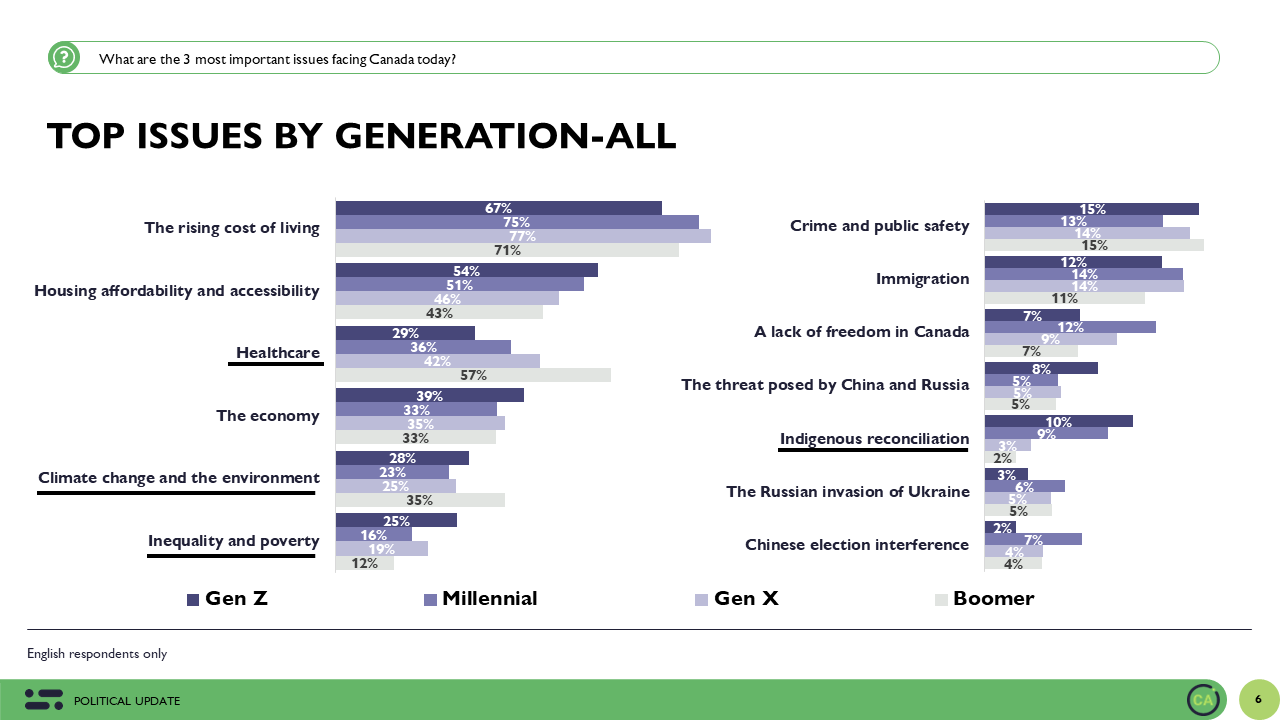
Citation very much needed. This sounds like _your_ concern that you're trying to launder through projecting onto the rest of the country.
reply