For anyone interested in the "critical" aspect mentioned by h0l0cube, please consider also reading "Farmers or Hunter-Gatherers? The Dark Emu Debate" by Peter Sutton and Keryn Walshe.
Peter Sutton is an anthropologist and linguist (>50 years); Keryn Walshe is an archaeologist (>35 years). Peter Sutton in particular has spent large amounts of time living with indigenous people in the far north. Their book describes many deficiencies in Dark Emu, and also gives a huge amount of interesting information about how aboriginal people lived, and the way they curated the land and the food resources available to them.
For anybody lacking context, ie. those outside Australia, for example,
* Australia has much the same area as mainland USofA (ie. it's big) and spans from the tropical equatorial (northern Australia) to much closer to the south pole (Tasmania).
* Geographic landscapes include: Coastal, Rainforest, forest, river, and desert.
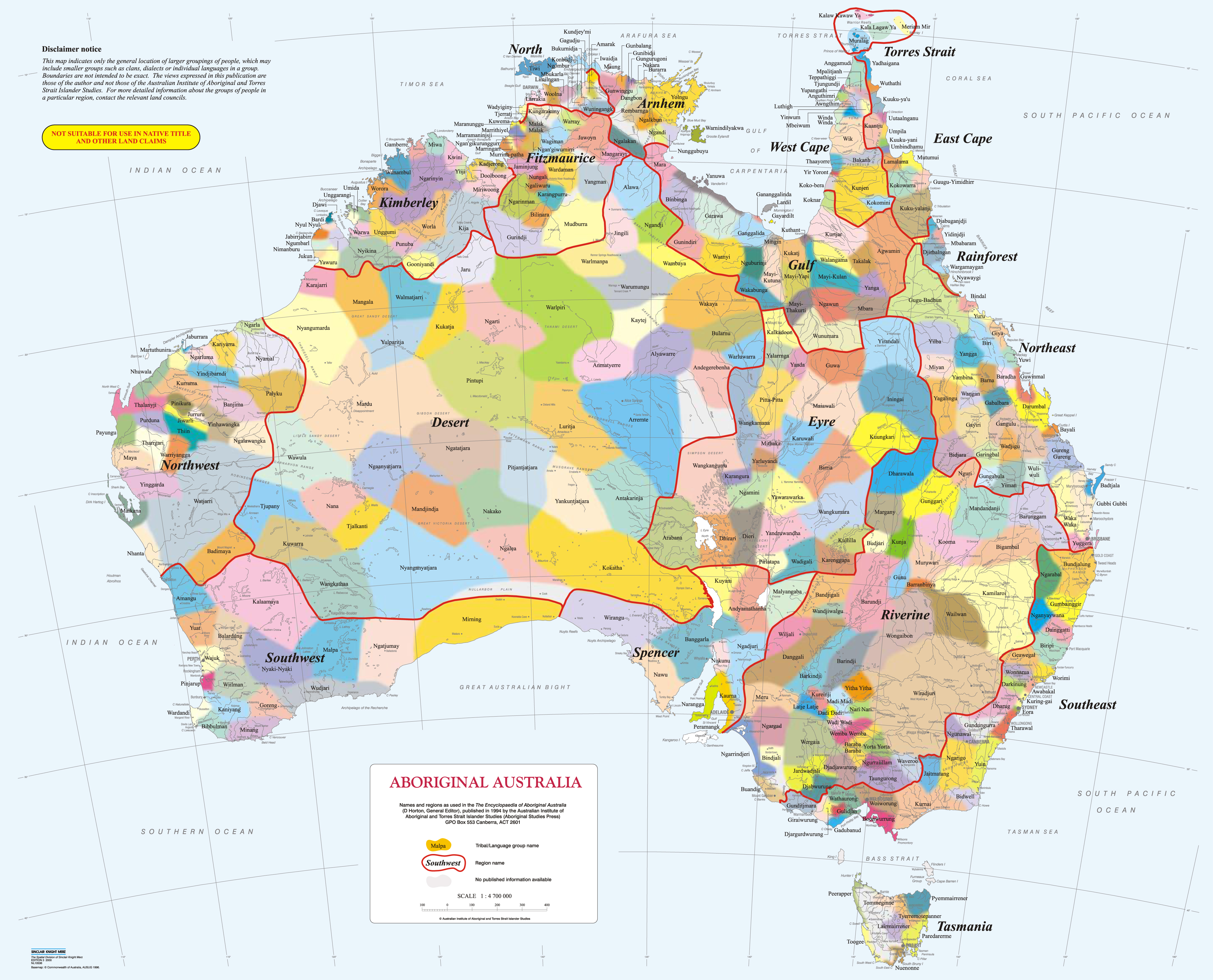
There was (and still remains in some parts of Australia) a wide range of traditional lifestyles, the Murray river (and south western australia, and elsewhere) had extensive multigenerational fish traps - now largely destroyed for paddleboat navigation back in the day.
I've heard Dark Emu has deficiencies, I can't say I've ever read it. There are other books that address pre colonial aboriginal living, pay attention to place and landscape and avoid generalising across a large landmass.
Maybe watch the video. Artists have to eat, and they relied on patronage and commissions. The church and the nobles were the only ones with the free cash and the motivation to fund artists and their creations for much of the Christian age in Europe, regardless of their looks.
But also: something changed in the 16th century: do you contend that the monarchs suddenly got uglier to the point that artists didn't want to paint them anymore?
> do you contend that the monarchs suddenly got uglier
If you focus on the Habsburgs then arguably yes, it did got very bad in that regard. They still managed to find willing painters (even if they possible had to pay them a bit more to soften some of the most visible flaws).
> do you contend that the monarchs suddenly got uglier
Yes, because for centuries they were having children with their relatives.
If you studied basic biology you would know that by doing that the gene pool become too small and many physical problems arise (and appearance is only one of them).
Incest, according to many sources, was the cause of collapse of the Egyptian empire. The latest pharaoh had all sort of problems (and mental problem was one of then too)
Other contributory factors include the rise of the mercantile middle class, and a push back against religions and royalty as they typically controlled the wealth and kept people in servitude in various ways.
Something not mentioned was this period was also the little ice age [1], when Maunder[2] and Dalton[3] first started observing the sun, noticing a decline in sunspots over the usual 11 year solar cycle[4], a year without summer[5] due to a volcanic explosion that threw so much ash into the atmosphere, it partially obscured the sun, causing crops and wild plants to die back around the world causing massive famines and death in some parts of the less developed world.
The extent of the artic ice reach was so great inuits could walk across the ice and then kayak across the north sea to Scotland[6]. Cod stocks require 7 DegC waters moved south in the North Sea making fishing harder and with todays higher sea temperatures, forcing fish north, which brings to mind was this a factor for Brexit?
The rise of the Mercantile middle class was due to the traders sailing off discovering the world, bringing back exotic crops, picking up new methods to grow crops and improve yields, they helped to stave off hunger and famine when royalty and religion were failing the general population by not providing any solution.
The Catholic church was losing power, as noted with the Avignon papacy when the Catholic church was based in Avignon in France not Vatican city like today[7],
The French Revolution, again the peasants were not being looked after due to the poor conditions and so starved and hungry, they revolted killing the French King.
Thats why there were lots of snow and ice depictions, just like frost fairs on the river Thames [8], arguably one of the first offshore tax havens to exist, mainly because the river when it froze provided an area in which to trade which was unregulated by the laws of the land.
A unique trading situation caused by ice.
And so this situation was exploited like a hack to make money.
So did the monarchs get uglier?
Keeping the wealth inside the wider family and peers of similar or same stature, has always caused genetical mutations and reduced genetic variation, inbreeding if you will, but there was much more to paint than just a few wealthy individuals helped along by the printing press.
Try quantifying the effect they had on society at undermining authority and the cohesion of society. Opinion polls didnt exist back then.
Harsh environmental conditions where its generally colder, like a mini ice age, is going to up root people, force migration, lower crop yields, more hunger, more violence, more lawlessness.
Its one of the reasons why the Stradivarius violins were sought after, the colder climate resulted in less tree growth, tighter tree rings and it altered the sound of musical instruments of the day[1]
There were also alot of extreme weather events during this little ice age.
IF you read this book https://www.google.com/search?q=little+ice+age+brian+fagan
in it, Fagan asserts there was an earthquake down in Avignon which people took to be a sign of god, which forced the catholic church to relocate with its tail between its legs. I dont know how true that is, there is nothing online I can find, perhaps an example of an entity managing its online reputation.
In that book, he also asserts an innuit paddled up one of the rivers of one of the city's in Scotland, he claims to have got this data from reading old newspapers of the time.
Just like he got information on crop yields from old monasteries, country estate owners and others who kept records, any record made back in that time. I got the impression it took him a long time to compile the data, to arrive at the narrative he espouses.
Its an interesting read, and you'll see how weather can destabilise any country very quickly, especially with todays level of communication and stuff going viral around the world, but also how these events build and build over time, changing culture. Even today the French dont take 'non' for an answer, when you see farmers blockading the ports and Eurotunnel, or rioting on the streets over the pension age.
If you dont know the history, you wont realise the significance of the events you watch unfolding on the news today.
So my point is, the artistry is a depiction of the time, its meta data, especially if you know some of the winter scene pictures were painted in June or Sept!
European history is such a rabbit hole, the more you read the more interesting things you find to learn more later.
> The Catholic church was losing power
I've been reading exactly about that... and it's mind blowing that the divide between Catholics and Protestants was what initiated the Eighty Years' War[1] (as mentioned in the video). That War was followed by an even bigger one later, the Thirty Years' War[2] (from 1618 to 1648), the biggest conflict in Europe up until that time (it was huge, parts of today Germany lost 50% of their population). That war started with the infamous Defenestration of Prague [3] in which the representatives of Ferdinand (a Habsburg) the new, fervently catholic King of Bohemia (which was a stronghold of Protestantism), were thrown out of the window of the Prague castle (that's how they used to show their strong discontent diplomatically back then)!
I was recently in Prague and made a point to visit that window :D. Quite amazing to think the places where such events took place are still there and anyone can visit it.
Anyway, after the 30 Years' War, the Habsburgs (which controlled a huge chunk of Europe, from Spain to Flanders, Bohemia to Hungary), lost a lot of power, with France and their ally, Sweden, becoming the dominant powers (can you imagine that the Swedes sieged Prague in 1648!??)... which in turn led to many wars later, including wars between Sweden, the Lithuanian Empire, and the Russian Empire which I find fascinating... all of them had big victories at some point, (e.g. Swedes kicked Russian's asses in 1700 in the Battle of Narva[4] -see also this amazing video by HistoryMarche [5] - but got completely destroyed by the Russians in Poltava [6], current-day Ukraine) but at the end of the wars in 1795 [7], Lithuania and its union buddy Poland basically ceased to exist as an independent entity (after hundreds of years of existence, extending from Kyiv to Villnius, Minsk and as far into Russia as Smolensk!), the Swedes losing almost all of their possessions in mainland Europe (like Estonia) and also Finland to the Russians, and France becoming the main power in Western Europe just in time for Napoleon to rise.
> which in turn led to many wars later, including wars between Sweden, the Lithuanian Empire, and the Russian Empire which I find fascinating
Yes more recently Nato's creep towards Russia and the Ukraine war.
Recent examples being the coup to seize the Bosphorus Bridge in 2016[1], a stealth attack to control the waterways to Russia's Black Sea Naval ports located in Crimea.
Fast forward to today and you can see why with the Ukraine War.
However wars should never been seen in a totally negative light, because they force rapid regeneration of infrastructure and cultural change. Ukraine was a very very poor country by European standards, still quite peasant like in the rural locations, so some would argue that wars today are more todo with bringing areas of the planet up to date, despite the rhetoric put out by the media.
I understand Monsanto have been trying to get into Ukraine since the early 00's because the soil there is particularly suited to GM crops, so that has benefits for increasing the food available on the global markets. Obviously there are disputes over what is the best way to achieve change and some countries are highly resistant to GM crops due to the chemical load on the land including wildlife and human health.
So if history doesn't repeat, it certainly rhymes.
> However wars should never been seen in a totally negative light
Ya of course! War is great, it pushed also industrial output and plenty of investments in researches. Plus it gets rid of the weak too! (This paragraph is sarcastic, I've to write it because many probably won't understand)
You should have a word or two with the families of those that lost their relatives in the plenty wars that lacerated this planet recently
or maybe finance yourself a trip to Iraq, Afghanistan or Syria to see how well established these countries are.
> some would argue that wars today are more todo with bringing areas of the planet up to date
Nobody argues that you're the only one. Also because it's clearly a false statement and a total misinterpretation of the war.
Have you ever had a look at other wars or you're taking Ukraine as example only because is the only one that you know about?
Iraq, Syria, Yemen, Afghanistan, Congo, Libya. They're just a small list of countries that have been victim of wars recently. None of them is an example of how to rebuild things (or bringing them "up to date", also because they don't benefit the plenty billions of dollars that the US is sending to Ukraine.
but if your theory is really correct, why don't you move to Afghanistan and enjoy the western style of living that was brought there thanks to 20 years of war?
Reading your comment made me feel like someone had been spying on me in my car. I go through this same thing in my Lexus every time I drive it as well. It is such a relief to know I am not the only one.
I think SK's numbers are becoming more reliable by the day though. The new case rate has stabilised to a small number in the range of 50 to 150 per day and the active case count is dropping at a rate of over 200 per day. The daily death rate has been below 10 the whole time I believe. If that trend continues then SK's CFR will be well known soon and I would guess not dissimilar to current estimates. Though it's always possible a false sense of security will set in and people will relax their habits and send it higher again.
Compare to Germany: weeks behind SK but already more than three times as many cases, new case rate in the last few days of 2500-4500 (SK's max: 851), daily deaths in the last few days 10-29 and heading north. Actually the death rate must reflect an amazing health care system given 30k cases, but it's early days for Germany. Their pipeline is very full, agreed I wouldn't want to make a prediction there.
OK, SK's new case rate is stabilizing, but they still have 5400 active cases. If even 1% of those active cases die (which is possible, since these longer-lasting cases are likely more severe), that's a total CFR of 2%. And this is for a country that everybody claims has been doing contact-tracing and testing asymptomatic people.
I find it interesting that SK is always brought up in these discussion about CFR and how now action is required. Actually SK is the prime example of a country acting quickly and early (also showing that general lockdown is not necessary in that case). They would have been even better off had it not been for patient 31.
Significant evidence that 50%+ of cases are asymptomatic or very mild and those people are not being tested at all. In the Uk even quite bad cases don't get a test
> Their pipeline is very full, agreed I wouldn't want to make a prediction there.
German here. I assume the recent hard lockdowns will work out pretty much for us... I'm more worried about the US, this is gonna be a mass die-off, and the Trump government's handling of the issue is... let's say abysmal.
German resident here. Why do you assume the recent hard lockdowns will work out? I have discovered in my time here that the German reputation for orderliness and rule following is exaggerated.
South Korea coped with the outbreak by having a test early, test often strategy, but the German strategy seems to be test eventually, test perfectly. That means that there isn't any process to flag essential workers and others as needing a good proper test. Korea's showed it's better to do a test with a high false positive and even a significant false negative many times a day and get the person out of circulation awaiting an accurate test, than to wait for them to find the symptoms concerning and ask for a proper test.
China coped with the outbreak by having actual curfews. Major lockdowns. The sort we couldn't reasonably expect. When I went to do my weekly/fortnightly shopping yesterday, I saw several police officers looking around into restaurants and on the local town square. Not hard to hide from. No-one cared what my business was.
Italy still hasn't really peaked. They did this test-free lock down strategy that Germany is doing. Apparently the amount of intercourse required for viral transmission is ridiculously low.
There's already tens of thousands of sick people here, and the government was very lethargic in their response. The peak will be huge. As I mentioned before, they gave up after Gangelt and seemed to act as if the whole thing would be minor. It took weeks after discovering a major problem existed that needed hard work before German authorities actually agreed to do hard work.
Learning lessons seems to be really hard for authorities at the moment, and I'm genuinely worried. It's like even ideas are subject to the European protectionism - better import a bad idea from Italy than an effective one from South Korea. My goal is to not get ill before there's space in the hospitals again, because any other goal seems unrealistic.
The Nullarbor is a vast, arid, unpopulated plain over 1000km wide. I think the comment was meant to suggest that infrastructure projects like this are challenging in Australia, because the distances involved make them expensive, but the low population density makes them much less profitable than in places like the US and Europe with high population densities.
Many tourists from other parts of the world come to Australia thinking they can "just drive" from Melbourne to Cairns or Perth to Adelaide, not realizing how much of an undertaking that is because they don't have a good sense of the distances involved.
I don't disagree with the general realpolitik you describe, but it's not clear that damaging Huawei isn't damaging the USA as well. American companies supply Huawei, and their business is being harmed; and American consumers buy Huawei equipment -- if Huawei is excluded from the US market then presumably that may have an inflationary impact on substitutes, so American consumers will be paying more for certain goods.
Wouldn't this also have been considered as part of the decision to ban Huawei? And yet the administration proceeded anyway.
Something that might be worth noting: two minutes of googling didn't turn up the author's age, but I recall seeing this photo on his website when I bought it some time after it was published in 2008: https://hcsw.org/contact.php
It's possible he was quite young when it was published. If that's the case, then I think the book is all the more a towering achievement. It's abrasive, and it smells a bit of 2000s forum fanboy discussions, but mature people should be able to read past the more opinionated parts and find the gems in the technical treatment.
On your first point: I seem to remember plenty of companies that failed that were not telecom. In fact when I went looking just now I found a bunch of listicles about retail startups that failed.
The telecom bubble and crash was almost a side-effect. The telco executives saw the web taking off and used it to justify wildly over-inflated projections of traffic demand growth, and then began building out debt-financed networks to meet it. When the traffic didn't materialize (partly because the dotcom bubble burst), they had a bunch of overcapacity not generating revenue to service the debt that financed it, and that killed them.
> In fact when I went looking just now I found a bunch of listicles about retail startups that failed.
Their contribution to losses in the dotcom bubble were measured in the millions. Telecom, last mile service providers and B2B losses were measured in the billions. [0] You obviously know those lists are infotainment.
> The telecom bubble and crash was almost a side-effect.
I'd characterize it as more of a feedback loop. They weren't simply increasing capacity with the expectation of a customer demand that didn't materialize, they were pushing through an evolutionary hump in search of a global minimum. The world would look very different today if they hadn't, at great cost, setup the network the way it is today - pushing way beyond the original design of NAPs (Network Access Points) to IXPs (Internet Exchange Points). I guess you could attribute the change to capacity, but I'd say it is more accurate to describe it as a recognition of inevitable scalability problems and as a result - a change in philosophy. That change, the official government handoff, occurred in '95. There was also an amazing amount of very interesting R&D work going on, from strange new operating systems to packet switching on fiber optics without copper interruption. Even Enron was getting in the game by trying to setup a commodity market for bandwidth. The entire situation reminds me of the evolutionary problem, where you've got massive metabolic costs in brain size growth.
So no, it wasn't an overestimation of traffic growth. Everybody was trying to figure out the way the new world would work, a lot of people got it wrong.
Also... 401k participation spiked in '95 - I don't think that is a coincidence.


Peter Sutton is an anthropologist and linguist (>50 years); Keryn Walshe is an archaeologist (>35 years). Peter Sutton in particular has spent large amounts of time living with indigenous people in the far north. Their book describes many deficiencies in Dark Emu, and also gives a huge amount of interesting information about how aboriginal people lived, and the way they curated the land and the food resources available to them.
https://www.amazon.com/Farmers-Hunter-gatherers-Dark-Emu-Deb...