Self-sufficiency is a myth. Even if you wanted to try and be energy independent, for the short and medium term (and maybe longer, who knows?) you will be dependent on China and all the baggage that they bring because of their dominance of rare earth mineral processing. Need a new solar panel? Don't make a certain country mad (whether that's your local Ayatollah or CCP official).
And that's just energy. What about pharmaceuticals? Financial markets? Who protects your shipping lanes? Who builds your semiconductors? Where do those factories get their energy from?
I support the diversity of energy sources because they all have strengths and weaknesses. We've got to figure out climate change. But we also can't have, even if you want to somehow "move off of oil" a single country run by lunatics who can decide whenever they don't get their way that they get to seize 20% of the global oil supply. We can't have China dominating rare earth processing either. For some others it may be a reliance on American military technology.
There is a huge difference between buying a solar panel once and having it generate energy for the next 30 years vs. buying a barrel of oil now and consuming it by next week.
It's the same difference as buying a house now and owning it until it collapses vs. renting a house and being at the mercy of your landlord, or buying a piece of shrink-wrapped software and using it for the next 18 years vs. renting a SaaS subscription that provides a different product next month.
Old hardware or emulation of old operating systems on new hardware.
Quite common on old industrial machinery and other capital equipment like lab equipment. San Francisco BART for example has to scrounge eBay for old motherboards that still allow DMA to parallel ports via southbridge because it’s too expensive to validate a new design for controllers.
I have a G5 with a bunch of old boxed software that runs as well as it did the day I bought it. And an Xbox 360 with the same. Not everything has to keep up with the times.
Not all software can be sufficiently insulated from external changes, but almost all software I care about can be. My normal update cadence is every 2-3 years, and that's only because of a quirk in my package manager making it annoying for shiny new tools to coexist with tools requiring old dependencies. The most important software I use hasn't changed in a decade (i.e., those updates were no-ops), save for me updating some configurations and user scripts once in awhile. I imagine that if I were older the 18yr effective-update-cycle would happen naturally as well.
My gut reaction is that the software you're describing relies heavily on external integrations. Is that correct?
He had upgrades, but I was running Kubuntu about 20 years ago, still have a bunch of Red Hat and Mandrake ISOs from the early 2000s, and can confirm they still work.
Beside, on the rate earth materials, it just happen that China is able to exploit it cheaply but other countries also have access to them and could very well exploit.
> other countries also have access to them and could very well exploit.
only in your wet day dreams.
let's just look at Gallium which is arguably one of the most critical for defence. to produce 100 tons of Gallium, which counts for 10% of the global supply each year, you have to have 200 million tons of Alumina capabilities. "other countries" won't be able to do it, as they don't have affordable electricity and skilled workers to make the Alumina business itself profitable. how they are going to use or sell those Alumina? to absorb loss of 2 million tons of Alumina for each 1 ton produced Gallium, "other countries" will have to lift their Gallium prices to stupid level.
that is assuming Chinese choose not to fight back on the Alumina front - they control 60% of Alumina production worldwide, they can just flood the global market with cheap Alumina to bankrupt your Gallium production.
remember - 2 million tons of Alumina for 1 ton of Gallium.
Well I am referring about rare materials for battery, energy storage, solar panel because the discussion was about that.
I don't know about defense needs, could be true, but I guess they are much less important in volume that the other. You may be able to store them in case of disruption.
>It's the same difference as buying a house now and owning it until it collapses vs. renting a house and being at the mercy of your landlord,
I always take issue with the expression "buying a house now" when you actually mean "pay a mortgage for a house now". With a mortgage, you are at the mercy of the bank and whatever contract you signed. With a rent tenancy, you are at the mercy of the landlord and whatever contract you signed. A landlord will wake up tomorrow and tell you to leave, you have some notice period. Your fixed period deal ends and you can only get a deal that triples your rate.
It's like when people say that self-employed people have no boss, your customer becomes your boss. And you always have one. Everyone that exchanges services/products for money has one.
For some people "buying a house now" actually does mean "buying a house now, with cash". My mom bought her last house with cash - she just rolled over the money from the sale of my childhood home, which they paid off in the 80s. I needed a mortgage for mine, but now that I have it I'm clinging to my 2.75% rate, it's less than I can make with basically every other investment. In Silicon Valley it's not uncommon for people to buy houses (even $4-6M ones) with cash because they're sitting on an 8-figure exit.
Even besides that, there is a dramatic difference between a typical (U.S.) mortgage that locks your payments for 30 years, and a month-to-month rental where your rent can go up next month. It's the same difference as buying a solar panel that fixes your costs for 30 years vs. paying whatever electricity rates the local utility charges this month.
(And there is also a dramatic difference between having 1 boss vs. 10 clients vs. 1000 customers vs. 3 billion users. The amount you can ignore any one of them goes up exponentially, and the risk that they will all stop paying you goes down correspondingly.)
"For some people", yes nowadays, it's for wealthy people only unless it's a house in the middle of nowhere.
In a tenancy, your rent can go up but most decent countries have legal restrictions in regards to how many increases you can do in a period of time and by how much you can increase it at any given time, and gives tenants legal tools to contest it if needed. And you still get the freedom to move to a different city without losing money. Here, most people don't do anywhere near 30 year mortgages so maybe that's more of a US thing.
In an ideal world, businesses would have customers that are all equally valuable. But in the real world, many businesses have a few customers that account for most of the revenue and the rest of the customers. Those few customers become your boss and they indirectly dictate significant parts of your business because an average customer not spending as much will be ok but a major customer not spending as much will get you sweating and looking at your cashflow.
Self sufficiency exists on a spectrum. On the idiot end is autarky, which only works to keep a small group in power at the cost of national weakness. On the other end is a lack of stockpiles and domestic production that essentially negates sovereighty.
A country running a solar grid with EVs can withstand more economic shocks for longer than one importing oil. And while mining metals is geographically limited, making solar panels and batteries and cars is not.
Recycle one of your old ones. You don't burn solar panels to make energy.*
I think people are still stuck in the fossil fuel mindset. I've started calling it gas brain.
* What happens if China stops selling you panels while you embark on electrification? Nothing. You already have enough electricity from your existing sources (presumably) so you just pause the PV rollout until they wise up. And other countries are starting to get into PV manufacturing. Exhibit A: https://solarmagazine.com/2025/08/india-solar-supply-chain-f... So you can always just buy from someone else.
It doesn't though, it's the illusion of removing of a dependency which is rather dangerous. You're not only swapping one dependency for another in this specific case, but you're ignoring the rest of the global economy and its own dependencies and how they affect you.
You're swapping a dependency which hits very quickly if disturbed, for one that would take a much longer time to manifest.
When Russia invades Ukraine or Iran cuts the straight of Ormuz energy prize go up instantly, chocking the entire world economy in the course of a few weeks. Even if China stops exporting rare earths, it would take years before it affects the energy market.
It's absolutely incomparable.
Cuba is a good example by the way: a country can survive for decades while being cut from most technology import due to sanctions, but if you cut its access to oil, it becomes dirty real quick. And because Cuba has been stuck in the middle of the 20th century, it's actually much less dependent on energy than most developed or even developing countries.
> You're swapping a dependency which hits very quickly if disturbed, for one that would take a much longer time to manifest.
That's not the entire point. You still rely on global supply chains. Those semiconductors in your MacBook Pro are made in Taiwan - many steps (perhaps most) in that supply chain to go from raw material to MacBook Pro, or EV, or fresh produce rely on oil. When Iran holds 20% of the world's oil supply hostage then prices go up for you too. Even if you are 100% renewables you are still dependent on oil for your economy.
Even the renewable power grid relies on fossil fuels for maintenance and service, many parts and components are built using materials made from oil (hello plastic), &c.
Right: My body will never be able to survive without taking in elements from the outside, but I'd rather have an interrupted supply of calcium than an interrupted supply of oxygen!
> A country that goes all in renewable is in a stronger position.
Depends on the country.
> UK power grid doesn't give a fuck about this war.
Power grid =/= economy. You're missing the point. Rising prices affect the United Kingdom economy even if it was fully run on renewables. The ships bringing products to the country don't run on renewables, the cars mostly don't, your fighter jets don't, your fertilizer doesn't. &c.
It's important to not be dogmatic and be practical about this stuff. Every country on the planet needs and utilizes oil and gas and that will remain true for the foreseeable future because of globalized supply chains.
> Sure China. But unless they send in an army to retreive previously sold panels, or block the sun they can only harm future increases to supply.
Which, in the case of a war with the US would be true because the UK will be involved and sided with the US and/or certainly assumed to be by China. (This is indisputable). So sure you build up those panels, but then you see a war and now you lose access to those materials and if it isn't solved in the near term you have to switch all of your energy back to fossil fuels. No new EVs during the war, for example.
It is a sliding scale though. Having more renewables in the mix seems better than fewer. But indeed no one is immune to global trade and higher global prices.
1. It’s closer to 50 years, and even a partially degraded panel will work, just with less output
2. Even if we say 20 years, that means that you only need to buy panels once every 20 years! Not continuously. A complete and total interruption of solar panel production lasting 4 years will only mildly interrupt current output. How long can we last with a total disruption to oil supply chains?
The long operating life of a solar panel compared to a barrel of oil is a selling point when it comes to self-sufficiency. With 20 years of warning, any country that pretends to be a globally-relevant power can get itself to the point of producing acceptable solar panels if its survival depends on it.
Eh, an operational dependency that immediately raises costs across your entire economy, across all geographies, all industries, within a couple days of disruption is very different from these more strategic dependencies.
The key would be to simply not ignore all the other dimensions of dependency.
Oil is disposable, solar panels are not. If you have solar, and then piss off the CCP to the point where they attempt to stop you from acquiring more of it, you don't lose the solar you already have. Those solar panels will continue generating energy for years, if not decades, afterwards.
It's also important to note that the US also produces oil[0]. There are some quirks of the market and refineries that make it difficult to consume our own oil, but we could potentially build more domestic processing. The real problem is that pesky global market that puts costs on the state's ambitions for power. To put it bluntly, American oil is expensive. We can survive an oil crisis iff we are willing to pay astronomical prices at the pump; but if we are doing this assuming we can just enjoy cheap gas while the world burns, we are going to get a rude awakening.
Think about it this way: buying your energy in the form of oil is like exclusively using streaming services for your entertainment needs. It's cheap, easy, convenient - until the plug gets pulled and it suddenly stops being those things. Buying solar is like buying physical media - you have to pay up front and it's more of a hassle to get started, but it can't be turned off on a whim.
[0] It also used to produce rare earths, too. The mines closed down because they were too expensive to operate - not because rare earths are actually rare.
It's really strange too. I thought these settlements and 3rd party app stores would lower prices, but prices continue to go up! And now as prices are going up, Epic is also laying off workers? Hmmm.
Plus if gas prices rise more people might switch to EVs, drive less often, and/or hopefully begin to understand the fragility of our car-only infrastructure and mandatory car ownership and demand better urban planning and transportation options.
Can't wait to get my new iPhone shipped here on an electric cargo ship, and it shouldn't be too much more expensive for my food transported by a fleet of electric semis and trains. Totally worth exploding billions of ordnance and killing a few thousand people!
> And I don't buy the "but China fuels money into their EV industry" either.
Well, you’re wrong. There’s not much else to say bout that.
> And why would I care if Chinese taxpayers subsidize my car? I really don't.
Because it prices the vehicles below points where others can compete. Then they go out of business, and then the remaining winner raises prices. If you are Germany, Japan, or the United States that means lots of bad things for jobs, and starting a new automaker to bring down high prices later is very difficult.
It’s like, who cares if Amazon or Walmart comes in to your country, subsidizes the prices, and then runs all the competition and small mom and pop stores out of town until you have nothing left but Amazon or Walmart. Right?
> Well, you’re wrong. There’s not much else to say bout that.
That's an opinion, not a fact.
> Because it prices the vehicles below points where others can compete.
This is way too expensive for something like that to last. The rush to the bottom is already killing so many chinese automakers locally. The idea that they can sustain such a money bleed globally is hard to believe.
It's either a correct fact or an incorrect fact. And if you don't know whether it's correct or incorrect, that doesn't mean nobody does, and it certainly doesn't mean it's an opinion.
An opinion would be "I think the way China is subsidizing its EV production is bad."
It’s not an opinion. You’re welcome to go read China’s own self-published strategic plans on this or a litany of news and policy journals discussing this.
> This is way too expensive for something like that to last.
How can you claim it’s too expensive if you’re claiming you don’t even buy that it’s happening??
> The rush to the bottom is already killing so many chinese automakers locally. The idea that they can sustain such an money bleed globally is plain asinine.
Look at German automakers in China for a view of the future.
As Chinese automakers compete and then consolidate they’ll raise prices of course but the level of competition and capacity build out will still have them underpricing other automakers due to economies of scale, cheap labor, and advanced manufacturing. They don’t need to sustain it really, globally they’re already poised to win which is why US, EU, Japan are going to have a lot of import controls, tariffs, and will utilize other tools to protect domestic industries.
There are plenty of countries that lack domestic automotive production that are very OK using Chinese EVs. Nepal for example, is all in in Chinese EVs now since it’s people couldn’t afford much gas or ICEs before, and with some hydro investments (also aided by China), they can now better afford to buy (cheap Chinese EVs) and drive cars (cheap hydro). There are a hundred nepals out there that the western and Japanese countries aren’t going after.
There's nothing wrong with Chinese EVs (or any EVs) going to Nepal or something. China is closer, it's a tough country to get to, makes sense that China (or India perhaps) would be their primary supplier.
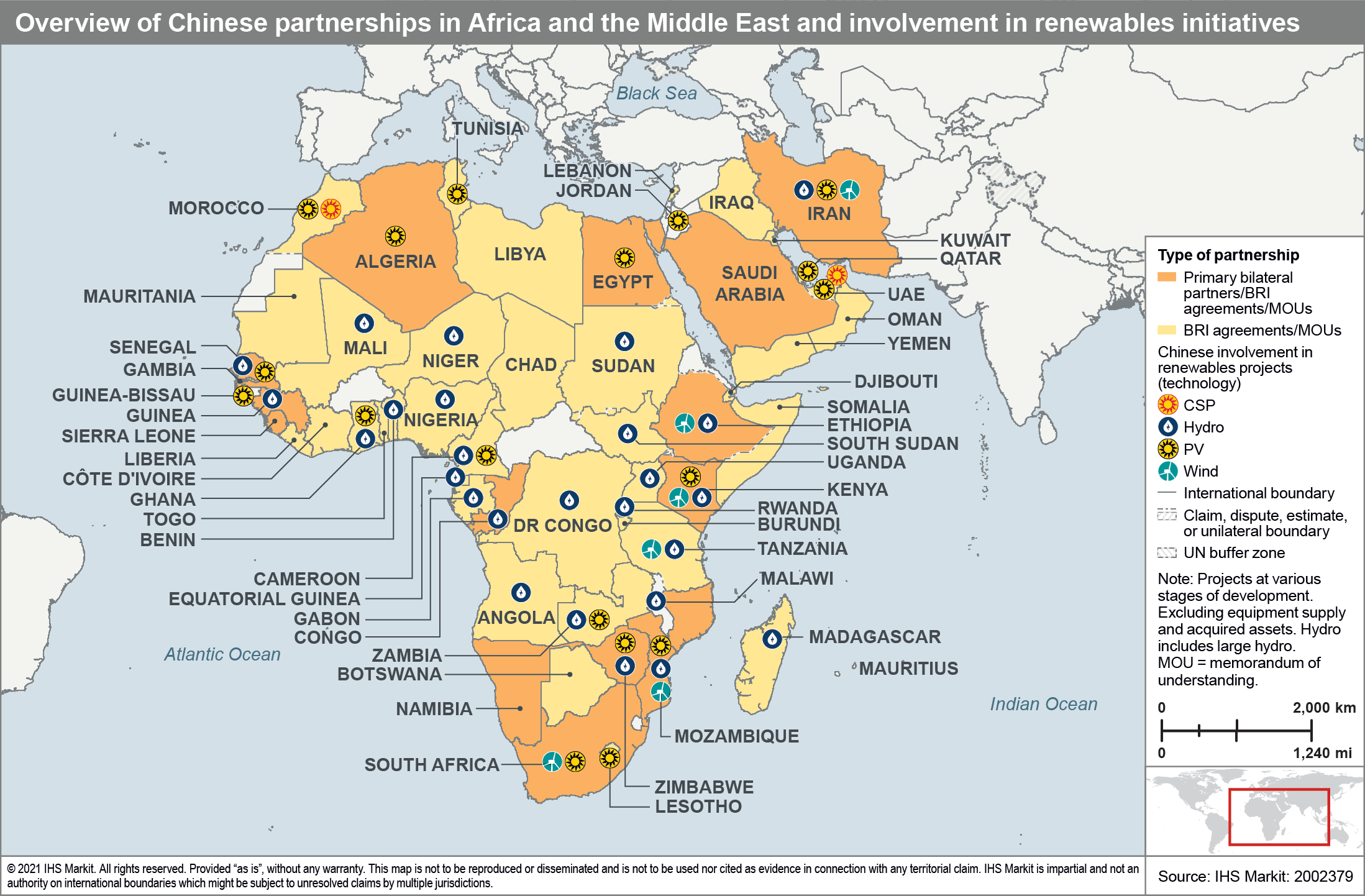
Logistics through Tibet wasn’t really a thing until recently, China had to invest there. But it’s not just Nepal, it’s most of Africa, southeast asia, as well as Australia/NZ. China is literally creating markets for its products that simply didn’t exist at all before.
Sure, though I'm not positive that's a good economic strategy outside of perhaps SE Asia. Market size in places like Africa, along with general instability presenting challenges has not made it a great place to invest, unless of course you have state backing and subsidies from, idk, China?
But let's say China develops these markets and they can afford more cars. That's great. That means after China develops them, Western countries can come in and sell their cars too at China's developmental expense. Seems like a win-win all around.
Western countries don’t have a product to sell without protectionism. Look at Australia, a first word country by any measure but without an auto industry to protect has wholly embraced Chinese EVs.
China is creating and making markets where they are allowed to create/make markets. The western auto manufacturers are turtling up via protectionism, and they are no longer aiming to compete on their products.
> China is creating and making markets where they are allowed to create/make markets.
What's the median income in Africa, and how much is the cost of a new Chinese EV that is supposed to be sold in Africa? I'm not sure, do you happen to know?
> The western auto manufacturers are turtling up via protectionism, and they are no longer aiming to compete on their products.
Chinese automakers were/are subsidized by the CCP (including "investment" deals via Belt and Road), it's a response to that. Even today China requires joint ventures for western automakers to operate in China (to my knowledge). China already turtled up via protectionism.
When you say western automakers aren't aiming to compete on their products what do you mean? The quality of the vehicles? Capabilities? Cost? All of the above?
> What's the median income in Africa, and how much is the cost of a new Chinese EV that is supposed to be sold in Africa? I'm not sure, do you happen to know?
Africans are poor but Chinese EVs are cheap. What’s more, they can earn more with better tools, like Chinese EVs and Chinese investments in green energy. If you’ve been to a bunch of poor countries you know how it works by now. Yes, $10k is a lot of money in those places, but it isn’t a horrible amount of money and is realistic for lots of non-rich people.
> Chinese automakers were/are subsidized by the CCP (including "investment" deals via Belt and Road), it's a response to that. Even today China requires joint ventures for western automakers to operate in China (to my knowledge). China already turtled up via protectionism.
Yes, thats definitely fair. But they didn’t turtle up, they innovated and developed new tech instead. The difference is that China used protectionism to catch up, the USA is using protectionism to…be lazy and dumb. Which one do you think will pay off?
> When you say western automakers aren't aiming to compete on their products what do you mean? The quality of the vehicles? Capabilities? Cost? All of the above?
Yes. Germany has the best bet of catching up, the American auto corps have been dying for a couple of decades now and are probably beyond help. Japan (not western, but usually included) made dumb bets on hydrogen that it still isn’t walking back.
> It’s not an opinion. You’re welcome to go read China’s own self-published strategic plans on this or a litany of news and policy journals discussing this.
I didn't say they don't prop their carmaking, battery or ev industries. I said that I don't buy the argument it's bad for us.
> They don’t need to sustain it really, globally they’re already poised to win which is why US, EU, Japan are going to have a lot of import controls, tariffs, and will utilize other tools to protect domestic industries.
Protectionism historically only helps industries in their earliest stages when you need to kickstart them, never when they are mature.
At the end of the day western consumers and workers are always left with the bill if they cannot compete. It's us who will end up paying twice the amount for cars that aren't competitive, and don't have incentives to compete because they are protected anyway.
You also need to understand I'm European. Not American.
German/Italian economies are strongly export dependent. Exports amount for 50% of german economy and 30%+ of Italian one.
Protecting internal markets achieves little to nothing, which is why Germany and Italy were among those less willing to tariff chinese cars.
US has a giant internal market and is not a good exporting economy, it's core exports are financial and IT services.
> I didn't say they don't prop their carmaking, battery or ev industries. I said that I don't buy the argument it's bad for us.
And I explained why it was bad for us.
> Protectionism historically only helps industries in their earliest stages when you need to kickstart them, never when they are mature.
Never is a strong word. You're assuming that the Chinese EV industry isn't still in the kickstarting stages. The goal is to, via subsidies and capability to deindustrialize other parts of the world. Through that lens you can see their actions quite clearly.
As a European you should be particularly worried if you value labor. When you say things like German and Italian economies are export dependent it begs the question: what happens when those exports to their #1/#2 export market (China) collapse, and then China - because as you said of course Germany and Italy aren't willing to tariff Chinese cars - comes in to the EU and then outcompetes German and Italian automakers too?
What does that leave you with? It leaves you with:
  China - dominating EV sales and a massive player in the auto market.

  America - protected domestic industry that's not reliant on exports, little to no competition from China

  Japan - serving US/EU global markets and protecting domestic industries

  Europe - Collapse of industrial capacity to make vehicles, maybe with tariffs or import controls will have workers at Chinese factories making cars (with profits and capital of course heading back to the home market). Follows the British model a bit with focus on luxury automobiles (Ferrari, Aston Martin, things like that)
I hear your point about subsidies in American and European markets and how regular people are "left with the bill", but that's mostly because regulators and those working in government are incompetent, by and large, not because there aren't actions one can take. China serves as a clear counter example. And then you could also look at other countries and steps they've taken to shore up their domestic industries or otherwise.
> Exports amount for 50% of german economy and 30%+ of Italian one.
And in China its barely 20%. But most of German and Italian exports go to other EU countries so its not exactly a fair comparison. Not quite the same but not that different to trade between different US states.
The ev and chip market may indeed be insurmountable to their subsidy model, but it has worked on so many other sectors that now only exist in China. They do have troubles discontinuing subsidies to sectors that capture government. But mostly the subsidize to bootstrap has worked wonderfully for them. Tariffs are one counter. But subsidizing your own existing sector to counter it is necessary as well and tariffs have the down side of making your industries uncompetitive globally. Argentina demonstrated this for us. An evenhanded subsidybthat doesn't pick winners is also necessary. China broke capitalism the same way VC does. Come in with a big enough bank roll and it doesn't matter if you are better if you can keep spending until the competition folds. The open question is if China's demographic issues will outpace productivity gains.
I’m not sure it’s the infrastructure so much as the cost for these vehicles. Well, Tesla has political problems but Rivian and Lucid don’t - but they are priced quite high.
It's kind of a yes both. A base Model 3 is in the same price range as decent hybrids that will be more convenient for many owners given current highway adjacent charging infrastructure.
Of course there are also new vehicles that cost quite a bit less than a base Model 3, but they invite a discussion of not being all that comparable.
Sure if $37k is a lot for a car I’ll agree with you. Then I think Tesla is now just joining Rivian and Lucid by being too expensive. The infrastructure would be besides the point then because you don’t care about that if you can’t even afford the car.
37k with 20% down payment means you borrow $29k at say, a 4.79% interest rate for 60 months so... $556/month. I know we're on HN with high salaried tech workers but c'mon, that's a lot of money and doesn't even include insurance.
That and their base model 3 is RWD which makes it a non-starter for anyone who drives in snow/ice. The AWD model starts at $47k.
A Honda CRV Hybrid for example starts at $35k (Accord Hybrid is 34k) and that's a pretty common vehicle here in Ohio. We could debate the capabilities and such and what you get for your money, but I'm just not in an agreement that $37k is a lot of money for a car.
I've owned a base model 3 RWD and live in Ohio where we regularly get all of the weather, sometimes the same day even. I would rather drive that than an AWD Honda or Toyota or similar. The weight and center of gravity, especially with the right tires, makes it a very nice vehicle to drive in adverse conditions. Those "average" market SUVs aren't very good in snow/ice either. At least in my experience.
Well, speaking as someone who is moderately price sensitive, I'm probably going to shop for a used car.
I'm not sure people are reading my comments above as making 2 comparisons. I used "decent hybrids" as a group of cars that are roughly comparable to the Model 3, but more convenient in areas where chargers are sparse (in northern Michigan and the Upper Peninsula, you pretty much have to plan your route to the available chargers).
And then I noted that there are cars that are available for quite a lot less, so anyone that is price sensitive probably isn't going to be shopping for a new electric vehicle that costs nearly $40k.
Yea I think we got side-tracked here in discussing what is affordable. But my point was that the big 3 EV makers in the United States: Tesla, Lucid, Rivian are either politically uncompetitive (Tesla) or financially uncompetitive (all three if you are also arguing Tesla is too expensive) and because of that the charging infrastructure isn't relevant if you are already thinking the car itself costs too much.
As an aside I've been to the UP and it's lovely up there. At the time (2020) there weren't really any charging stations except Maciniac City where there was a Tesla Supercharger and Marquette where, my wife and I found ourselves for about 12 hours charging our car in a parking garage. But Tesla has built a few new Superchargers in the area and they are to varying degrees open to other EV manufacturers.
The US wouldn’t even need to “attack” Greenland. What is there to even attack? 50 Danish soldiers? They could just say “that’s ours”, ignore whatever Europe says, and start doing whatever they wanted to do and instead force the EU to attack American forces or civilian business interests.
I’m not suggesting this is a good idea or anything but there’s a ton of other ways that something like this could play out which involves more difficult ways to counter than you might think.
> Instead of making America great again the US has ceded power to China.
Before this, we (large multinational infra company) were happily using AWS, microsoft and a bunch of other US based companies.
Now we are beginning the migration away, not because its cheaper or better, but because we just don't think that we can trust the contracts we have with them any more.
This isn't a sudden thing, we are not going to do it over night. But we are not renewing multi-million dollar contracts in the coming years for stuff that would have been a no brainer last year.
Actually, in a number of cases EU cloud is cheaper and better.
In terms of "better", spec wise it is not uncommon to get more bang for your buck in the EU cloud, especially around compute.
In terms of "cheaper", that too. AWS, Azure etc. will happily sit there all day nickle and diming you through obscure pricing structures with all sorts of small-print. Good luck, for example, figuring out if you're going to go over your "provisioned IOPS-month" on AWS EBS, whatever the hell that is. And have fun with all the nickle-and-diming on AWS S3. Meanwhile on EU providers a lot of stuff is free that the US providers nickle and dime you for, and the stuff that is charged is done in a manner where you actually CAN forecast your spend.
And then of course there is the real EU sovereignty. Not the fake US-cloud-in-Europe which despite what the US providers salesdroids try to tell you is still subject to CLOUD, PATRIOT and everything else.
It’s interesting how these conversations always start and end with “my company isn’t buying XYZ American cloud provider services” while ignoring other incredibly important products and services that you can’t or are unwilling to boycott. Are you turning in your MacBook Pro and iPhone, or are you putting a bumper sticker on it saying you bought it before you knew America was crazy?
Similarly, while it's great to take a principled stand here (it's yet again interesting how it's always a principled stand against American companies but never others), while you are busy spending time and money migrating away from AWS to a competing product that has worse features and is more expensive as you said, you should hope your competitors are too because if not, they're going to be delivering features faster and more cheaply. Something worth thinking about there.
I don't think Microsoft losing some European contracts is an example of the US ceding power.
> while ignoring other incredibly important products and services that you can’t or are unwilling to boycott.
Its about operational risk.
right now AWS is a key dependency, if that get turns off, we're fucked. we have mixed estate of end user devices, so its hard to turn them all off at once.
If AWS gets "turned off" (the implication being the US is doing some big mean thing against all of Europe) for European countries then something absolutely catastrophic has happened and you're going to be hoping you have heat, electricity, food, and water.
If AWS gets "turned off" your MacBook Pro isn't going to work anymore because obviously the US will just whoops turn that off too! Your Google OS on your Android phone won't work anymore, and if you turn it on bam drone strike! Gotcha! Meta will shut down your WhatsApp, and you'll have to import all of your oil from Russia or something.
I don't think there's anything wrong with European countries or the EU as a whole looking to build more homegrown products and restore their manufacturing capacity - that's what we're looking to do in the US too in various ways and I encourage it. But I do think there's a problem with this fantasy, and indeed it is a fantasy of somehow decoupling from American tech companies or being isolationist or whatever and it's not good for you. We have global supply chains and in those supply chains you're going to have American products whether you like it or not. You can work on building better businesses in the EU and you should, but lay off the grandstanding, otherwise you just sound like the freedom fries enthusiasts.
Nobody would have agreed more with you than me, two years ago. But with Trump, the only thing that is completely clear is that nothing can be safely assumed about the US any longer. The explosion of corruption and corrosion of the legal system screams "liability". Hopefully his power will soon diminish but the damage that has been done, especially to trust, is going to last a lot longer.
Right now if I want to process data in compliance with GDPR, I need to make sure there are sample clauses that provide equivalence in data protection standards.
Those clauses only hold if the US and EU agree that they won't fuck with them.
Personally I have a Lenovo laptop (China) running Ubuntu (UK), on an LG monitor (Korea) with a logitech (Switzerland) mouse on an Ikea (Denmark) desk connected to a Mikrotik (Latvia) router.
I was just going off what you wrote. I buy locally handmade furniture and haven't bought anything from Ikea since college. Anyway, Sweden doesn't build all of this stuff either.
> ARM comes from a long line of UK products?
Again, global supply chains when it's convenient for your argument.
Both my iPhone and MacBook were bought from Apple Switzerland AG and shipped directly from china to me. The money will stay in Europe unless Trump does another tax holiday where American companies can send money back to the USA without paying taxes on it - otherwise it's a pretty hefty tax bill.
First and foremost, Apple is still an American company and even if it isn't repatriating some amount of income because it doesn't want to pay taxes on it American shareholders still get the benefit of the reported cash position. Apple still owns the assets.
Second, the products are manufactured/assembled in a variety of countries including China, Taiwan, and more - US obviously designs the products and all that. But in each step of the way Apple is paying suppliers, suppliers pay other suppliers and so forth and when you finally go to Apple Switzerland AG and buy your MacBook Pro you're just paying the sum total costs of the profit for Apple, each individual supplier, and manufacturer. All that money has left Europe, Apple Switzerland is just charging you the diff on the imported product and what profit margin they want to make. Maybe it's $250 or something, of the supply chain that is pretty much all that stays in Europe, of course subtracting out where European companies are suppliers.
This kind of stuff masked you feel good to say but the UK isn’t going to stop the US if it (somewhat foolishly in my opinion) decided that it was going to take Greenland. Neither is the EU.
No it would be a point of no return. But the "non-kinetic" consequences would go both ways.
It's not an exercise we should entertain, though the EU needs to step up in a very serious way and spend billions of Euros adding new equipment to Greenland to beef up detection and defense.
How will the EU get this arctic warfare equipment to Greenland? If the EU is so ready and willing to use this equipment, maybe they should deploy it to Ukraine instead.
The US literally has bases in Alaska and Greenland and deals with these temperatures regularly.
Sure if the US decides it would like to leave Greenland? It's just depending on who wants what with what influence factors. But if both blocks just decided to put all of their might and resources and politics capital into this the US clearly can just take Greenland and there's nothing the EU can do about it.
You live in a multi-polar world, there are three major power blocks and Europe isn't one of them, though that may change now (we're sick of war, but we're also sick of the threat of war, which one of the two will win out is up for grabs). There is - or rather, was, by now - Russia, China and the USA. Russia is unacceptable for many reasons, China is too clever for its own good in the longer term and the United States was historically our ally.
The United States has thrown away 80 years or so of very carefully and very expensively built up soft power because someone didn't understand the concept (apparently just like you). That doesn't translate into ownership and it doesn't in any way give you control but it ensures that things will, at least most of the times, go your way because of momentum and because it makes sense by default. Just like you may disagree on some stuff with your friends but you're not going to rob their homes, just because you can (and maybe just because they gave you the key to the back door).
You throw that away at your peril and because Russia is in no way capable of capitalizing on that the Chinese are. I wouldn't be surprised at all if in a decade or two the US$ is no longer the reserve currency. It could happen a lot faster than that. The US economy is teetering on the edge of the abyss and if you think that your ability to project power isn't diminished then maybe by the end of the Iran war you'll get it.
The US maximized its post-war power on the 10th of September 2001. Since then it has gone down hill very steadily and the fall rapidly accelerated with Trump. I see no reason to believe this will change, all institutions that were supposed to provide checks and balances have failed. And all China has to do is to look sane in comparison, that's not super hard.
the idea that Russia is a world power but Europe isn't is fairly silly. Europe had 3x the population, 10x the gdp. Russia has a bigger nuclear arsenal, and 5 years ago had more conventional stockpiles, but for all the ammo they had, they weren't able to topple the government of a single post Soviet country with a fairly unpopular leader. Russia is a fairly strong regional power but they're no where near the power that the Soviet Union used to have
> You live in a multi-polar world, there are three major power blocks and Europe isn't one of them, though that may change now (we're sick of war, but we're also sick of the threat of war, which one of the two will win out is up for grabs). There is - or rather, was, by now - Russia, China and the USA. Russia is unacceptable for many reasons, China is too clever for its own good in the longer term and the United States was historically our ally.
We live in a multi-polar world. Sure. But I disagree with your assertion that there are three major power blocks. The US and China are the only two. Europe has a decent sized and advanced economy but it lacks military power and is politically fragmented and always will be. China is building military power but lacks the ability and will to project that power. Manufacturing and economic powerhouse rivaling the United States. No doubt about that.
Russia isn't a pole in this world. As President Obama said back in the 2010s I believe "Russia is a nuclear armed gas station". That was true then, and it's still true today.
> The United States has thrown away 80 years or so of very carefully and very expensively built up soft power because someone didn't understand the concept (apparently just like you).
Well, I don't think this is true for one. And secondly if it takes just a year or so to throw away that power then it was just a matter of time until the EU got mad at the US for doing something and threw it away anyways.
> You throw that away at your peril and because Russia is in no way capable of capitalizing on that the Chinese are.
What soft power is the Chinese capitalizing on? Is it their support for Russia and supplying money, weapons, and equipment for their war in Ukraine? Or is it the soft power they had in Venezuela, Cuba, and Iran that they have just lost because of US military action?
> I wouldn't be surprised at all if in a decade or two the US$ is no longer the reserve currency. It could happen a lot faster than that. The US economy is teetering on the edge of the abyss and if you think that your ability to project power isn't diminished then maybe by the end of the Iran war you'll get it.
The US ability to project power isn't being diminished by the Iran war, only being exercised. Talking heads for some reason think that when you launch an aerial assault against a country that is amassing ballistic missiles, drones (which they build and sell to Russia to go bomb innocent Ukrainians), and more that it should be over within 24 hours and that the enemy shouldn't be able to fight back. It's unrealistic.
Nevermind Iran launching these missiles at civilian targets in countries throughout the Middle East. I get the argument that if you hose a US military base that the base is a target, but there's no excuse for attacking civilian apartment complexes and such.
It also misses the fact that, we've seen this movie before with North Korea. Except if Iran gets a nuclear weapon they also have control over your oil supply and it would kick off a nuclear arms race in the region because Saudi Arabia and others certainly aren't going to let Iran be the only one with nuclear weapons.
These are tough problems to deal with, and from the sidelines it's easy to think about how simple the solution is or point out all the mistakes, but the alternative headline here is the US does nothing, all of these Middle Eastern countries get nuclear bombs, Iran loads up on ballistic missiles, and then who knows exactly what will happen? Do they nuke Israel and Israel nukes them back? Do they extract a toll on oil passing through the Straight of Hormuz like they are as of today declaring they will do?
> For example, one-third of the top 100 mobile games in Japan currently come from China.[20]
China is indeed taking the mobile game world by storm. Go to Akihabara and you will see these huge billboards of Chinese games like Genshin Impact or Honkai Star Rail. China is starting to outplay Japan at their own otaku game.
> Economic power (US will no longer be the world reserve currency).
As a reminder, reserve currencies are just currencies that are held in large amounts by national banks and other important institutions. The USD, like the Euro, Yen, Pound, and others are all reserve currencies.
The USD is the dominant currency, in part because the US is in the Middle East right now doing exactly what it is doing by using the military to enforce trade for oil in USD. But if the US loses that "status" it just.... reverts to being more like the EU? Doesn't seem so bad to me.
There's also pros/cons with being "the reserve currency".
> The power of allies (see Trump begging for help in Hormuz).
See Europe begging for help in Ukraine. I don't think this is a good argument. If 4 years of Trump being mean was all it took to erase all soft power the US ever had, then it never had it in the first place and it wasn't worth caring about.
>If 4 years of Trump being mean was all it took to erase all soft power the US ever had, then it never had it in the first place and it wasn't worth caring about
That's a weird statement. Like all it was were some empty words. The current system, which you don't think is worth caring about, has been exceptionally good for the US. The US is the wealthiest nation in the world. Do you think this is simply because Americans are superior human beings?
Also,
>See Europe begging for help in Ukraine
..what, exactly, are you trying to say here? Other than yes, the US does in fact seem to be siding with Putin in spite of a few attempts at acting neutral.
> The current system, which you don't think is worth caring about, has been exceptionally good for the US.
I'm not against the current system, generally speaking. Critical of it, at times, absolutely. But not against it. Apologies if I gave you the wrong impression there.
> The US is the wealthiest nation in the world. Do you think this is simply because Americans are superior human beings?
I think our culture and policies were superior, and then toss in a gigantic country with access to both oceans, incredible natural resources, and well protected and you have a recipe for an economic and military super power. So it's a combination of things really. I wouldn't be quick to dismiss the cultural attributes though.
> ..what, exactly, are you trying to say here?
Idk, people are making fun of the US "begging for help" against Iran. I'm going to make fun of the EU begging for US help against Ukraine.
> Other than yes, the US does in fact seem to be siding with Putin in spite of a few attempts at acting neutral.
US isn't siding with Putin. China and Iran are though. Or have you forgotten that Iran [1] is building and selling drones to Russia who is using those drones to bomb innocent civilians in Ukraine? Or have you also forgotten that China is supplying Russia with equipment and weaponry, often times under cover to evade sanctions? But sure, saulapremium, it's the US who is siding with Putin and we certainly didn't give Ukraine tens of billions of dollars in support, we certainly didn't rush missiles to Ukraine to help them fight against Russia, nor did we sanction Russia to hell, stop Venezuela from skirting those sanctions, and we can't possibly still providing intelligence and targeting support to Ukraine.
This is what I'm talking about. If all it takes are a few mean words from our idiot president and now all of a sudden it's the US who is siding with Russia, then what are we even doing here? Why should Americans even bother caring about our allies?
You need a recalibration in your understanding of who is doing what here and who the bad guys are.
[1] Iran is also funding militias in the Middle East to try and start wars, today is hanging people for peacefully protesting, killed an estimated 30,000 of its own citizens this year over protests, and when the US attacked its military instead of just targeting military bases, or even the oil infrastructure, Iran is lobbying missiles at apartment complexes, threatening to kill people at amusement parks worldwide, and more.
>and now all of a sudden it's the US who is siding with Russia
No, it's not the mean words that indicate this, it's more the open and obvious siding with Russia that does that. And before you go and collect a list of things that Trump has done which have hurt Putin, let me respond to that right away: The fact that he is a bull in a china shop who hurts everyone, whether they're on his side or not, doesn't change the fact that it's clear to anyone and everyone who's side he is on.
>people are making fun of the US
..nobody made fun. Eupolemos was showing you that you are losing soft power, the thing that you don't see any value in.
“Losing soft power” in this context is “US does something we disagree with”. It’s like my sitting here saying the EU is losing soft power by not taking on Iran and stopping their government from all the bad things they are doing.
> No, it's not the mean words that indicate this, it's more the open and obvious siding with Russia that does that. And before you go and collect a list of things that Trump has done which have hurt Putin, let me respond to that right away: The fact that he is a bull in a china shop who hurts everyone, whether they're on his side or not, doesn't change the fact that it's clear to anyone and everyone who's side he is on.
Trump is a bull in a China shop and still helping Ukraine. But the US is the bad guy and losing soft power while Iran and China help Russia prosecute its unjust war against Ukraine.
Let’s talk about the soft power China is losing by supporting Russia, or Iran for that matter.
You know there was a famous and accurate saying by Winston Churchill that America will always do the right thing after it has exhausted all other options. I think that’s more true of the EU today than it is of the United States.
For the record, I love the US. I grew up watching almost nothing but US movies and TV. I've lived in SF and New York.
We fully agree that the dictatorships are bad, of course they are. And the US is not that, yet. But it sure appears to be flirting with the idea.
The point I am making is not that the US is bad or good, but that it's are losing soft power, and no, that doesn't just mean "doing something we disagree with".
There is an election in my country right now. Key items that parties now profile themselves on are:
* decoupling from US defence tech
* decoupling the public sector from Microsoft and AWS
* decoupling from Visa and Mastercard
Now, even if all of this happens (and it obviously won't just happen as all of those are hard and expensive), my tiny country won't move the needle in any way. But these talking points were completely unimaginable two years ago.
And I see another trend: my peers in the local startup scene are now reconsidering YC and Delaware encorporation as the default for startup creation. Importantly, this is not because of left wing ideology. Most of them, like myself and I think yourself, are somewhat right-leaning in the traditional sense, not MAGA. We all agree that the EU is over regulated and almost detrimental to entrepreneurship. But at this point, betting on the US looks like a liability.
If these trends are similar elsewhere, and I strongly suspect that they are, the long term loss for the US will be significant. It's the kind of effect that we wont see before years have passed and by then, other things will be on the radar, so I doubt that there will ever be a reckoning of this fact. But I don't doubt that it will happen.
It wasn’t even about Greenland, but a distraction from the extent of Trump’s knowledge of Epstein.
Anyway, there’s actually an index for soft power. Eliminating USAID halved that index. China built the highways, hospitals and water treatment instead.
In the American context, hopefully it never comes to an actual revolution, because life for everyone will be much, much worse with little prospect of anything being better afterward. We should do what we can to avoid one, especially because while it's fun to fantasize about your side being the one to start a revolution, there's no reason to think that the other side won't also think the same way and maybe they'll beat your side and make your life really, really awful.
Secondarily, there's a lot to say about anti-tank and anti-air power in the context of a "revolution". Most of it is pure fantasy including the idea that 3D printed missiles are going to start striking US strike aircraft at 40k feet in the equally absurd fantasy that those aircraft are going to just be bombing American cities and towns and countrysides. It's really just pure Internet-driven fantasy to think that these scenarios are plausible or the least bit desirable in any fashion.
If its a revolution you probably aren't hitting them 40k in the air, your hitting them when they park similar to how Ukraine sent drones after bombers behind enemy lines. I really hope we can avoid any kind of conflict, with the way American's think I could see one or both sides resorting to biological/chemical weapons faster than they start making missiles. There is also no reason to assume what starts out as your side will remain such, revolutions are crazy risky.
> If its a revolution you probably aren't hitting them 40k in the air, your hitting them when they park similar to how Ukraine sent drones after bombers behind enemy lines.
Right, and you don't need to conjure up anti-tank missiles (sure those could be nice to have) to do this. You could seize a bulldozer and drive it into the airframes, or just shoot them to bits. At this point if you have access to American jets on the ground to destroy them, you've already lost the manufacturing capacity to repair them.
> There is also no reason to assume what starts out as your side will remain such, revolutions are crazy risky.
Absolutely. Robespierre learned that lesson. Putin is learning that lesson from the perspective of starting a war but not being able to predict the outcome. The status quo is pretty great and we should be very careful and guarded about changing that, especially through violent means. Most things that are problems today can be resolved through legislation and the existing democratic mechanisms. Throwing that out (not suggesting you are suggesting that) would be almost certainly profoundly unwise. It's very much like the Monty Hall Problem.
> hopefully it never comes to an actual revolution, because life for everyone will be much, much worse with little prospect of anything being better afterward.
In the situations a revolution comes to exist, it is because life for everyone is already getting much, much worse with little prospect of anything being better. Nobody starts a revolution for funsies, so you're supposing a false dichotomy where the choice is between "plunge into hell for no reason" or "continue living a great life", when in fact the latter is not an option at all.
> In the situations a revolution comes to exist, it is because life for everyone is already getting much, much worse with little prospect of anything being better.
Some folks want to hasten "a revolution" because (a) they think it's going to happen 'eventually' anyway so might as well get it over with, and (b) they think they can come out 'on top' and set up the new system the way they want it (because the current Enlightenment-based system(s) suck in their opinion):
I think modern day Americans do not understand how bad war is because they’ve been engaged in it for nearly 30 years continuously without directly feeling the consequences.
Loads, the various attempts to overthrow the Weimar Republic for one, but many smaller, like the Impresa di Fiume.
Maybe not “for fun” but largely for justifications that pale in comparison to the suffering they unleashed.
Americans ready to go to war because eggs and gas are too expensive, or their trans teen’s top surgery was delayed, might be making similar mistakes. But Americans are good at making mistakes, perhaps supernaturally gifted.
This is in poor taste given there is a bill right now being debated that bans the exact surgery you’re mocking. It also bans trans Americans from participating in gendered sports. You should find a better example.
At this point the laws in several states go far beyond those topics. The people pushing them just figured on had to start with something that would let them mock any opposition as extremist "gender ideology" and the like.
And sadly federal > state law so that means the reasonable states not enacting these awful policies would have to get in line with nationwide, legal discrimination.
Exactly. Revolutions are awful things that are only defensible if the conditions are brutal enough. And even then, there has to be the caution that the revolution can be co-opted by infinitely worse people than those that were overthrown (take the Russian revolution, for example)
Also, actual revolutions require a significant chunk of "excluded elite". People who have nothing can generally manage a riot, maybe burn down some buildings until the police open fire, but nothing more coordinated. Revolutions require more money and organization. I'm reminded of how the convicted Jan 6th rioters were a lot more middle-class than you might expect.
No American revolution would succeed without a significant chunk of US military support. Either from above ("autogolpe"), or entire units defecting en masse.
The Russian revolution is not a good example if you are talking about the October revolution. It cannot be stated objectively that it turned out to be worse, and, in fact, for many replacing the czars with the Bolsheviks led to a lot better living conditions.
Holodomor was the result of several unfortunate events including the Ukranian kulaks burning their produce to protest collectivisation, a natural famine and misjudgement of the State.
If the responsibility of Holodomor lies solely with the USSR, the nexus between the NATO and occupied Palestine are responsible for at least a billion deaths, going by your intellectual honesty standards. I have factored in death due to military interventionism, gun laws, and capitalism related deaths (death from being uninsured, hunger, poverty).
In the American context, life is pretty great. Been all over the world. It could get better here but it's still by and large pretty great.
My point wasn't to suggest the options were "hell for no reason" or "continue to live a great life" so to speak, but that the probability of "life gets better" as an outcome is one of the least likely. The most likely outcomes, certainly in a single lifetime, are death, destruction, food shortages, roving gangs of gunmen, religious theocracies, dictatorships, and more.
The US for example is in no position or need of a "revolution". Reform, sure. Most revolutionaries are just in it for their own power grab, at your expense.
They do when they're convinced it's a walk in the park.
See the Spanish civil war, which was a two week coup by military worried about conspiracy theories turned into a years long war turned into a 40 year dictatorship (with decades of hunger).
This is obviously true now in places that aren't currently revolting, which is why they aren't revolting. But it can definitely get bad enough that it's worth gambling on the chance of a better life (as well as the chance of a worse life) vs. a guaranteed chance of a horrible life, or imminent death.
I mean... we're 4 years into a little Russian jaunt that was supposed to be over in a matter of weeks. And a certain someone just picked a war with Iran pretty much for funsies
I don't want to underestimate the level of arrogance/stupidity that might be involved in sparking a revolution at this point
It is easy to see that South Korea is much better off now as a democracy than under the generals. It is easy to see the Philippines are better off than under Marcos. What countries move away from democracy to become better?
I wouldn't call either of those a revolution; they're both top-down directed foreign offensives. A revolution is generally domestic and sparked by widespread popular internal unrest, even if it's sometimes led by elites.
Yes, my point is more that entering into a war for funsies is a similarly stupid decision, and we have a whole bunch of guardrails that are supposed to prevent it, but somehow it just keeps on happening
> we have a whole bunch of guardrails that are supposed to prevent it, but somehow it just keeps on happening
Yes but all of these wars are generally much smaller in scope and less frequent than they were 80+ years ago. The current world order has absolutely reduced the amount of warfare happening in the world as well as a conflict’s tendency to increase in size to include more and more belligerent nations. We just don’t see “big” nations duking it out like they used to, though I also should acknowledge that in the grand scheme of things 80 years isn’t that long so the current situation is far more fragile than I think any of us like to believe.
I don’t think anybody is claiming war has been eradicated and I am certainly not looking to diminish the scale and suffering that has happened over the last century when conflict has emerged. But there’s no doubt things are “calmer“ than they have been historically. That’s why all the wars that have been happening over the last 5 to 10 years have been very alarming. It’s bucking the trend.
Times have changed since then but the first Chechen war heavily works against the theory of your second paragraph. Instrumental was their seizure of anti-tank and heavy weaponry during ambushes of Russian forces entering into Grozny and other chokepoints. Eventually they used these weapons to capture even more heavy weapons and then won a few years of outright independence.
It didn't exactly matter in the end. Russia eventually encircled them with artillery and pounded them until they gave up and brokered a deal. Their fighting skills and spirit have since been added as an asset on the Russian military's balance sheet.
it doesn't really matter in the end because the human species will one day be extinct.
would the chechens be in their position now had they never fought? impossible to say, counter-factual conditionals are all unconditionally true. though i'm not sure why you'd assume so...
In exchange for two brutal wars they got 9 years of de facto independence. That's not even very long.
You dont need counterfactuals to ask if it was worth it or compare 9 years to the age of the universe.
Armed revolutions are often lionized and glorified because they form part of most countries' national mythos - the binding agent holding together most national identities.
But, the ugly truth is that most of them are just a tragic waste of human life. Chechnya was very much that.
It’s practically impossible for an indigenous insurgency to be effective without state backing, so the real question is who would be willing provide such support and under what circumstances. Similar to how France supported US independence as a way to hurt the UK. Or the UK supporting Native Americans to attack the US (war of 1812).
Being able to effectively organize enough to create home grown weapons and fight an insurgency is a signal to a 3rd party that you are organized and committed and worthy of further support. From there it can snowball.
Or worse. Neither your side nor your opponents side wins, an unknown threat swoops in and takes over and now you have a drastically worse system than either “side” would have at least tried to implement. Instability is a great opportunity for Russia to swoop on in, or China. The next American Civil War hopefully never happens because it will end worse than anyone realizes.
Everyone with the “only solution is revolution” mentality needs to read this comment. Anyone salivating over/romanticizing armed conflict has never experienced it and can’t fathom how awful it is. I know I can’t, and that’s why I don’t want to find out.
From my experiences with the YPG in the Syrian Civil War --- You'd be surprised how many people that have seen combat absolutely loved it. There was one guy that would go in a state of ecstasy while being shot at, literally expressing happily "ha ha they try to shoot me" and this is a guy who had seen many of his comrades die. Once you accept you are dead it's actually far less mundane than normal life, while at the same time you have a fairly straightforward sense of meaning and purpose. Plus life is much simpler -- 99% of (that) war is just standing guard, smoking cigarette, drinking tea, moving sandbags, etc, much less complicated than say something like trying to juggle a dentistry practice while driving the 2 kids to school events and then going home to patch drywall on the house.
There's a reason why Hemingway wrote "There is no hunting like the hunting of man, and those who have hunted armed men long enough and liked it, never care for anything else thereafter." Going home just to have a toddler scream at you for the wrong color cup or walking into the grocery store and just effortless picking one of 1000 brands of cereal just seems so -- hollow -- afterwards.
This is a large component of the alt-right, isn't it.
> much less complicated than say something like trying to juggle a dentistry practice while driving the 2 kids to school events and then going home to patch drywall on the house
There is genuinely a group of people who'd rather fantasize about mass murder than do chores. Every now and again one of them actually picks up a gun. Then some school kids never have to go to events, or anywhere, ever again.
I have some sympathy for people who can't adapt to peace. When I was a kid one of my neighbours was https://en.wikipedia.org/wiki/Mike_Calvert ; I knew him as an old man who drank too much and never talked about the war. This is not an excuse to restart the war.
>This is a large component of the alt-right, isn't it.
I couldn't tell you. YPG was dominantly left-wing and looked up to the former communist 'Apo'. I imagine the phenomenon is fairly politically universal.
>There is genuinely a group of people who'd rather fantasize about mass murder than do chores. Every now and again one of them actually picks up a gun. Then some school kids never have to go to events, or anywhere, ever again.
Yes there are people like that. Although most of the Kurds I met started fantasizing about fighting ISIS only after Islamic theocrats starting murdering and raping their population. I doubt many of them who gained a taste for combat were doing chores one day and started fantasizing they could live under a tyrannical regime so they'd have an "excuse" to "restart" the war.
Personally I don't think soldiers in need of a war have to fantasize too hard to come up with a morally acceptable outlet. I wouldn't look down on those who fought against the Russians in Ukraine or against ISIS in Mali because they need an outlet for their escape from civil life.
revolutions are like earthquakes or pandemics: created by forces beyond our control and a matter of when, not if. people romanticizing or anti-romanticizing armed conflict online doesn't even enter the frame <zizekian sniff>.
I think the last couple of elections have shown us how powerful online discourse can be. I don’t think it makes sense to pretend internet discourse doesn’t bleed heavily into the real world. Look at the influence QAnon, for instance, has had on the MAGA movement and the Republican Party at large.
I understand we disagree here but telling someone you’re laughing at their views is incredibly rude. If you don’t want to have a respectful discussion then we can both just move on.
sorry, i really didn't mean to offend you. i really didn't convey the tone i was going for well.
what i've learned in the period of time between the last couple elections is how astroturfed online discourse is, and when that astroturfing fails to manage opinion effectively--i'm thinking here about the israeli genocide against the palestinians--cruder forms of supression are used. and then if public opinion continues to be "wrong", well, just nothing happens, the button of public opinion isn't wired to anything.
Anyone salivating over/romanticizing surrendering to a dictatorship hellbent on committing genocide has never experienced it and can't fathom how awful it is. I know I can't, and that's why I don't want to find out.
For anyone that thinks a "civil war" scenario might be fun, I recommend watching Alex Garland's 'Civil War' - a highly realistic portrait of what an inter-US war would actually look like.
I did not find that movie to be realistic at all but I can see why other people do. I think it it’s far more likely to be a CIA faction led ‘attempted coup’ similar to the 2016 on in Turkey. I think Turkeys coup was likely run by their secret police as a way to flush out dissidents and heavily suppress them. So I would expect a Jan 6 but with more of a real actionable plan created by informants and doomed to quickly fail followed by a de-MAGAfication program similar to de-Baathification in Iraq or de-Nazification in Germany.
> Most of it is pure fantasy including the idea that 3D printed missiles are going to start striking US strike aircraft at 40k feet
Nobody is really talking about hitting supersonic jets at 40k feet, nor even destroying a fully-armoured tank. More about making your opponent think twice about deploying close air support, and have move cautiously with their APCs and supply trucks.
We can see some version of this playing out in Ukraine, and I guess it is possible that FPV drones have pretty much invalidated the role a DIY missile launcher would play
I whish I coule upvote you more than once: as shitty as your country may feel to you, it's not remotely close to how bad it would be in the advent of a civil war (which come pretty much after any revolution).
Even if “your side” won in the end, you'd have lost a lot in the process.
In order for that to happen, there has to be a way for regular people to live good lives without needing a revolution. Unfortunately, the Epstein class has and is doing everything in their power to get rid of those alternatives.
Fuck that. South Korea constantly worked toward progress and went from generals to democracy.
America won a Civil war against traitors like the Epstein class, but we want to just give up today because democracy is hard and what, hope the new dictator class is more benevolent? When has that ever been the case?
The US is ours, Democracy is ours. That is why they constantly undermine it. Why would we give up the stronger position that is easier to win from just because they keep trying to undermine it? That makes zero sense.
The oil market is global and the US is a big part of that but it’s not the only one. You can always make changes to energy sources later and as new technologies are unlocked perhaps we can even skip some headaches now. Obviously there’s the geostrategic angle now which you see play out in Iran and Venezuela.
As other countries move to reliance on Chinese rare earth processing for renewable technology, it drives their oil and gas consumption down which means more oil and gas for those who are still using it.
If you really want to look at this analogy about drug dealers then really what you see is that America is the big boss here and an energy and military super power, and Saudi Arabia is just another dealer under American protection and if they don’t do what we tell them to do they’ll get the boot.
> Hand-washing dishes also, from what I understand, uses more energy and water than the dishwasher does.
Correct, more energy, detergent, and water. Dishwashers are more efficient than what you can do by hand because they effectively manage their water usage.
A modern dishwasher will use 3 to 4 gallons on a run. By comparison, my kitchen sink holds about 10 gallons of water on each side. When I wash by hand, I'll fill one side with soapy water and rinse each dish individually. Easily more than 10 gallons of water get used in the whole process.
Dishwashers are so efficient because they rinse everything off the dishes with about ~1 gallons of water, they drain the water, then use detergent in the second run which gets off the tougher food stains, another 1 gallons of water. Then they rinse with another gallon of water.
Dishwashers maximize getting food particulates into dirty water in a way that you can't really sanely do by hand.
Ten gallons to hand wash is crazy. I have and use a dishwasher but when I hand-wash I use maybe two gallons of straight hot water. I wash everything, give it a minimal rinse with the sprayer and then hand dry to remove any remaining soap suds or water.
If I hand wash, I wash as I go. It takes maybe 5 minutes to wash up dishes from breakfast or lunch, maybe a little more for a big dinner, maybe not.
Dishwashers let you accumulate dirty dishes for a day or two which is the real advantage in water savings. But I've noticed a lot of people pre-wash by hand and then load the dishwasher. I don't understand that, if I'm going to "pre-wash" anything I'll just wash it completely and put it away.
5 minutes of most sinks running is 10 gallons of water. (Most kitchen sinks are 2 gallons per minute).
> Dishwashers let you accumulate dirty dishes for a day or two which is the real advantage in water savings.
I agree. If you aren't filling the dishwasher then you are probably wasting water. However, a full dishwasher is going to be a real water/energy saver. Especially if you aren't washing the dishes before putting them in the dishwasher. (I know a decent number of people do that. It's a hard habit to break).
Who runs the water constantly? I don't. I put a stopper in the drain, get some hot water in the sink, then turn the water off. Wash everything, give it all a quick rinse, then dry.
> A modern dishwasher will use 3 to 4 gallons on a run. By comparison, my kitchen sink holds about 10 gallons of water on each side. When I wash by hand, I'll fill one side with soapy water and rinse each dish individually. Easily more than 10 gallons of water get used in the whole process.
I'm pro-dishwasher, but you could use much less water handwashing.
If I don't have a dishwasher, my normal method is to stopper one side of my sink, squirt some dish soap on the first few dishes, and run just enough water to wet the dishes. Then I scrub some dishes, run the water (into the stoppered sink) just to rinse them as I transfer to the dish rack, then turn off the water and repeat. The dirtiest dishes that have the most food stuck on get done last so they get the most time soaking in the soapy rinse water from the rest of the dishes. I can do a full dishwasher load with one side of my sink maybe 1/4 full of water.
Time how long you run the sink while washing and rinsing. If you run it for more than 1.5 to 2 minutes, you've used more water than the dishwasher would have.
I'm collecting all the water in the sink, I can measure the volume directly. 10 cm of water in my sink in about 13 litres. My dishwasher is specced for 16.5 - 29.7 litres on the "Energy Saver" cycle that I normally use.
(The "normal" cycle is specced for 11.0-27.7 litres but uses more electricity, which is more expensive than water.)
This is in fact true (in the US at least), but part of why it is true is that people don't wash dishes the way they used to (with multiple bins of soapy + rinse water) and instead just run a bunch of hot water.
Modern high-efficiency dishwashers probably beat the most efficient humans now, but that's relatively recent and not a huge margin (and may not get the same results).
I use the time I spend to hand-wash my dishes as a time to pause and to let my mind wander.
Having the hands in water is soothing.
And its a pleasant feeling, where cleaning is part of the food workflow : I cook, I eat, I clean (the kitchen, the dishes, my teeth).
I hate home dishwashers: you have to play Tetris after each meal to fill them, trying not to get your hands/arms dirty, then you have to let it do the work, and now you have to spend a few minutes to get the dishes out and store them where they should be, even though most of them are not linked to a meal you just had.
Maybe worse, you could unload the dishwasher at a time completely unrelated to food, so that breaks the link.
On the other hand, having worked in restaurants, industrial dishwashers are awesome.
Atomic bombs, probably. Drones? I’m not so sure I’ve heard that specific discussion point before. Why would drones be any different than machine guns or fighter jets?


And that's just energy. What about pharmaceuticals? Financial markets? Who protects your shipping lanes? Who builds your semiconductors? Where do those factories get their energy from?
I support the diversity of energy sources because they all have strengths and weaknesses. We've got to figure out climate change. But we also can't have, even if you want to somehow "move off of oil" a single country run by lunatics who can decide whenever they don't get their way that they get to seize 20% of the global oil supply. We can't have China dominating rare earth processing either. For some others it may be a reliance on American military technology.
reply