I think they pretty clearly meant 'practical best' rather than 'theoretical best'. Theoretically we could be so much better, which is why everyone is so grumpy about U.S. shipbuilding.
For 'practical best' you'd normally point people to examples of warships the U.S. actually can build without much drama, but if you try this with the Navy you're basically left with, what, the last LPD class?
10 years ago you'd call the Virginia SSNs a success, but even those have now run into construction delays due to various issues, even as the Navy needs their #1 priority (Columbia-class SSBN, also delayed) to succeed to decommission the Ohios on time.
> think they pretty clearly meant 'practical best' rather than 'theoretical best’
I guess I question this, too. This “battleship” a cartoon drawn for the President. It might damage our fighting ability if built. But it’s not reflective of our practical best.
There is a broader, genuine criticism of American warship building. But this battleship has as much to do with that as do rubber ducks.
Because this and further politicization just makes the decline even worse. This just caused the cancellation of the DDG(X), which I'm sure would have been its own boondoggle in time.
The DDG(X) was the destroyer the US navy wanted to build no? I thought it was a nice concept on what a modern destroyer should do m, what was your issue with it (and it's cancelled now? For sure?)
> The new Trump-class battleships will replace the Navy's previous plans to develop a new class of destroyer, the DDG(X). However, the sea service intends to incorporate the capabilities it had planned to employ on that platform into the new Trump-class ships.
Read the original comment they made again. They weren't talking about the proposed battleship at all, but about broader issues the U.S. Navy is already experiencing trying to build the already-approved designs.
> It might damage our fighting ability if built. But it’s not reflective of our practical best.
Indeed, it is beyond our current practical best, even if we assume the cartoon would ever be built. Which is, I suspect, what elicited the comment in the first place.
Because US Navy procurement has been a disaster for over two decades now?
Just Zumwalt and LCS alone are like $50 billion burned up for nothing.
The Navy's issues with procurement go all the way back to the retiring of the Oliver Hazard Perry class without a suitable replacement in the pipeline.
> Are ships even defendable in the age of hypersonic missiles?
Given 90s-era NATO air defences are shooting down Russia’s newest hypersonic missiles [1], I’m continuing to treat the category as more hype than utility.
That presumes no future innovation or improvement in defense systems.
Which with the way the US is being managed might be true, but generally there's no evidence that China has a missile which cannot be intercepted by refined means we already know.
It’s geriatric hype. It tells you how the administration is thinking about the Navy: in terms someone born in the 1940s—and who never refreshed their assumptions since childhood—can understand.
What we should have are floating, automated drone-production platforms that can be mass manufactured themselves and shipped to right ahead of the front for overwhelming the enemy’s sea-based defences (while F-35s take care of SEAD). Instead we get Popeye with a rail gun.
The Arsenal ship concept[1] paired with the idea of "crew optional" ships would be inline with this idea and also integrate with the data link capabilities intended for the F35 (where it potentially fires missiles it's not carrying at targets it identifies).
The thing which stands out about VLS systems is the salvo fire capability of them: VLS tubes can launch an entire ships ammo complement in as little as 60 seconds or so. Which is a massive advantage because it means if a ship is targeted it can still potentially service every single target in range before it's in any danger of actually being hit.
Yeah, and the reason the arsenal ship proposal been shot down time after time, by many nations, is because when you actually dig into it, it's a bad idea.
There's a minimum tonnage needed to mount a big enough radar, have a hanger for a helicopter, and plenty of room for VLS, RAM, etc.
But past that, it's better to distribute your assets across multiple vessels vs building one dramatically larger ship.
It's far better to have 4x Arleigh Burke style ships than one behemoth that's 4x the tonnage.
Heck, this was true even at the end of the battleship era. Just look at how useless the Yamato proved to be. And it's doubly true now in an era of very sophisticated anti ship missiles.
Also, conceiving of this in terms of single platforms is also just totally wrong. We assemble surface action groups with a mix of capabilities that match the situation. Some of our Burkes focus on anti aircraft warfare, other's anti submarine, so we send a mix. And when they're on station each hull can be in the location best suited to its task.
So really you have to think about the whole package, and the arsenal ship just doesn't offer anything desirable on that basis.
> The thing which stands out about VLS systems is the salvo fire capability of them: VLS tubes can launch an entire ships ammo complement in as little as 60 seconds or so.
And then it has to go back to base to reload. Reloading at sea is marginally possible. The U.S. Navy has demonstrated it recently, in harbor. But it's not done routinely with live ammo yet. This is a known weak point.
It's not clear when you would ever reload a conventional ships gun at sea either though, particularly on a modern transparent battle space.
It would still involve putting two or more ships in close proximity with heavy lift equipment for an extended time.
If this is close to the front it's a target, if it's not then you could reload VLS cells, and to do it your sacrificing the ability to put munitions on targets quickly which might just cost you the entire ship.
It's not even clear it saves you any reload time, since the only potential benefit is that shells are somewhat smaller then missiles, and even then once you account for magazine design and survivability I'd say the trade off is questionable at best.
maybe... maybe we should stop electing these ancient white bastards whose brains fossilized back in the days of rotary phones and vacuum tubes. I don't know.
I read an article shortly after Trump's first win which said that American women, especially the oldest remaining generation or so of voters did not believe a woman could be President, and so they were anti-Clinton in a way their comparable daughters were not.
At the time I found this an interesting comparison to the UK. In the UK my mother's generation (squarely in that same bracket) voted in Margaret Thatcher†, the "Iron Lady" and so they know a woman is no different from a man in terms of potential to lead. Which doesn't mean (see Liz Truss) better but also doesn't mean worse.
So in the UK you could definitely put a strong female leader at the top of the ticket and expect to get the same response, and in the US that seems likely in the future but it certainly counted against Clinton and even in 2028 it's probably a bad bet (assuming that is, that the US holds a meaningful presidential election in 2028)
† Thatcher isn't much liked, especially in some parts of the UK, but nobody is fooling themselves by thinking she was incompetent or ineffectual, they mostly thought she was bad which is different.
Yeah, I think that after 2024 neither political party is likely to run a woman for president for the next generation at a minimum, and I think the voters agree.
(I don’t think that’s GOOD, mind you, but twice bitten)
Not "wasted." Handed to allies of the administration. It's just naked kleptocracy.
I suspect that the "ball room" attachment to the White House will also still be a hole by the end of the administration, but a lot of money will get handed out.
Indeed. WW1 and WW2 battleships are incredible pieces of engineering and (IMHO) rather beautiful in their own way. And some of them were built in very short time frames when you consider they had no computers to design them with.
As much as I love any opportunity to stick it to Trump, wasting billions of dollars is about the only thing the US Navy does anymore; in this case he's keeping them on-brand and on-mission. It's kind of hilarious they announced this at the same time as the Constellation-class getting canceled, just to make sure there's no chance the Navy goes even a single day without an active boondoggle of a ship which will never sail.
> the proper response is punching them in the face and throwing them onto the ground so people can step over (or on) them
The proper response to anyone doing this is jail time and a flight ban. The person with a bag delayed everyone by seconds. The person having an emotional breakdown will cost folks minutes.
> would support a law that imposes grave consequences for airline passengers found to be in possession of personal baggage following an evacuation
My preference would be for a massive fine and one-year flight ban for the first offence, and triple that fine plus one year in jail plus lifetime for a second offence.
In all cases, you’re personally responsible for your injuries and those of anyone behind you.
> speculate that Japanese passengers expect to promptly get their stuff back while North Americans know they are effectively throwing it in the garbage, and so are more tempted to grab a few things
If this behaviour were isolated, this hypothesis would make sense. Given it exists in a broader context of Japanese altruism, I’d say it’s just a fitness advantage to having a high-trust, rule-following society.
> steady building up of alternatives will happen until one day the reserve currency status will change hands all of a sudden
This is not how it has ever happened. Instead, we’ll see a gradual erosion as the world switches to multi-polarity and spheres of influence. (And, with decreasing international trade, every country’s reserve mix will vary.)
I agree that the next wave may not be dominated by a single currency. I also think that is a superior system. I think the BRICS system is based on honoring multiple currencies rather than using a single currency for settlement.
It’s more robust and less efficient. Transaction costs—and opportunities for middlemen—will increase. But the chances that your country’s economy is entirely shut down on the whim of one man in Washington is reduced.
> the BRICS system is based on honoring multiple currencies
The BRICS system is nonsense, as evidenced by basically nobody using it beyond a totem amount. Both the PBoC and RBI have superior settlement systems they could open up if they wanted to. Neither does because neither wants an unrestricted capital account.
I agree that it has been unused but disagree that it will always go unused. I think that China is using the US current global antagonism to encourage others to participate.
> disagree that it will always go unused. I think that China is using the US current global antagonism to encourage others to participate
China is in a border dispute with another founding member of the BRICS. Another is in the Western Hemisphere and will become a proxy-financial frontline.
There will be yuan, Euro and dollar payment rails. (If the EU had failed to unify, they’d be getting divided up between Washington and Moscow again.)
I wish you would elaborate how being a net exporter relates to it being a myth. I don't see the connection. My point is that global trade of which oil is a major component needs to settle the books nightly. If the books aren't reconciled in an efficient manner trade has to slow down.
> how being a net exporter relates to it being a myth. I don't see the connection
Petrodollar a U.S. policy comes from the 1970s, when the U.S. guaranteed the House of Saud’s security in exchange for them selling their oil in dollars. The reason wasn’t to do some currency scheme, but to ensure the U.S. could always buy Saudi oil in a currency we controlled. Saudi Arabia then invested its profits in Treasuries, which closed the loop on Wall Street [1].
When America imported oil, keeping oil exporters close was strategically vital. Petrodollar recycling helped with that. Now that we don’t, it doesn’t.
I see that as a side show to the overall banking system. I trying to express that this was a reactionary response to an immediate problem rather than a key part of banking.
> see that as a side show to the overall banking system
See what? The geopolitics? The petrodollar was entirely a geopolitical affair. If anything, one could argue petrodollar recycling—together with the fall of the USSR-created the modern American banking system. (The timeline is compelling for e.g. LBO debt.)
The reaction to 70's era oil embargo as opposed to the overall global monetary system. The oil embargo was a use of the monetary system not an intrinsic part of it's development.
Oil embargo was about America not having oil. We didn’t react with a financial tool to that, but with security guarantees via our military. Putting the financial piece first reverses causation on the order of a decade.
I don't think so I think the US had many levers one might have been security guarantees. To try to separate the US influence into specific categories is the same as trying to dissect a joke or a frog.
> forcing oil to be bought with dollars, the USD was pegged to oil demand, especially from developing nations whose consumption was growing
If you give me one source, I'll break down why this is wrong.
(In case there isn't one, the U.S. dollar was never pegged to oil demand [whatever that means]. And nothing about petrodollar recycling thought about developing nations for one second.)
Hasn’t all recent oil purchases been settled using USD. My understanding is that most countries buy US treasuries to maintain US credit ratings and to settle global trade debts.
> Hasn’t all recent oil purchases been settled using USD
No. I’ve traded and settled oil in British pounds from a desk at a bank in New York.
> most countries buy US treasuries to maintain US credit ratings and to settle global trade debts
No to the first, partly to the second. Holding Treasuries doesn’t affect creditworthiness. That said, Treasuries are a universal collateral, so some lenders may require Treasuries be held in reserve for their safety (usually in a third-country bank).
The main reason countries buy Treasuries is for reserves. These are maintained so they can defend their currency. They need dollars to do this if their country trades in and/or finances with dollars. (If they trade in or finance with yuan, they should hold yuan bonds, which they can quickly turn into yuan to sell into the market to buy back their currency, thereby stabilizing it.)
> countries (emerging markets / BRI recipients) who would have borrowed USD from FED (or US influenced IMF/WB) now borrow from USD from PRC -> reduce US treasuries demand
This makes no sense. If the PRC is lending U.S. dollars, that doesn’t reduce Treasury demand. It increases demand for dollar-denominated assets, goods and service providers. The borrowing country has to spend those lent dollars after all.
PRC lending their USD surplus to countries to buy more PRC shit. "Increases demand for dollar-denominated assets, goods and service" =/= increase demand for US treasury, aka it doesn't fund US deficits. The attack is not on dollar circulation / liquidity but cost of treasury
Old: PRC recycle surplus USD into US bonds, increase US treasury demand, subsidizes cheap US debt.
New: PRC recycle surplus USD into BRI finance, said USD doesn't return to US treasury to buy bonds, decrease US treasury demand, treasury increase interest to fill hole, makes exorbitant privilege more exorbitant.
PRC parallel dollar bond lending COMPETES with US treasury bond lending. PRC dollars gets recycled towards PRC goods / BRI projects, not US treasury. PRC leveraging dollar liquidity for PRC geopolitical interests, meanwhile taking demand away from treasury bond sales, so US drive rates up to compete. US treasury had to find other buyers to fill ~600 billions (and raising) of USD bonds that PRC no longer holds. Filling hole that size = finding more price sensitive buyers (vs PRC who previously default recycled into treasury), so raise interest, increase debt servicing. US 10 year going from 0% (countries basically paying to hold USD) to ~0.8% cost US ~300B+ annually. Now that's not all PRC doing, but 100 billion here and there and soon we are talking about real money.
> attack is not on dollar circulation / liquidity but cost of treasury
No real way this can work between similarly-sized trading economies. Worst case, a couple central bankers' weekends would be ruined.
> PRC recycle surplus USD into BRI finance, said USD doesn't return to US treasury to buy bonds
How? PRC sends dollars into BRICS. What do they do with the dollars? If they aren't sitting on them, they're contributing to the dollar economy.
The PRC financing using dollars would be nuts because it puts their sovereign financing into American hands.
> PRC parallel dollar bond lending COMPETES with US treasury bond lending
Not in any meaningful way. (There aren't that many indisctiminate buyers of international debt anymore. Put another way, most Treasury buyers have and will never buy any Chinese paper and vice versa.)
> US treasury had to find other buyers to fill ~600 billions (and raising) of USD bonds that PRC no longer holds. Filling hole that size = finding more price sensitive buyers
Not really. You fire up the Fed. If it's China that's doing it, that's national security. Hell, sanction the accounts the dollars are going into.
> but 100 billion here and there and soon we are talking about real money
Have you traded Treasuries in an instituional setting? You're talking about the size of a single desk's intraday exposure.
Or you know, a few basis points increase in interest rate that adds up to 100s of billions of new debt obligations a year (now more than defense), but it's America, no one loses sleep over that.
>they do with the dollars
Sign PRC development contracts, which = PRC products. Not US treasury. Dollars circulating =/= dollars going into treasury to finance US solvency.
>meaningful way...
>aren't that many indiscriminate...
>single desk's intraday exposure
Churn =/= net absorption, liquidity =/= funding, which is 2T new issuance per year to cover deficit right now (speed =/= volume of plumbing). The exact vulnerability is not many indiscriminate buyers... and losing a whale like PBOC that was one of them, and their 100s of billions has outsized effect as marginal buyer that closed auction regardless of price. Now they've been replaced by price sensitive buyers which means FEDS raise rates to attract non indiscriminate buyers who buy for yield/valuation not storage to close auctions. Meanwhile PRC lending out their USD which further decrease demand for treasury. Instead of exorbitant privilege of cheap debt, treasury payouts closer and closer to market rate because indiscriminate price takers like PRC out. Structural cost of capital increases when debt velocity and refinancing reach fiscal trap levels.
>using dollars would be nuts
>national security
I mean it's happening, lots of PRC loans / shadow lending / swaplines backed up by their dollars, because it's better for PRC use them to further PRC interests than subsidize US debt. What's national security crisis? PRC not using dollars to buy treasury? AKA US going to announce to world surplus USD now must be mandatory recycled/loaned to US gov or be sanctioned? Are they going to sanction countries for buying PRC tractors and end up increasing USD risk premium even more? The virtue of mechanism is PRC is sustaining US dollar system (which Trumps seems to like, i.e. threaten to sanction countries who goes off), but incrementally stripping dollar strength into liability. There's shit all US can do about it without looking even more delulu and making system worse (granted for everyone). US/Trump still gets to see the privilege of dollar liquidity/churn/circulation, but now they have to pay through the nose for it because PRC marginal buyer not there to keep interest floor down.
Could you explain what do BRICS do with dollars they borrowed from PRC? Buy oil and so the dollars flow to SA. Then what do BRICS do when the dollars loan to PRC is due?
It's not limited to BRICs but many emerging economies or distressed countries PRC wants to gain influence. Dollars attached to specific PRC projects, i.e. BRI, so they buy PRC industrial inputs, goods, equipment, contracts PRC SEOs to build XYZ. It goes from a Chinese bank to a Chinese contractor who buys other shit. But the shit they are not buying is US treasuries, and even if they did, not at PBoC/central bank for storage low yield rates that subsidizes US debt. Sometimes there's more generalized debt servicing swaplines, but regardless When dollars come due, PRC can take rmb/commodities/assets (rarely aka debt trap). If borrowing countries payback in USD, then cycle repeats. PRC is basically exploiting UDS network / liquidity effects without paying exorbitant privilege. Well they do pay, as in they take on lending risks, but their USD reserve is inherently not safe anymore post RU sanctions, so might as well as use it now.


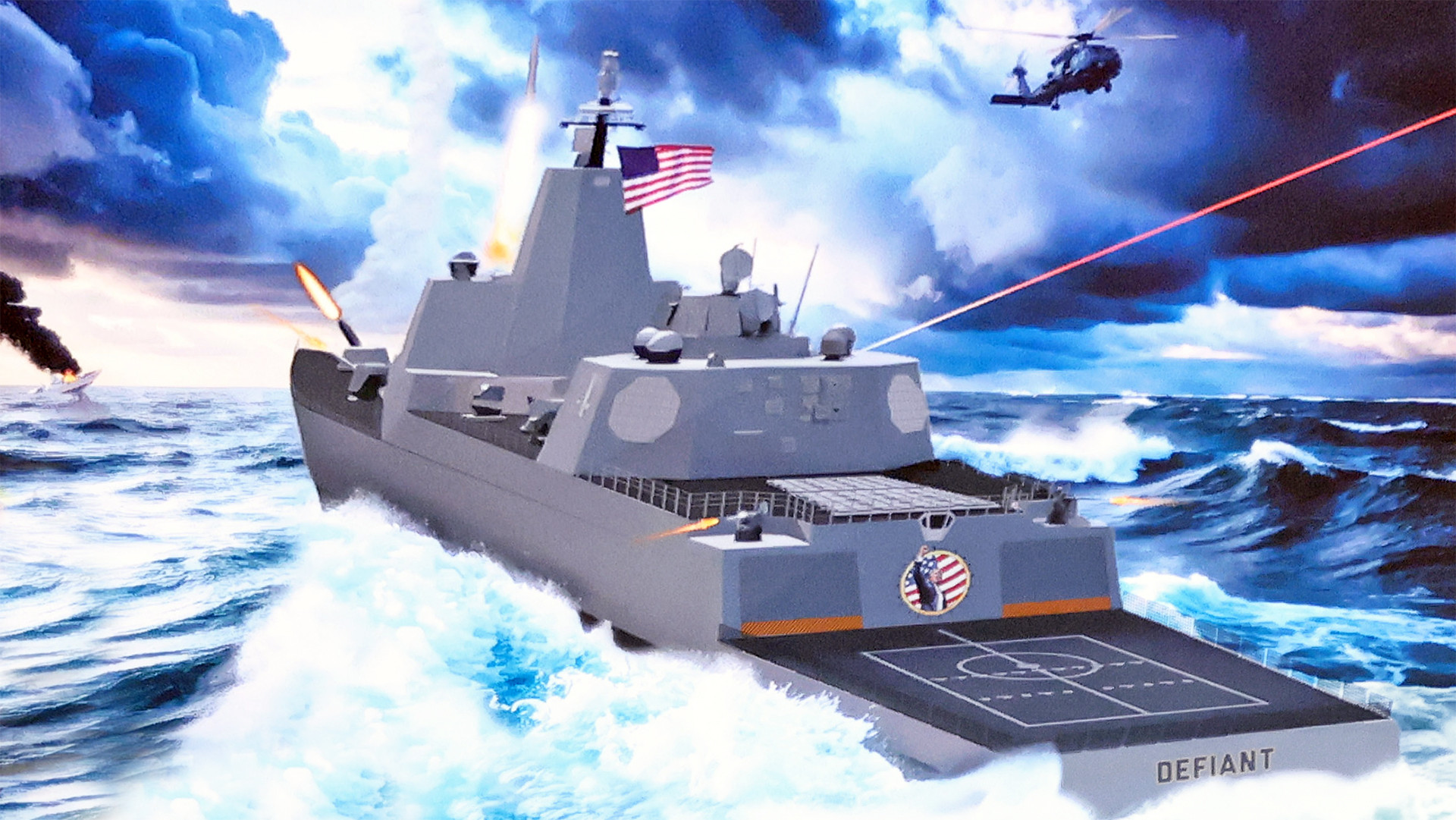
Why would you take this as an indication of the “best we can do”?
reply